RTX

Search documents
Why VIS Gives Your Pure Industrial Exposure at 0.10% Fees (Not for Everyone)
247Wallst· 2026-02-20 12:46
Core Insights - Vanguard Industrials ETF (VIS) provides concentrated exposure to the industrial sector with 97.4% of its assets allocated to over 500 holdings, including major companies like GE, RTX, and Caterpillar [1] - The ETF has achieved a year-to-date gain of 12.51%, closely mirroring the performance of its main competitor, the Industrial Select Sector SPDR Fund [1] - Manufacturing value-added reached $2.95 trillion in Q3 2025, showing a growth acceleration of 3.2% after a period of cyclical weakness [1] ETF's Intended Portfolio Role - VIS serves as a precise tool for sector allocation, focusing solely on industrials and eliminating exposure to other sectors, which allows investors to capitalize on cyclical recovery themes [1] - The fund's holdings include key subsectors such as aerospace and heavy equipment, providing diversification within the industrial theme [1] - With a dividend yield of only 1.02%, VIS is positioned as a growth-focused investment rather than an income-generating vehicle [1] Performance and Returns - VIS has successfully captured the industrial sector's cyclical upswing, benefiting from its exposure to leading companies in aerospace and heavy equipment [1] - The ETF's low fees enhance its attractiveness, allowing investors to fully benefit from the industrial recovery without incurring high expenses [1] Tradeoffs and Considerations - The cyclical nature of the industrial sector introduces significant risk, as evidenced by the year-to-date gains occurring alongside rising jobless claims and a contraction in manufacturing [1] - The lack of defensive exposure means that during economic downturns, VIS offers no protective buffer against losses [1] - Active monitoring of economic indicators and cycle positioning is essential for investors, as the industrial sector can experience rapid shifts in performance [1]


Airbus Has the Orders. The Engines Didn’t Get the Memo.
Yahoo Finance· 2026-02-19 15:54
Airbus Has the Orders. The Engines Didn’t Get the Memo. - Moby THE GIST Airbus just reminded investors that a record backlog does not mean record deliveries. It can sell jets all day long, but if the engines do not show up, neither does the cash, and the stock reacts accordingly. WHAT HAPPENED Airbus cut its 2026 commercial delivery outlook to about 870 aircraft, below where many analysts had expectations, with some earlier forecasts closer to 900 plus. In some reports, expectations had drifted even hi ...
American Airlines picks CFM International to power upcoming Airbus A321neo jets
Reuters· 2026-02-19 12:57
American Airlines picks CFM International to power upcoming Airbus A321neo jets | ReutersSkip to main content[Exclusive news, data and analytics for financial market professionalsLearn more aboutRefinitiv]An American Airlines plane arrives at LaGuardia Airport in the Queens borough of New York City, U.S., November 8, 2025. REUTERS/Kylie Cooper/File Photo [Purchase Licensing Rights, opens new tab]Feb 19 (Reuters) - American Airlines [(AAL.O), opens new tab] said on Thursday it has selected CFM International' ...


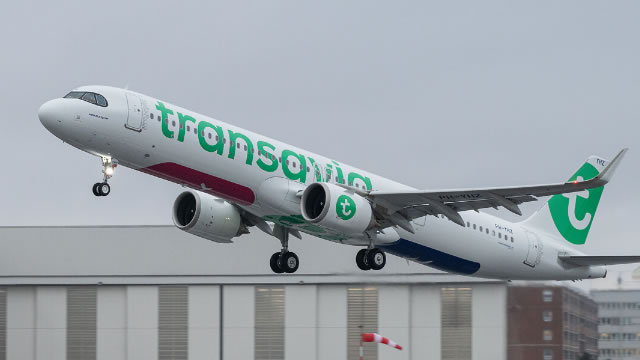
Airbus softens output goal amid Pratt & Whitney engine delays
Reuters· 2026-02-19 05:10
Core Viewpoint - Airbus has adjusted its jet production targets downward due to significant engine supply shortages from Pratt & Whitney, impacting its production goals and financial guidance for the upcoming years [1]. Group 1: Production Targets - Airbus now aims for a narrowbody output rate of 70 to 75 jets per month by the end of next year, stabilizing at 75 per month beyond 2027, down from a previous target of 75 jets per month in 2027 [1]. - The company has been in discussions with Pratt & Whitney regarding engine supply volumes for 2026 and 2027, which are typically agreed upon 18 months in advance [1]. Group 2: Financial Performance - In the fourth quarter, Airbus reported an adjusted operating profit of €2.98 billion, reflecting a 17% increase, while revenue rose by 5% to €25.98 billion [1]. - Analysts had anticipated a profit of €2.87 billion on revenues of €26.51 billion, indicating that Airbus exceeded expectations [1]. - For 2026, Airbus forecasts 870 jet deliveries, an increase from 793 in the previous year, with an adjusted operating profit projected at around €7.5 billion [1].
Iran's Khamenei Warns Of 'Slap' To US Military Amid Strait Of Hormuz's Temporary Closure: LMT, RTX Eyed—FRO, DHT On Watch For Shipping Risks - Lockheed Martin (NYSE:LMT)
Benzinga· 2026-02-18 07:22
Group 1 - Iran announced the temporary closure of the Strait of Hormuz for live-fire drills, impacting global shipping and U.S. defense contractors as regional tensions rise [1] - The Strait of Hormuz is crucial as it handles 20% of the world's oil, leading to increased scrutiny on tanker companies and defense stocks [2] - As of February 18, Brent crude is trading at approximately $67.63 per barrel, up 0.31%, while West Texas Intermediate is at about $62.40 per barrel, higher by 0.22% [2] Group 2 - Despite military tensions, Iranian Foreign Minister expressed optimism for a sustainable solution during a U.N. disarmament conference, indicating a potential diplomatic opening [4] - U.S. Vice President noted that while some progress has been made in indirect nuclear talks, Iran has not acknowledged certain "red lines" set by the previous administration [4]


The Zacks Analyst Blog NVIDIA, Taiwan, ASML and Applied Materials
ZACKS· 2026-02-17 10:41
Core Insights - The International Monetary Fund (IMF) projects global GDP growth of approximately 3.3% for 2026, supported by corporate investment in digital infrastructure and advanced technologies [1] - The global semiconductor industry is expected to reach $975 billion in annual sales in 2026, driven by an AI infrastructure boom [2] - The industrial sector is bolstered by sustained defense spending and strong commercial aerospace backlogs, with U.S. national defense spending exceeding $800 billion annually [7] Technology Sector - AI-driven capital expenditure is a key earnings catalyst in 2026, with major companies like Microsoft, Amazon, and Alphabet investing heavily in AI data centers and cloud infrastructure [4] - The Semiconductor Industry Association anticipates global semiconductor sales to approach $1 trillion in 2026, indicating a 26% growth, primarily due to advanced logic and high-bandwidth memory linked to generative AI workloads [5] - Companies such as NVIDIA, Taiwan Semiconductor, ASML, and Applied Materials are positioned to benefit from this growth, with TSM holding a Zacks Rank 1 (Strong Buy) and the others carrying a Zacks Rank 2 (Buy) [5] Industrial Sector - The industrial sector benefits from strong defense spending and a robust commercial aerospace backlog, with companies like Lockheed Martin and RTX reporting significant backlogs of $194 billion and $268 billion, respectively [7] - Electrification and grid modernization are also key growth drivers, with firms like Eaton and Siemens focusing on data center power demand and energy transition investments [8] - These factors provide substantial backlog visibility and earnings support as the sector moves into mid-2026 [8]


Tech Boom & Defense Backlogs: 2 Sectors Poised to Outperform in 2026
ZACKS· 2026-02-13 20:00
Global Economic Outlook - The International Monetary Fund (IMF) projects global GDP growth of approximately 3.3% for 2026, supported by corporate investment in digital infrastructure and advanced technologies [1] - The U.S. labor market shows resilience, with nonfarm payrolls increasing by 130,000 in January 2026 and an unemployment rate of 4.3% [1] Industry Projections - The global semiconductor industry is expected to reach $975 billion in annual sales in 2026, driven by an AI infrastructure boom [2] - The Semiconductor Industry Association forecasts global semiconductor sales to approach $1 trillion in 2026, indicating a 26% growth, primarily due to advanced logic and high-bandwidth memory for generative AI workloads [5] Sector Performance - AI-linked infrastructure and healthcare innovation are expected to outperform the broader market in 2026, supported by strong demand drivers and favorable earnings momentum [3] - Hyperscalers like Microsoft, Amazon, and Alphabet are significantly investing in AI data centers and cloud infrastructure, which remains a core earnings catalyst [4] Aerospace and Defense - The industrial sector benefits from sustained defense spending, with U.S. national defense spending exceeding $800 billion annually, providing multi-year revenue visibility for prime contractors [8] - Companies like Lockheed Martin and RTX report substantial backlogs, with Lockheed Martin exiting 2025 with a $194 billion backlog and RTX with a $268 billion backlog, indicating extended revenue streams [9] Electrification and Grid Modernization - Electrification and grid modernization are identified as powerful structural drivers, with companies like Eaton and Siemens focusing on data center power demand and energy transition investments as key growth catalysts [10]

RTX: Digital Transformation Unlocks Margin Multiplier On Backlog
Seeking Alpha· 2026-02-10 15:00
Core Thesis - The merger of a $268 billion backlog with the maturation of the Core digital OS is seen as a basis for structural margin expansion, justifying a Strong Buy rating for the company [1] Analyst Position - The analyst has no stock, option, or similar derivative position in any of the companies mentioned and has no plans to initiate any such positions within the next 72 hours [1]

海外科技周报(26/01/26-26/01/30):特朗普提名鹰派美联储主席,大宗趋势暴跌何去何从-20260205
Hua Yuan Zheng Quan· 2026-02-05 11:21
Investment Rating - Investment rating: None [4] Core Insights - The report highlights strong order performance in the AI energy sector, with GEV securing approximately 24GW of gas turbine demand in Q4 2025, and a total of 83GW of orders and capacity reserved until 2029, aiming for 100GW by the end of 2026 [5][13][14] - In the fintech sector, BREAD Financial led the market with a 5.5% increase after reporting Q4 2025 earnings that exceeded market expectations, while the overall sector remains under pressure [16][21] - Quantum computing companies like Honeywell and IonQ are making significant strides, with Honeywell's Quantinuum raising approximately $840 million and IonQ acquiring Seed Innovations and Skyloom to enhance its enterprise-level platform [28][29][31] Summary by Sections AI Energy - The AI energy sector saw GEV's strong performance with 24GW of new gas turbine demand and a total of 83GW of orders, with expectations to reach 100GW by 2026 [5][13] - The company anticipates a significant increase in gas turbine production by Q3 2026 and a doubling of grid equipment capacity from 2024 to 2028 [14] - The report notes a positive outlook on the U.S. emergency power auction mechanism, which could accelerate the construction of stable, dispatchable power sources [14] Fintech - The fintech sector experienced a downturn, with most companies declining, except for BREAD Financial, which reported a 5.5% increase in stock price after strong Q4 earnings [16][21] - Visa has implemented Apple Pay for Chinese cardholders, enhancing cross-border payment capabilities, while NITMX is working on cross-border payment systems with major Chinese payment service providers [21][22] - The report suggests that cross-border payments are transitioning from a "channel competition" phase to a "infrastructure reconstruction" phase, driven by high-frequency consumption scenarios [23] Quantum Computing - The quantum computing sector saw Honeywell's Quantinuum achieve significant funding and partnerships, integrating its products with NVIDIA's AI technology [28][29] - IonQ is advancing its enterprise-level platform through acquisitions, enhancing its capabilities in machine learning and quantum networking [31] - The report emphasizes IonQ's strategy to build a comprehensive platform covering quantum computing, networking, sensing, and security [31] Commercial Aerospace - The commercial aerospace sector experienced a slight decline, with key companies like Honeywell and RTX reporting strong earnings despite market fluctuations [36] - Honeywell's Q4 sales reached $9.8 billion, with a 6% year-over-year increase, while RTX reported $24.2 billion in sales, a 12% increase from the previous year [36]
Transcat(TRNS) - 2026 Q3 - Earnings Call Transcript
2026-02-03 22:32
Financial Data and Key Metrics Changes - Consolidated revenue increased by 26% to $83.9 million, driven by double-digit growth in both distribution and service segments [5][10] - Consolidated gross profit grew by 28%, with gross margins expanding by 60 basis points [5][10] - Adjusted EBITDA rose by $2.2 million or 27.2% to $10.1 million, with a slight margin expansion [5][13] - Net loss decreased to $1.1 million, influenced by higher amortization and interest expenses [11] Business Line Data and Key Metrics Changes - Service revenue grew by 29%, with organic growth of 7%, supported by acquisitions [10] - Distribution revenue increased by 20%, driven by strong demand in rentals and product sales, with gross margin expanding by 330 basis points [9][10] Market Data and Key Metrics Changes - Strong demand observed in regulated end markets such as life sciences, aerospace and defense, and energy [5][6] - The service segment continues to show substantial growth potential, both organically and through acquisitions [9] Company Strategy and Development Direction - The company aims to leverage its acquisitions to expand geographic footprint and technical capabilities, focusing on capturing sales and cost synergies [6][16] - Investments in leadership, technology, and process improvement are expected to enhance competitive differentiation [16] Management's Comments on Operating Environment and Future Outlook - Management expressed confidence in maintaining high single-digit organic service revenue growth expectations for the fourth quarter [15] - The company is well-positioned for future growth, with a strong acquisition pipeline and a focus on recurring revenue streams [16][50] Other Important Information - The CEO succession plan is nearing completion, with a search committee evaluating candidates [11][58] - Additional one-time expenses related to the CEO search are expected in the fourth quarter [60] Q&A Session Summary Question: Drivers of service segment growth - Management highlighted the ramp-up of delayed service orders and strong performance in regulated markets as key drivers [19][24] Question: Impact of startup costs on margins - Management indicated that startup costs are not significant but affect margins temporarily as new customers are onboarded [21][22] Question: Distribution segment performance and AI opportunities - Management noted strong execution in distribution, particularly in power generation markets, and emphasized the potential for recurring calibration opportunities [25][26] Question: Expectations for Q4 service growth - Management reaffirmed guidance for high single-digit growth in Q4, with a strong pipeline for new business [32] Question: M&A strategy and geographic expansion - Management discussed gaps in geographic presence, particularly in Northern California, Dallas, Atlanta, and the Mid-Atlantic region, and highlighted recent expansion in Ireland [34][36] Question: Long-term growth outlook in life sciences and defense - Management acknowledged that onshoring of manufacturing in regulated spaces is beneficial and that increased defense spending presents opportunities for calibration services [49][51]