
三不腐

Search documents
重庆:坚决拥护党中央决定
券商中国· 2026-03-20 09:30
Core Viewpoint - The article emphasizes the unwavering support of the Chongqing Municipal Committee for the Central Committee's decision to conduct a disciplinary review and investigation into Hu Henghua, highlighting the commitment to strict party governance and anti-corruption efforts [1][2]. Summary by Sections Meeting Overview - The Chongqing Municipal Committee held a meeting to discuss Hu Henghua's serious disciplinary violations and the subsequent investigation by the Central Commission for Discipline Inspection [1][2]. Commitment to Party Governance - The meeting underscored the Central Committee's determination to advance strict party governance and the importance of maintaining political discipline and unity under Xi Jinping's leadership [2][3]. Lessons and Responsibilities - Leaders at all levels are urged to learn from past mistakes, maintain absolute loyalty to the party, and adhere strictly to political discipline and regulations [3][4]. Strengthening Supervision - The meeting called for enhanced supervision of power operations, focusing on key leaders and critical positions to prevent misuse of power and ensure transparency [4][5]. Anti-Corruption Measures - A zero-tolerance approach to corruption was emphasized, with a commitment to continuous education on party discipline and the eradication of corrupt practices [5]. Leadership and Development Goals - The municipal leadership is expected to take the lead in ensuring high-quality development and social stability, contributing to the successful start of the "14th Five-Year Plan" [5].


广东一地披露:观看警示片后,7天内14人主动投案
Xin Lang Cai Jing· 2026-02-14 15:34
Group 1 - The core message of the news highlights the strong anti-corruption efforts in Yangdong District, Guangdong Province, where a recent warning education conference led to 14 party members voluntarily confessing to violations within a week, recovering 336,600 yuan in illicit funds, demonstrating the effectiveness of the educational initiative [1] - The conference showcased the commitment of the local disciplinary inspection and supervision agencies to combat corruption and purify the political environment, emphasizing the importance of accountability and the need for a robust response to corruption cases [1][2] - Since the 20th National Congress of the Communist Party, significant cases involving high-profile officials have been addressed, reinforcing the message of zero tolerance towards corruption and the necessity for strict adherence to discipline and regulations among party members [1][2] Group 2 - The local disciplinary inspection and supervision agencies have implemented a comprehensive approach to anti-corruption, focusing on both immediate measures and long-term solutions, which includes enhancing supervision and addressing vulnerabilities in key areas such as project management and land transfer [2] - The ongoing efforts include a multi-layered warning education system aimed at fostering a culture of integrity and accountability among party members, with plans for continuous improvement and regional, industry-specific governance [3]
官方披露:观看警示片后,7天内14人主动投案
Zhong Guo Ji Jin Bao· 2026-02-14 12:16
Group 1 - The core message emphasizes the effectiveness of warning education in deterring corruption among party members, as evidenced by 14 members voluntarily confessing to violations and returning 336,600 yuan within a week after the educational meeting [1] - The meeting showcased the determination of the municipal disciplinary inspection and supervision agency to combat corruption and purify the political environment, highlighting significant cases involving high-profile officials [1][2] - The ongoing efforts to implement comprehensive anti-corruption measures are aimed at reinforcing the rule of law and ensuring that party members adhere to discipline and regulations [2] Group 2 - The municipal disciplinary inspection and supervision agency is committed to building a comprehensive, multi-layered, and normalized warning education system to promote long-term mechanisms for strict governance of the party [3] - There is a focus on addressing the root causes of corruption by conducting thorough investigations into risk points and enhancing regulatory frameworks in key areas such as project management and land transfer [2] - The agency plans to utilize various educational methods, including special studies and discussions, to instill a strong sense of discipline and mission among party members [2]
一地680余名党员干部观看警示教育片,会后7天内14人主动投案
Xin Lang Cai Jing· 2026-02-14 10:20
Group 1 - The core message of the news highlights the effectiveness of warning education in deterring corruption among party members in Yangdong District, as evidenced by 14 party members voluntarily confessing to violations within a week after a warning education meeting [1] - The meeting included a video showcasing serious disciplinary violations by party members, which had a profound emotional impact on attendees, reinforcing the importance of accountability [1] - The local disciplinary inspection and supervision authorities have been actively implementing anti-corruption strategies aligned with national directives, resulting in a significant increase in voluntary confessions from 48 individuals in 2025 to 45 individuals in just over a month in early 2026 [1] Group 2 - In response to the issues revealed by the cases, the Yangdong District disciplinary inspection and supervision authorities are conducting thorough investigations to identify and rectify corruption risks, particularly in key areas such as engineering projects and land transfers [2] - The authorities are promoting the establishment of a comprehensive warning education system and are committed to ongoing regional and sector-specific reforms to strengthen long-term mechanisms against corruption [2] - The approach includes various educational initiatives aimed at reinforcing the ideals and responsibilities of party members, ensuring they remain vigilant about discipline and regulations [2]
中国共产党昆明市第十二届纪律检查委员会第六次全体会议公报
Xin Lang Cai Jing· 2026-02-12 22:40
Core Viewpoint - The sixth plenary session of the 12th Discipline Inspection Commission of the Kunming Municipal Committee emphasizes the importance of strengthening party discipline and anti-corruption efforts to support the development of Kunming in the context of Chinese-style modernization [1][2]. Group 1: Meeting Overview - The plenary session was attended by 29 members of the Municipal Discipline Inspection Commission and 223 attendees, focusing on the implementation of Xi Jinping's thoughts and the resolutions from the 20th National Congress of the Communist Party of China [1]. - The meeting reviewed the work report presented by Qi Xiaoyong, which outlines the goals for 2026 and summarizes the achievements of 2025 in discipline inspection and supervision [1]. Group 2: Key Themes from the Meeting - The session highlighted the significant achievements in strict party governance over the past year and set strategic directions for further advancing anti-corruption efforts [2]. - Emphasis was placed on the need for a unified approach among party organizations and members to implement the directives from the central and provincial levels [2]. Group 3: Focus Areas for 2026 - The meeting outlined the necessity to deepen the understanding of Xi Jinping's important thoughts on self-revolution and to enhance the collaboration between various levels of discipline inspection agencies [4]. - It was noted that the focus for 2026 would include promoting political supervision, improving work styles, and addressing corruption in key sectors such as finance, state-owned enterprises, and education [5][6]. Group 4: Implementation Strategies - The session proposed a series of measures to enhance political supervision, including the establishment of a political supervision work regulation and the exploration of a big data model for supervision [5]. - There is a commitment to address issues of formalism and bureaucracy, ensuring that the focus remains on practical results that benefit the public [6]. Group 5: Community Engagement and Transparency - The meeting stressed the importance of addressing corruption and misconduct that directly affect the community, with specific initiatives aimed at improving public services and governance [7]. - A call was made to enhance the transparency of power operations through the development of a comprehensive data supervision system [8]. Group 6: Capacity Building and Professionalism - The session underscored the need for continuous education and training for discipline inspection personnel to ensure they are well-equipped to uphold party integrity [9]. - There is a focus on integrating party building with operational effectiveness to create a high-quality, professional discipline inspection team [9].
清风抚廊邑 奋进护发展
Xin Lang Cai Jing· 2026-02-12 04:07
Group 1 - The article emphasizes the importance of regular and institutionalized learning to enhance political loyalty and effectiveness in governance [1] - The city’s disciplinary inspection and supervision bodies have reported on 117 major cases and provided five comprehensive reports on corruption trends, effectively transmitting accountability pressure [1] - A focus on grassroots supervision and problem-solving is highlighted, with a call for more engagement with local voices to address issues early [1] Group 2 - The article discusses the successful completion of key infrastructure projects, such as the Beijing-Xiongan Airport Express Line, facilitated by effective supervision [2] - A special supervision initiative targeting grassroots law enforcement has led to the rectification of 923 issues, improving the business environment [2] Group 3 - The city conducted multiple rounds of inspections, uncovering 723 deep-seated issues across 73 units, demonstrating the effectiveness of the inspection system [3] - A total of 21 rounds of inspections were guided across various counties, revealing over 11,000 issues [3] Group 4 - The city’s disciplinary bodies have conducted 91 educational sessions to address various issues, resulting in the rectification of 6,285 problems across leadership teams [4] - Continuous monitoring of the implementation of the Central Eight Regulations has led to the identification of 615 violations, indicating a strong commitment to combating corruption [5] Group 5 - The article outlines a comprehensive approach to corruption prevention, focusing on the "three no-corruption" strategy, which includes deterrence, institutional safeguards, and moral education [6] - Significant financial recoveries of over 60 million yuan have been achieved through targeted anti-corruption efforts in key sectors [6] Group 6 - The city has implemented a series of reforms in the funeral service sector, resulting in a 33% reduction in average costs for services [7] - Initiatives in the education and elderly care sectors have led to substantial improvements, including a 99.4% self-operation rate for school canteens [7] Group 7 - The article highlights the establishment of a three-dimensional training model for disciplinary inspection personnel, enhancing their skills and capabilities [8] - Structural reforms within the disciplinary bodies aim to streamline operations and improve efficiency [8] Group 8 - The city has revised and improved 24 management systems to enhance governance and accountability, with 13 initiatives recognized at the provincial level [9] - The commitment to uphold political responsibility and deepen anti-corruption measures is reiterated, ensuring a disciplined environment for development [9]
书记谈丨以有力有效监督护航高校高质量发展
Zhong Yang Ji Wei Guo Jia Jian Wei Wang Zhan· 2026-02-12 00:14
Core Viewpoint - The construction of a comprehensive internal supervision system in higher education institutions is essential for advancing strict governance of the Party and enhancing the modernization of governance capabilities in universities [3][4]. Group 1: Importance of Supervision System - Accelerating the establishment of an internal supervision system in universities is an inherent requirement for deepening the strict governance of the Party in the education sector [3]. - The supervision system is crucial for ensuring that universities effectively implement the directives of the central government and maintain political integrity [3][4]. - Current issues include fragmented supervision and the weakening of political oversight, necessitating a complete and efficient supervision system to enhance the effectiveness of political supervision [3][4]. Group 2: Anti-Corruption Efforts - The ongoing anti-corruption struggle remains complex, with significant challenges in eliminating corruption in key areas such as research funding and affiliated hospitals [4]. - A robust supervision system is needed to reduce opportunities for corruption and to implement early intervention measures [4]. Group 3: Governance Efficiency - A high-quality supervision system is essential for supporting the high-quality development of universities, with mechanisms established for cross-departmental collaboration [4]. - Strengthening the supervision system can optimize internal governance structures and ensure effective decision-making and management [4]. Group 4: Coordinated Supervision Framework - The supervision system should not merely be a simple aggregation of supervisory forces but a coordinated effort based on responsibility allocation and collaborative operation [5][6]. - Establishing a clear "responsibility network" is vital for enforcing political responsibilities in university governance [5]. Group 5: Long-term Governance Mechanisms - A complete governance loop should be established to address issues and promote long-term governance, integrating problem identification, accountability, and corrective actions [7]. - The development of a comprehensive disciplinary education framework is necessary to instill a culture of integrity and accountability within the university community [10]. Group 6: Support Mechanisms for Supervision - A multi-layered and collaborative support mechanism is essential for the effective operation of the supervision system in universities [8][9]. - Enhancing the professional capabilities of supervisory personnel and integrating technology into supervision practices are critical for improving oversight effectiveness [9].
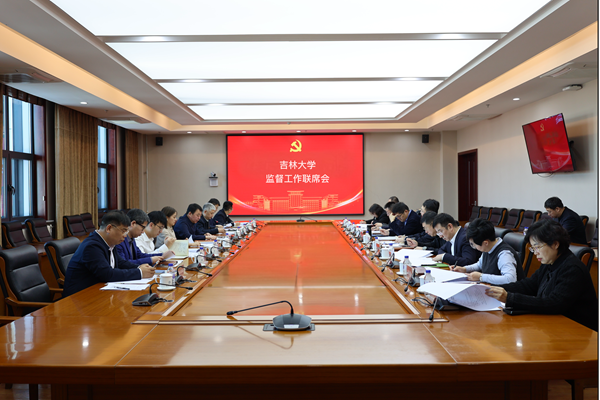
2025年度市直部门机关纪委书记述职会议召开
Xin Lang Cai Jing· 2026-02-10 22:10
Group 1 - The core focus of the meeting was to review the work of the municipal discipline inspection commissions for the year 2025, analyze the current situation, share experiences, and identify shortcomings to better plan for the upcoming year [1] - Five municipal departments presented their reports on enhancing political supervision, conducting warning education, and addressing corruption issues at the grassroots level [1] - The meeting emphasized the need for municipal discipline inspection bodies to tailor their 2026 work plans to their specific circumstances, with a focus on strengthening political supervision, improving daily oversight, enhancing disciplinary capabilities, and deepening internal development [1]
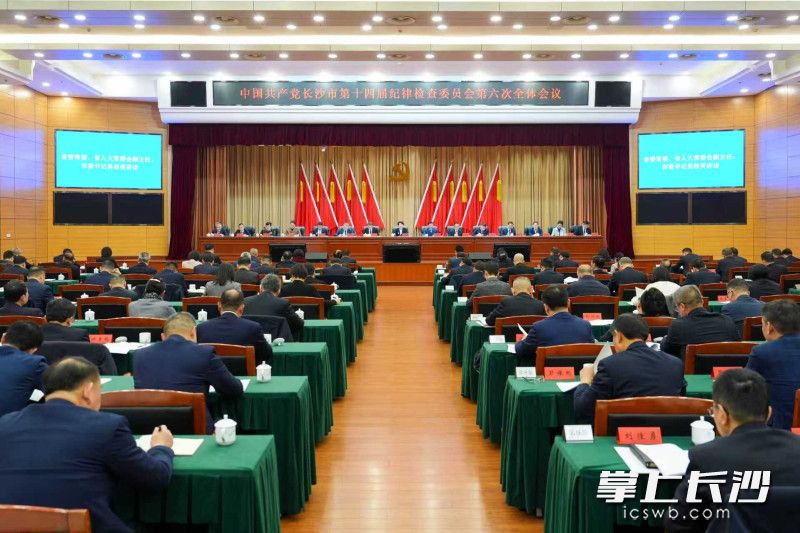
市第十四届纪委第六次全会召开 吴桂英出席并讲话
Chang Sha Wan Bao· 2026-02-10 03:49
Group 1 - The meeting of the 14th Municipal Discipline Inspection Commission was held on February 9, emphasizing the importance of implementing Xi Jinping's thoughts on the Party's self-revolution and advancing strict governance and anti-corruption efforts to support high-quality development in Changsha [1][3] - Wu Guiying highlighted the strategic deployment made by Xi Jinping during the 5th Plenary Session of the 20th Central Commission for Discipline Inspection, calling for a sustained high-pressure stance against corruption and the need for comprehensive measures to prevent corruption [4][6] - The past year saw significant efforts from municipal party organizations and disciplinary inspection agencies in implementing central decisions, enhancing political supervision, and addressing corruption issues, leading to improved political ecology in the city [7] Group 2 - Wu Guiying stressed the need for continuous political supervision, focusing on maintaining the "two safeguards," establishing a correct view of political achievements, and strictly enforcing political discipline and rules [7] - The emphasis was placed on strengthening institutional governance, ensuring rigid execution of regulations, and promoting a culture of integrity to effectively manage power within institutional frameworks [7] - The meeting included participation from various city leaders and featured a report on work from the municipal discipline inspection commission, along with a warning education film on anti-corruption [8][9]
在创新中狠抓落实丨着力增强腐败治理综合效能
Zhong Yang Ji Wei Guo Jia Jian Wei Wang Zhan· 2026-02-08 00:31
Core Viewpoint - Guizhou Zunyi is intensifying its anti-corruption efforts by integrating punishment, governance, and prevention to enhance the overall effectiveness of corruption management [2][3]. Group 1: Anti-Corruption Measures - Zunyi City maintains a zero-tolerance approach towards corruption, focusing on key areas such as state-owned enterprises, healthcare, and finance, with a particular emphasis on high-ranking officials [2][3]. - In 2025, Zunyi's disciplinary inspection and supervision agencies filed 3,673 cases and detained 235 individuals, including 21 city-level and 57 county-level officials [2]. - Notable cases include the former deputy secretary of the New Pu New District and the former chairman of the municipal political consultative conference, among others [2]. Group 2: Preventive Strategies - The city emphasizes preventive measures by reforming systems and regulating power operations to reduce opportunities for corruption [3]. - In 2025, 81 disciplinary inspection recommendations were issued to promote reform and accountability in response to identified issues [3]. - Following the investigation of a former hospital director, a comprehensive analysis of corruption in the healthcare sector was conducted, leading to the development of a corrective action plan [3]. Group 3: Educational Initiatives - Zunyi's disciplinary inspection and supervision agencies utilize warning education as a key strategy to promote integrity and prevent corruption [4][5]. - The city organizes educational sessions for key personnel in critical sectors, focusing on self-examination and awareness [4]. - A series of educational videos and materials are produced to illustrate the consequences of corruption, targeting both officials and their families [5].