以台制华

Search documents
赖清德当局结结实实挨了美国“三大巴掌”
Xin Lang Cai Jing· 2026-01-23 10:09
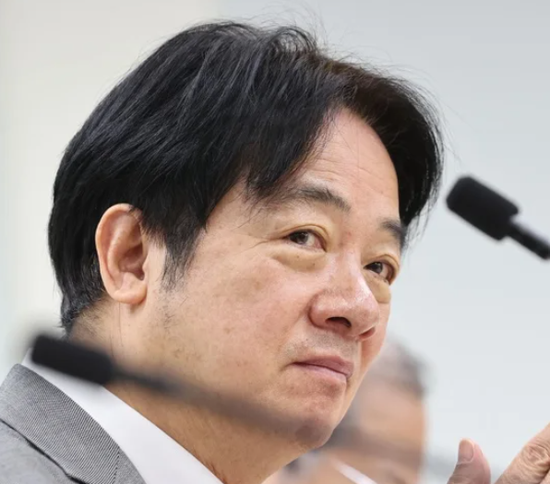
Core Viewpoint - The recent trade agreement between Taiwan and the U.S. is perceived as a significant financial burden on Taiwan, with a total investment of $500 billion, which is approximately 80% of Taiwan's foreign exchange reserves, equating to NT$680,000 per citizen, viewed as a political contribution to the ruling Democratic Progressive Party (DPP) [1][6]. Investment and Economic Impact - Under the trade agreement, Taiwan is set to provide $250 billion in new investments and $250 billion in credit guarantees in exchange for a reduction in tariffs on goods exported to the U.S. to 15% [3][8]. - This arrangement is expected to lead to substantial capital, technology, and talent outflow from Taiwan, raising concerns about significant economic losses [3][8]. Semiconductor Industry Concerns - U.S. Commerce Secretary Gina Raimondo stated that the goal is to transfer 40% of Taiwan's semiconductor supply chain and production to the U.S. during Trump's presidency, which could undermine Taiwan's core industrial advantages and transform it from a "tech island" to an "hollow island" [3][9]. - The DPP government is criticized for promoting this as a "Taiwan model," despite the potential economic ramifications [9]. Public and Media Reactions - Taiwanese media and commentators express skepticism about the DPP's claims of a "win-win" situation, arguing that the U.S. is the primary beneficiary of the agreement, effectively draining Taiwan's resources [4][10]. - Articles in Taiwanese newspapers highlight the perception that the DPP is sacrificing Taiwan's economic future for short-term gains, with critiques labeling the U.S. as a self-serving actor rather than a protector of Taiwan's interests [5][10]. Strategic Implications - Analysts suggest that as Taiwan's semiconductor and technological capabilities are gradually diminished, the U.S. will only focus on its own risk management, questioning what will remain of Taiwan's value [10]. - The narrative posits that the U.S. views Taiwan not as a supply chain partner but as a strategic asset to counter China, indicating a shift in Taiwan's role in the geopolitical landscape [10].

为何此时军演?日媒解读
Xin Lang Cai Jing· 2025-12-30 17:07
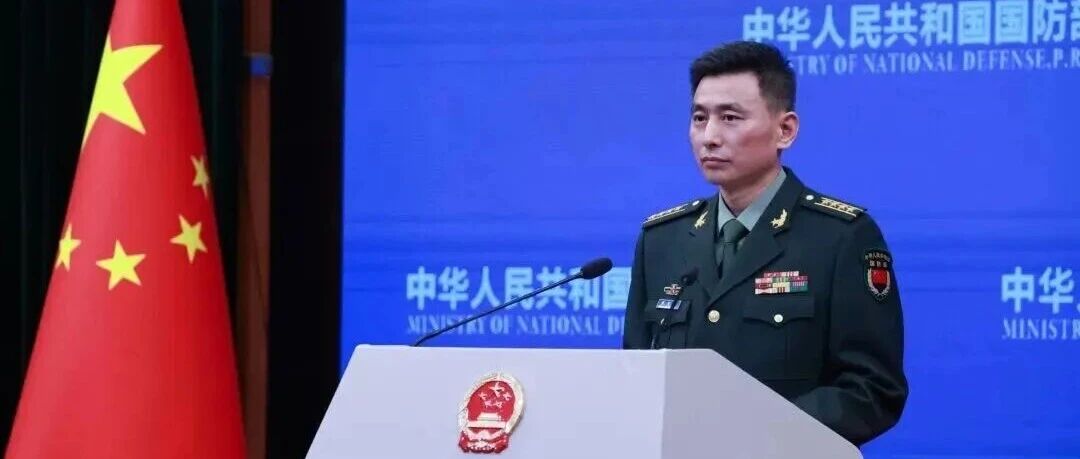
Core Viewpoint - The Chinese military conducted a large-scale exercise named "Mission of Justice-2025" around Taiwan, aimed at blocking Taiwan and preventing external interference, reflecting China's strong dissatisfaction with U.S. and Japanese involvement in Taiwan issues [2][3] Summary by Relevant Sections Military Exercises - The "Mission of Justice-2025" exercise was organized by the Eastern Theater Command on December 29, emphasizing China's military readiness and response to perceived threats from Taiwan and external forces [2] U.S.-Taiwan Relations - The exercise follows a record arms sale announcement by the Trump administration to Taiwan, totaling approximately $11.1 billion, which prompted strong protests from China and sanctions against 20 U.S. defense companies and 10 executives [2] China-Japan Relations - China is intensifying criticism of Japanese Prime Minister Fumio Kishida's comments regarding Taiwan, with military activities near Japan seen as a deterrent against the Kishida government [2] Warnings and Statements - Chinese Defense Ministry spokesperson Zhang Xiaogang stated that the exercise serves as a serious warning against "Taiwan independence" forces and external interference, asserting the necessity of defending national sovereignty and territorial integrity [2][3]
外媒关注解放军对台演习:严重警告外部干涉势力
Xin Lang Cai Jing· 2025-12-30 15:02
Core Viewpoint - The recent military exercises conducted by the People's Liberation Army (PLA) in the Taiwan Strait serve as a strong warning against external interference, particularly from the United States and Japan, amidst rising tensions over Taiwan [1] Group 1: Military Exercises - The PLA organized the "Mission of Justice-2025" exercises starting December 29, involving various military branches including the army, navy, air force, and rocket force, across multiple locations around Taiwan [1] - The exercises are intended to demonstrate the PLA's capability to prevent any external military support for Taiwan [1] Group 2: Political Context - Chinese military experts highlighted that a significant aspect of the exercises is the concept of "striking first," which serves as a serious warning to both "Taiwan independence" forces and external interveners [1] - The exercises are viewed as a response to recent provocative statements from Japanese Prime Minister Fumio Kishida regarding Taiwan and the U.S. approval of large-scale arms sales to Taiwan, reflecting China's strong dissatisfaction and opposition [1] Group 3: Strategic Implications - The exercises aim to enhance the PLA's anti-access/area denial capabilities, signaling China's determination to prevent future external interference in Taiwan-related issues [1]
中方回应美方关于中国军事演习的言论
Zheng Quan Shi Bao· 2025-12-30 09:59
Group 1 - The core viewpoint is that Taiwan is an inseparable part of China's territory, and military exercises by the People's Liberation Army (PLA) are necessary actions to defend national sovereignty and territorial integrity against "Taiwan independence" forces [1][2] - The Chinese Foreign Ministry spokesperson emphasized that the military exercises conducted by the Eastern Theater Command are a severe punishment for the "Taiwan independence" forces and a necessary response to the recent $11.1 billion U.S. arms sale to Taiwan [1] - The spokesperson criticized the Democratic Progressive Party (DPP) for its persistent "Taiwan independence" stance and accused it of turning Taiwan into a "powder keg" and a "munitions depot," portraying it as a "peace destroyer" and "crisis creator" [1] Group 2 - Taiwan issue is described as the core of China's core interests, with a firm commitment to safeguarding national sovereignty, security, and territorial integrity [2] - Any provocative actions regarding the Taiwan issue will be met with resolute countermeasures from China, and any schemes to obstruct China's unification will not succeed [2]
深夜跳水!白银跌9%,黄金跌超4%;特朗普谈乌方试图袭击普京官邸:对此很生气;解放军无人机俯瞰台北101大厦;宇树首店将开业丨每经早参
Mei Ri Jing Ji Xin Wen· 2025-12-29 23:17
Group 1 - Gold and silver prices have significantly dropped, with spot gold falling over $200, a decrease of 4.36%, currently at $4,334.13 per ounce, and COMEX gold futures down 4.39% at $4,353.4 per ounce. Spot silver has decreased by 9% to $72.145 per ounce, while COMEX silver futures are down 7.3% at $71.56 per ounce [5][6]. - The U.S. stock market saw slight declines, with the Dow Jones down 0.51%, Nasdaq down 0.5%, and S&P 500 down 0.35%. Major tech stocks mostly fell, with Tesla down over 3% and Nvidia down over 1% [4]. - International oil prices have risen significantly, with WTI crude oil up 2.01% at $57.87 per barrel and Brent crude oil up 1.96% at $61.42 per barrel [5]. Group 2 - The Chinese military released new footage of military exercises, showcasing a drone's perspective over Taipei 101, indicating ongoing tensions in the region [8]. - The Chinese Ministry of Defense emphasized its commitment to countering "Taiwan independence" and maintaining national sovereignty, stating that military exercises are necessary actions against separatist forces [7]. - A new logistics standardization plan has been jointly issued by six Chinese departments, focusing on 101 national standards to support the construction of a unified national market [9]. Group 3 - China Eastern Airlines announced that starting January 1, 2026, all domestic wide-body flights will offer free Wi-Fi services to first-class and business-class passengers, with economy class also receiving complimentary standard Wi-Fi [22]. - Vanke has delivered nearly 120,000 homes this year, achieving about 70% of the required delivery volume over the past two years, indicating a stable delivery scale and positive signals for the real estate market [24]. - Utree Technology announced the opening of its first store in Beijing on December 31, enhancing its brand presence and user experience [25].

国防部发声!
券商中国· 2025-12-29 14:27
Core Viewpoint - The article discusses the "Justice Mission-2025" military exercise conducted by the Eastern Theater Command, emphasizing it as a necessary action to safeguard national sovereignty and territorial integrity against "Taiwan independence" forces and external interference [1]. Summary by Relevant Sections - **Military Exercise Context**: The "Justice Mission-2025" exercise is a direct response to recent large-scale arms sales to Taiwan by the United States, serving as a warning against "Taiwan independence" and external meddling [1]. - **Political Commentary**: The spokesperson criticizes the DPP government for aligning with external forces, claiming it exacerbates tensions across the Taiwan Strait and undermines peace and stability [1]. - **Call to Action**: The article urges relevant countries to abandon the "using Taiwan to contain China" strategy and warns the DPP that reliance on foreign support for independence will ultimately fail [1].

国防部新闻发言人就东部战区“正义使命-2025”演习答记者问
Xin Lang Cai Jing· 2025-12-29 14:17
Core Viewpoint - The recent military exercise "Justice Mission-2025" conducted by the Eastern Theater Command is a necessary action to safeguard national sovereignty and territorial integrity, responding to external interference and "Taiwan independence" forces [1][2][3]. Group 1: Military Exercise Details - The Eastern Theater Command organized the "Justice Mission-2025" exercise around Taiwan on December 29, which is seen as a direct response to recent large-scale arms sales to Taiwan by the United States [1][2]. - The exercise serves as a serious warning against "Taiwan independence" and external interference, emphasizing the need to protect China's sovereignty and territorial integrity [1][2]. Group 2: Political Context and Implications - External forces have been increasingly crossing boundaries regarding Taiwan, attempting to embolden "Taiwan independence" forces, which exacerbates cross-strait tensions and undermines peace in the Taiwan Strait [2][3]. - The current Taiwanese administration is accused of recklessly aligning with external forces, provoking tensions and becoming a source of instability in the region [3]. - The Chinese government urges relevant countries to abandon the illusion of using Taiwan to contain China and to cease actions that provoke tensions over Taiwan [2][3].
东部战区此次军演是针对美国近期大规模对台军售?国防部:敦促有关国家放弃“以台制华”幻想,停止在台湾问题上拱火滋事
Xin Lang Cai Jing· 2025-12-29 14:07
Core Viewpoint - The Eastern Theater Command's "Justice Mission-2025" exercise is a necessary response to external interference and "Taiwan independence" forces, aimed at safeguarding national sovereignty and territorial integrity [1] Group 1: Exercise Context - The exercise is organized in response to recent large-scale arms sales to Taiwan by the United States, which are seen as provocative actions that embolden "Taiwan independence" forces [1] - The Eastern Theater Command issued information about the exercise promptly, indicating its significance in the current geopolitical climate [1] Group 2: Warnings and Statements - The spokesperson emphasized that external forces' interference in Taiwan issues severely undermines China's sovereignty and damages peace and stability in the Taiwan Strait [1] - The spokesperson criticized the DPP (Democratic Progressive Party) government for aligning with external forces and provoking tensions, labeling it as a root cause of the current situation [1] Group 3: Future Actions - The Chinese military will continue to conduct operations against "Taiwan independence" and external interference, asserting its commitment to maintaining national sovereignty and unity [1] - The spokesperson warned that any attempts by external nations to use Taiwan to contain China will ultimately backfire, and urged the DPP to abandon its reliance on foreign support for independence [1]

国防部:解放军打“独”促统决不手软
Xin Lang Cai Jing· 2025-12-29 14:06
Core Viewpoint - The Eastern Theater Command's "Justice Mission-2025" exercise serves as a serious warning against "Taiwan independence" forces and external interference, emphasizing the necessity of safeguarding national sovereignty and territorial integrity [1] Summary by Relevant Sections Military Exercises - The "Justice Mission-2025" exercise was organized around Taiwan, responding to recent large-scale arms sales to Taiwan by the United States [1] - The exercise is characterized as a legitimate action to counteract provocations from external forces and to maintain peace and stability in the Taiwan Strait [1] Political Context - The spokesperson criticized the DPP (Democratic Progressive Party) government for aligning with external forces, which is seen as a root cause of escalating tensions in the Taiwan Strait [1] - There is a strong warning to external nations to abandon the illusion of using Taiwan to contain China and to cease actions that provoke tensions regarding Taiwan [1] Future Actions - The People's Liberation Army (PLA) will continue to organize actions against separatism and interference, firmly maintaining national sovereignty, unity, and territorial integrity [1]
国防部回应东部战区军事演习:解放军打“独”促统决不手软
第一财经· 2025-12-29 13:48
Core Viewpoint - The article discusses the "Justice Mission-2025" military exercise organized by the Eastern Theater Command, which is a response to recent large-scale arms sales to Taiwan by the United States. The exercise serves as a warning against "Taiwan independence" forces and external interference, emphasizing the necessity of safeguarding national sovereignty and territorial integrity [3]. Summary by Sections - The Eastern Theater Command announced the "Justice Mission-2025" exercise as a legitimate action to counteract serious threats posed by "Taiwan independence" and external forces. It highlights the increasing provocations from external entities that undermine China's sovereignty and disrupt peace in the Taiwan Strait [3][4]. - The article mentions that the exercise involves naval and air forces conducting readiness patrols around Taiwan, aimed at testing the rapid mobility and comprehensive capabilities of the troops in the region [4]. - A video released by the Eastern Theater Command showcases military exercises from a drone's perspective, including views of Taipei 101, reinforcing the proximity and readiness of the Chinese military [5].