
倚外谋独

Search documents
总台海峡时评丨罔顾日本殖民罪行,赖清德媚日贴靠令人不齿!
Xin Lang Cai Jing· 2026-02-12 16:31
Group 1 - Lai Ching-te congratulated Japan's Prime Minister Sanae Takaichi on the victory of the Liberal Democratic Party in the House of Representatives election, expressing hope for continued "shared values" and collaboration to face "regional challenges" [1] - The Taiwan Affairs Office spokesperson criticized Lai for ignoring Japan's historical atrocities during its colonial rule over Taiwan, accusing him of spreading pro-Japan rhetoric and compromising Taiwan's dignity [1] - Takaichi's extreme conservative views and militaristic tendencies are highlighted, with references to historical events such as the Yunlin Massacre and Wushe Incident, which resulted in the deaths of over 600,000 Taiwanese [1] Group 2 - Lai's alignment with Takaichi is seen as using Taiwan's future for personal political gain, with Takaichi hinting at potential military intervention in the Taiwan Strait, posing a serious threat to regional peace [1] - The article emphasizes that any collusion with external forces to split the nation will ultimately lead to failure, warning that Lai's continued pursuit of foreign alliances could result in widespread rejection and historical reckoning [2]

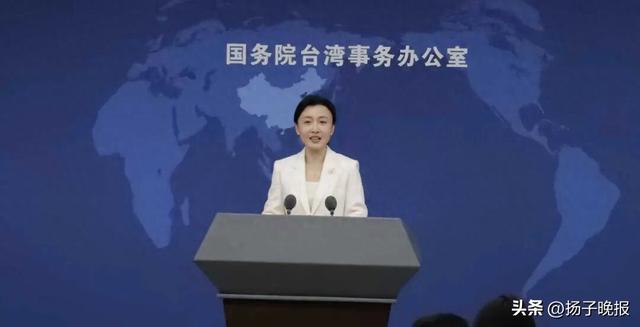
直通国台办发布会|台湾半导体全产业链迁美 只有民进党还在粉饰太平
Xin Lang Cai Jing· 2026-01-28 04:17
Group 1 - The core concern is that if 40% of Taiwan's semiconductor supply capacity moves to the United States over the next three years, it will severely impact Taiwan's economy and lead to a talent exodus from the high-tech sector [1][3] - The spokesperson Zhang Han highlighted that the Taiwanese government, led by the Democratic Progressive Party (DPP), is downplaying the serious concerns expressed by the industry and the public regarding the potential relocation of the semiconductor industry [3] - The DPP's strategy of relying on external forces for independence is criticized as it compromises Taiwan's semiconductor industry advantages, which could result in irreversible losses for the local economy and increased public discontent [3]
国台办:民进党当局无底线媚美卖台“跪送”半导体优势
Ren Min Ri Bao· 2026-01-28 03:25
Group 1 - The core concern is the potential relocation of 40% of Taiwan's semiconductor supply capacity to the United States over the next three years, which could severely impact Taiwan's economy and lead to a talent exodus from the high-tech sector [1] - The spokesperson from the State Council Taiwan Affairs Office highlighted that the Taiwanese public and industry are worried about the full supply chain of semiconductors moving to the U.S., while the ruling Democratic Progressive Party (DPP) is downplaying these concerns [1] - The DPP's strategy of relying on external forces for independence is criticized as it compromises Taiwan's semiconductor industry, leading to irreversible losses for the local economy and increasing public discontent [1]
赖清德“三失”祸台
Xin Lang Cai Jing· 2026-01-25 23:27
Group 1 - The core issue revolves around the impeachment case against Taiwan's leader Lai Ching-te, who refused to attend the review meeting, leading to accusations of arrogance and contempt for public opinion [1][2] - The impeachment process was initiated after Lai's administration failed to endorse a financial law amendment, marking the first time such a procedure has been started against a leader in Taiwan [2] - Public sentiment is largely negative towards Lai, with over 52% of the population expressing dissatisfaction with his governance, and 80.4% considering him the most disappointing leader [5] Group 2 - The controversy is linked to a proposed NT$1.25 trillion defense budget aimed at purchasing new weapons from the U.S., which has faced repeated rejections in the legislative assembly [4] - The U.S. has been pressuring Taiwan to approve the defense budget, indicating that support is contingent on Taiwan's willingness to invest in its own defense [4] - The current administration's approach to defense spending is criticized for prioritizing military expenditure over peaceful cross-strait relations, with calls for dialogue and cooperation instead [6]
赖清德当局结结实实挨了美国“三大巴掌”
Xin Lang Cai Jing· 2026-01-23 10:09
Core Viewpoint - The recent trade agreement between Taiwan and the U.S. is perceived as a significant financial burden on Taiwan, with a total investment of $500 billion, which is approximately 80% of Taiwan's foreign exchange reserves, equating to NT$680,000 per citizen, viewed as a political contribution to the ruling Democratic Progressive Party (DPP) [1][6]. Investment and Economic Impact - Under the trade agreement, Taiwan is set to provide $250 billion in new investments and $250 billion in credit guarantees in exchange for a reduction in tariffs on goods exported to the U.S. to 15% [3][8]. - This arrangement is expected to lead to substantial capital, technology, and talent outflow from Taiwan, raising concerns about significant economic losses [3][8]. Semiconductor Industry Concerns - U.S. Commerce Secretary Gina Raimondo stated that the goal is to transfer 40% of Taiwan's semiconductor supply chain and production to the U.S. during Trump's presidency, which could undermine Taiwan's core industrial advantages and transform it from a "tech island" to an "hollow island" [3][9]. - The DPP government is criticized for promoting this as a "Taiwan model," despite the potential economic ramifications [9]. Public and Media Reactions - Taiwanese media and commentators express skepticism about the DPP's claims of a "win-win" situation, arguing that the U.S. is the primary beneficiary of the agreement, effectively draining Taiwan's resources [4][10]. - Articles in Taiwanese newspapers highlight the perception that the DPP is sacrificing Taiwan's economic future for short-term gains, with critiques labeling the U.S. as a self-serving actor rather than a protector of Taiwan's interests [5][10]. Strategic Implications - Analysts suggest that as Taiwan's semiconductor and technological capabilities are gradually diminished, the U.S. will only focus on its own risk management, questioning what will remain of Taiwan's value [10]. - The narrative posits that the U.S. views Taiwan not as a supply chain partner but as a strategic asset to counter China, indicating a shift in Taiwan's role in the geopolitical landscape [10].
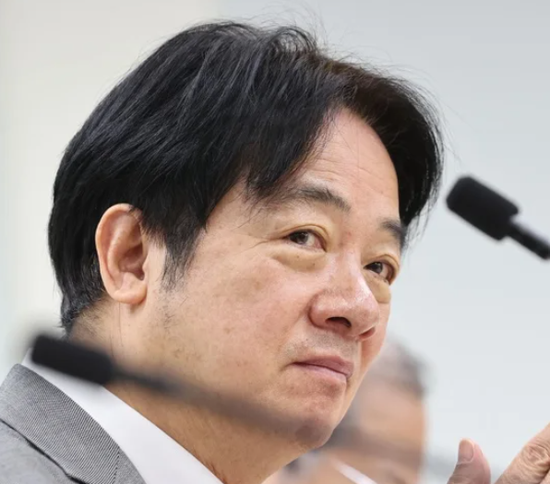
民进党当局的卖身券和投降书
Xin Lang Cai Jing· 2026-01-21 22:38
Group 1 - The core viewpoint of the article is that the recent US-Taiwan tariff negotiations are seen as a coercive measure by the US to pressure Taiwan into increasing investments, which could undermine Taiwan's competitive industries [1][2] - The US Department of Commerce announced that the overall tariff rate applicable to Taiwanese goods will not exceed 15%, down from 20%, while Taiwan's semiconductor and technology companies are expected to make at least $250 billion in new direct investments [1] - The Taiwanese authorities are expected to provide at least $250 billion in credit guarantees as part of the agreement, which the ruling party claims is a significant achievement [1] Group 2 - Taiwan is facing a commitment of $500 billion in investments, which is approximately 80% of its foreign exchange reserves, equating to about 680,000 New Taiwan dollars per citizen [2] - There is a significant risk that 40% of Taiwan's semiconductor supply chain may be relocated to the US, potentially eroding Taiwan's core industrial advantages and transforming it from a "technology island" to an "hollow island" [2] - The outcome of the US-Taiwan tariff negotiations is portrayed as evidence that seeking independence is a dead end, and without the support of a strong homeland, Taiwan risks becoming vulnerable to external forces [2]
国台办:所谓美台贸易及供应链合作只会把台湾榨干
Xin Hua She· 2026-01-21 03:19
Group 1 - TSMC's labor costs in the U.S. are reported to be more than double those in Taiwan, with equipment depreciation costs four times higher, and profit margins are only one-eighth of those in Taiwan [1] - The Democratic Progressive Party (DPP) is criticized for pushing TSMC to increase investments in the U.S., which is seen as detrimental to Taiwan's local industry and the sentiments of its people [1] - Recent statements from Lai Ching-te highlight that the U.S. has become Taiwan's largest destination for overseas direct investment, with hopes for a tariff agreement to support TSMC and other companies in the U.S. [1]

国台办:“倚外谋独”“以武谋独”是对台湾民众安全最大威胁
Yang Shi Xin Wen Ke Hu Duan· 2026-01-14 06:13
Core Viewpoint - The spokesperson from the Taiwan Affairs Office highlighted that 90% of respondents in polls believe that the Democratic Progressive Party (DPP) is accelerating Taiwan's militarization, putting the public in a dangerous situation [1]. Group 1: Public Sentiment - Over 60% of the public does not wish to see themselves or their family members go to war, indicating a strong consensus against the DPP's military policies [1]. - There is widespread dissatisfaction among the Taiwanese people regarding the DPP's spending on defense, which is perceived as catering to external forces and enriching foreign arms dealers [1]. Group 2: Government Actions - The DPP is accused of increasing defense budgets for party interests, promoting a "全民皆兵" (everyone a soldier) mentality, and inciting "war panic" [1]. - The DPP's strategy of relying on external forces for independence and using military means to achieve this is viewed as a significant threat to the safety and interests of the Taiwanese people [1].
美媒称中国在本国领土采取行动不需要国际“先例”,国台办回应
Xin Lang Cai Jing· 2026-01-14 04:08
Group 1 - The core viewpoint is that Taiwan is an integral part of China, and the resolution of the Taiwan issue is a matter of China's internal affairs, emphasizing national sovereignty and territorial integrity [2] - The spokesperson criticized the Democratic Progressive Party (DPP) for relying on external forces to pursue independence, suggesting that this strategy will lead to Taiwan becoming a pawn of foreign powers [2]
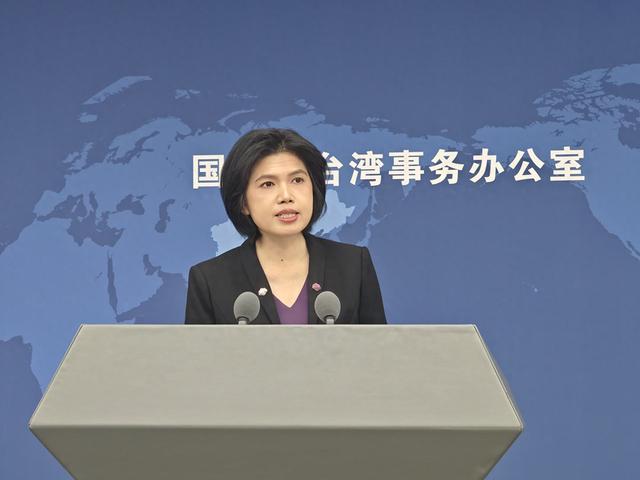
国台办: 赖清德当局“倚外谋独”必遭彻底粉碎
Jing Ji Guan Cha Wang· 2025-12-31 03:37
Core Viewpoint - The spokesperson Zhang Han criticized Lai Ching-te's administration for seeking support from external forces to pursue independence, disregarding the dangers posed by Japan's right-wing forces and the challenges faced by Taiwan's high-tech industry due to foreign exploitation [1] Group 1 - Lai Ching-te's administration is accused of engaging in unprincipled appeasement towards Japan [1] - The administration is said to ignore the severe challenges faced by Taiwan's high-tech industry, which is being undermined by Western countries [1] - The strategy of relying on external forces to pursue independence is predicted to ultimately fail [1]