伊朗导弹计划

Search documents
伊朗外长抵达日内瓦,反驳美方“远程导弹”指认
Xin Hua Cai Jing· 2026-02-25 23:56
Group 1 - Iranian Foreign Minister Zarif arrived in Geneva, Switzerland, on the 25th to prepare for the third round of indirect talks with the U.S. regarding Iran's nuclear program [1] - Zarif refuted U.S. claims that Iran is developing long-range missiles capable of reaching the U.S., labeling such statements as "fake news" [1] - The Iranian delegation is set to meet with U.S. representatives, including Trump's envoy and son-in-law, Kushner, on the 26th, with Oman mediating the discussions [1] Group 2 - Zarif stated that Iran intends to limit the range of its missiles to within 2,000 kilometers, emphasizing that the missile program is purely for defense and deterrence [1] - He cited the conflict with Israel in June as an example of U.S. and Israeli provocation, which necessitated Iran's self-defense measures [1] - The U.S. continues to amass military forces in the Middle East, with President Trump acknowledging consideration of "limited military strikes" against Iran to compel compliance [1]
特朗普称伊朗正研发能打击美国本土的导弹,伊朗外交部驳斥
Huan Qiu Shi Bao· 2026-02-25 22:49
Core Viewpoint - Iran's Foreign Ministry has dismissed U.S. claims regarding its missile program as "a great lie," responding to President Trump's assertion that Tehran is developing missiles capable of striking the U.S. mainland [1][3]. Group 1: Iran's Response to U.S. Claims - Iran's Foreign Ministry spokesperson, Baghaei, stated that accusations from the U.S. and Israel regarding Iran's nuclear program and ballistic missiles are merely a repetition of "great lies" [3]. - Baghaei referenced Nazi propagandist Goebbels' quote about lies becoming truth through repetition, suggesting that the U.S. and Israel are using this tactic for misleading propaganda against Iran [4]. - Although Baghaei did not specify which U.S. claims he was addressing, he noted that Trump had recently claimed Iran is seeking to develop missiles that could reach the U.S. [4]. Group 2: Iran's Military Capabilities and Negotiations - Earlier in the month, Iranian Foreign Minister Zarif stated that Iran currently does not possess the capability to strike the U.S. mainland but would retaliate against U.S. military bases in the Middle East if attacked [4]. - Trump reiterated in his State of the Union address that the U.S. will not allow Iran to develop nuclear weapons, accusing Iranian leaders of plotting "evil nuclear ambitions" [4]. - Iran has consistently denied seeking nuclear weapons, asserting its right to use nuclear technology for peaceful purposes, and expressed a desire for a fair agreement in upcoming negotiations with the U.S. [4].

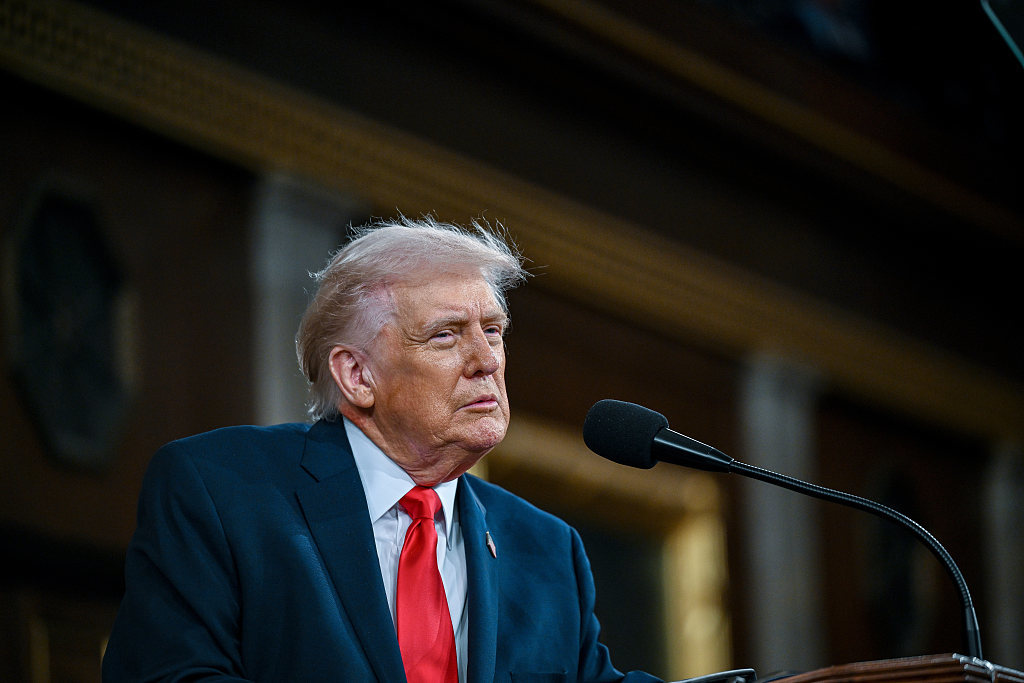
伊朗外长抵达日内瓦
Xin Hua She· 2026-02-25 22:47
Core Viewpoint - Iran's Foreign Minister Zarif arrived in Geneva for indirect negotiations with the U.S. regarding Iran's nuclear program, refuting claims about Iran developing long-range missiles capable of reaching the U.S. [1] Group 1: Negotiation Context - Zarif's delegation arrived in Geneva to meet with U.S. representatives, including Trump's envoy and son-in-law, Kushner, with Oman mediating the discussions [1] - This meeting follows two previous rounds of indirect talks held in Muscat and Geneva earlier in the month [1] Group 2: Missile Development Claims - Zarif criticized U.S. President Trump's assertion that Iran is developing missiles that could reach the U.S., labeling it as "fake news" [1] - He stated that Iran intends to limit missile range to within 2000 kilometers, emphasizing that the missile program is purely for defense and deterrence [1] Group 3: Regional Military Presence - The U.S. continues to amass military forces in the Middle East, with Trump acknowledging consideration of "limited military strikes" against Iran to compel compliance [1]
伊朗外长抵达日内瓦 反驳美方“远程导弹”指认
Xin Hua She· 2026-02-25 21:24
Core Viewpoint - Iran's Foreign Minister Zarif arrived in Geneva for indirect negotiations with the U.S. regarding Iran's nuclear program, while refuting claims about Iran developing long-range missiles capable of reaching the U.S. [1] Group 1: Negotiation Context - Zarif's delegation arrived in Geneva to engage in indirect talks with U.S. representatives, including Trump's envoy and son-in-law, Kushner, with Oman mediating the discussions [1] - This meeting follows two previous rounds of indirect negotiations held in Muscat and Geneva earlier in the month [1] Group 2: Missile Development Claims - Zarif dismissed U.S. President Trump's assertion that Iran is developing missiles that could reach the U.S., labeling it as "fake news" [1] - He stated that Iran intends to limit its missile range to within 2000 kilometers, emphasizing that the missile program is purely for defense and deterrence [1] Group 3: Regional Military Presence - Concurrently, the U.S. is amassing military forces in the Middle East, with Trump acknowledging consideration of "limited military strikes" against Iran to compel compliance [1]
美以闭门会晤有何盘算
Xin Lang Cai Jing· 2026-02-14 02:59
Core Viewpoint - The meeting between U.S. President Trump and Israeli Prime Minister Netanyahu focused on Iran, Gaza, and the Middle East situation, with Netanyahu aiming to influence U.S.-Iran negotiations and increase demands on Iran [1][3]. Group 1: U.S.-Israel Relations - Netanyahu's visit to the U.S. was perceived as an attempt to sway U.S. negotiations with Iran, emphasizing Israel's security needs and the importance of close coordination between the two nations [3][5]. - The Israeli stance is that any agreement between the U.S. and Iran must ensure that Iran does not possess nuclear weapons and must limit its missile capabilities and support for regional proxies [4][5]. Group 2: U.S.-Iran Negotiations - The U.S. and Iran have engaged in indirect negotiations, but key issues remain unresolved, particularly Iran's uranium enrichment and missile program [3][4]. - Iran has expressed willingness to discuss its uranium enrichment levels under the condition that its rights under the Non-Proliferation Treaty are respected, indicating a potential for negotiation but with significant caveats [4]. Group 3: Military Considerations - The U.S. continues to apply military pressure on Iran, with the deployment of the USS Abraham Lincoln carrier strike group in the Middle East, and considerations for sending a second carrier strike group [6]. - Analysts suggest that the U.S. military buildup may serve dual purposes: to pressure Iran into negotiations or to prepare for potential military action if negotiations fail [6].
特朗普闭门会内塔尼亚胡,谈拢了吗?
Xin Lang Cai Jing· 2026-02-12 14:09
Core Viewpoint - The meeting between US President Trump and Israeli Prime Minister Netanyahu focused on Iran, Gaza, and the Middle East situation, with Netanyahu aiming to influence US-Iran negotiations and increase demands on Iran [1][13]. Group 1: Meeting Details - The closed-door meeting lasted approximately three hours, with no media presence or joint statement issued [3][15]. - Trump emphasized the US's preference for continuing negotiations with Iran, while Netanyahu highlighted Israel's security needs and the importance of close coordination between the two nations [5][17]. Group 2: Negotiation Dynamics - Netanyahu's primary goal was to push for a broader agreement that extends beyond Iran's nuclear program, expressing dissatisfaction with the current state of US-Iran negotiations [5][18]. - Israeli media reported that Netanyahu's agenda included ensuring any agreement would prevent Iran from acquiring nuclear weapons and limit its missile capabilities [6][18]. Group 3: Military Considerations - There are speculations that the meeting may have also been about coordinating military actions in case negotiations fail [2][21]. - The US has increased military presence in the Middle East, with the deployment of the USS Abraham Lincoln carrier strike group, indicating a readiness for potential military action against Iran [12][23]. Group 4: Broader Implications - Analysts suggest that while there are subtle differences in the negotiation approach between the US and Israel, there is no fundamental conflict in their positions [21]. - The ongoing military pressure from the US may serve as a backdrop to negotiations, with some experts arguing that the talks could be a facade for justifying military intervention [23].
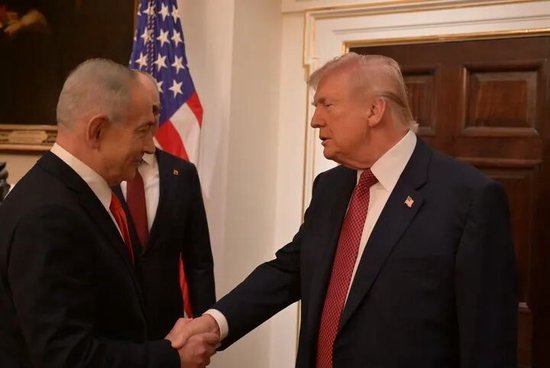
内塔尼亚胡提前访美见特朗普
Xin Lang Cai Jing· 2026-02-11 04:18
Core Viewpoint - Israeli Prime Minister Netanyahu's upcoming meeting with President Trump is primarily focused on discussing Iran, emphasizing the need for negotiations to include restrictions on Iran's ballistic missile program and its support for regional proxies [1][2]. Group 1: Meeting Details - Netanyahu is scheduled to meet Trump on November 11 in Washington, marking his seventh visit to the U.S. since Trump took office [1]. - The meeting is not expected to be open to the media, and there are no plans for a joint press conference, although this could change [2]. - Netanyahu's visit is tightly scheduled, arriving in the U.S. on November 10 and returning on November 12 after the meeting [3]. Group 2: Israeli Concerns - Netanyahu aims to persuade Trump not to sign any agreement that does not address Israel's core interests, particularly regarding Iran's missile capabilities and support for militant groups [2][4]. - There are concerns that Iran's missile program could eventually threaten not only Israel but also the U.S. [2]. - Netanyahu plans to present the latest intelligence on Iran's nuclear and missile programs, as well as its support for terrorist organizations [3]. Group 3: Diplomatic Context - Iran has warned that Netanyahu's visit could negatively impact the diplomatic process, accusing Israel of undermining peace efforts [2]. - Netanyahu's direct dialogue with Trump may stem from doubts about the effectiveness of Trump's advisors in handling negotiations related to Hamas and Palestine [4]. - The meeting is seen as a strategic move for Netanyahu, allowing him to either take credit if Trump decides to take action against Iran or to show that he has made efforts if no action is taken [4].
伊朗外长:伊美两国认为新一轮谈判应尽快举行
Xin Lang Cai Jing· 2026-02-07 13:33
Core Viewpoint - Iran and the United States are in agreement on the necessity of continuing negotiations regarding Iran's nuclear program, although specific dates for the next round of talks have not been established [1][2]. Group 1: Negotiation Status - Iranian Foreign Minister Zarif stated that while the current round of negotiations is a good start, there is still a long way to go in building trust [1]. - Zarif emphasized that negotiations must occur without threats or pressure, and he hopes the U.S. will adopt a similar approach [1]. - Both Iran and the U.S. have agreed to continue discussions, with the next meeting to be arranged after mutual consultations [2]. Group 2: Nuclear and Missile Programs - Zarif asserted that the Iranian nuclear issue can only be resolved through negotiations, and Iran is prepared to reach an agreement that addresses concerns related to uranium enrichment [1]. - He made it clear that the issue of banning uranium enrichment is non-negotiable, stating that it is Iran's right to continue this process [1]. - Zarif also indicated that Iran's missile program is fundamentally defensive and will not be included in negotiations [1]. Group 3: Military Preparedness - Zarif mentioned that the possibility of war always exists, and Iran is prepared for such a scenario [1]. - He clarified that while Iran cannot attack the U.S. mainland, it would target U.S. military bases in the Middle East if attacked [1]. - Zarif distinguished between attacking military bases and neighboring countries, asserting that Iran would not attack its neighbors [1].
美伊密集表态释放谈判信号,焦点为伊朗核计划
Zhong Guo Ji Jin Bao· 2026-02-04 01:46
Group 1 - The core point of the article revolves around the ongoing negotiations between the US and Iran regarding a potential nuclear agreement, with discussions about the location and format of the talks [1][2] - Iran's President has instructed the Foreign Minister to engage in "fair and just negotiations" with the US, emphasizing that the talks should align with Iran's national interests [2] - The US administration, while pursuing diplomatic efforts, has indicated that military options remain on the table if negotiations fail, highlighting the tense atmosphere surrounding the talks [3] Group 2 - Israel has set forth three conditions for any agreement with Iran: no development of nuclear programs, no ballistic missile development, and no support for regional proxies [4] - The focus of the negotiations is primarily on Iran's nuclear program, with Iran expressing no intention to transfer enriched uranium abroad, despite potential concessions [5][6] - There are indications that the US may also seek to address Iran's missile capabilities in the negotiations, although Iran insists that discussions should be limited to nuclear issues [6][7] Group 3 - Recent military tensions have escalated, with the US military shooting down an Iranian drone in the Arabian Sea and Iranian vessels approaching a US-flagged oil tanker in the Strait of Hormuz [8][10] - The US military reported that the drone was approaching the USS Abraham Lincoln, and there were no injuries or damage to US equipment during the incident [9] - Iran has claimed that a vessel entered its territorial waters illegally, asserting that it requested navigation permits from the ship, which did not comply [10]
美伊核谈判开启前变数频生,又分别发生两起军事摩擦:美军击落伊朗无人机,数小时后,伊方船只逼近一美油轮
Xin Lang Cai Jing· 2026-02-03 23:55
Group 1 - The core point of the article is that negotiations between the US and Iran regarding a potential nuclear agreement are facing changes in location and format, with Iran requesting a shift to Oman for bilateral talks instead of Istanbul with multiple countries involved [1][3][21] - The US White House confirmed that the talks are still planned to occur as scheduled despite Iran's request for changes [3][25] - Military tensions have escalated with the US military shooting down an Iranian drone in the Arabian Sea and Iranian vessels approaching a US oil tanker in the Strait of Hormuz [5][9][29] Group 2 - Iran's Foreign Ministry indicated that the negotiation plans are set, with discussions expected to take place in the coming days, and the location is still under negotiation [5][25] - The upcoming talks, if realized, would mark the first face-to-face meeting between senior officials from the US and Iran since the US airstrike on Iranian nuclear facilities in June 2025 [5][25] - Iran's President has instructed the Foreign Minister to engage in "fair and just negotiations" with the US, emphasizing that the talks should align with Iran's national interests [10][32] Group 3 - The US military reported that an Iranian drone was shot down while approaching the USS Abraham Lincoln aircraft carrier, which was operating approximately 500 miles from the Iranian coast [7][27] - Following the drone incident, Iranian vessels threatened to board a US-flagged oil tanker in the Strait of Hormuz, prompting a US naval response to ensure the tanker’s safety [9][29] - Iran's officials claimed that the vessel was illegally entering Iranian waters and had been warned before leaving [9][29] Group 4 - The Israeli Prime Minister met with a US envoy to discuss Iran, expressing distrust in Iran's commitments and emphasizing the need for stringent conditions in any agreement [14][34] - The US President has reiterated military options remain on the table if diplomatic efforts fail, indicating a readiness for potential military action against Iran [15][37] - Israel has outlined three conditions for any agreement with Iran, focusing on halting nuclear development, missile programs, and support for regional proxies [37][39] Group 5 - Reports suggest Iran may be willing to make significant concessions regarding its nuclear program, including potentially transferring enriched uranium to Russia, although this has been denied by Iranian officials [19][39] - The US appears to be maintaining its demands to limit Iran's missile capabilities alongside nuclear discussions, indicating a dual-track negotiation approach [20][40] - Iranian officials have stated that discussions should focus solely on the nuclear program, rejecting any talks on missile projects [20][40]