医学AI

Search documents
阿里健康氢离子获人民卫生出版社授权 临床全场景知识库全面嵌入AI
Sou Hu Wang· 2026-02-03 05:34
Core Insights - Alibaba Health's AI product "Hydrogen Ion" has established a content collaboration with the People's Medical Publishing House, gaining systematic access to its core medical publishing resources [1] - The collaboration aims to transform static medical content into a dynamic, intelligent knowledge system that supports doctors in obtaining precise clinical advice and drug information through natural language queries [1][2] Group 1: Collaboration and Technology - The partnership with the People's Medical Publishing House allows Hydrogen Ion to utilize a comprehensive clinical knowledge base and drug knowledge base, constructed from thousands of textbooks, guidelines, and monographs [1] - AI technologies such as knowledge graphs, natural language retrieval, and dynamic evidence positioning will enable authoritative knowledge sourcing for medical professional Q&A [1][2] Group 2: Practical Applications - Hydrogen Ion can provide evidence-based, high-quality professional support for clinical decision-making by generating answers to specific medical queries and citing the source of information [2] - The AI assistant is designed to meet the real needs of clinical practice, research, and education, enhancing its evidence-based capabilities in various medical scenarios [2] Group 3: Future Directions - The company plans to deepen collaborations with national medical publishing or academic institutions to further advance the usability and reliability of authoritative medical knowledge [2] - The goal is to transition medical knowledge from being merely readable to being usable, verifiable, and dependable, ultimately serving as a comprehensive AI tool for doctors [2]

阿里健康氢离子获中华医学会授权 国内顶级医学资源全面赋能AI
Sou Hu Wang· 2026-01-30 08:35
Core Insights - Alibaba Health's AI product "Hydrogen Ion" has partnered with the Chinese Medical Association to integrate top-tier medical resources into its platform, enhancing the accessibility and usability of authoritative medical knowledge for clinicians and researchers [1][2] - The collaboration aims to convert medical academic resources into a structured knowledge system that supports precise sourcing and retrieval, addressing challenges faced by doctors in keeping up with rapid updates and finding reliable information [1] Group 1 - The partnership will enable doctors to ask natural language questions and receive immediate answers based on the latest evidence-based guidelines, along with precise citations for reference [1] - Researchers will benefit from intelligent cross-journal and cross-disciplinary searches, improving knowledge association and retrieval capabilities [1] - The Chinese Medical Association's clinical guidelines and expert consensus are considered industry "gold standards," providing invaluable guidance to frontline clinical and research doctors [1] Group 2 - The Director of the New Media Department of the Chinese Medical Association expressed optimism about the collaboration, highlighting the new evidence-based information paradigm that Hydrogen Ion will provide to doctors [2] - Hydrogen Ion focuses on addressing the real needs of doctors in clinical and research settings, aiming to enhance its core functionalities in evidence support, intelligent retrieval, and literature review [2] - The goal is to ensure that doctors receive accurate answers backed by evidence in their clinical and research endeavors [2]
阿里健康AI产品氢离子新功能上线:动态证据定位 让医学结论可验、可信、可用
Zheng Quan Ri Bao· 2026-01-27 14:17
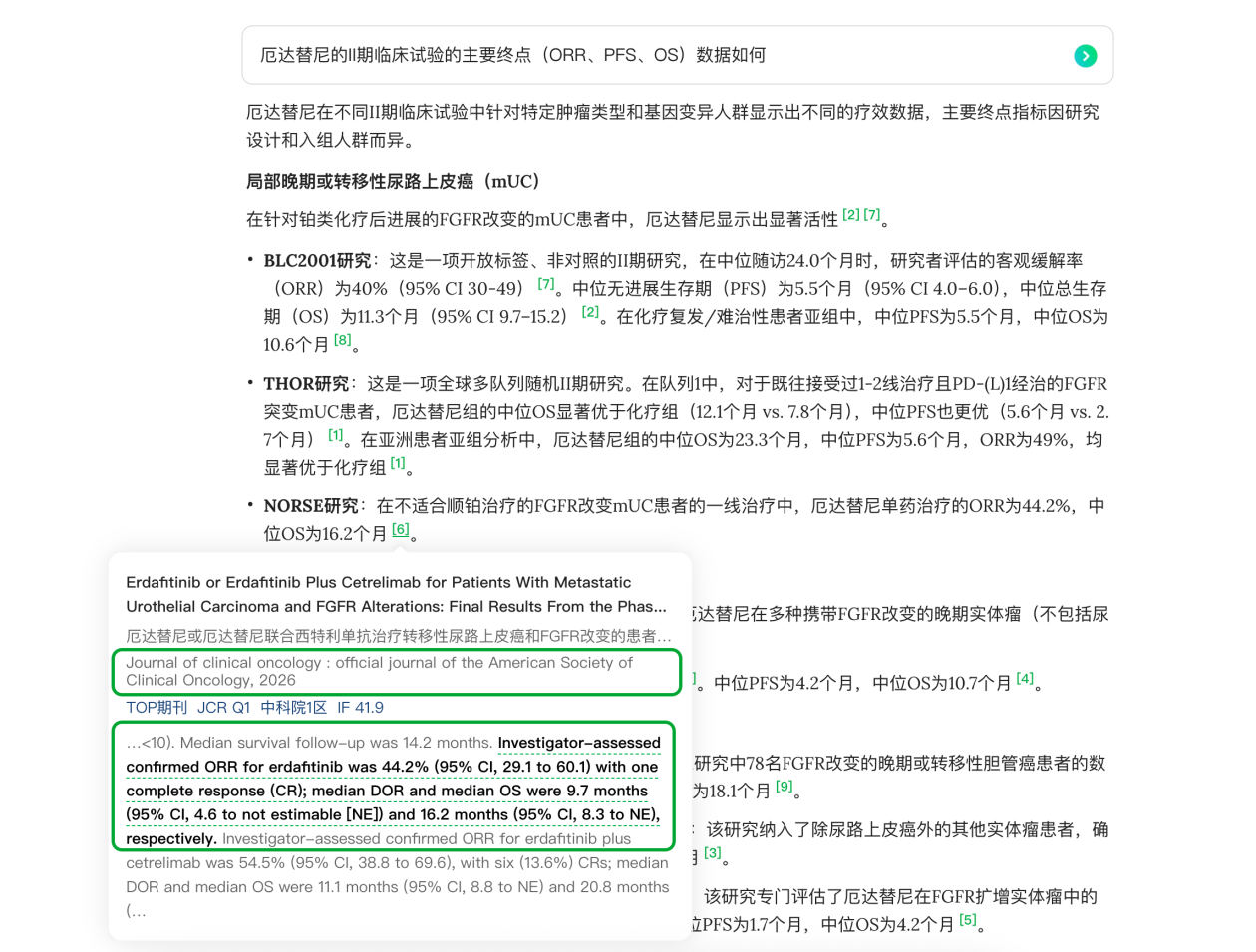
Core Insights - Alibaba Health's medical AI application "Hydrogen Ion" has launched a key version update featuring a new function called "Dynamic Evidence Localization" which allows precise identification of specific statements supporting claims, while also verifying their timeliness, authority, and logical consistency [2] Group 1: Dynamic Evidence Localization - The new function upgrades traditional "static citation" methods to "living evidence," addressing the industry's challenge of determining whether information is still valid and credible [2] - The system integrates timeliness and authority into its citation logic, continuously updating and filtering global guidelines and literature to ensure responses are based on the latest and most reliable medical evidence [2][3] Group 2: User Experience and Impact - When users inquire about specific clinical trial data, the system provides structured medical conclusions with citation tags, allowing seamless tracing back to original literature and supporting statements [3] - This technology significantly reduces the information verification cost for clinical and research work, enabling doctors to make decisions without pausing to check original documents, as the AI performs triple verification of effectiveness, authority, and logical consistency [3]

阿里健康AI产品氢离子新功能上线:动态证据定位 让医学结论可验
Huan Qiu Wang· 2026-01-27 07:58
Core Viewpoint - The key update of Alibaba Health's AI application "Hydrogen Ion" introduces a new feature called "Dynamic Evidence Localization," which enhances the precision of sourcing medical information by verifying its timeliness, authority, and logical consistency [1][3]. Group 1: Feature Overview - The "Dynamic Evidence Localization" feature allows for precise identification of specific statements in original texts, moving from vague citations to exact references that explain their credibility and current validity [1]. - This feature addresses the limitations of traditional static knowledge bases that only provide spatial references without assessing the reliability or timeliness of the information [1][3]. Group 2: Technical Implementation - The technology employs a "Three-Dimensional Evidence Framework" that systematically resolves industry challenges by integrating timeliness and authority into the citation logic [1][3]. - The system updates and filters global authoritative guidelines and literature on a daily basis, ensuring that the content presented is always aligned with current medical consensus [3]. Group 3: User Experience - When users inquire about specific clinical trial data, the system not only provides structured medical conclusions but also allows seamless tracing back to the original literature and supporting statements [2]. - The goal of this technology is to instill confidence in doctors, enabling them to trust and utilize the AI's outputs effectively [3].
阿里健康AI产品氢离子上线新功能
Zhong Guo Jin Rong Xin Xi Wang· 2026-01-27 06:28
Core Viewpoint - Alibaba Health's medical AI application "Hydrogen Ion" has launched a key version update featuring a new function called "Dynamic Evidence Localization," which allows for precise identification of specific statements supporting viewpoints, along with real-time verification of their timeliness, authority, and logical consistency [1][2]. Group 1: Technology and Functionality - The "Dynamic Evidence Localization" function upgrades traditional static citation methods to a more dynamic approach, enabling the identification of whether the evidence is still valid and credible [1]. - The system utilizes a unique "three-dimensional evidence-based architecture" to systematically address industry challenges by integrating timeliness and authority into the citation logic [1][2]. - The technology updates and filters global authoritative guidelines and literature daily, ensuring that the information presented is always aligned with current medical consensus [2]. Group 2: Impact on Medical Decision-Making - The new functionality significantly reduces the information verification costs for clinical and research work, allowing doctors to make decisions without pausing to check original literature [2]. - The AI performs a threefold verification process to ensure that the information is effective at the current moment, authoritative in source, and logically sound [2].
阿里健康AI产品氢离子上线“动态证据定位 ”功能
Xin Lang Cai Jing· 2026-01-27 04:33
Core Insights - Alibaba Health's medical AI application "Hydrogen Ion" has launched a key version update featuring a new "Dynamic Evidence Localization" function, which allows precise identification of specific statements supporting viewpoints while verifying their timeliness, authority, and logical consistency [1][4]. Group 1: Dynamic Evidence Localization - The core of the Dynamic Evidence Localization function is to upgrade the traditional "static citation" to an evolving "live evidence" model, addressing the industry's challenge of determining whether sources remain valid and credible [1][5]. - Traditional solutions rely on static knowledge bases and keyword matching, which only provide spatial location of citations without assessing the reliability or currency of the content [5]. Group 2: Three-Dimensional Evidence Framework - Hydrogen Ion employs a unique "Three-Dimensional Evidence Framework" to systematically tackle the industry's issues, integrating timeliness (When) and authority (Quality) into the citation logic [5]. - The system updates and filters global guidelines and literature daily, ensuring that the information presented is always based on the latest and most reliable medical evidence [5]. Group 3: User Experience and Trust - When users search for specific clinical trial data, the system not only provides structured medical conclusions but also allows seamless tracing back to the original literature and supporting statements through citation tags [2][5]. - The primary goal of this technology is to instill confidence in doctors, enabling them to trust and utilize the information provided [2][5].
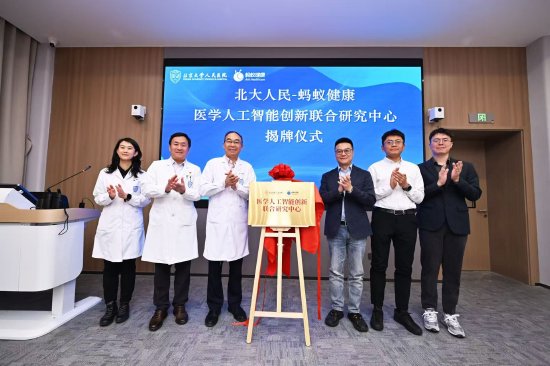
北大人民医院携手蚂蚁健康,成立医学人工智能创新联合研究中心
Xin Lang Cai Jing· 2025-12-30 03:15
Group 1 - The "Medical Artificial Intelligence Innovation Research Center" has been officially established through a collaboration between Peking University People's Hospital and Ant Group Health, aiming to advance AI technology in the healthcare sector [1][2]. - The first national "AI Doctor" standard in the surgical field has been developed, led by Peking University People's Hospital in collaboration with the China Academy of Information and Communications Technology, Ant Group Health, and several top hospitals, marking a significant step in the standardization of medical AI applications [3][5]. - The research center will focus on real clinical pain points, exploring innovative applications of AI in specialized disease diagnosis, clinical decision support, and health management models, with the goal of transforming research outcomes into more accessible healthcare services [3][5].
钟南山:医学AI发展需要产学研医用联动
Zhong Guo Qing Nian Bao· 2025-12-13 12:47
Core Insights - The first Greater Bay Area Medical Artificial Intelligence Conference highlighted the necessity of integrating AI into healthcare, as emphasized by academic leaders like Zhong Nanshan, who stated that "medical AI is not a choice but a must" [1][3]. Group 1: Industry Challenges and Opportunities - The uneven distribution of medical resources and weak grassroots service capabilities in China necessitate innovative solutions through new-generation information technology [3]. - The integration of "AI + healthcare" requires a collaborative approach involving technological innovation, systemic mechanism innovation, and ecological synergy, making it a complex system engineering task [3]. - The medical AI sector is identified as a highly promising area for application due to its vast data, diverse scenarios, and essential public needs [3]. Group 2: Collaboration and Ecosystem Development - Zhong Nanshan emphasized the importance of collaboration among various institutions to advance medical AI, advocating for the integration of industry, academia, and research to facilitate rapid implementation [3][5]. - The establishment of a credible data space for medical testing and AI exploration was showcased at the conference, aiming to expand the ecological cooperation network and develop new scenarios and data products [5]. - The health data is recognized as a crucial strategic resource for the nation and a foundational element for the development of medical AI, with expectations for high-level medical institutions and tech companies to engage in innovative practices [5].

AI永生赛道来了位15岁量子物理博士
量子位· 2025-12-01 09:26
Group 1 - The article highlights the remarkable achievement of Laurent Simons, who at the age of 15 has become one of the youngest PhD holders in quantum physics, completing his dissertation on "Bose polarons in superfluids and supersolids" [1][27][29] - Following his PhD, Laurent plans to transition into AI in medicine, aiming to develop "superhumans" and combat biological aging [1][34][35] - Laurent's educational journey is characterized by accelerated learning, having completed primary school by age four, high school by age eight, and earning a bachelor's degree in physics at age eleven with a top score of 85% [1][21][22] Group 2 - The article discusses the intense media attention and public interest surrounding Laurent, with many tech giants reaching out to him for collaboration, although his parents have declined these offers [1][32] - It also touches on the concerns regarding the pressure and expectations placed on child prodigies like Laurent, questioning the balance between academic achievement and normal childhood experiences [1][57][58] - Laurent's family background is mentioned, noting that both of his parents are dentists and that he lived with his grandparents until the age of nine, which may have contributed to his unique development [1][44][45]

一个模型读懂所有医学数据,Hulu-Med探索医学大模型开源新范式 | 浙大x上交xUIUC
量子位· 2025-11-13 09:25
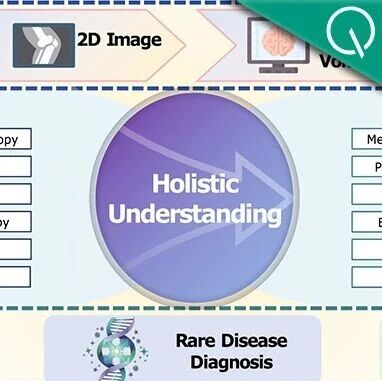
Core Insights - The article discusses the evolution of medical AI from specialized assistants to versatile models, highlighting the introduction of the Hulu-Med model, which integrates understanding of medical text, 2D images, 3D volumes, and medical videos into a single framework [1][2]. Group 1: Overview of Hulu-Med - Hulu-Med is a generalist medical AI model developed collaboratively by several institutions, including Zhejiang University and Shanghai Jiao Tong University, aiming to unify various medical data modalities [1][6]. - The model is open-source, trained on publicly available datasets and synthetic data, significantly reducing GPU training costs while demonstrating performance comparable to proprietary models like GPT-4.1 across 30 authoritative evaluations [4][5]. Group 2: Challenges in Medical AI - The current landscape of medical AI is characterized by fragmentation and a lack of transparency, with many specialized models acting as isolated "information islands," complicating the integration of multimodal patient data [7][9]. - The rise of large language models presents an opportunity to address these challenges, but the lack of transparency in leading medical AI systems remains a significant barrier to widespread adoption [8][9]. Group 3: Design Principles of Hulu-Med - The development of Hulu-Med is guided by three core principles: holistic understanding, efficiency at scale, and end-to-end transparency [10]. - The model aims to be a "medical generalist," capable of comprehensively understanding various data types to assess patient health [11]. Group 4: Innovations in Transparency and Openness - Hulu-Med prioritizes transparency and openness, relying solely on publicly available data to avoid privacy and copyright risks, and has created the largest known open medical multimodal corpus with 16.7 million samples [16][17]. - The model's open-source nature allows researchers to replicate and improve upon the work, fostering a collaborative environment for developing reliable medical AI applications [18]. Group 5: Unified Multimodal Understanding - Hulu-Med's architecture allows for the native processing of text, 2D images, 3D volumes, and medical videos within a single model, overcoming limitations of traditional models that require separate encoders for different modalities [20][22]. - The innovative use of 2D rotation position encoding and a unified visual encoding unit enables the model to understand spatial and temporal continuity without complex modules specific to 3D or video data [23][25]. Group 6: Efficiency and Scalability - Hulu-Med achieves a balance between high performance and efficiency, employing strategies like medical-aware token reduction to minimize redundancy in 3D and video data, reducing visual token counts by approximately 55% [33][35]. - The model's training process is structured in three progressive stages, enhancing its ability to learn from diverse data types while controlling training costs effectively [37][41]. Group 7: Performance Evaluation - Hulu-Med has been rigorously evaluated across 30 public medical benchmarks, outperforming existing open-source medical models in 27 tasks and matching or exceeding the performance of top proprietary systems in 16 tasks [48][49]. - The model demonstrates exceptional capabilities in complex tasks such as multilingual medical understanding and rare disease diagnosis, showcasing its potential for clinical applications [51]. Group 8: Future Directions - Future research will focus on integrating more multimodal data, expanding open data sources, enhancing clinical reasoning capabilities, establishing efficient continuous learning mechanisms, and validating the model in real clinical workflows [52].