
司法公正

Search documents
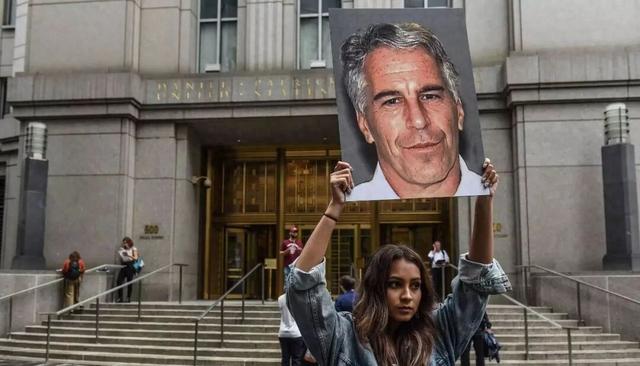
海客谈:美国民众表示,爱泼斯坦案暴露美式精英特权
Xin Lang Cai Jing· 2026-02-22 08:41
Core Viewpoint - The release of documents related to the Epstein case by the U.S. Department of Justice has sparked significant discussions about elite privilege, judicial fairness, and power dynamics globally [1] Group 1: Public Reactions - Residents in New York express concerns about the protection of the elite class in various sectors, including society, government, and politics [1] - There is a strong desire among the public for transparency, with individuals highlighting that crucial information regarding the case remains concealed [1]
最高检:持续深化和规范检务公开
Xin Hua She· 2026-02-19 02:57
Group 1 - The Supreme People's Procuratorate (SPP) aims to deepen and standardize public prosecution services, enhancing the breadth, precision, and depth of transparency to better meet public expectations for fairness and justice [1] - Since 2025, the SPP has organized three open day activities focusing on themes such as the implementation of the Civil Code, comprehensive judicial protection for minors, and supervision of criminal penalties, utilizing a four-level linkage approach [1] - Local procuratorial agencies have also conducted various open day activities tailored to their specific circumstances, promoting transparency and public engagement [1] Group 2 - The SPP regularly publishes information on similar case handling, including issues like infringement of personal information, medical insurance fraud, environmental pollution, and food and drug safety [1] - Since 2020, the SPP has released 22 batches of 58 categories of case information, with 4 batches and 11 categories published in 2025 alone [1] - The publication of similar cases not only highlights legal risks but also promotes social justice through judicial fairness, reflecting the SPP's commitment to its responsibilities [1]
守好法治生命线
Liao Ning Ri Bao· 2026-02-14 01:04
Group 1 - The core viewpoint emphasizes the importance of fairness and justice in law enforcement and judicial processes, highlighting that public trust is rooted in the perception of justice [1][2] - The article stresses the need for a robust legal framework that ensures equal rights, opportunities, and rules, advocating for a comprehensive approach to uphold social justice [1][3] - It points out the detrimental effects of judicial misconduct, such as favoritism and corruption, which undermine public confidence in the justice system [2] Group 2 - The text calls for the implementation of a judicial responsibility system to ensure accountability and transparency in judicial decisions, reinforcing the principle that those who adjudicate must also be responsible for their rulings [2] - It highlights the necessity for standardized enforcement practices to eliminate discrepancies in penalties and ensure fair treatment across similar cases, addressing issues like selective enforcement and abuse of discretion [2] - The article concludes by urging legal professionals to enhance their capabilities in promoting social justice and to make the principles of law more accessible and visible to the public [3]
以案例库建设促推司法公正
Ren Min Ri Bao· 2026-02-09 03:05
Core Viewpoint - The construction of a case database by the Supreme People's Court is essential for ensuring judicial consistency and enhancing public trust in the legal system, as highlighted by legal professionals [1]. Group 1: Case Database Development - The Supreme People's Court has been advancing the construction of a case database to provide guidance for judges and serve as a resource for the public [1]. - There are suggestions to enrich the types of cases included in the database, particularly in specialized fields such as intellectual property, environmental resources, and finance, to better meet judicial practice needs [1]. - As of January 31, 2026, the case database has included over 5,300 cases, achieving comprehensive coverage of common crimes and frequently occurring legal issues [1]. Group 2: Improvements and Innovations - The case database has shown significant progress in novelty, exemplified by the inclusion of the first national case addressing "invisible overtime," which establishes recognition standards for this issue [2]. - There is an expectation for further improvements in the operational mechanisms of the case database to enhance its effectiveness in promoting judicial fairness and receiving positive feedback [2].
余华英被执行死刑已近1年,作案细节再披露:有5个家庭被她一次拐走了两个孩子
Mei Ri Jing Ji Xin Wen· 2026-02-09 00:44
Core Viewpoint - The case of Yu Huaying, who was sentenced to death for child trafficking, highlights the long-term impact of organized crime on families and the judicial system's commitment to justice for victims [1][11][20]. Group 1: Crime Details - Yu Huaying, along with accomplices, trafficked multiple children over a span of 10 years, operating in various regions including Guizhou and Chongqing, and selling them to Hebei [2][18]. - The number of children trafficked by Yu Huaying was initially reported as 11 but was later confirmed to be 17, affecting 12 families, with some families losing multiple children [16][18]. Group 2: Victim Accounts - Victims' families, such as Luo Xingzhen and Chen Binglian, have endured decades of searching for their lost children, often at great personal and financial cost [3][5]. - Yang Niuhua, a victim, provided crucial evidence against Yu Huaying, recalling her abduction vividly and aiding in the eventual arrest of the trafficker [10][11]. Group 3: Judicial Process - The initial trial resulted in a death sentence for Yu Huaying, which was upheld after an appeal, emphasizing the court's determination to ensure justice for the victims [11][18]. - The case underwent a re-examination to clarify all criminal acts committed by Yu Huaying, reflecting the judicial system's commitment to thoroughness and justice [14][16]. Group 4: Societal Impact - The case serves as a significant step towards the goal of eradicating child trafficking, demonstrating the judicial system's resolve to combat severe crimes against minors [20].


爱泼斯坦案离真相还有多远
Xin Lang Cai Jing· 2026-02-08 21:40
Core Viewpoint - The Epstein case continues to evolve with new revelations about high-profile individuals involved, while the U.S. Justice Department has decided to conclude its investigation without further criminal prosecutions, raising questions about accountability and justice for victims [1][5][9]. Group 1: Involvement of High-Profile Individuals - The Epstein case has implicated numerous prominent figures, including former U.S. President Bill Clinton, Microsoft founder Bill Gates, and British former ambassador Peter Mandelson, among others, leading to public apologies and resignations [1][2][3]. - Clinton reportedly flew on Epstein's private plane 27 times, and both he and his wife have agreed to cooperate with congressional investigations, a rare occurrence for former presidents [2][6]. - Mandelson has acknowledged receiving a $75,000 transfer from Epstein and has publicly stated that knowing Epstein was his greatest mistake [2][3]. Group 2: Legal Proceedings and Investigations - The U.S. Justice Department has announced that it will not pursue new criminal charges related to the Epstein case, despite the extensive documentation and evidence available [5][6]. - The decision has sparked criticism regarding the lack of accountability for other individuals involved in Epstein's activities, as only Epstein and his associate Ghislaine Maxwell have faced significant legal consequences [5][9]. - The release of over 3 million pages of documents has been criticized for selectively redacting information, particularly regarding the identities of victims while exposing personal details of high-profile individuals [7][9]. Group 3: Public and Political Reactions - The decision by the Justice Department has led to public outcry and skepticism about the integrity of the legal process, with some questioning whether the system is protecting powerful individuals rather than victims [6][10]. - Former President Donald Trump has been mentioned over 1,000 times in the released documents, yet he claims the documents clear him of wrongdoing, framing the situation as a conspiracy against him [7][10]. - The ongoing political implications of the Epstein case are evident, as it has become a focal point in discussions about justice, accountability, and the influence of wealth and power in the legal system [6][10].
视频丨法官讲述余华英案重审:穷尽一切手段将其所有犯罪事实都查清楚
Xin Lang Cai Jing· 2026-02-08 16:28
Core Viewpoint - The case of Yu Huaying, involved in child trafficking, has been highlighted as one of the "Top Ten Cases Promoting the Rule of Law in 2025," culminating in her execution after a lengthy judicial process [1][2]. Summary by Sections Case Background - Yu Huaying was involved in organized child trafficking over a span of 10 years, from 1993 to 2003, where she and accomplices trafficked multiple children from Guizhou and Chongqing to Hebei [3]. - The families of the victims suffered immense emotional and financial distress, with some never reuniting with their children [3]. Victim Accounts - Parents of the abducted children, such as Luo Xingzhen and Chen Binglian, have shared their harrowing experiences of searching for their lost children for decades, highlighting the emotional toll and the impact on their lives [4][6]. - Yang Niuhua, one of the victims, recounted her abduction at the age of five and her subsequent efforts to gather evidence against Yu Huaying, leading to her arrest in June 2022 [8][10]. Judicial Proceedings - The initial trial resulted in a death sentence for Yu Huaying, who was found guilty of trafficking 11 children [10]. - During the appeal process, new evidence emerged, leading to a retrial that increased the number of trafficked children to 17, involving 12 families [12][14]. - The final ruling by the Guizhou Provincial High Court upheld the death sentence, emphasizing the severity of the crimes and the need for justice for the affected families [15][17]. Legal and Social Implications - The case reflects the judicial system's commitment to both substantive and procedural justice, particularly in cases involving severe crimes against minors [17]. - The resolution of Yu Huaying's case is seen as a significant step towards the goal of eradicating child trafficking, reinforcing the importance of legal action in protecting vulnerable populations [17].

爱泼斯坦案:谁在惧怕真相
Xin Lang Cai Jing· 2026-02-08 04:02
Core Viewpoint - The Epstein case, involving numerous high-profile individuals, is facing a potential closure by the U.S. Department of Justice, despite ongoing public interest and calls for justice [2][8][9]. Group 1: Key Individuals Involved - The case has implicated a wide range of influential figures, including former U.S. Presidents Trump and Clinton, British former ambassador Mandelson, and tech mogul Bill Gates, all of whom have expressed regret over their associations with Epstein [2][5][7]. - Clinton reportedly flew on Epstein's private jet 27 times, and both he and his wife have agreed to cooperate with investigations, marking a rare instance of a former president being scrutinized in such a manner [5][12]. - Mandelson has faced significant backlash for his connections to Epstein, including receiving a $75,000 transfer from him, leading to his resignation from the House of Lords and the Labour Party [5][7]. Group 2: Legal Proceedings and Public Response - The U.S. Department of Justice has announced the conclusion of its review of the Epstein case, stating that no new criminal charges will be filed against individuals associated with Epstein, which has raised concerns about accountability for the alleged crimes [8][9][16]. - The decision has been met with skepticism, as many believe it undermines the pursuit of justice for the victims, with critics questioning whether the legal system is protecting the powerful rather than the victims [9][13][16]. - The release of over 3 million documents related to the case has been criticized for selectively redacting information, protecting the identities of powerful individuals while exposing the details of victims [12][13]. Group 3: Broader Implications - The Epstein case highlights systemic issues within the U.S. judicial system, where high-profile individuals may evade accountability through civil settlements and legal maneuvering [16]. - The case has become a focal point for discussions about the intersection of power, wealth, and justice, raising questions about the integrity of legal processes in protecting victims versus shielding the elite [16].
一场跨越千里的讨薪拉锯战
Xin Lang Cai Jing· 2026-02-07 03:13
Core Viewpoint - The article highlights the challenges faced by a worker, referred to as Lao Xu, in seeking justice for unpaid wages from a moving company, emphasizing the importance of thorough investigation and empathy in the judicial process [3][9]. Group 1: Case Background - Lao Xu filed a lawsuit against a moving company for unpaid wages, but the evidence presented was weak, consisting of a blank contract and an insurance agreement with no clear employer identification [3][6]. - The absence of the defendant in court raised concerns about the effectiveness of the legal process in addressing Lao Xu's grievances [3][6]. Group 2: Court Proceedings - During the first court session, Lao Xu recounted his experience of working long hours without payment, but the lack of corroborating evidence made it difficult to establish a strong case [6][8]. - The investigation continued post-hearing, with attempts to contact individuals associated with the moving company, but initial responses were evasive [6][7]. Group 3: Legal Challenges - Lao Xu faced a potential dismissal of his case due to failure to pay court fees on time, which could jeopardize his chances of receiving compensation [7]. - With guidance, Lao Xu managed to pay the required fees within the legal timeframe, allowing the case to proceed [7]. Group 4: Resolution - In the second court session, the defendant was still absent, but a shift in strategy led to gathering information from subcontractors and former colleagues of Lao Xu, gradually building a clearer picture of the situation [8]. - A breakthrough occurred when the investigator engaged in a heartfelt conversation with a company representative, leading to an acknowledgment of the owed wages and a settlement agreement [8][9]. Group 5: Judicial Insights - The article underscores the role of judges not only in legal proceedings but also in understanding the human aspects behind each case, advocating for a justice system that is both effective and compassionate [9].

解码年度“双十大” 透视2025检察工作系列报道|传承与担当,“正义之剑”展现监督锋芒
Xin Lang Cai Jing· 2026-02-07 01:11
Core Viewpoint - The articles emphasize the importance of judicial fairness and the legacy of justice in China, particularly in the context of prosecuting war criminals and addressing serious crimes involving minors and cross-border fraud [1][2][3]. Group 1: Judicial Practices and Standards - The "Five Musts" standard for case determination reflects the commitment of the new Chinese procuratorial system to uphold historical accountability and public trust, ensuring that every case is handled with rigorous legal standards [2][3]. - The successful handling of the "缅北" (Northern Myanmar) series of cases demonstrates China's determination to combat cross-border fraud and protect the interests of its citizens, showcasing the effective exercise of judicial sovereignty [1][7]. Group 2: Case Studies and Innovations - The case involving the prosecution of a minor for serious crimes illustrates the balance between education and punishment, emphasizing that serious criminal behavior will not be tolerated despite the age of the offender [5][6]. - The innovative use of technology in evidence collection and analysis, particularly in the prosecution of electronic evidence, has significantly enhanced the efficiency and effectiveness of legal supervision [5][6]. Group 3: Historical Context and Future Implications - The exhibition commemorating the prosecution of Japanese war criminals serves as a reminder of the historical commitment to justice, reinforcing the ongoing mission of the procuratorial system to uphold fairness and integrity in the legal process [2][3][8]. - The successful prosecution of complex cross-border crime cases not only serves as a deterrent but also contributes to the development of international legal cooperation and the establishment of a robust framework for addressing similar future cases [7][8].