
法治

Search documents
以法治推动短视频高质量发展
Xin Hua Ri Bao· 2026-02-27 06:27
Core Insights - The short video user base in China is projected to reach 1.068 billion by June 2025, accounting for 95.1% of the total internet users [1] - The short video industry is facing significant challenges related to intellectual property infringement, with over 50 million suspected infringement links reported, including approximately 6.5 million related to original content [2] - Legal frameworks and regulations are being established to protect intellectual property rights in the short video sector, which is crucial for fostering a healthy digital cultural industry [3] Group 1: Industry Growth and Challenges - The short video sector is experiencing rapid growth, with a complete industry chain formed that includes creators, distribution platforms, and support services [4] - The annual compound growth rate for micro-short dramas is projected to reach 916.03% by the end of 2024, with 23,000 approved micro-short drama creation institutions [5] - The industry is also expanding into international markets, with Chinese short video applications achieving nearly 55 million downloads and generating $170 million in in-app purchases by February 2024 [5] Group 2: Legal and Regulatory Framework - The short video industry faces legal challenges regarding the definition of works, recognition of creative actions, and delineation of fair use and platform responsibilities [3] - Various regulations have been introduced to standardize industry practices and protect the rights of creators and platforms, including the "Internet Audio-Visual Program Service Management Regulations" and "Network Short Video Content Review Standards" [3] - Collaborative efforts among judicial, administrative, and industry associations have led to significant actions against copyright infringement, including the deletion of 840,000 infringing links and the closure of 1,692 infringing websites [7] Group 3: Future Directions and Industry Health - The industry is encouraged to focus on high-quality content and sustainable development while promoting socialist core values and positive energy [8] - Continuous legal protection and regulatory oversight are essential for maintaining a competitive and healthy ecosystem within the short video industry [6][7]
人民日报刊载评论:破“内卷”需用好法治之钥
Ren Min Ri Bao· 2026-02-25 01:33
Core Viewpoint - The article emphasizes that the rule of law serves as both a "firewall" against unfair competition and a "stabilizer" for companies' development, highlighting its importance in addressing "involution" competition in the context of building a unified national market [1][4]. Group 1: Case Studies - A car company suffered significant losses when 40 executives and technical personnel moved to a competitor, which launched a series of electric vehicles using proprietary technology without legal sources. The Supreme People's Court imposed punitive damages of approximately 640 million yuan, marking a historic high in intellectual property infringement cases in China [2]. - A machinery technology company faced three patent infringement lawsuits from a competitor. After winning the first two cases, the competitor attempted to disrupt the company's IPO with a third lawsuit. The court dismissed the competitor's claims and ordered them to pay 400,000 yuan in reasonable expenses, reinforcing the notion that lawful companies will not suffer from malicious lawsuits [4]. Group 2: Legal Enforcement and Judicial Actions - The article discusses the need for strict and fair law enforcement to delineate the boundaries of fair competition. The State Administration for Market Regulation has intensified enforcement efforts against "involution" competition, particularly in key sectors, to enhance deterrence [5][6]. - Judicial actions are crucial in defining the legal boundaries of competitive behavior, effectively combating intellectual property infringement, and promoting a shift from low-quality competition to high-quality and innovative competition [5][6]. Group 3: Legislative and Regulatory Framework - The emergence of new challenges in the platform and digital economy, such as unauthorized use of AI models and data theft, necessitates timely legislative responses and clear judicial rules to maintain market order and promote healthy industry development [7]. - The rule of law is identified as an essential requirement and important guarantee for constructing a high-level socialist market economy, which can unleash market vitality and accelerate the growth of new productive forces [8].
人民日报:破“内卷”需用好法治之钥
Xin Lang Cai Jing· 2026-02-25 00:34
Core Viewpoint - The rule of law serves as both a "firewall" against unfair competition and a "stabilizer" for businesses, playing a crucial role in addressing "involution" competition in the construction of a unified national market [1] Group 1: Importance of Rule of Law - Strong protection is essential to stimulate innovation and creativity [1] - Maintaining a fair competitive order through the rule of law is key to breaking down "involution" [1] - Confidence among business entities is bolstered when the rule of law is guaranteed [1] Group 2: Challenges and Responses - The development of platform and digital economies introduces new challenges, such as the misuse of AI models and data rights protection [1] - Examples include a short video platform's AI model being directly used by other companies and illegal data scraping practices [1] - Timely legislative improvements and clear judicial rules are necessary to respond to these new types of unfair competition cases [1]
破“内卷”需用好法治之钥(人民时评)
Ren Min Ri Bao· 2026-02-24 22:18
Core Viewpoint - The article emphasizes that the rule of law serves as both a "firewall" against unfair competition and a "calming pill" for businesses, playing a crucial role in addressing "involution" competition in the construction of a unified national market [1][4]. Group 1: Case Studies - A car company suffered significant losses due to organized poaching of 40 executives and technical personnel by a competitor, which led to a court ruling that imposed punitive damages of approximately 640 million yuan, marking a historical high in intellectual property infringement cases in China [2]. - A machinery technology company successfully defended against three patent infringement lawsuits, with the third lawsuit aimed at damaging its reputation during its IPO process. The court dismissed the competitor's claims and ordered them to pay 400,000 yuan in reasonable expenses, reinforcing the idea that adherence to the law protects honest businesses [4]. Group 2: Legal and Regulatory Framework - The article highlights the need for strict and fair law enforcement to delineate the boundaries of fair competition, with the market regulatory authority intensifying efforts against "involution" competition in key sectors [5][6]. - The judiciary plays a vital role in defining the legal boundaries of competitive behavior, effectively combating intellectual property infringement and promoting a shift from low-quality competition to high-quality and innovative competition [5][6]. Group 3: Emerging Challenges - The rise of platform and digital economies introduces new challenges, such as the unauthorized use of AI models and data theft, necessitating timely legislative responses and clear judicial rules to maintain market order in emerging sectors [7]. Group 4: Economic Implications - The rule of law is deemed an essential requirement and important guarantee for building a high-level socialist market economy, with the potential to unleash market vitality and accelerate the growth of new productive forces, thereby injecting continuous momentum into high-quality development [8].
特朗普全球关税被最高法院否决后遭嘲讽,纽森:可怜的小猪
Sou Hu Cai Jing· 2026-02-22 05:55
Core Viewpoint - The U.S. Supreme Court ruled against President Trump's tariff policy, leading to his aggressive response and subsequent increase in tariffs on global goods, which has drawn criticism and mockery from political opponents [1][5][7]. Group 1: Supreme Court Ruling - The Supreme Court deemed Trump's broad reciprocal tariff policy unconstitutional, stating he exceeded his authority without Congressional approval [7][8]. - Trump's reaction included labeling the justices as "unpatriotic" and expressing shame over the ruling, claiming it was influenced by foreign interests [7][8]. Group 2: Tariff Policy Changes - Following the ruling, Trump signed an executive order to impose a 10% tariff on all imports, later increasing it to 15%, the maximum allowed under the relevant law [5][8]. - The law cited by Trump, Section 122 of the Trade Act of 1974, is intended for short-term emergencies rather than long-term economic policy [8][11]. Group 3: Political Reactions - French President Emmanuel Macron welcomed the Supreme Court's decision, emphasizing the importance of checks and balances in a democracy [1]. - California Governor Gavin Newsom mocked Trump, suggesting he was losing control and calling for the return of funds taken from American citizens due to the illegal tariffs [5][7]. - Illinois Governor J.B. Pritzker sent a bill for $8.6 billion in tariff refunds to Trump, threatening further action if not addressed [5]. Group 4: Legal Framework for Tariffs - Trump has other legal avenues to pursue tariffs, including Section 301 for discriminatory foreign trade practices and Section 232 for national security threats, which he previously used for steel and aluminum [11]. - The 1930 Tariff Act also provides grounds for imposing tariffs on countries that discriminate against U.S. businesses [11].

2026,法院人的专属春联,请查收!
Xin Lang Cai Jing· 2026-02-16 03:38
Group 1 - The article emphasizes the celebration of the upcoming Year of the Horse in 2026, highlighting the theme of "rule of law" in the context of the New Year festivities [2][5][9] - It presents a creative initiative by the Beijing judiciary to offer "legal couplets" as a way to promote legal awareness and cultural engagement during the Spring Festival [2][4][6] - The content reflects a commitment to enhancing public understanding of legal principles and fostering a harmonious society through the integration of law and culture [3][7][8] Group 2 - The initiative aims to create a festive atmosphere while simultaneously educating the public about legal rights and responsibilities [2][5] - The article suggests that the legal couplets will serve as a medium to convey important legal messages in a culturally relevant manner [4][6][9] - It indicates a broader goal of strengthening the rule of law and improving public trust in the legal system through community engagement [3][7][8]

守好法治生命线
Liao Ning Ri Bao· 2026-02-14 01:04
Group 1 - The core viewpoint emphasizes the importance of fairness and justice in law enforcement and judicial processes, highlighting that public trust is rooted in the perception of justice [1][2] - The article stresses the need for a robust legal framework that ensures equal rights, opportunities, and rules, advocating for a comprehensive approach to uphold social justice [1][3] - It points out the detrimental effects of judicial misconduct, such as favoritism and corruption, which undermine public confidence in the justice system [2] Group 2 - The text calls for the implementation of a judicial responsibility system to ensure accountability and transparency in judicial decisions, reinforcing the principle that those who adjudicate must also be responsible for their rulings [2] - It highlights the necessity for standardized enforcement practices to eliminate discrepancies in penalties and ensure fair treatment across similar cases, addressing issues like selective enforcement and abuse of discretion [2] - The article concludes by urging legal professionals to enhance their capabilities in promoting social justice and to make the principles of law more accessible and visible to the public [3]
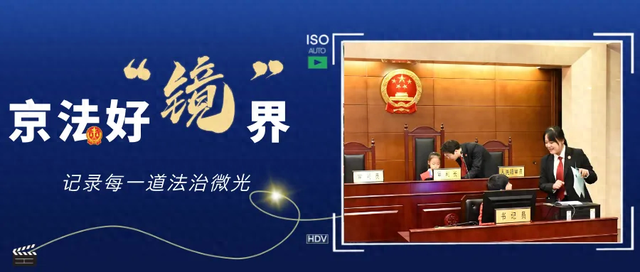
京法好“镜”界|“深度探访朝阳法院,我也当上了‘小法官’”
Xin Lang Cai Jing· 2026-02-13 14:17
Group 1 - The article highlights a special court session in Beijing's Chaoyang District where children participated as "junior judges" in a mock trial, emphasizing the importance of legal education for youth [4] - The event was part of a New Beijing News initiative, allowing young reporters to explore the court, learn about legal roles, and experience the judicial process firsthand [4] - Participants expressed their admiration for the court's solemnity and the various roles within the legal system, indicating a positive impact on their understanding of law [4]
汤琳琳:以《民营经济促进法》为引领 全面激发泰安市民营经济发展活力
Qi Lu Wan Bao· 2026-02-10 22:56
Core Viewpoint - The implementation of the "Private Economy Promotion Law" in May 2025 marks a significant legislative support for private enterprises in China, emphasizing a stable and transparent environment for high-quality development of the private economy [1] Group 1: Legislative and Policy Framework - The law incorporates the principle of "competition neutrality" and the "whole lifecycle" concept to support private enterprises [1] - A mechanism for annual evaluation of local regulations and policies will be established to ensure compliance with private economic standards, addressing ownership and industry discrimination [1] - A dynamic management approach will be adopted, allowing private capital to enter new industrial sectors with minimal barriers, ensuring fair competition [1] Group 2: Building Confidence and Public Perception - A media initiative called "Tai'an Private Enterprise Stories" will be launched to highlight successful private enterprises and their contributions to technology and employment [2] - A 24-hour response mechanism for misinformation related to enterprises will be implemented to ensure timely clarification and accountability for malicious rumors [2] - Annual selections of exemplary cases of legal protection for private enterprises will be conducted to promote awareness of legal rights among entrepreneurs [2] Group 3: Enhancing Business Environment - A regular compliance check mechanism will be established to help private enterprises identify and mitigate risks in various areas, offering personalized compliance solutions [3] - The "Taihao Ban" APP will feature an AI matching function to automatically suggest applicable policies to enterprises, streamlining access to benefits [3] - A dedicated "Entrepreneur Day" will be established to celebrate private enterprises and facilitate direct policy implementation and recognition [3] Group 4: Fostering Collaborative Relationships - A "Business Leader Consultation Day" will be instituted for direct dialogue between government leaders and private entrepreneurs to address concerns and policy revisions [4] - An "interference-free" regulatory approach will be adopted for high-credit private enterprises, minimizing unnecessary inspections [4] - A positive and negative list for government-enterprise interactions will be created to clarify acceptable and prohibited activities, fostering a supportive environment for entrepreneurs [4]
法治成为上海的一张闪亮名片
Xin Lang Cai Jing· 2026-02-08 07:08
Group 1 - The core viewpoint of the articles emphasizes the importance of rule of law in creating a favorable business environment in Shanghai, showcasing various legal cases that highlight effective governance and dispute resolution [1][2][4] - A construction company withdrew its appeal against a fine for failing to manage construction waste properly, demonstrating the city's commitment to legal enforcement and conflict resolution [1] - The Shanghai judicial system has implemented reforms to enhance legal services, including easing restrictions on partnerships with Hong Kong and Macau law firms, which supports the internationalization of legal services [3] Group 2 - The Shanghai legal authorities have made significant strides in improving public safety and crime prevention, with a reported increase in public safety perception for 13 consecutive years [4] - The police have adopted innovative policing models to combat telecom fraud, resulting in a decrease in fraud cases and significant financial savings for citizens [5] - The city has also focused on enhancing food safety and public service efficiency, with initiatives that have streamlined processes and improved service delivery for citizens [6] Group 3 - The establishment of comprehensive community governance centers has improved conflict resolution, with a significant number of disputes being successfully mediated [7] - The judicial system has expanded its services to ensure better access to legal support, including full coverage of litigation services and participation in accident investigations [8] - The success rate of community mediation has reached 88.9%, indicating effective dispute resolution mechanisms in place [8]