抗日

Search documents
1944年,两个年轻妇女,来到新四军办事处,张口就要40万发子弹
Sou Hu Cai Jing· 2026-02-25 06:42
Core Viewpoint - The narrative revolves around the relationship between Chen Shan, a commander of the New Fourth Army, and Wang Dingshan, a former farmer turned bandit leader, highlighting their collaboration against Japanese forces during a tumultuous period in Chinese history [3][12]. Group 1: Background and Context - In the winter of 1944, Chen Shan was managing the New Fourth Army's operations when he received a request for 400,000 bullets from Wang Dingshan, indicating a significant need for military support [3][14]. - Wang Dingshan, originally a farmer, became a bandit leader due to oppressive conditions, including high taxes and exploitation by landlords, which drove him to resist the status quo [5][6]. - The backdrop of the story includes the Japanese invasion and the subsequent rise of bandit groups in response to the weakening of the Nationalist forces, with Wang's area becoming a focal point of conflict [8][10]. Group 2: Relationship Development - Chen Shan and Wang Dingshan's connection dates back to 1942, during the Japanese military's aggressive campaigns, where Chen was tasked with infiltrating local bandit groups to establish anti-Japanese forces [10][12]. - Despite being a bandit, Wang Dingshan was portrayed as having a sense of justice, primarily targeting corrupt officials and landlords, which earned him respect among the local populace [11][12]. - Chen Shan's encouragement for Wang to resist both the Japanese and Nationalist forces laid the groundwork for their future collaboration, especially as the situation in their region deteriorated [12][14]. Group 3: The Request for Support - Facing imminent defeat, Wang Dingshan recalled Chen Shan's offer for assistance and sent a letter requesting ammunition, which prompted urgent discussions within the New Fourth Army about how to respond [14]. - The leadership of the New Fourth Army debated whether to assist Wang, ultimately deciding that supporting him would prevent further Nationalist encroachment in the region [14]. - Chen Shan's response to Wang's request included an invitation for Wang's forces to join the New Fourth Army, emphasizing the importance of unity against the common enemy [14]. Group 4: Integration and Outcomes - Wang Dingshan's forces eventually agreed to join the New Fourth Army under specific conditions, including maintaining their independence and ensuring support for their families [14]. - The integration of Wang's bandit group into the New Fourth Army was celebrated with a grand anti-Japanese rally, reinforcing the message of unity and redemption for former bandits [14]. - This collaboration significantly bolstered the New Fourth Army's capabilities, leading to successful military engagements against Japanese forces and contributing to the broader resistance efforts [14].

冯梦云的最后时刻
Xin Lang Cai Jing· 2026-01-08 06:35
Group 1 - The article discusses the tragic fate of journalist Feng Mengyun during the Pacific War, highlighting his capture and subsequent execution by Japanese forces [1][2][3] - Feng Mengyun was known for his strong anti-Japanese stance and was arrested due to his involvement with the "Zhengyan" newspaper, which had published anti-Japanese materials [2][3] - Reports indicate that Feng suffered severe torture while imprisoned, including physical abuse and psychological pressure to confess to charges against him [3][4] Group 2 - The article mentions that Feng Mengyun's death was confirmed by a fellow inmate who witnessed his removal from prison, suggesting he was likely executed shortly thereafter [2][4] - Various publications, including "Li Bao" and "Hua Bei Ri Bao," reported on Feng's disappearance and later confirmed his death, emphasizing the brutality of the circumstances surrounding his execution [4] - The narrative reflects the broader context of the suffering endured by journalists and intellectuals during the war, illustrating the risks faced by those who opposed the occupying forces [1][3]
理响中国·烽火丹心丨少年铁血铸忠魂
Yang Guang Wang· 2025-12-27 03:04
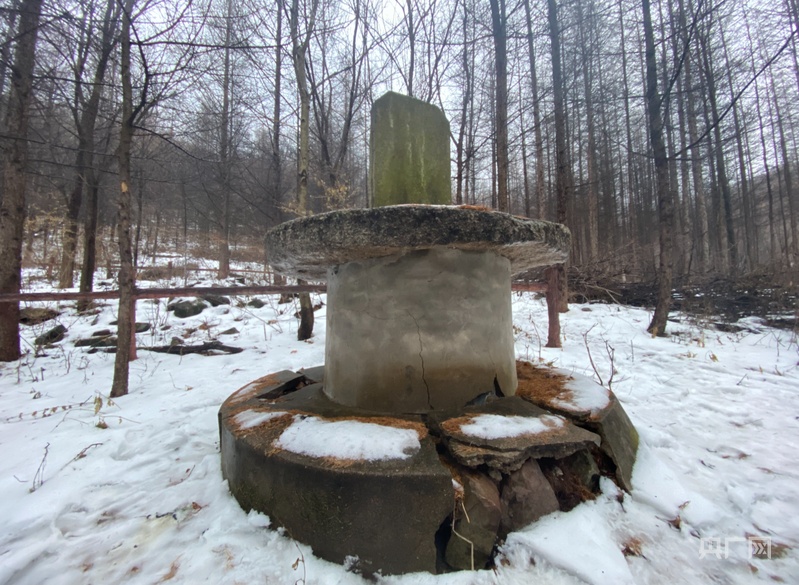
Core Viewpoint - The article highlights the historical significance of Li Baoqing's family during the anti-Japanese resistance, showcasing their contributions and sacrifices in the fight against invaders, particularly through the experiences of her son, Guo Fengqi, who died heroically in battle [4][9][11]. Group 1: Historical Context - The story is set in Benxi Manchu Autonomous County, where Li Baoqing's family played a crucial role in the first anti-Japanese democratic regime in the region [2]. - In 1934, Li Baoqing provided food for Red Army soldiers, reflecting the local community's support for the anti-Japanese efforts [4]. - The family's home became a secret transportation station for the anti-Japanese alliance, with Li Baoqing's son, Guo Fengqi, actively participating in the resistance from a young age [5]. Group 2: Personal Sacrifice and Legacy - Guo Fengqi joined the Northeast Anti-Japanese United Army at the age of 17, demonstrating the youth's commitment to the cause [7]. - He played a significant role in a military operation, leading his unit to capture weapons from the enemy, ultimately sacrificing his life in battle [9]. - Li Baoqing and her husband endured torture without revealing any information to the Japanese, showcasing their resilience and dedication to the resistance [9][11]. Group 3: Commemoration and Reflection - After the war, Li Baoqing sought information about her son, reflecting the enduring pain and hope of families affected by war [11]. - The article emphasizes the importance of remembering the sacrifices made by the youth during that era, as they laid the foundation for future generations [13].
积极投身抗日前线 台湾光复有他们的努力
Yang Shi Xin Wen Ke Hu Duan· 2025-10-26 06:44
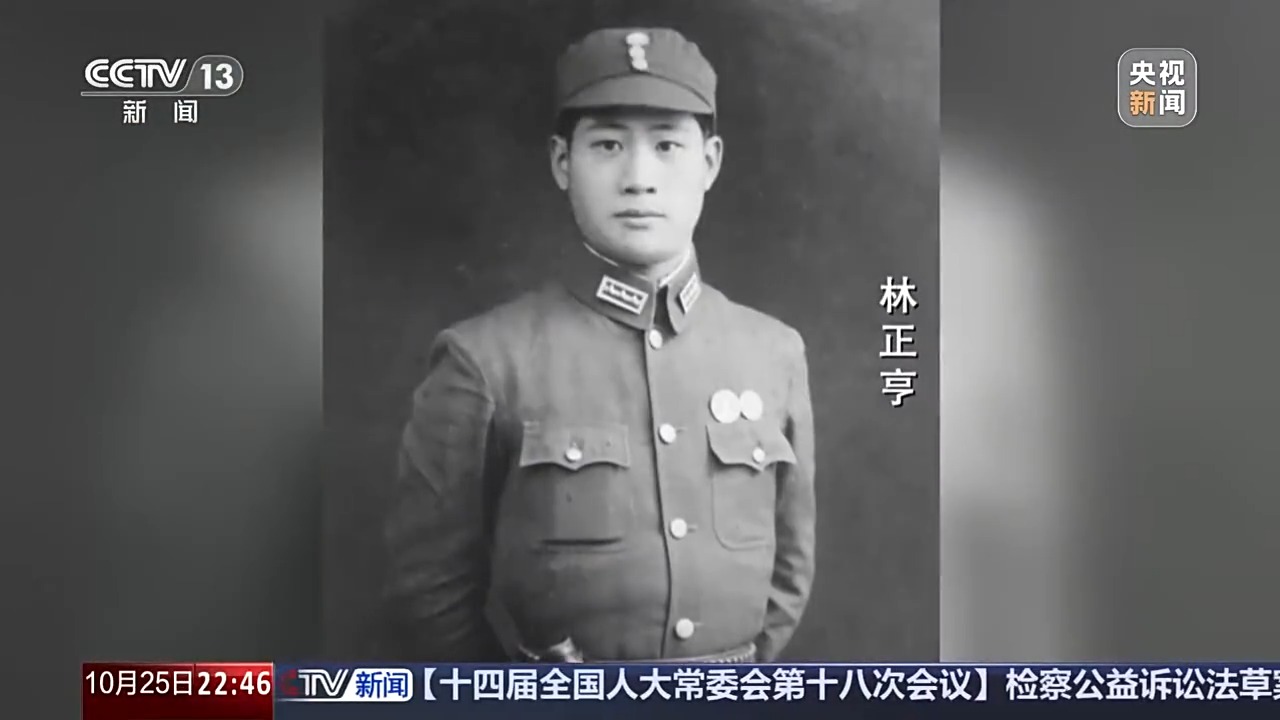
Core Points - The National People's Congress of China has designated October 25 as Taiwan Recovery Day, marking the end of 50 years of Japanese colonial rule following the victory in the Anti-Japanese War [1] - The historical context includes the signing of the Treaty of Shimonoseki in 1895, which ceded Taiwan to Japan, leading to widespread resentment among the Taiwanese people [1] - Prominent families in Taiwan, such as the Lin and Hsiao families, played significant roles in the anti-Japanese resistance, with many members sacrificing their lives for the cause [6][8][10] Historical Context - The Treaty of Shimonoseki was signed in 1895, resulting in Taiwan being ceded to Japan, which caused great distress among the Taiwanese population [1] - The rise of anti-Japanese sentiment was fueled by the broader context of the national anti-Japanese war, with over 50,000 Taiwanese individuals participating in the resistance [6][8] - The Lin family, particularly Lin Zumi, was instrumental in supporting anti-Japanese efforts, emphasizing the importance of national identity and resistance [3][10] Cultural Impact - The cultural resistance included the establishment of patriotic organizations and the promotion of Taiwanese culture through poetry and literature, aiming to preserve national identity [10][12] - The "Taiwan Recovery Tribute Group" was formed in 1946 to honor the sacrifices made during the anti-Japanese struggle, highlighting the connection between Taiwan and mainland China [14][16] - Recent political movements in Taiwan have sought to downplay the anti-Japanese history and promote a narrative that distances Taiwan from its Chinese heritage, leading to concerns about cultural memory among the younger generation [16][18]
“台湾义勇队”队长李友邦将军之子李力群接受《环球时报》专访:“台湾回归祖国是父亲的终生大愿”
Huan Qiu Wang· 2025-09-02 22:40
Core Viewpoint - The article commemorates the 80th anniversary of the victory in the Anti-Japanese War and the recovery of Taiwan, highlighting the contributions of the "Taiwan Volunteer Corps" and its leader, Li Youbang, in the fight against Japanese imperialism [1][9]. Group 1: Historical Context - The "Taiwan Volunteer Corps" was established during the Anti-Japanese War, consisting of Taiwanese compatriots who participated directly in the national struggle against Japan [2][5]. - Li Youbang, born in 1906, experienced the hardships of Japanese colonial rule in Taiwan, which motivated his commitment to the anti-Japanese cause [2][3]. Group 2: Formation and Activities of the "Taiwan Volunteer Corps" - The "Taiwan Volunteer Corps" was officially formed in 1939 in Jinhua, Zhejiang, with a focus on political engagement, medical assistance, production for the nation, and propaganda [5][6]. - The corps participated in significant battles, including the "Dongzhou Defense Battle," which was one of the fiercest confrontations in the early stages of the war [6][7]. Group 3: Post-War Developments - After Japan's defeat in 1945, the corps played a crucial role in the recovery of Taiwan, with Li Youbang leading efforts to maintain order and protect the lives and property of Taiwanese people [7][9]. - The article emphasizes that the recovery of Taiwan was a collective effort of all Chinese people, and it acknowledges the sacrifices made by many unnamed heroes during the war [9][10]. Group 4: Legacy and Recognition - Li Youbang's legacy has been recognized over the years, with efforts to clear his name and honor his contributions to Taiwan's recovery and the anti-Japanese movement [8][9]. - The article calls for remembrance of the sacrifices made during the war and highlights the importance of national unity and historical awareness [10][11].
义勇丹心照两岸——台湾抗日名将李友邦的“复疆”情
Xin Hua She· 2025-08-20 12:17
Core Viewpoint - The article highlights the historical significance of Li Youbang, a prominent figure in Taiwan's anti-Japanese resistance, and the ongoing efforts to preserve and promote this history in contemporary Taiwan [1][2][3][4]. Group 1: Historical Context - Li Youbang, born in 1906, was a key leader in the Taiwanese anti-Japanese movement, founding the Taiwan Volunteer Corps during the Second Sino-Japanese War [1][2]. - The Taiwan Volunteer Corps grew from over 30 members in 1939 to more than 380 by 1945, actively participating in various anti-Japanese efforts [2]. - The article notes that over 65,000 Taiwanese people sacrificed their lives during the anti-Japanese struggle, culminating in Taiwan's return to China on October 25, 1945 [3]. Group 2: Cultural Preservation - The ancestral home of Li Youbang has been designated as a historical site to commemorate his contributions and educate future generations about Taiwan's anti-Japanese history [3][4]. - Annual celebrations are held on October 25, Taiwan's Restoration Day, to honor the spirit of the ancestors and promote awareness of the historical struggle [4]. - The archives of the Taiwan Volunteer Corps have been recognized as part of China's documentary heritage, reinforcing the narrative of Taiwan as an inseparable part of China [4]. Group 3: Contemporary Relevance - There is concern regarding the younger generation's unfamiliarity with the term "anti-Japanese," attributed to the current political climate and educational narratives promoted by the ruling party [3][4]. - Li Youbang's son, Li Liqun, emphasizes the importance of remembering history to foster peace and unity between Taiwan and mainland China [4].
黄魂:以信仰为炬,诠释赤胆忠魂
Hai Nan Ri Bao· 2025-08-14 01:02
Core Points - The article highlights the life and contributions of Huang Hun, a revolutionary figure in the anti-Japanese resistance, emphasizing his bravery, intelligence, and dedication to the cause of liberation [2][3][7]. Group 1: Background and Early Life - Huang Hun, originally named Fu Quanzhong, was born in 1903 in a peasant family in Longquan Town, Haikou [3]. - He changed his name to protect his family and to symbolize his commitment to the revolutionary cause [3]. Group 2: Revolutionary Activities - Huang Hun was instrumental in organizing and mobilizing the local population against Japanese invaders, showcasing remarkable leadership and strategic skills [2][4]. - He published various revolutionary publications, such as "Special Committee Monthly" and "Red Flag News," to rally support and disseminate revolutionary ideas [4][5]. Group 3: Military Engagements - Huang Hun demonstrated tactical brilliance during encounters with enemy forces, successfully executing strategies that allowed him and his comrades to escape from dangerous situations [5][6]. - He developed the "White Skin Red Heart" strategy, which involved feigning compliance with the enemy while secretly organizing resistance efforts [6][7]. Group 4: Legacy and Commemoration - Huang Hun's dedication to the revolutionary cause led to his ultimate sacrifice in 1944, where he was killed in action while ensuring the safety of his comrades [7][8]. - His remains were later moved to the Martyrs' Cemetery in Haikou, where he is honored and remembered for his contributions to the anti-Japanese resistance [8][9].
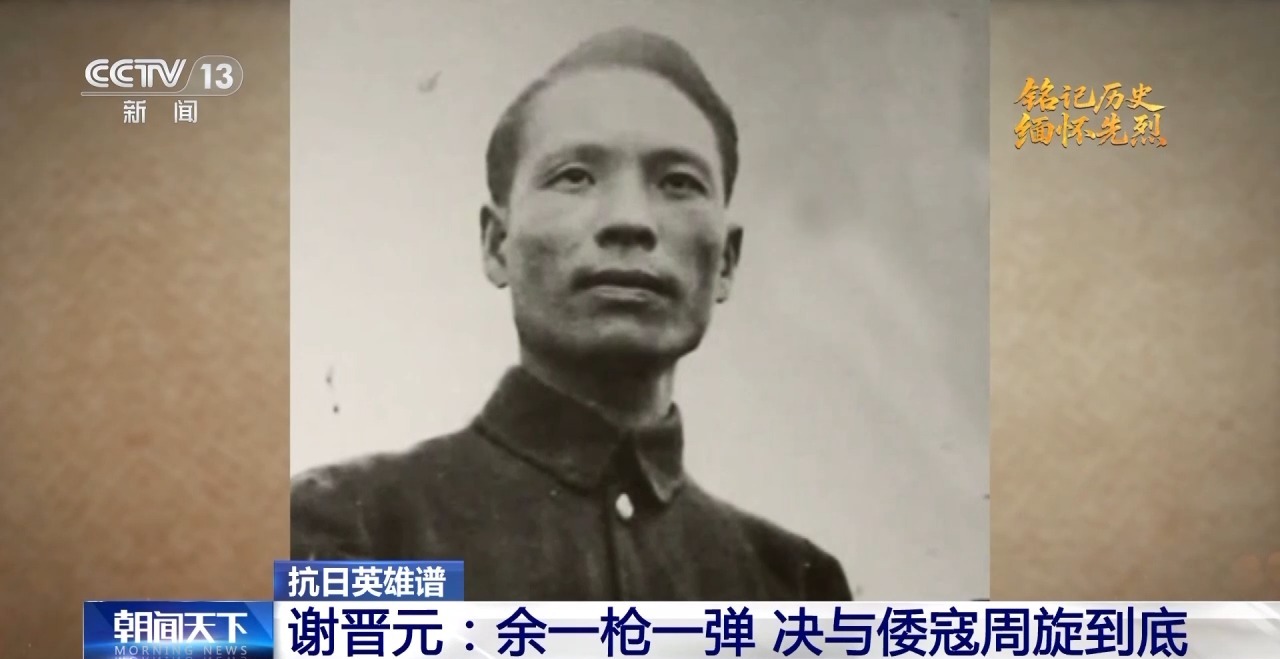
抗日英雄谱丨孤军奋战 他带领“八百壮士”誓死抵抗日军
Yang Shi Xin Wen· 2025-08-05 06:58
Core Viewpoint - The article highlights the heroic resistance of the "Eight Hundred Heroes" led by Xie Jinyuan during the Battle of Shanghai in 1937, emphasizing their determination to fight against Japanese forces despite overwhelming odds [1][6][14]. Group 1: Historical Context - The Battle of Shanghai began on August 13, 1937, leading to the eventual retreat of Chinese forces, except for a small contingent that defended the Sihang Warehouse [1][6]. - Xie Jinyuan, born in 1905, joined the military at a young age and was a prominent figure during the anti-Japanese war, showcasing his commitment to national defense [4][6]. Group 2: The Defense of Sihang Warehouse - On October 26, 1937, Xie Jinyuan and over 420 soldiers took a stand at the Sihang Warehouse, aiming to delay Japanese advances and protect the retreating forces [6][8]. - The Sihang Warehouse served as a critical stronghold due to its robust structure, allowing the defenders to mount a significant resistance against the Japanese army [8][10]. Group 3: The Battle and Its Impact - The defenders, despite being outnumbered, managed to inflict heavy casualties on the Japanese forces, killing and wounding over 200 enemy soldiers during four days of intense fighting [12][14]. - The bravery of the "Eight Hundred Heroes" inspired the Chinese populace and garnered international attention, symbolizing the spirit of resistance against foreign aggression [14][18]. Group 4: Legacy and Recognition - The story of the "Eight Hundred Heroes" became a source of national pride, leading to cultural expressions such as songs that celebrated their courage [18][21]. - Xie Jinyuan was posthumously recognized as a national hero, and in 2014, he and his comrades were included in the list of notable anti-Japanese heroes by the Ministry of Civil Affairs [23].
铭记历史 缅怀先烈|梁希贤:黄河岸边的铁血忠魂
Xin Hua She· 2025-07-24 11:25
Core Viewpoint - The article highlights the heroic legacy of Liang Xixian, a Chinese general who sacrificed his life during the Battle of Zhongtiao Mountain in 1941, emphasizing the importance of remembering and honoring national heroes [1][4]. Group 1: Historical Context - Liang Xixian was born in 1898 in Liangjiayan Village, Shaanxi Province, and was influenced by stories of heroes from a young age, leading him to join the military [1]. - He graduated from the Whampoa Military Academy in 1926 and participated in significant military campaigns, including the Northern Expedition and the Battle of Shanghai [1]. - In 1940, Liang's unit was ordered to cross the Yellow River to confront Japanese forces in the Zhongtiao Mountain area, where they engaged in multiple skirmishes [2]. Group 2: The Battle of Zhongtiao Mountain - The Japanese army launched a major offensive on May 7, 1941, with around 100,000 troops attacking Chinese positions, supported by air and artillery [2]. - Despite being ill, Liang chose to remain with his troops to lead the defense against the Japanese assault, demonstrating his commitment to his soldiers [2][3]. - On May 9, as the situation deteriorated, Liang ordered a retreat and ultimately sacrificed himself by jumping into the Yellow River to avoid capture [3]. Group 3: Legacy and Commemoration - Liang Xixian was posthumously recognized as a national hero, being included in a list of notable anti-Japanese heroes by the Ministry of Civil Affairs in 2015 [4]. - A memorial for Liang was established in November 2022, reflecting the community's efforts to honor his memory and that of other local soldiers who fought in the war [4]. - Local officials and community members are actively working to preserve Liang's history and educate future generations about his contributions to the nation [4].
许国璋:以身许国全气节(铭记历史 缅怀先烈·抗日英雄)
Ren Min Ri Bao· 2025-07-14 22:03
Core Viewpoint - The article highlights the heroic actions and legacy of General Xu Guozhang, emphasizing his unwavering commitment to the Chinese resistance during the Second Sino-Japanese War, culminating in his ultimate sacrifice for the nation [1][2][4]. Group 1: Historical Context - General Xu Guozhang was born in 1897 in Chengdu, Sichuan, and became a prominent military leader during the war against Japan, notably serving as the commander of the 483rd Brigade [1]. - His military career included significant battles, such as the fierce engagements in Huangmei and the East Hubei region, where he demonstrated tactical ingenuity despite facing overwhelming odds [1][2]. Group 2: Key Events - In November 1941, during the Changde Campaign, General Xu's forces faced a dire situation as they were surrounded by Japanese troops, leading to a desperate attempt to break through enemy lines [2]. - On November 20, General Xu personally led a counterattack against the Japanese forces, but was severely injured during the conflict, showcasing his bravery and leadership [2][4]. Group 3: Legacy and Recognition - After his death, General Xu was posthumously promoted to the rank of Major General, and his contributions were formally recognized by the Ministry of Civil Affairs in 2014, when he was included in the first batch of notable anti-Japanese heroes [4]. - The article concludes with a reflection on General Xu's enduring legacy, symbolizing the indomitable spirit of the Chinese people during the war [4].