美伊外交谈判

Search documents
多国从中东撤侨撤员 特朗普直言对伊朗“不悦”
Xin Lang Cai Jing· 2026-02-27 20:20
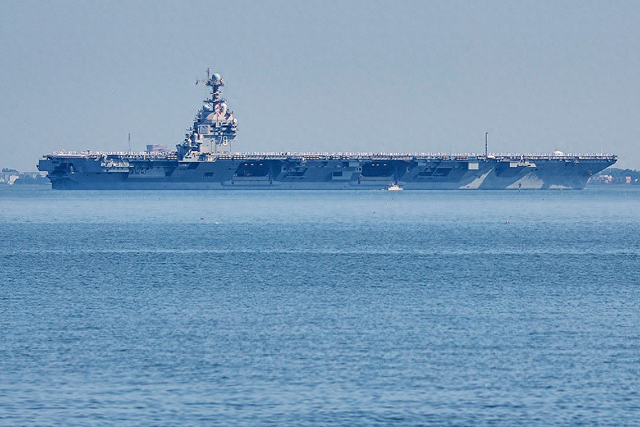
Core Viewpoint - The situation in the Middle East is escalating, with the U.S. and U.K. evacuating diplomatic personnel amid rising tensions and military buildup, while Trump expresses pessimism about diplomatic negotiations with Iran [1][2][4]. Group 1: Diplomatic Actions - The U.S. has notified non-emergency staff at its Jerusalem embassy to leave Israel due to potential Iranian retaliation if the U.S. conducts strikes [5]. - Similar evacuation orders have been issued for the U.S. diplomatic mission in Beirut, with other countries like the U.K., India, Australia, Poland, Finland, Sweden, and Singapore advising their citizens to leave the region [5][1]. Group 2: Military Buildup - The U.S. continues to strengthen its military presence in the Middle East, with the deployment of the aircraft carrier USS Gerald R. Ford, which is currently in Israeli waters and may participate in operations against Iran [4][7]. - Trump has reiterated threats to attack Iran while stating that a final decision has not yet been made regarding military action [2][5].

美可能发动打击在即,美驻以大使强调迅速离境的重要性:今天就走
Xin Lang Cai Jing· 2026-02-27 10:00
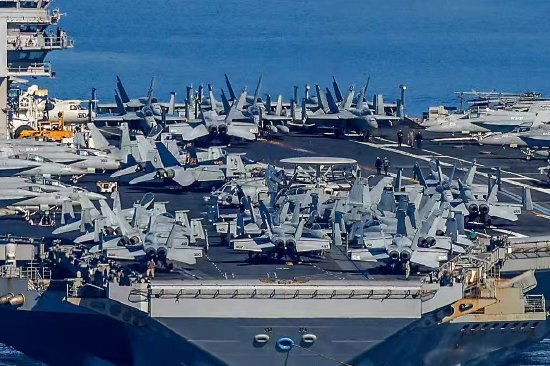
Group 1 - The U.S. Embassy in Jerusalem has informed staff that they can leave Israel due to potential military action against Iran, urging those who wish to evacuate to act immediately [2][11] - The embassy's decision was made after a night of meetings and discussions, emphasizing the safety of personnel as the top priority [2][11] - The embassy has entered an "authorized departure" status, allowing non-essential personnel and their families to evacuate at government expense if U.S. national interests or lives are under imminent threat [5][14] Group 2 - KLM has suspended flights to Israel citing "commercial and operational considerations" [3][12] - An online briefing is scheduled for 12:30 PM local time to provide more information regarding the situation [6][14] - U.S. officials indicate that President Trump is considering options that include precision strikes on Iranian military and nuclear facilities to compel Iran to make concessions [8][15]
谈判前伊朗警告美勿故伎重施:若美方发动攻击将遭还击
Xin Lang Cai Jing· 2026-02-26 11:30
Core Viewpoint - Iran warns the U.S. against repeating past aggressive actions, stating that any attack will be met with a strong response [1] Group 1: Diplomatic Stance - Iran's parliamentary speaker, Ghalibaf, emphasizes the importance of respecting diplomatic avenues and mutual interests in negotiations [1] - Iran is willing to remain at the negotiation table if the U.S. chooses a respectful approach [1] Group 2: Military Threats - Iran has declared that if attacked, all U.S. military bases in the Middle East will be considered legitimate targets [1] - The U.S. has been amassing military forces in the Middle East, increasing tensions in the region [1]
万斯:美对新一轮美伊间接谈判“抱有希望” 但不排除动武
Yang Shi Xin Wen· 2026-02-25 16:50
Core Viewpoint - The U.S. Vice President expressed optimism regarding the upcoming indirect negotiations between the U.S. and Iran, scheduled for February 26 in Geneva, aiming for a diplomatic resolution to the nuclear issue [1] Group 1: U.S. Position - The U.S. stance is clear: Iran must not possess nuclear weapons [1] - President Trump prefers a diplomatic approach to resolve the situation but is prepared to use military force if necessary [1]
伊朗外交部:任何对伊攻击都将被视作侵略并承担后果
Xin Lang Cai Jing· 2026-02-23 14:33
Core Viewpoint - Iran's Foreign Ministry spokesperson Baghaei stated that any attack on Iran will be considered aggression and will have consequences [1] Group 1: Diplomatic Negotiations - Iran's armed forces are on high alert while engaging in diplomatic negotiations and closely monitoring developments [1] - Baghaei emphasized that negotiations must involve mutual effort and sincerity, and Iran is willing to negotiate for several days or weeks, but extending the negotiation process is deemed unproductive [1] - The goal of the negotiations is to achieve results, as the Iranian people are suffering under sanctions, and there is a need to act quickly to lift these sanctions [1] Group 2: Upcoming Talks - Oman's Foreign Minister Badr confirmed that a new round of negotiations between the U.S. and Iran is scheduled for the 26th in Geneva, Switzerland [1] - The second round of indirect talks took place on the 17th in Geneva, where officials from both sides noted progress despite existing differences and agreed to continue discussions [1] Group 3: Military Context - The U.S. has recently amassed military forces in the Middle East, and President Trump acknowledged that he is considering "limited military strikes" against Iran [1]
伊朗外交部说任何对伊攻击都将被视作侵略并承担后果
Xin Hua She· 2026-02-23 13:43
Core Viewpoint - Iran's Foreign Ministry spokesperson emphasized that any attack on Iran would be considered aggression and would have consequences, highlighting the country's vigilance amid ongoing diplomatic negotiations [1] Group 1: Diplomatic Negotiations - Iran is willing to engage in negotiations for several days or weeks but believes that prolonging the process is unproductive [1] - The goal of the negotiations is to achieve results, particularly in light of the sanctions pressure faced by the Iranian people [1] - A new round of talks between the U.S. and Iran is scheduled for June 26 in Geneva, as confirmed by Oman's Foreign Minister [1] Group 2: Military Posture - Iran's armed forces are on high alert while diplomatic talks are ongoing, indicating a dual approach of negotiation and readiness for potential conflict [1] - The U.S. has been amassing military forces in the Middle East, and President Trump has acknowledged considering "limited military strikes" against Iran [1] Group 3: Progress in Negotiations - Both U.S. and Iranian officials reported progress in the second round of indirect talks held on June 17, despite existing differences [1]
美媒:美国在中东集结的空中力量,达到2003年入侵伊拉克以来之最
Xin Lang Cai Jing· 2026-02-20 02:04
Core Viewpoint - The escalating tensions between the US and Iran have led to significant military preparations by the US, including the deployment of advanced aircraft and naval forces, while diplomatic negotiations continue with limited progress [1][2][10]. Military Preparations - The US is deploying a large number of combat and support aircraft to the Middle East, marking the largest air force buildup in the region since the 2003 invasion of Iraq [1]. - Advanced fighter jets, including F-35 and F-22, are being sent to the region, along with a second aircraft carrier group and critical air defense systems [1][10]. - The US military is prepared for a sustained air campaign against Iran, potentially lasting several weeks, rather than a one-time strike [1][2]. Diplomatic Efforts - US and Iranian representatives have met in Geneva to discuss potential agreements regarding Iran's uranium enrichment, with some progress reported but significant disagreements remaining [2][6]. - Iran has indicated a willingness to compromise on its nuclear program, provided sanctions are lifted, but is unlikely to agree to a complete halt of uranium enrichment [6][12]. Strategic Considerations - The US military has overwhelming advantages over Iran, but Iran possesses a substantial missile arsenal that could target US bases and allies in the region [7][11]. - The US is considering using bases in Diego Garcia and the UK for potential military actions against Iran if diplomatic efforts fail [7][10]. Historical Context - The current military buildup is significant but still less than the forces deployed during the Gulf War in 1991 and the Iraq invasion in 2003, with fewer ground forces available for support [11]. - The lack of international coalition support and restrictions from regional allies like Saudi Arabia and the UAE complicate the US's military options [11].
消息人士:美军已准备最早于本周末打击伊朗,但特朗普尚未作出最终决定
Xin Lang Cai Jing· 2026-02-19 15:44
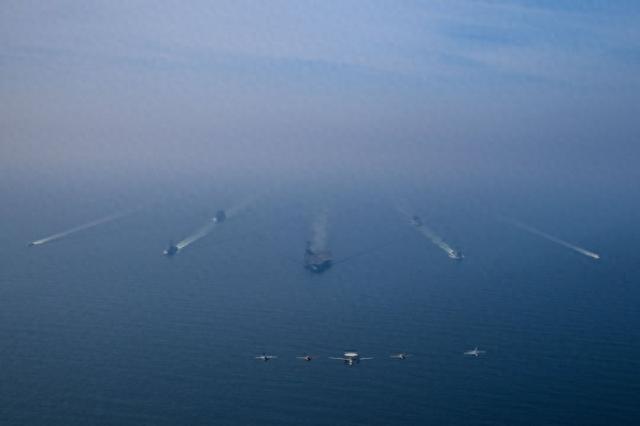
Core Viewpoint - The U.S. military is prepared to strike Iran as early as this weekend, but President Donald Trump has not yet made a final decision on whether to authorize action [1][5][6]. Group 1: Military Preparedness - The U.S. military has significantly increased air and naval forces in the Middle East, potentially ready to launch an attack this weekend [1][8]. - The USS Gerald R. Ford, the most advanced aircraft carrier, is expected to arrive in the region soon, following a series of military deployments [8]. - U.S. Air Force units stationed in the UK, including refueling aircraft and fighter jets, are being redeployed closer to the Middle East [8]. Group 2: Diplomatic Efforts - Indirect talks between Iran and U.S. representatives lasted three and a half hours in Geneva, but no clear outcomes were achieved [7]. - The Iranian chief negotiator stated that both sides agreed on a "set of guiding principles," but many details remain to be discussed [7]. - White House Press Secretary Karine Levitt indicated that Iran is expected to provide more details on its negotiating position in the coming weeks [2][7]. Group 3: Political Considerations - Levitt emphasized that while diplomacy is the president's preferred option, military action remains on the table [4][7]. - Various scheduling factors may influence the timing of any potential strike, including the conclusion of the Winter Olympics and the beginning of Ramadan [8]. - Trump is set to deliver his annual State of the Union address next week, which may impact his decision-making process regarding military action [8].
持续冲突风险升高,美军或为对伊长期行动做准备
Xin Lang Cai Jing· 2026-02-14 06:12
Group 1 - The U.S. is increasing military pressure on Iran while engaging in diplomatic negotiations, with President Trump confirming the deployment of a second aircraft carrier strike group to the Middle East to compel Iran to reach an agreement [1][3] - U.S. military preparations indicate a potential for prolonged military action against Iran, which could escalate into a more severe conflict than previously experienced, as Iran possesses a strong missile arsenal [1][4] - Trump emphasized the difficulty of reaching an agreement with Iran, suggesting that instilling fear may be necessary to resolve the situation [1] Group 2 - The "Gerald R. Ford" aircraft carrier strike group has been ordered to move from the Caribbean to the Middle East, with reports indicating that it will take at least a week to be fully deployed [3] - The Pentagon has been advised to delay military action until U.S. forces are better prepared, particularly in terms of defense capabilities to protect American interests from potential Iranian retaliation [4] - The U.S. military fleet currently includes eight destroyers capable of intercepting Iranian ballistic missiles and submarines equipped to launch cruise missiles at Iranian targets [4]
美伊谈判新进展:伊方对谈判提出多个“调整”要求,美国已同意将谈判地点从土耳其改为阿曼
Xin Lang Cai Jing· 2026-02-04 12:20
Group 1 - The core point of the article is that the Trump administration has agreed to hold negotiations with Iran in Oman on February 6, following a maritime confrontation between the two nations [1][9][10] - Iran has made several demands for adjustments to the negotiations, including changing the location from Turkey to Oman, limiting the talks to only the U.S. and Iran, and focusing solely on nuclear issues [1][9][10] - The U.S. has previously stated that discussions should also include Iran's ballistic missile program and its support for anti-Israel forces in the region [1][9][10] Group 2 - The U.S. military shot down an Iranian drone that was provocatively approaching the USS Abraham Lincoln aircraft carrier in the Arabian Sea, and also escorted a U.S. oil tanker that was threatened by Iranian vessels [4][14][15] - Following the maritime incident, President Trump considered leaving the negotiation table but ultimately decided to proceed with the talks [5][15] - Israeli Prime Minister Netanyahu has requested the U.S. to maintain "freedom of action" regarding Iran, emphasizing that Iran's commitments are not trustworthy [6][16] Group 3 - The U.S. special envoy and Trump's son-in-law, Jared Kushner, will attend the negotiations, with Iran's foreign minister leading their negotiation team [3][13] - Israel has presented multiple demands to the U.S. before the negotiations, including a complete halt to Iran's uranium enrichment activities and missile production [6][18] - An Iranian diplomatic source indicated that Iran's perspective on the negotiations is neither optimistic nor pessimistic, asserting that its defensive capabilities are non-negotiable [6][18]