
自民党总裁选举

Search documents
日本东京都前知事:恢复民众信任是自民党面临最大课题
Yang Shi Xin Wen· 2025-10-04 07:06
Core Points - The main issue for the Liberal Democratic Party (LDP) is to regain public trust after facing failures in recent elections [1] - The new LDP president's ability to address economic issues, particularly price control and the "politics and money" problem, is crucial for restoring support [1] - The LDP is currently in a minority government situation, making cooperation with opposition parties essential for policy implementation [2] Group 1 - The LDP has lost public support, and regaining it is critical for future electoral success [1] - Economic management, especially regarding inflation and the "black money" scandal, is a significant challenge for the new LDP leadership [1] - The new LDP president must focus on collaboration with opposition parties to effectively govern, as the party lacks a majority in both houses of parliament [2]
日本自民党总裁选举候选人节目上被要求用英语传达对美国信息,结果引发讨论
Huan Qiu Wang· 2025-09-28 01:11
Core Points - The Japanese public is questioning the English communication skills of three candidates in the Liberal Democratic Party presidential election after they primarily responded in Japanese during a televised program [1][3] - The program highlighted the importance of English communication for the future Prime Minister of Japan, especially in relation to the U.S. President [3] Group 1 - Five candidates were asked to express their vision for Japan in English, but three candidates, including Takashi Sawa, Shinjiro Koizumi, and Yoshinobu Kobayashi, mainly used Japanese [1][3] - Candidates Yoshimasa Hayashi and Toshimitsu Motegi responded in English, while Takashi Sawa initially used a brief English phrase but switched to Japanese for the rest of her answers [3] - The public reaction included concerns about the candidates' ability to communicate effectively with U.S. leaders, emphasizing the significance of personal relationships in diplomacy [3] Group 2 - Some netizens expressed that relying solely on translation is insufficient for effective communication with President Trump, given the nuances in the Japanese language [3] - Observations were made regarding Takashi Sawa's body language and tone, suggesting confusion during her responses, while Koizumi and Kobayashi were perceived as avoiding the questions [3]


日本自民党总裁选举打响,5人争夺
Huan Qiu Shi Bao· 2025-09-22 22:37
Group 1 - The core viewpoint of the article is the commencement of the Liberal Democratic Party (LDP) presidential election in Japan, with five candidates participating, marking it as a "revival battle for the losers" from the previous election [1][3]. - The election will focus on how to collaborate with opposition parties to pass budget proposals and laws, as well as addressing rising prices and rebuilding the LDP [3]. - The election will involve a total of 590 votes, with candidates needing a majority to win. If no candidate achieves this in the first round, the top two will proceed to a second round [3]. Group 2 - A recent poll indicates that Sanae Takaichi leads with a support rate of 28.3%, followed by Shinjiro Koizumi at 25.7%, and Yoshihide Suga at 11.1% [3][4]. - Among LDP supporters, Shinjiro Koizumi has the highest support at 35.2%, followed by Sanae Takaichi at 22.5% [4]. - The new LDP president may not necessarily become the new Prime Minister due to the party's current minority status in both houses of parliament, requiring support from opposition parties [4].
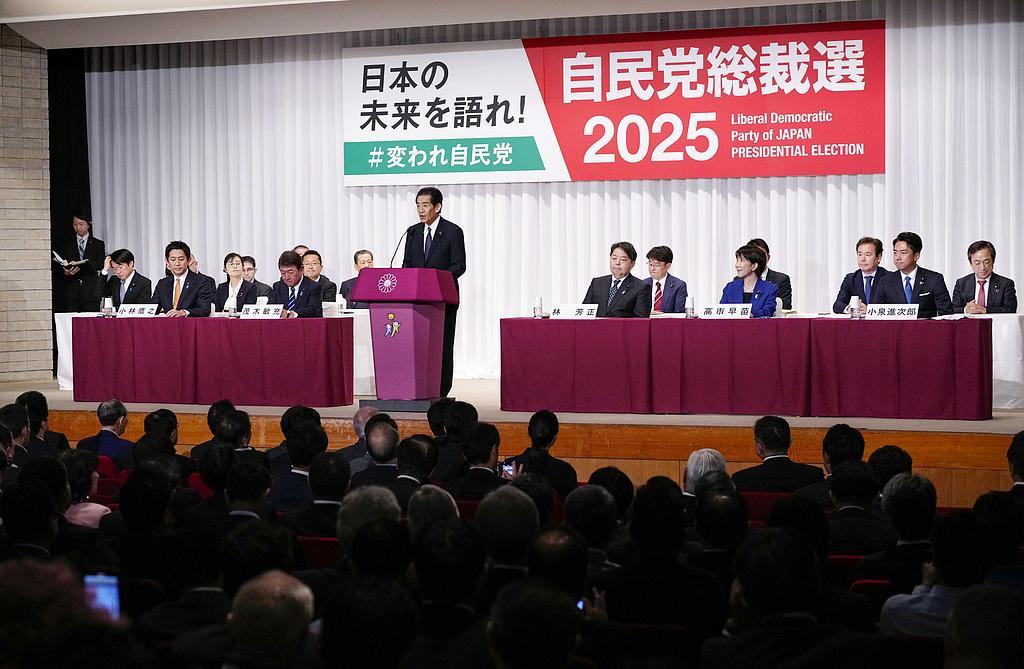
日本自民党总裁选举启动
Bei Jing Shang Bao· 2025-09-22 16:18
Group 1 - The election for the new president of Japan's ruling Liberal Democratic Party (LDP) officially began on September 22, with voting scheduled for October 4, focusing on candidates' policy speeches and the need for cooperation with opposition parties [1] - The current political landscape shows five candidates competing for the presidency, including former LDP Secretary-General Toshimitsu Motegi, current Chief Cabinet Secretary Hiroshi Matsuno, current Minister of Agriculture, Forestry and Fisheries Shinjiro Koizumi, former Minister of Economic Security Sanae Takaichi, and newcomer Takayuki Kobayashi [2] - The LDP and its coalition partner Komeito failed to secure a majority in the recent elections, marking a historical low performance, which led to the resignation of former president Shigeru Ishiba [3] Group 2 - Candidates are addressing public concerns such as rising prices and the necessity of collaboration with opposition parties, which will be a central theme in their campaigns [1] - Motegi is known for his strong negotiation style and has held multiple economic-related positions, while Matsuno holds a key position in the cabinet, directly supporting the Prime Minister [2] - Koizumi, with a strong educational background and connections within the party, is seen as a potential successor, while Takaichi could make history as Japan's first female Prime Minister if elected [2]
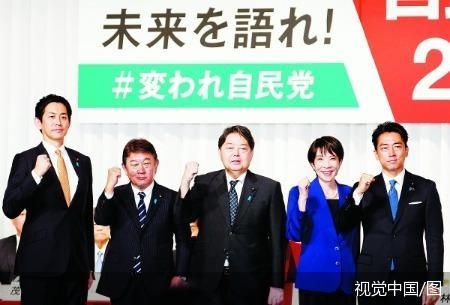
日本自民党新总裁选战在即 有权投票党员数锐减
Xin Hua Wang· 2025-09-22 01:41
Group 1 - The election for the new president of Japan's ruling Liberal Democratic Party (LDP) officially starts on September 22, with voting scheduled for October 4 [1][3] - The number of party members eligible to vote in this election has decreased to approximately 915,600, a reduction of over 140,000 compared to the previous election [1][3] - The decline in eligible voters is attributed to a decrease in overall party membership and new voting regulations requiring members to have paid dues for at least two years [3] Group 2 - The total number of votes in the LDP presidential election will be 590, with 295 votes from LDP lawmakers and the remaining votes from local party members and registered supporters [3] - If no candidate receives a majority in the first round, the top two candidates will proceed to a second round of voting [3] - The election is expected to feature five main candidates, who will debate key issues such as high prices and cooperation with opposition parties [3]
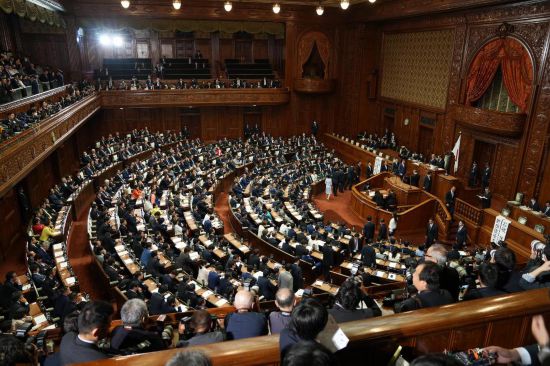
日本内阁官房长官林芳正宣布有意参选自民党总裁
Yang Shi Xin Wen· 2025-09-16 04:56
Core Viewpoint - The current Chief Cabinet Secretary of Japan, Hiroshi Matsuno, has expressed his intention to participate in the upcoming Liberal Democratic Party (LDP) presidential election, following significant electoral losses for the party [2] Group 1: Election Context - The LDP faced consecutive defeats in the House of Representatives election in October last year and the House of Councillors election in July this year, resulting in the ruling coalition losing a majority in both houses for the first time since its establishment in 1955 [2] - Prime Minister Shigeru Ishiba announced his resignation as LDP president on September 7, indicating a leadership change within the party [2] - The LDP's presidential election management committee has scheduled the election for October 4 [2]
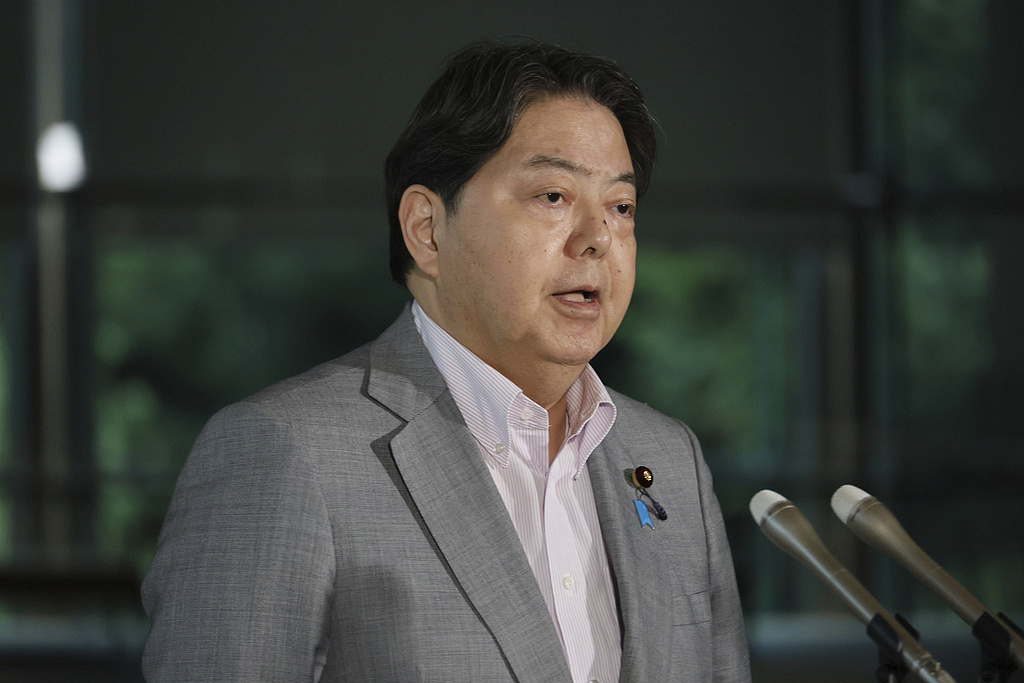
小泉进次郎宣布参选
财联社· 2025-09-13 04:28
Core Viewpoint - The Japanese Liberal Democratic Party (LDP) is facing significant political challenges, having lost a majority in both houses of the National Diet for the first time since its establishment in 1955, which may impact future governance and policy direction [1] Group 1 - The Japanese Minister of Agriculture, Forestry and Fisheries, Koizumi Shinjiro, announced his candidacy for the LDP presidential election [1] - The LDP and its coalition partner, Komeito, lost their majority in both the House of Representatives and the House of Councillors during the elections held in October last year and July this year, respectively [1] - Prime Minister Ishiba Shigeru announced his resignation from the position of LDP president on September 7 [1] Group 2 - The LDP's presidential election management committee convened on September 9 and scheduled the presidential election for October 4 [1]
石破茂又要辞职了?这次是真的
Hu Xiu· 2025-09-08 03:55
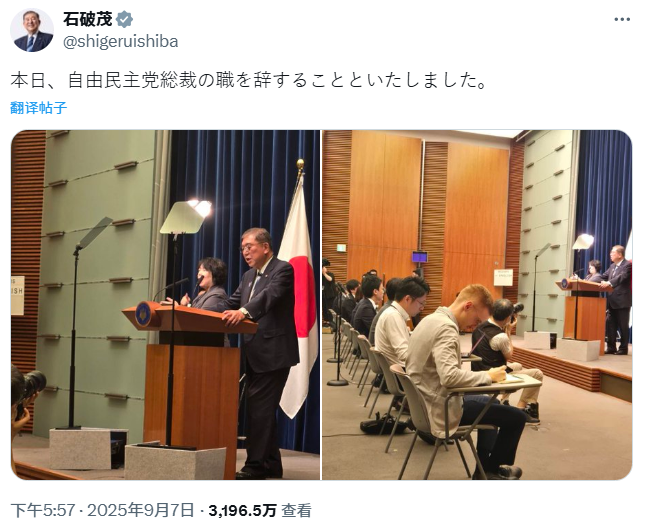
Core Points - The article discusses the resignation of Japanese Prime Minister Shigeru Ishiba, which is seen as a move to prevent internal division within the ruling Liberal Democratic Party (LDP) [2][11] - Ishiba's resignation comes after a series of electoral defeats for the LDP, leading to increased pressure for him to step down [3][11] - The article highlights the potential implications of Ishiba's resignation for the future leadership of the LDP and Japan's political landscape [9][18] Summary by Sections Political Context - Ishiba's intention to resign was confirmed amidst discussions within the LDP about holding an early presidential election [2][4] - Following significant losses in the House of Councillors elections, calls for Ishiba's resignation intensified, leading him to announce his intention to resign by the end of August [3][11] Party Dynamics - The LDP's internal discussions regarding an early presidential election were initiated, with a meeting of the party's presidential election management committee taking place on August 19 [5][10] - Ishiba faced pressure from party members, including former Prime Minister Yoshihide Suga, to make a clear political decision to address the growing demands for a leadership change [6][12] Resignation Announcement - Ishiba officially announced his resignation on September 7, aiming to revitalize the LDP's morale and address public dissatisfaction [7][11] - His resignation is viewed as a strategic move to allow for a redistribution of power within the party and to mitigate the risk of open factional splits [12] Future Leadership - Potential successors to Ishiba include prominent figures such as former Economic Security Minister Sanae Takaichi and Agriculture Minister Koizumi Shinjiro [17][18] - The article raises questions about whether the new leadership will be able to unite the party and effectively manage Japan's international relations, particularly with China and the United States [18]
石破茂辞职,专家:新任自民党总裁参选者或将变少
Xin Lang Cai Jing· 2025-09-08 00:16
Core Viewpoint - Japanese Prime Minister Shigeru Ishiba announced his resignation as the president of the Liberal Democratic Party (LDP), which may lead to a reduced number of candidates in the upcoming presidential election due to the current political landscape [1][2]. Group 1: Political Context - Ishiba stated he will not participate in the next presidential election, indicating a significant shift in leadership within the LDP [1]. - Political expert Hiroshi Shiratori noted that the LDP and its coalition partner Komeito have not secured a majority in both the House of Representatives and the House of Councillors, suggesting fewer candidates compared to the last election where there were nine participants [1]. Group 2: Election Implications - There is a possibility that a House of Representatives election may occur after the new Prime Minister is elected, indicating potential changes in the political landscape [2]. - Komeito leader Tetsuo Saito expressed that Komeito cannot accept the dissolution of the House of Representatives, highlighting tensions within the ruling coalition [1].
石破茂决定辞去自民党总裁职务
Zhong Guo Xin Wen Wang· 2025-09-07 23:26
Core Points - Shigeru Ishiba announced his resignation as the president of the Liberal Democratic Party (LDP) of Japan during a press conference on September 7, 2023, citing responsibility for the party's losses in the July Senate elections [1] - Ishiba's decision aims to prevent further division within the LDP and he will initiate the election of a new party president [1] - Despite his resignation, Ishiba stated he will continue to fulfill his responsibilities to the public until a new president is elected [1] Election Context - Ishiba was elected as the LDP president in September 2022, with a term set to end in September 2027 [1] - The ruling coalition of the LDP and Komeito lost its majority in both the House of Representatives elections in October 2022 and the Senate elections in July 2023 [1] - Following the Senate election defeat, there was increasing pressure within the LDP for Ishiba to resign and hold an early presidential election [1] Previous Statements - Ishiba had previously expressed the need to remain in office to avoid a political vacuum due to ongoing issues such as tariff negotiations with the United States [2] - On September 7, he indicated that these issues have reached a temporary resolution, making it an appropriate time for him to step down and allow for a successor [2]