
日本首相更替

Search documents
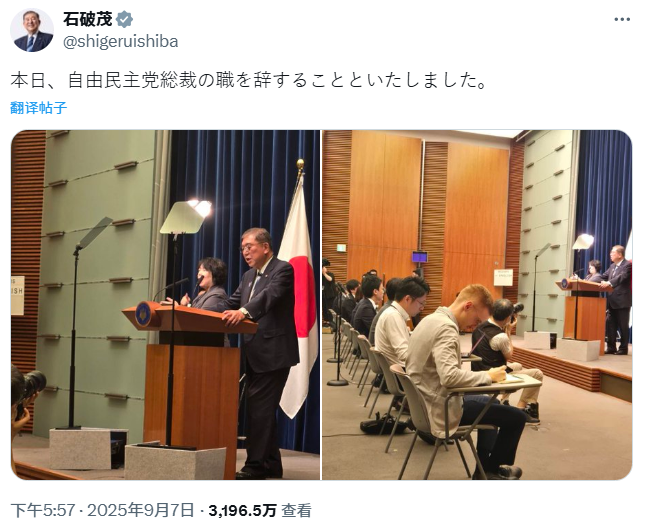
石破茂又要辞职了?这次是真的
Hu Xiu· 2025-09-08 03:55
Core Points - The article discusses the resignation of Japanese Prime Minister Shigeru Ishiba, which is seen as a move to prevent internal division within the ruling Liberal Democratic Party (LDP) [2][11] - Ishiba's resignation comes after a series of electoral defeats for the LDP, leading to increased pressure for him to step down [3][11] - The article highlights the potential implications of Ishiba's resignation for the future leadership of the LDP and Japan's political landscape [9][18] Summary by Sections Political Context - Ishiba's intention to resign was confirmed amidst discussions within the LDP about holding an early presidential election [2][4] - Following significant losses in the House of Councillors elections, calls for Ishiba's resignation intensified, leading him to announce his intention to resign by the end of August [3][11] Party Dynamics - The LDP's internal discussions regarding an early presidential election were initiated, with a meeting of the party's presidential election management committee taking place on August 19 [5][10] - Ishiba faced pressure from party members, including former Prime Minister Yoshihide Suga, to make a clear political decision to address the growing demands for a leadership change [6][12] Resignation Announcement - Ishiba officially announced his resignation on September 7, aiming to revitalize the LDP's morale and address public dissatisfaction [7][11] - His resignation is viewed as a strategic move to allow for a redistribution of power within the party and to mitigate the risk of open factional splits [12] Future Leadership - Potential successors to Ishiba include prominent figures such as former Economic Security Minister Sanae Takaichi and Agriculture Minister Koizumi Shinjiro [17][18] - The article raises questions about whether the new leadership will be able to unite the party and effectively manage Japan's international relations, particularly with China and the United States [18]

若石破茂辞任日本首相 潜在接班人有哪些?
智通财经网· 2025-07-23 09:05
Core Viewpoint - The recent Senate election defeat has led to speculation about the potential resignation of Japanese Prime Minister Shigeru Ishiba, although he has denied such reports and intends to continue his term [1][2]. Trade Agreement - A trade agreement between the U.S. and Japan has been reached, with a 15% tariff rate on Japanese goods, lower than the previously anticipated 25% [1]. - Japan is set to invest $550 billion in the U.S., with the U.S. expected to gain 90% of the profits from this investment, which is projected to create hundreds of thousands of jobs [1]. Political Landscape - The defeat of Ishiba may clear the way for a leadership change within the ruling Liberal Democratic Party (LDP), with potential candidates facing significant challenges [2]. - Possible successors include: - **Shinjiro Koizumi**: Represents a younger generation within the LDP and has been involved in policies affecting rice prices, gaining some public support but alienating farmers [3]. - **Sanae Takaichi**: A conservative candidate who could become Japan's first female prime minister, but her policies may raise concerns about increased national debt [4]. - **Yoshimasa Hayashi**: Seen as a continuity candidate and a close aide to Ishiba, known for crisis management [5]. - **Takayuki Kobayashi**: A younger conservative who gained visibility during the last leadership election [6]. - **Fumio Kishida**: Former prime minister who may seek to return to power, though his past resignation due to a political scandal could hinder his chances [7]. - **Katsunobu Kato**: A potential unifying figure within the party, with experience in key government roles [8]. - **Yoshihiko Noda**: Former prime minister who led the Constitutional Democratic Party to significant electoral success but faces challenges in forming a coalition government [9]. - **Yuichiro Tamaki**: Leader of the Democratic Party for the People, whose party has gained ground and could be crucial for the LDP's majority [10]. - **Sohei Kamiya**: Leader of a rising right-wing party, gaining popularity but facing challenges due to radical views [11].