自由流通股

Search documents
GMO转向泰国股票、在MSCI发出预警后减持印尼股票
Xin Lang Cai Jing· 2026-02-18 01:55
Core Viewpoint - Grantham Mayo Van Otterloo & Co (GMO) is shifting its investment focus from Indonesian stocks to Thai stocks following a warning from MSCI regarding Indonesia's potential downgrade to frontier market status [1][2][3] Group 1: Investment Strategy - GMO has significantly reduced its holdings in Indonesian stocks and is increasing its investments in Thai stocks, anticipating political stability following the election of Thai Prime Minister Anutin Charnvirakul [1][2] - Thailand is currently one of GMO's largest overweight markets due to better macroeconomic indicators [3] Group 2: Market Performance - The Thai stock market has outperformed its Asia-Pacific peers with a 10% increase this month, benefiting from improved economic growth and the election results [3] - Foreign investors have net purchased $1.6 billion in Thai stocks this year, marking the highest level since 2022 [3] Group 3: Concerns in Indonesia - Concerns over free float shares have become a focal point in Indonesia's $878 billion stock market, with investors expressing dissatisfaction over low trading volumes controlled by a few wealthy individuals [4] - Indonesia faces a May deadline to demonstrate reforms, including increasing the minimum free float requirement to 15%, to enhance equity transparency [4] - Chiang noted that it is challenging for any emerging market to implement such rapid changes [4]
印尼年初股市大跌引总统暴怒 普拉博沃据悉下令开掉监管高层
Xin Lang Cai Jing· 2026-02-16 03:36
Group 1 - Indonesia's stock market experienced its most severe crash since 1998, prompting President Prabowo Subianto to express anger and demand accountability from officials [1][12] - Key cabinet ministers blamed financial regulators and the stock exchange for failing to address concerns raised by MSCI regarding investment and market transparency [12][2] - Following the crisis, the heads of Indonesia's Financial Services Authority and the stock exchange resigned, reflecting a swift response to mitigate losses and hold officials accountable [12][1] Group 2 - Concerns about President Prabowo's leadership style and the disconnect between his inner circle and external stakeholders, including Jakarta elites and international investors, have been highlighted [2][13] - The Indonesian currency has been one of the weakest in Asia over the past year, and social unrest due to inequality has escalated, further complicating the political landscape [13][2] - The government must implement reforms regarding free float shares and opaque ownership structures by May to avoid a downgrade of Indonesia's stock market status, which could lead to significant international investor withdrawals [14][12] Group 3 - The Danantara sovereign wealth fund, announced by President Prabowo in February 2025, aims to manage state-owned enterprise assets with an initial fund size of approximately $20 billion, eventually targeting $900 billion [18][8] - Concerns about Indonesia's opaque equity structures and low free float ratios have persisted, with about 25% of listed companies having free float ratios below 15% [19][9] - MSCI's adjustments to its inclusion criteria for Indonesian stocks have raised questions about the actual availability of shares for trading, impacting market liquidity and investor confidence [20][10]
标普道琼斯继续推进印尼股市评估
Jin Rong Jie· 2026-02-16 03:04
Group 1 - S&P Dow Jones Indices is closely monitoring the progress of equity transparency in the Indonesian stock market and plans to proceed with the scheduled quarterly index adjustment in March, despite competitors pausing their reviews [1] - The company stated that it is paying attention to recent developments, including new guidelines from the Indonesia Stock Exchange, and will conduct the index adjustment in March 2026 according to existing standard procedures [1] - This decision distinguishes S&P from its competitors, MSCI and FTSE Russell, which have increased scrutiny of the Indonesian market due to concerns over high equity concentration and opaque ownership structures that may lead to an overestimation of free float shares [1] Group 2 - FTSE Russell announced a postponement of its planned index assessment for the Indonesian market in March, citing risks of unusual trading volume fluctuations and uncertainties related to free float shares, with a reassessment scheduled for June [1] - MSCI had previously issued warnings regarding the investability and accessibility of the Indonesian market, which triggered the largest sell-off in nearly 30 years in this Southeast Asian market [1]
Indonesia Stock Exchange vows to work with the MSCI on more transparency
Youtube· 2026-01-29 20:35
Group 1 - The discussions between IDX and MSEI focus on enhancing data transparency, particularly regarding free float and ownership structures, to align with MSEI methodologies and global best practices [2][5]. - Investors have raised concerns about low trading volumes and accessibility of certain stocks included in MSEI indices, despite their increasing market capitalizations [3][6]. - IDX has implemented a more comprehensive free float disclosure since January 2nd, which includes nine segments covering both domestic and foreign investors [4]. Group 2 - There is an ongoing effort to improve transparency regarding ultimate beneficial ownership (UBO) of stocks, especially for shareholders below the 5% threshold [7][8]. - Discussions with OJK (Financial Services Authority) aim to enhance the disclosure requirements for UBOs, potentially expanding the categories of investors similar to practices in India [8].


印尼股市创30年来最大两日跌幅
Di Yi Cai Jing· 2026-01-29 07:37
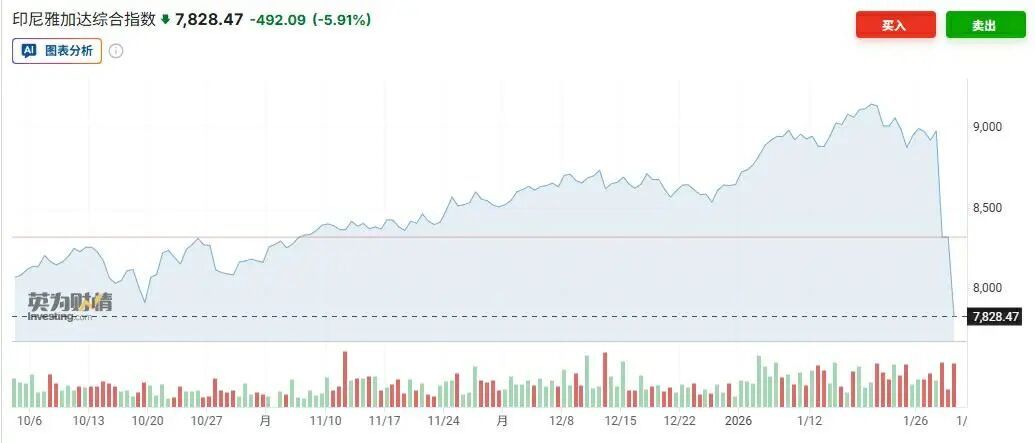
Core Viewpoint - The Indonesian stock market is experiencing its worst two-day performance in 30 years, driven by concerns raised by MSCI regarding the market's investability and transparency [1][3][4]. Market Performance - On January 29, the Jakarta Composite Index fell by as much as 10%, triggering a 30-minute trading halt, following a drop of over 8% the previous day [3]. - The market is at risk of entering a technical bear market if the downward trend continues [3]. - The Indonesian rupiah also saw its largest decline against the US dollar since October of the previous year, dropping by 0.5% [5]. MSCI Concerns - MSCI has raised alarms about the low free float of stocks in the Indonesian market, with over 200 components having a free float ratio below 15% [4]. - MSCI has suspended certain index adjustments and frozen the addition of new constituents until issues related to concentrated ownership are addressed by Indonesian regulators [4]. - If improvements in transparency are not made by May, MSCI may reassess Indonesia's market access, potentially leading to a downgrade in its weight in the MSCI Emerging Markets Index [4]. Investor Sentiment - Goldman Sachs and UBS have downgraded their ratings on the Jakarta Composite Index, with Goldman Sachs warning of a potential outflow of over $13 billion from the Indonesian stock market under extreme conditions [5]. - There has been a notable shift in investor sentiment, with foreign investors net selling $192 million worth of Indonesian stocks as of January 23, marking the first outflow in 16 weeks [5]. Regulatory Response - The Indonesia Stock Exchange has acknowledged MSCI's feedback and is committed to enhancing market data transparency and reliability [6]. - The exchange plans to publicly disclose free float data starting January 2, 2026, and will consult market participants on ideal free float ratios [6]. - Regulatory bodies are considering increasing the minimum free float requirement from the current 7.5% to between 10% and 15%, with a long-term goal of 25% [6][7].
印尼股市创30年来最大两日跌幅
第一财经· 2026-01-29 07:16
Core Viewpoint - The Indonesian stock market is experiencing its worst two-day decline in 30 years, driven by concerns raised by MSCI regarding the market's investability and transparency [3][6]. Market Performance - On January 29, the Jakarta Composite Index fell by as much as 10%, triggering a trading halt, while it had previously dropped over 8% on January 27, leading to another trading suspension [6][8]. - If the downward trend continues, the index may enter a technical bear market [6]. MSCI Concerns - MSCI has raised alarms about the low free float of stocks in Indonesia, with over 200 components having a free float ratio below 15%, which distorts the index and poses manipulation risks [7][10]. - MSCI has paused index adjustments and frozen new component stocks until regulatory issues regarding concentrated ownership are addressed [6][7]. Investor Sentiment - Following MSCI's warning, foreign investors have become increasingly cautious, with net sales of Indonesian stocks reaching $1.92 million for the week ending January 23, marking the first outflow in 16 weeks [8][9]. - On January 27, foreign investors sold a record net amount of 6.2 trillion Indonesian rupiah (approximately $3.71 million) in a single day [9]. Regulatory Response - The Indonesian Stock Exchange has acknowledged MSCI's feedback and is committed to enhancing market data transparency and reliability [9][10]. - Plans are underway to increase the minimum free float ratio from 7.5% to between 10% and 15%, with a long-term goal of 25% [10]. Future Outlook - Goldman Sachs and UBS have downgraded their ratings for the Jakarta Composite Index, with Goldman Sachs warning of potential capital outflows exceeding $13 billion under extreme conditions [6][9]. - The Indonesian financial authorities are preparing stricter rules for small business listings to improve market conditions [10].

MSCI警告引发印尼股市30年来最大两日跌幅,印尼监管机构紧急应对
Di Yi Cai Jing· 2026-01-29 06:33
Core Viewpoint - The Indonesian stock market is experiencing its worst two-day performance in 30 years, driven by concerns raised by MSCI regarding the market's investability and potential outflows of up to $13 billion [1][3][5]. Market Performance - On January 29, the Jakarta Composite Index fell by as much as 10%, triggering a 30-minute trading halt, following a previous drop of over 8% on January 28, which also led to a trading suspension [3][4]. - The significant sell-off has primarily affected state-owned banks and companies linked to large corporate groups, raising the risk of a technical bear market if the downward trend continues [3][4]. MSCI Concerns - MSCI has expressed serious concerns about the low free float of stocks in the Indonesian market, with over 200 components having a free float ratio below 15%, which distorts the index and poses manipulation risks [4][5]. - MSCI has announced a suspension of certain index adjustments and will freeze the addition of new constituents until issues related to concentrated ownership are addressed by Indonesian regulators [3][4]. Currency Impact - The Indonesian rupiah has depreciated against the US dollar, recording its largest drop since October of the previous year, as investor confidence wanes [5][6]. Analyst Ratings - Both Goldman Sachs and UBS have downgraded their ratings for the Jakarta Composite Index, with Goldman Sachs warning of potential outflows exceeding $13 billion under extreme scenarios [5][6]. Regulatory Response - The Indonesian Stock Exchange has acknowledged MSCI's feedback and is committed to enhancing market data transparency, with plans to publicly disclose free float data starting January 2, 2026 [6][7]. - The exchange aims to raise the minimum free float requirement from the current 7.5% to between 10% and 15%, with a long-term goal of 25%, although no specific timeline has been set [6][7]. Future Considerations - The Indonesian financial regulatory authority is preparing stricter rules for small business listings, while the stock exchange emphasizes the need for increased liquidity to absorb new stock supply [7].


印尼股市大幅下挫 综合股指盘中跌逾8%触发停牌
Zhong Guo Xin Wen Wang· 2026-01-28 11:02
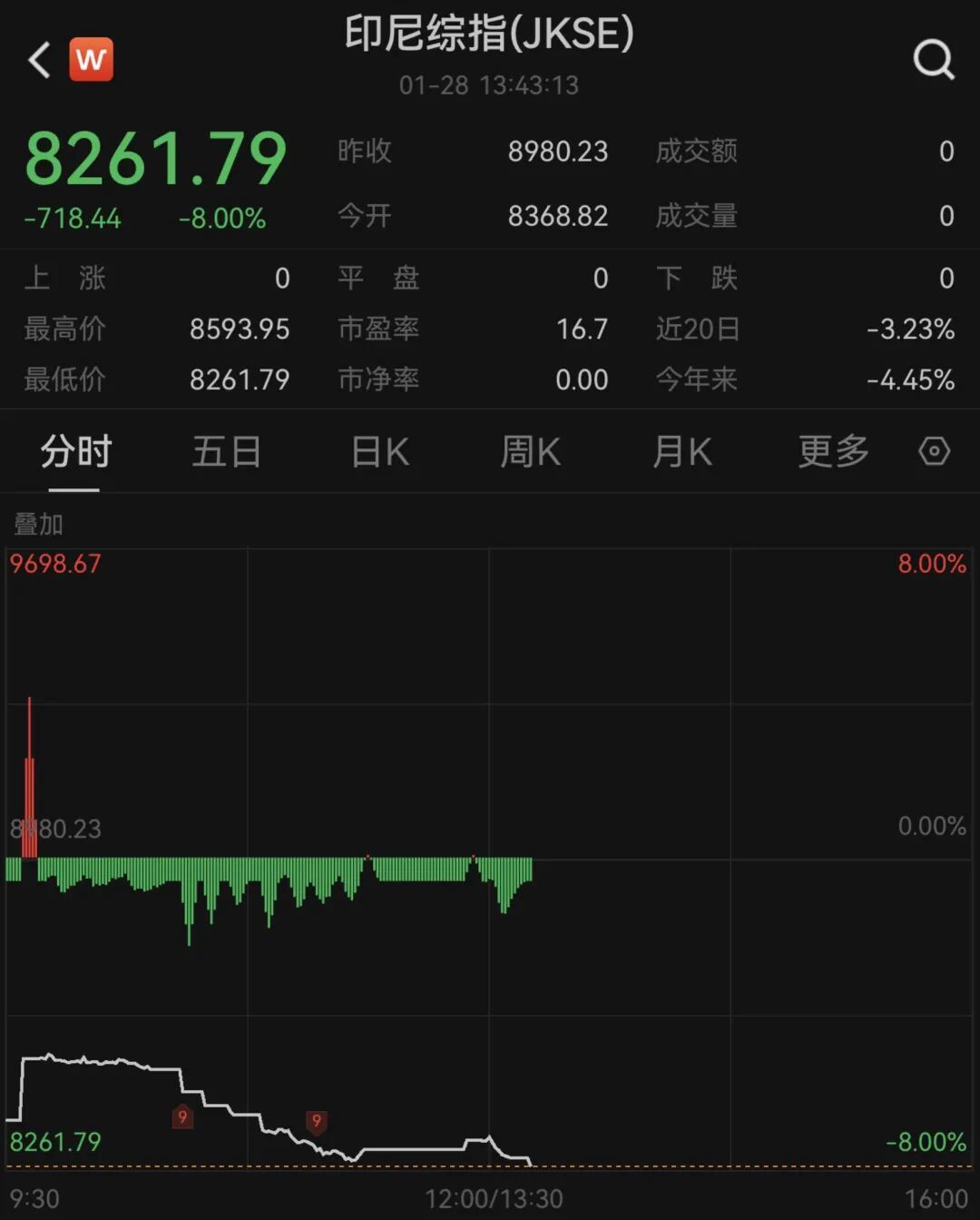
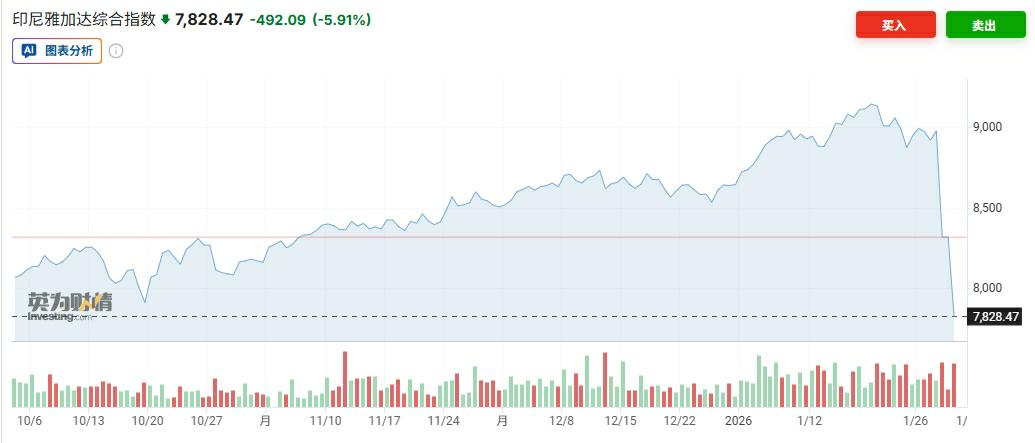
Group 1 - The Indonesian stock market experienced a significant decline, with the composite index (IHSG) dropping over 8%, triggering a 30-minute trading halt [1] - The index opened down 6.8% at 8369.48 points and further decreased to 8261.79 points, marking a total drop of approximately 718 points [1] - The last occurrence of an 8% drop in a single day was in 2025, following the Eid al-Fitr holiday [1] Group 2 - The sharp market fluctuations are closely linked to a warning issued by MSCI regarding the assessment of free float shares and market investability in Indonesia [1] - Over 200 stocks in the Indonesian composite index have a free float ratio below 15%, which is seen as a structural weakness that may undermine the index's representativeness and increase market risk [1] - Local brokers believe the impact of MSCI's statement may last about a week but will not alter the long-term trend of the Indonesian stock market [2] Group 3 - The Indonesian stock exchange stated that MSCI's feedback is an important reference for improving market governance and transparency [2] - The Minister of Investment and CEO of the National Sovereign Wealth Fund indicated that despite short-term market pressure, the fundamentals of Indonesian companies remain robust [2] - To alleviate market concerns, Indonesian financial regulators are considering increasing the minimum free float share ratio for listed companies [2]
印尼股市,暴跌逾8%!MSCI可投资性警告引发抛售
Feng Huang Wang· 2026-01-28 08:53
Core Viewpoint - The Indonesian stock market, represented by the Jakarta Composite Index (JCI), experienced a significant decline of over 8%, triggering a temporary trading halt due to concerns raised by MSCI regarding the investability of the Indonesian market [1][2]. Group 1: Market Reaction - The JCI recorded its largest drop in over nine months, with major stocks like PT Bumi Resources, PT Petrosea, and PT Pantai Indah Kapuk Dua falling nearly 15% each, as they were expected to be included in the upcoming MSCI index review [2]. - Global investors sold a net $192 million of Indonesian local stocks as of the week ending January 23, marking the end of 16 consecutive weeks of net inflows, with continued net selling observed in the current week [3]. Group 2: MSCI's Concerns - MSCI announced an immediate suspension of certain index adjustments, including the addition of new constituents, until regulatory authorities address concerns over excessive concentration of ownership in listed companies [2]. - MSCI warned that if Indonesia fails to make sufficient progress in transparency by May, it will reassess the market's accessibility status, potentially leading to a reduction in the weight of Indonesian companies in the MSCI Emerging Markets Index or even a downgrade to frontier market status [2]. Group 3: Ownership Structure Issues - The Indonesian stock market, with a total market capitalization of approximately $976 billion, faces significant issues related to ownership concentration, which has led to complaints from investors about low trading volumes and high control by a few wealthy individuals [5]. - The Indonesian financial regulatory authority has attempted to address these concerns by proposing to increase the minimum free float requirement from the current 7.5% to between 10% and 15%, with a long-term goal of 25% [5].
印尼股市突然大跌8%,暂停交易30分钟,发生了什么?
Mei Ri Jing Ji Xin Wen· 2026-01-28 08:40
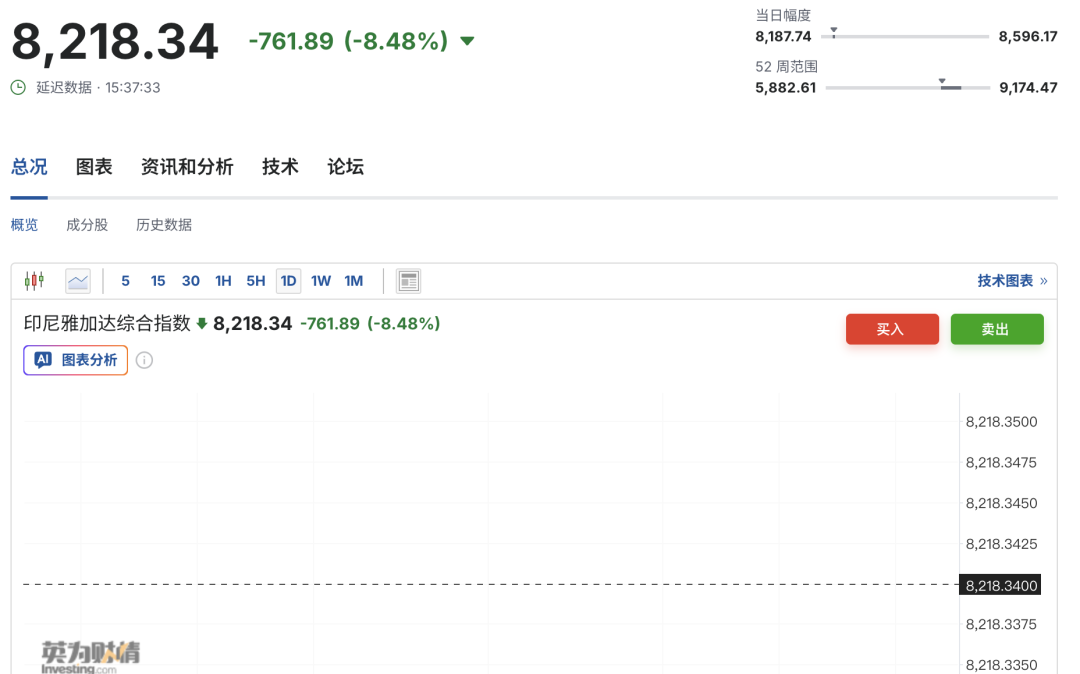
Core Viewpoint - The Indonesian stock market experienced a significant drop, with the Jakarta Composite Index falling by 8%, triggering a 30-minute trading halt, primarily affecting state-owned banks and companies linked to large corporate groups [1][5]. Market Performance - On January 28, the Jakarta Composite Index opened at 8,368.82 and closed at 8,261.79, marking a decrease of 718.44 points or 8.00% [2]. - The index had a weekly decline of 1.37% prior to the sharp drop, indicating a cooling market sentiment [8]. MSCI Announcement - MSCI announced a halt on the adjustment of Indonesian indices until regulatory issues regarding concentrated ownership in listed companies are resolved, citing concerns over "fundamental investment feasibility" and potential price manipulation [3][7]. - MSCI will stop adding new index constituents and freeze the increase in the number of stocks available for investors [3][7]. Future Implications - If Indonesia fails to improve transparency by May, MSCI may reassess the market's investability, potentially leading to a reduction in the weight of Indonesian companies in the MSCI Emerging Markets Index or even a downgrade to frontier market status [4][7]. - MSCI has proposed tightening the definition of free float shares, which are crucial for index weighting, and may use alternative data to assess the actual number of free float shares [9][10]. Market Concerns - The low free float ratio has been a significant issue for the Indonesian stock market, with many index constituents being controlled by a few wealthy individuals, leading to concerns about market manipulation and distorted index performance [10].