Federal Funds Rate

Search documents
Best money market account rates today, February 20, 2026 (up to 4.01% APY return)
Yahoo Finance· 2026-02-20 11:00
Find out which banks are offering the best MMA rates right now. The Federal Reserve cut the federal funds rate three times in 2024 and three times in 2025. As a result, deposit interest rates — including money market account rates — have been falling. It’s more important than ever to compare MMA rates and ensure you earn as much as possible on your balance. A look at the best money market account rates today Although money market account rates are elevated by historical standards, the national average ...
Treasury Yields Snapshot: February 13, 2026
Etftrends· 2026-02-17 16:37
Core Insights - The yield on the 10-year Treasury note reached 4.04% on February 13, 2026, marking its lowest level since November 2025, while the 2-year note ended at 3.40%, the lowest since 2022 [1] - The inverted yield curve, where longer-term Treasury yields are lower than shorter-term yields, is considered a reliable leading indicator for recessions, with the 10-2 spread being a key focus [1] - Recent trends show that mortgage rates have declined, with the 30-year fixed rate at 6.09%, one of the lowest since October 2024, despite the Federal Funds Rate (FFR) cutting cycle initiated in September 2024 [1] Treasury Yields Overview - The long-term view of the 10-year Treasury yield since 1965 highlights significant economic events, including the 1973 oil embargo that led to stagflation [1] - The 10-2 spread has been continuously negative from July 5, 2022, to August 26, 2024, with the last negative spread recorded on September 5, 2024 [1] - The average lead time to a recession based on the first negative spread date is approximately 48 weeks, while using the last positive spread date yields an average lead time of 18.5 weeks [1] Mortgage Rate Dynamics - The Federal Funds Rate influences borrowing costs for banks, typically leading to higher mortgage rates when the FFR increases; however, recent trends show mortgage rates declining despite the FFR cutting cycle [1] - The Freddie Mac Weekly Primary Mortgage Market Survey indicates the 30-year fixed mortgage rate at 6.09%, reflecting a downward trend in mortgage rates [1] Market Behavior and Federal Reserve Influence - Fed policy has significantly impacted market behavior, particularly in relation to Treasury yields and mortgage rates [1] - The relationship between the 10-year Treasury yield and the S&P 500 is noted, emphasizing the influence of Federal Reserve interventions on market dynamics [1]


Treasury Yields Snapshot: February 6, 2026
Etftrends· 2026-02-06 23:18
Core Insights - The yield on the 10-year Treasury note was 4.22% on February 6, 2026, while the 2-year note was at 3.50% and the 30-year note at 4.85% [1] - An inverted yield curve, where longer-term yields are lower than shorter-term yields, is a reliable leading indicator for recessions, with the 10-2 spread being particularly significant [1] - The average lead time to a recession based on the 10-2 spread is approximately 48 weeks from the first negative spread date, or 18.5 weeks from the last positive spread date [1] Treasury Yields Overview - The long-term view of the 10-year Treasury yield shows significant historical context, starting from 1965 [1] - The 10-2 spread has been continuously negative from July 5, 2022, to August 26, 2024, indicating potential recession signals [1] - The 10-3 month spread also shows similar patterns, with negative periods leading up to recessions [1] Mortgage Rates and Federal Funds Rate - The Federal Funds Rate influences borrowing costs, and recent trends show that mortgage rates have declined despite the Fed's rate-cutting cycle starting in September 2024 [1] - The latest Freddie Mac survey indicates the 30-year fixed mortgage rate at 6.11%, one of the lowest since October 2024 [1] - Fed policy has been a major influence on market behavior, particularly in relation to Treasury yields and mortgage rates [1]

Best CD rates today, February 3, 2026: Lock in up to 4% APY today
Yahoo Finance· 2026-02-03 11:00
Core Insights - Deposit account rates are declining, but competitive returns on certificates of deposit (CDs) can still be locked in, with the best CDs offering rates above 4% [1] Group 1: Current CD Rates - The best short-term CDs (six to 12 months) currently offer rates around 4% APY, with Marcus by Goldman Sachs providing the highest rate of 4% APY on its 1-year CD as of February 3, 2026 [2] - CDs generally offer significantly higher rates than traditional savings accounts, making them an attractive option for savers [2] Group 2: Historical Trends - CD rates were relatively high in the early 2000s but began to decline due to economic slowdowns and Federal Reserve rate cuts, with average one-year CDs at around 1% APY by 2009 [3] - The trend of falling CD rates continued into the 2010s, with average rates for 6-month CDs dropping to about 0.1% APY by 2013 [4] - A slight improvement in CD rates occurred between 2015 and 2018 as the Fed gradually increased rates, but the COVID-19 pandemic led to emergency rate cuts, causing new record lows in CD rates [5] Group 3: Recent Developments - Following the pandemic, inflation prompted the Fed to hike rates 11 times between March 2022 and July 2023, resulting in higher APYs on savings products, including CDs [6] - As of September 2024, the Fed began cutting the federal funds rate, leading to a steady decline in CD rates from their peak, although they remain high by historical standards [7] Group 4: Understanding CD Rates - Traditionally, longer-term CDs offered higher interest rates, but the current highest average CD rate is for a 12-month term, indicating a flattening or inversion of the yield curve [8] - When choosing a CD, factors such as goals, type of financial institution, account terms, and inflation should be considered to ensure the best fit for individual needs [9]
What’s the Fed’s 2026 Playbook? | Presented by CME Group
Bloomberg Television· 2026-02-02 19:12
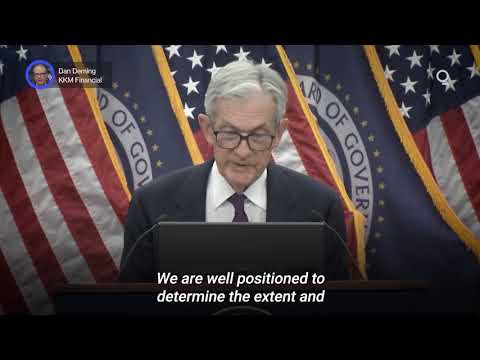
At today's meeting, the committee decided to maintain the target range for the federal funds rate. The Federal Reserve's federal funds rate currently stands at a target range of 3.5% to 3.75% following three 25 basis point cuts in September, November, and December of 2025. >> There was broad support on the committee for holding today.Broad, I would say the market does not anticipate a cut in the first three meetings of 2026. According to the CME Fed Watch tool, the median projection anticipates the Fed fund ...
Treasury Yields Snapshot: January 30, 2026
Etftrends· 2026-01-30 22:54
Group 1: Treasury Yields and Economic Indicators - The yield on the 10-year Treasury note was 4.26% as of January 30, 2026, while the 2-year note was at 3.52% and the 30-year note at 4.87% [1] - An inverted yield curve occurs when longer-term Treasury yields are lower than shorter-term yields, with the 10-2 spread being a reliable leading indicator for recessions, typically turning negative before recessions [2] - The average lead time to a recession based on the first negative spread date is approximately 48 weeks, while using the last positive spread date yields an average lead time of 18.5 weeks [4][6] Group 2: Mortgage Rates and Federal Funds Rate - The Federal Funds Rate (FFR) influences borrowing costs for banks, which in turn affects mortgage rates; however, recent trends show mortgage rates declining even as the Fed began a rate-cutting cycle in September 2024 [7] - The latest Freddie Mac Weekly Primary Mortgage Market Survey reported the 30-year fixed mortgage rate at 6.10%, marking one of the lowest levels since October 2024 [7] Group 3: Treasury ETFs - ETFs associated with Treasuries include Vanguard 0-3 Month Treasury Bill ETF (VBIL), Vanguard Intermediate-Term Treasury ETF (VGIT), and Vanguard Long-Term Treasury ETF (VGLT) [9]

Fed's Miran Weighs In on Warsh, Rate Cuts and Balance Sheet
Bloomberg Television· 2026-01-30 20:53
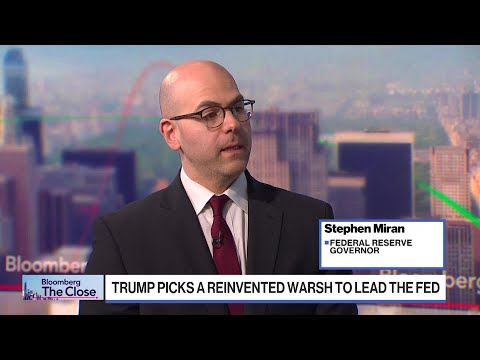
What is sort of technically your last 24 hours as a Fed governor. Your term is up tomorrow, but you're staying on. Thanks for having me back.It's good to see you again. Look, as you say, my term expires over the weekend. But per the Federal Reserve Act, I will be staying in my seat until someone is confirmed to replace me, presumably Chairman designate Kevin Warsh.This is common practice and has happened many times by other governors who have waited for someone else to be confirmed into their seat. Now the ...
Trump Names New Fed Chair: Kevin Warsh
Investopedia· 2026-01-30 17:00
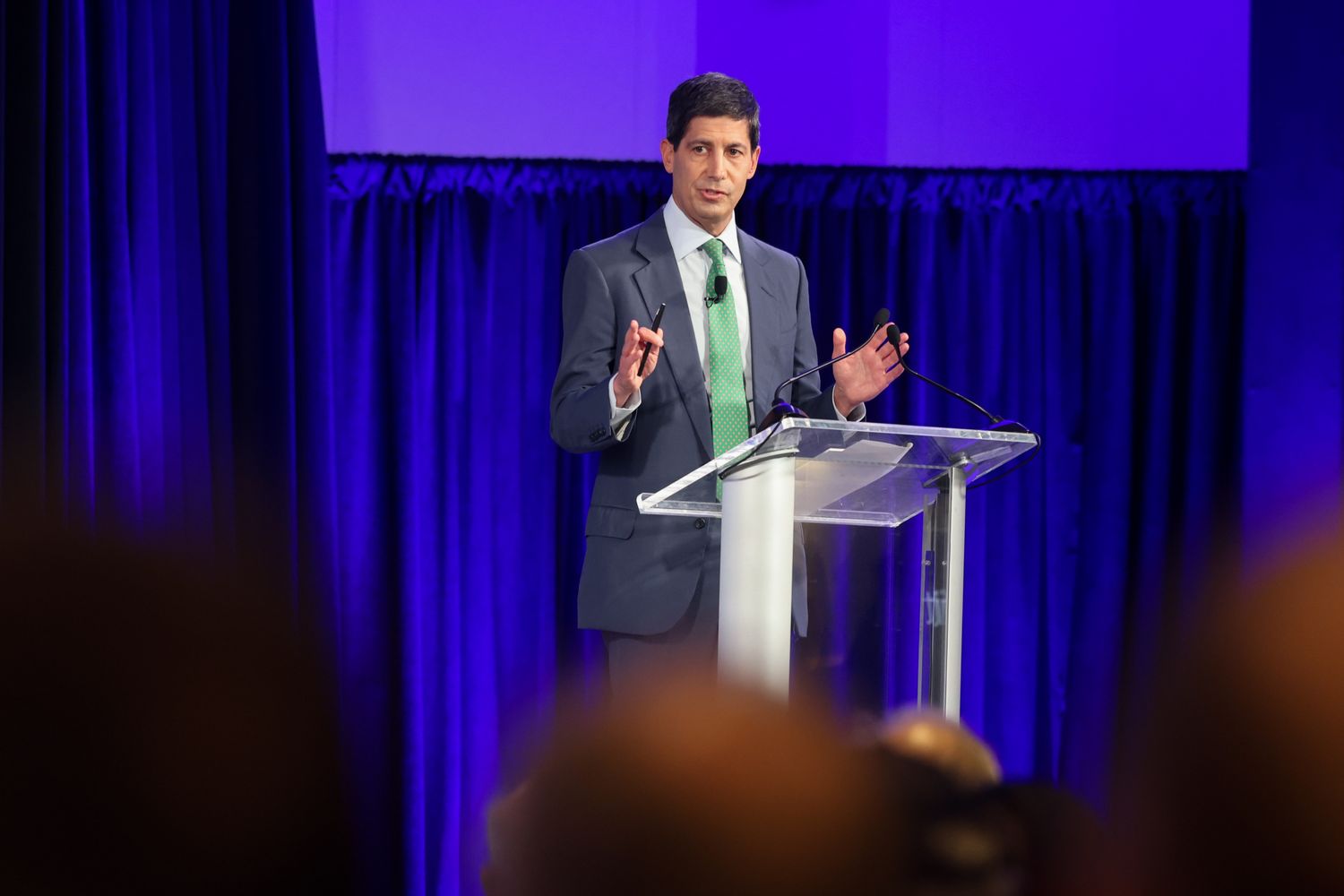
Key Takeaways President Donald Trump has selected former Federal Reserve Governor Kevin Warsh as his nominee to be the next chair of the Federal Reserve after Jerome Powell's term ends in May.Warsh has argued for lower interest rates, and as Fed chair, will be in a position to influence them. President Donald Trump has selected former Federal Reserve Governor Kevin Warsh to be the next chair of the central bank.Warsh, who served as a Fed governor between 2006 and 2011, beat out several finalists for the ...
How to save on auto loans as the federal funds rate changes
Yahoo Finance· 2026-01-29 14:37
Key takeaways The Federal Open Market Committee (FOMC) sets the benchmark rate, which impacts the rates auto lenders set. When the federal funds rate fluctuates, so will the cost to finance a vehicle. The Fed increased the benchmark rate 11 times between 2022 and 2023, and the central bank has cut its rate three times to date in 2025. While auto loan rates have begun to decrease, it will likely take several rate cuts before borrowers see significantly lower rates. Over the past two years, Americ ...
Treasury Yields Snapshot: January 23, 2026
Etftrends· 2026-01-23 22:33
Group 1: Treasury Yields and Economic Indicators - The yield on the 10-year Treasury note was 4.24% as of January 23, 2026, while the 2-year note was at 3.60% and the 30-year note at 4.82% [1] - An inverted yield curve occurs when longer-term Treasury yields are lower than shorter-term yields, which is often a precursor to recessions, with the 10-2 spread being a reliable leading indicator [2] - The average lead time to a recession based on the first negative spread date is approximately 48 weeks, while using the last positive spread date yields an average lead time of 18.5 weeks [4][6] Group 2: Mortgage Rates and Federal Funds Rate - The Federal Funds Rate (FFR) influences borrowing costs for banks, which typically affects mortgage rates; however, recent trends show mortgage rates declining despite the Fed's rate cuts starting in September 2024 [7] - The latest Freddie Mac Weekly Primary Mortgage Market Survey reported the 30-year fixed mortgage rate at 6.09%, marking one of the lowest levels since October 2024 [7] Group 3: Treasury ETFs - ETFs associated with Treasuries include Vanguard 0-3 Month Treasury Bill ETF (VBIL), Vanguard Intermediate-Term Treasury ETF (VGIT), and Vanguard Long-Term Treasury ETF (VGLT) [9]