
Fiscal Consolidation

Search documents
Fitch Warns on U.S. Fiscal Outlook as Meta Inks Massive Nvidia Chip Pact
Stock Market News· 2026-02-17 22:08
Economic Outlook - Fitch Ratings projects that U.S. federal deficits will remain elevated through the 2027 fiscal year, with little political will for fiscal consolidation ahead of the November 2026 midterm elections [2] - The Trump administration may use alternative authorities to impose new tariffs, which could increase inflationary pressures while addressing trade imbalances [3] Technology Sector - Meta Platforms announced a significant agreement to acquire and deploy "millions" of chips from Nvidia, including Blackwell GPUs and Grace CPUs, aiming to enhance AI capabilities for billions of users [4][5] - This partnership solidifies Nvidia's market leadership, although it raises concerns about the substantial capital expenditure required for AI advancements, contributing to volatility in tech indices [5] Energy Sector - Devon Energy reported a strong Q4 with $702 million in free cash flow, exceeding analyst expectations for production and earnings, with an average production of 851,000 barrels of oil equivalent (Boe) per day [6] - The company anticipates a spending outlook of $3.5 billion to $3.7 billion for 2026, despite forecasting a production cut of 10,000 Boe per day in Q1 due to severe winter weather [7] Investment Strategies - Carl Icahn has shifted his investment strategy, reducing exposure in telecommunications and specialty chemicals by cutting stakes in EchoStar and International Flavors & Fragrances, while increasing holdings in Centuri Holdings and Monro, Inc. [8][9] - Netflix Co-CEO Ted Sarandos indicated a cautious approach to media industry consolidation, preferring to wait for Paramount Global's next move before making any strategic decisions [9] Global Macro Trends - The Reserve Bank of New Zealand is facing pressure to consider a rate hike as inflation remains at 3.1%, slightly above the target band [10] - Wall Street is experiencing high volatility, influenced by AI-driven growth potential and risks from rapidly evolving technology and trade policies [11]



Sensex jumps 944 points on value-buying in oil, auto, banking stocks
Rediff· 2026-02-02 11:26
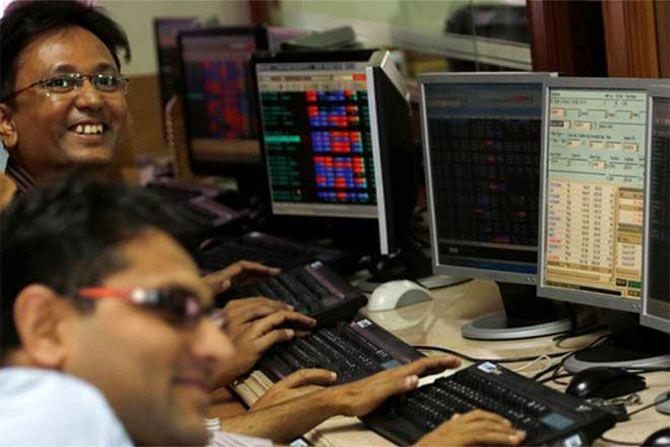
Market Performance - Stock markets rebounded with the BSE Sensex rising by 943.52 points or 1.17% to settle at 81,666.46 after a significant drop on Budget day [3][10] - The NSE Nifty increased by 262.95 points or 1.06% to end at 25,088.40, with a peak of 1,009.31 points during the day [4][5] Sector Performance - Blue-chip stocks in oil & gas, banking, and auto sectors saw value buying, contributing to the market recovery [3][11] - Power Grid surged by 7.61% and Adani Ports climbed by 4.76%, indicating strong performance among key players [4][7] Economic Indicators - A sharp decline in global crude oil prices, with Brent crude dropping 4.88% to USD 65.94 per barrel, provided relief to the markets [12][14] - The Union Budget for 2026-27, amounting to Rs 53.5 lakh crore, aims to boost manufacturing and support agriculture and tourism, reflecting a long-term growth strategy [8][9] Investor Activity - Foreign institutional investors sold equities worth Rs 588.34 crore on Sunday, indicating cautious sentiment in the market [5][12] - Despite the sell-off, the market showed signs of recovery as participants recalibrated positions following the Budget day decline [13]
印度经济与策略:2027 财年预算对增长的周期性与结构性支撑-India Economics and Strategy-F2027 Budget Cyclical and Structural Support to Growth
2026-02-02 02:42
Summary of the Conference Call on India's F2027 Budget Industry Overview - The conference call focuses on the Indian economy and its budget for fiscal year 2027 (F2027) - The analysis emphasizes the implications for various sectors, particularly Financials, Consumer Discretionary, and Industrials Key Points and Arguments Budget Overview - The F2027 Budget aims to balance debt-to-GDP reduction with slow fiscal consolidation while supporting growth through cyclical and structural measures - The fiscal deficit target is set at 4.3% of GDP for F27, slightly above the market expectation of 4.2% [2][3] Growth Support Measures - The budget supports growth through three main segments: 1. **Manufacturing**: Continued emphasis on manufacturing with support for semiconductors, rare earth magnets, and legacy industrial clusters [2] 2. **Services Sector**: Focus on the services sector with higher safe harbour thresholds, a tax holiday for data centres, and a target of achieving a 10% share of global exports by 2047 [2] 3. **Capital Expenditure (Capex)**: Total capex is projected to rise by 11.5% YoY, with defence capex increasing by 18% YoY [2][4] Fiscal Consolidation and Economic Growth - The budget maintains a path of fiscal consolidation, albeit at the slowest pace since the pandemic - Central government capex is expected to remain at 3.1% of GDP in F27, similar to the revised estimate for F26 - Nominal GDP growth is assumed at 10% for F27, with direct tax revenue growth projected at 11.4% [3][4] Market Outlook - The budget's focus on semiconductors indicates a significant shift in government priorities, likely boosting capex and services sector growth - The anticipated slower fiscal consolidation is expected to support earnings in F2027, aided by increased demand for equities through buybacks - The overall outlook for Indian equities remains constructive, with recommendations to be Overweight in Financials, Consumer Discretionary, and Industrials [4] Additional Important Insights - The budget's realistic fiscal math is supported by the projected growth in nominal GDP and tax revenues - The emphasis on manufacturing and services is seen as a strategic pivot to enhance India's competitiveness in the global market [3][4] This summary encapsulates the critical insights from the conference call regarding India's F2027 budget, highlighting the government's strategic focus on growth and fiscal management.
Budget 2026: Prudent push for sustainable growth
The Economic Times· 2026-02-01 18:00
Budget Overview - The budget is conservative with tax buoyancy for FY27 assumed at 0.8, lower than the previous year, and GST revenues projected to decrease by 3% in FY27 compared to FY26 [1][8] - The share of revenue expenditure, excluding interest, is proposed to decrease from 52.2% to 50.8% [1][8] Capital Expenditure and Fiscal Deficit - An additional capital expenditure of ₹1.26 lakh crore for FY27 has been budgeted, indicating improved quality of the fiscal deficit [2][9] Strategic Sector Incentives - The budget emphasizes policy nudges and incentives in strategic sectors with long-term economic implications, including nuclear power, data centres, global capability centres (GCCs), and maintenance, repair, and operations (MROs) [2][9] Nuclear Power Sector - The extension of zero basic customs duty on imports for new nuclear power projects until 2035 will lower capital costs for developers, reduce energy costs, and enhance energy security [4][9] Data Centres and Semiconductor Mission - Data centres are incentivized with a long-term tax holiday until 2047 for foreign companies providing cloud services, while the India Semiconductor Mission aims to boost private investment in fabrication, design, and equipment manufacturing [5][9] Manufacturing and Supply Chain Development - Changes in income-tax laws will facilitate just-in-time manufacturing and improve the economics of electronics manufacturing, alongside the development of dedicated rare earth corridors to strengthen strategic supply chains [6][9] Global Capability Centres (GCCs) - Investments in GCCs are encouraged as they drive services exports, job creation, and advanced skills development, particularly in AI and emerging technologies [7][9] IT Services Tax Certainty - Unifying all IT services under a single category with a common safe harbour margin of 15.5% will reduce ambiguity and enhance tax certainty for the sector [7][9] Support for MSMEs - The proposed ₹10,000-crore SME Growth Fund and credit guarantee schemes for invoice discounting aim to provide additional capital for India's 10 million registered MSMEs [7][9] Overall Budget Impact - The budget presents a credible roadmap for increasing competitiveness and long-term growth, although a higher divestment target could have provided more resources and fiscal flexibility [8][9]


With eye on FDs, SBI chief seeks tax parity on financial products
The Times Of India· 2026-01-31 19:04
Group 1 - The State Bank of India (SBI) chairman CS Setty emphasized the need for a level playing field in tax treatment for all financial products, particularly fixed deposits, as bank deposits lag behind credit growth due to a shift towards mutual funds [4][2] - SBI Research recommended aligning tax rates on deposit interest with capital gains to encourage household savings in banks, reflecting a broader consensus in the financial sector on fiscal prudence and consolidation [4][2] - The Indian Banks' Association has been advocating for tax benefits for fixed deposits, highlighting the current eligibility for deductions under the old tax regime, which is less favored by taxpayers [4] Group 2 - The ratio of mutual fund assets under management (AUM) to bank deposits has increased significantly, from 12.6% in 2015 to over 33.5% in 2025, indicating a structural shift in investor behavior [3][4] - Bank deposits have grown nearly three times over the past decade, while mutual fund AUM has seen more than seven times growth, suggesting a trend where savers are increasingly seeking better post-tax returns in equities [3][4] - Concerns have been raised by industry leaders, including Uday Kotak and MV Rao, regarding the systemic risks posed by the ongoing shift of funds from bank deposits to non-banking assets like equities and mutual funds [3][4]

Modi to bet on growth in budget amid global risks: What to watch
BusinessLine· 2026-01-30 04:05
Core Viewpoint - The Indian government's upcoming budget is expected to prioritize job creation and economic stability amid global uncertainties, with a focus on infrastructure spending and fiscal consolidation [1][2][4]. Employment and Growth - The budget is anticipated to emphasize employment support and growth initiatives, with increased spending on infrastructure such as roads, ports, and railways, alongside reforms in the import-duty regime [2][3]. - Economists project India's economic growth to be between 6.5% and 7% for the next fiscal year, with inflation expected to align with the central bank's target of 4% [8]. Fiscal Deficit and Debt - The fiscal deficit is projected to decrease to 4.2% of GDP in the upcoming fiscal year, down from 4.4% in the current year, as the government aims to adhere to fiscal consolidation [4][6]. - India's general government debt is estimated to reach 81.29% of GDP by March 2024, a significant increase from 69% in 2015, primarily due to pandemic-related borrowing [7]. Revenue Generation - The government anticipates net tax revenues of 28.3 trillion rupees (approximately $308 billion) and an additional 500 billion rupees from disinvestment [9]. - Corporate and income tax collections will need to increase by 11.7% and 43% year-on-year, respectively, to meet budgeted targets [10]. Capital Expenditure - Capital expenditure is expected to be a focal point, with an allocation of about 12.04 trillion rupees, nearly 3% of GDP, although concerns about reaching saturation in large infrastructure projects have been raised [12]. - Defense-related capital spending is projected to rise to 2.3 trillion rupees, reflecting ongoing border tensions [13]. Market Borrowing - The government is likely to engage in record bond borrowing, with gross market borrowing expected to reach 16.5 trillion rupees and net borrowing at 11.6 trillion rupees [14].
印度经济:2026 财年经济调查报告- 核心要点-India Economics-Economic Survey F2026 – Key Takeaways
2026-01-30 03:14
Key Takeaways from the Economic Survey F2025-26 Industry Overview - **Country**: India - **Focus**: Economic growth, fiscal policy, inflation, external stability, and sectoral performance Core Insights 1. **Growth Expectations**: - Real GDP growth is projected at **7.4% YoY for F2026** and between **6.8% and 7.2% YoY for F2027**. Domestic demand is expected to support this growth despite global uncertainties [9][10] - The cumulative impact of recent policy reforms has lifted the economy's medium-term growth potential closer to **7%** [11] 2. **Inflation Management**: - Headline CPI has softened due to a downturn in food prices, with core inflation hovering around **4%**. The survey anticipates inflation to remain anchored within manageable ranges, supported by strong agricultural output and stable global commodity prices [9][18] 3. **External Stability**: - India maintains robust external macro stability, with strong services exports and remittances supporting the current account. The capital account has attracted substantial gross FDI, indicating resilience amid global volatility [19][20][22] 4. **Fiscal Policy**: - The fiscal deficit is expected to be **4.2% of GDP** for F2027, with a commitment to a transparent medium-term debt glide path of **50% of GDP ±1ppt by F2031**. The government emphasizes a calibrated fiscal strategy that combines consolidation with sustained public investment [2][23] Sectoral Insights 1. **Agriculture**: - Growth in agriculture is critical for food security and livelihoods. Allied activities like horticulture and dairy are key contributors. Policy measures to improve infrastructure and productivity are essential [11] 2. **Industry**: - Transition to higher-value manufacturing is gaining traction, supported by ongoing capital expenditure and reforms like the PLI scheme. However, challenges such as high logistical costs and regulatory complexity persist [12][13] 3. **Infrastructure**: - Significant investments in infrastructure are crucial for growth and productivity. Initiatives like PM GatiShakti and the National Logistics Policy aim to enhance logistical coordination and reduce transaction costs [14] 4. **Services**: - The services sector is a major driver of economic growth and employment, with a focus on high-value, technology-driven segments. Tailored reforms are necessary to maintain competitiveness [15] Additional Considerations - **Medium-term Growth Path**: - Achieving inclusive growth is linked to augmenting productive capacity and institutional transformation, aligning with the long-term vision of "Viksit Bharat" by 2047 [27][28] - **State Finances**: - State governments are encouraged to improve revenue mobilization and spending composition, with a focus on conditional cash transfers linked to verifiable actions to avoid widening deficits [24][25][26] This summary encapsulates the key points from the Economic Survey F2025-26, highlighting India's growth trajectory, fiscal strategies, and sectoral developments while addressing potential risks and challenges.
X @Bloomberg
Bloomberg· 2026-01-29 00:41
Prime Minister Modi’s government is likely to announce measures to improve the ease of doing business and boost infrastructure spending, while sticking to fiscal consolidation in the upcoming budget, as punitive US tariffs cloud the outlook https://t.co/LREb17dP5T ...
Nominal GDP pegged at 10.5%-11% for FY27, fiscal deficit seen at 4.2%: Report
The Economic Times· 2026-01-26 19:04
Fiscal Deficit and Economic Projections - The fiscal deficit is estimated at 4.2% of GDP for FY27, with the government's borrowing cost expected to be between 6.8-7% [1] - Nominal GDP growth for FY27 is projected at 10.5-11%, influenced by rising international commodity prices affecting wholesale inflation [1] - Capital expenditure is projected to exceed ₹12 lakh crore in FY27, reflecting a year-on-year growth rate of 10% [1] Tax Revenue and Borrowing Trends - Personal income-tax collections are expected to continue surpassing corporate tax collections in the FY27 Budget [2] - Gross market borrowing over the next five fiscal years is estimated at ₹93.8-95.2 lakh crore, indicating a need for alternative borrowing sources such as small savings [2] Medium-term Fiscal Strategy - The central government has established a medium-term fiscal consolidation roadmap, aiming to reduce the debt-to-GDP ratio to 56.1% in FY26 from 57.1% in FY25 [5] - The government is committed to a declining trajectory for central government debt towards around 50% (± 1%) of GDP by March 2031, barring major external shocks [5] - The report recommends that state governments adopt medium-term, scenario-based debt-to-GSDP paths aligned with realistic growth assumptions and development needs [5]
UK borrows less than expected after Reeves tax raid
Yahoo Finance· 2026-01-22 08:34
Core Insights - The UK experienced a £56 billion increase in tax receipts due to recent tax rises implemented by Rachel Reeves, leading to lower-than-expected borrowing figures in December [1][2][4] Group 1: Tax Receipts and Borrowing - UK borrowing fell to £11.6 billion in December, a decrease of £7.1 billion from the previous year and below analysts' expectations [1] - Tax receipts increased by 7.6%, with a total rise of £33.2 billion from April to December, largely driven by higher income tax receipts which contributed £16.6 billion [2][3] - The National Insurance increase on employers contributed £23.8 billion to tax receipts during the same period, bringing the total tax take close to £150 billion [2] Group 2: Public Finances and Debt - Despite the positive borrowing figures, public finances are described as fragile, with national debt at its highest level since the early 1960s, at 95.5% of GDP [5][6] - Borrowing from April to December was £4.1 billion lower than forecast, primarily due to lower-than-expected debt interest costs, which were £3.8 billion less than anticipated [4] Group 3: Economic Outlook and Risks - Analysts express concerns that borrowing may exceed forecasts by the end of the financial year, with potential political instability posing risks to fiscal responsibility [7][8] - High borrowing costs and rising interest rates are significant challenges for public finances, with interest costs accounting for £9.1 billion of the net government borrowing in December [9][10]