
Policy Uncertainty

Search documents
Tariffs Revisited: Policy Uncertainty Returns as Fed Risks Build (22 Feb 2026) – Ernest Lim's Investing Blog
Ernest Lim's Investing Blog· 2026-02-22 09:01
Tariffs Revisited: Policy Uncertainty Returns as Fed Risks Build (22 Feb 2026) Dear allHappy Chinese New Year! Gong Xi Fa Cai!I am doing my usual work preparation over the weekend so as to provide timely updates to my clients. As I have a little bit of time, I decide to post on my blog too.Recent developments surrounding the U.S. Supreme Court ruling on tariffs introduce another layer of uncertainty into the market, even though the initial equity reaction was positive.1️⃣ Supreme Court Ruling & Tariff I ...

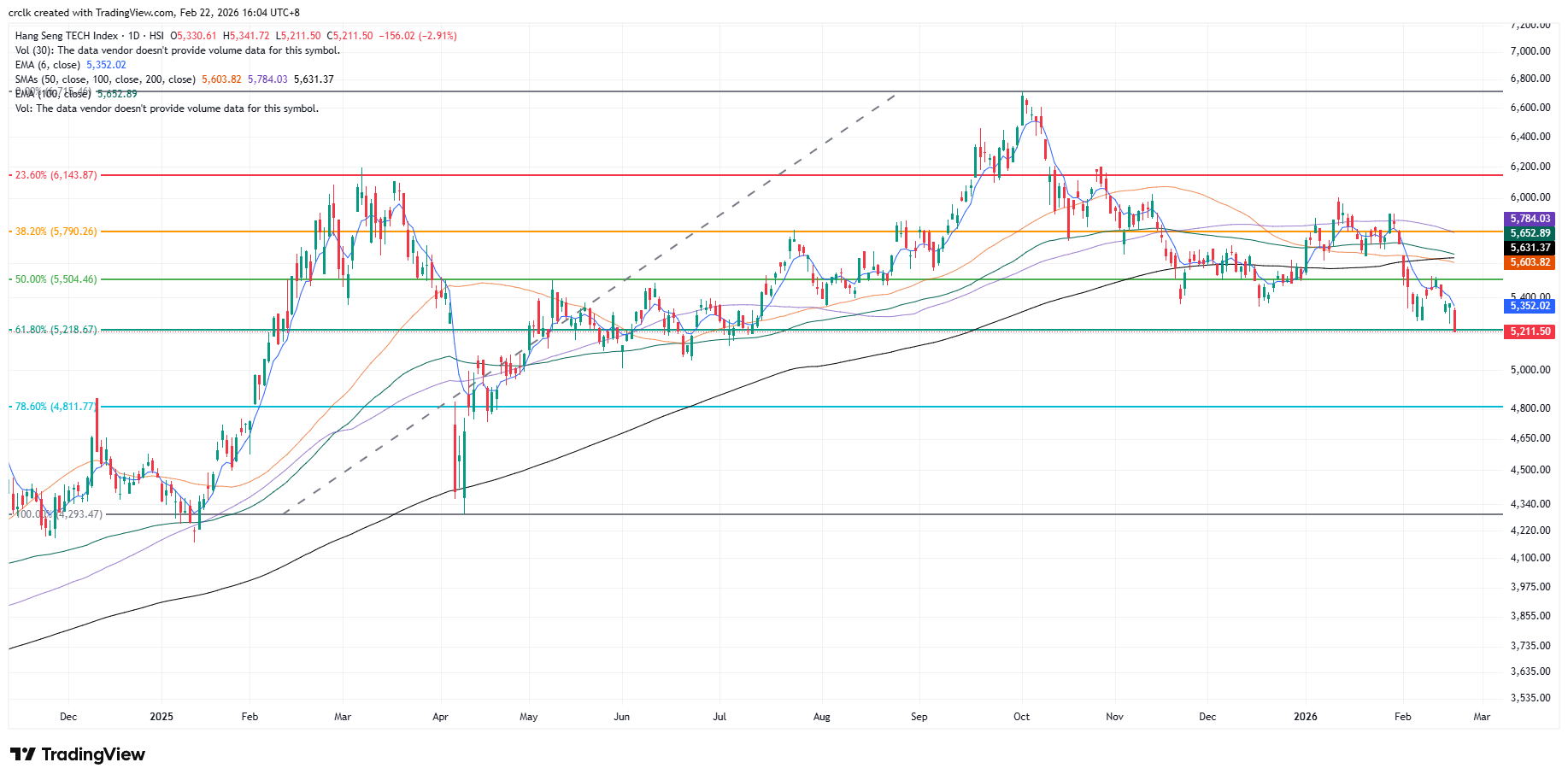
Whale's Insight: Policy Uncertainty Triggers Cross Asset Repricing
Seeking Alpha· 2026-02-06 08:15
To ensure this doesn’t happen in the future, please enable Javascript and cookies in your browser.If you have an ad-blocker enabled you may be blocked from proceeding. Please disable your ad-blocker and refresh. ...
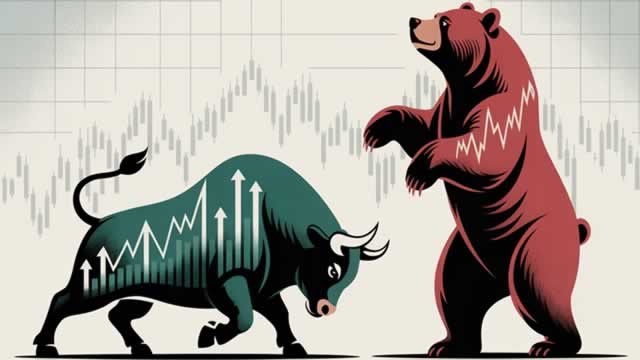
Fed is likely to lower rates only two more times, even under Trump's next chair pick: CNBC Fed survey
CNBC· 2026-01-27 13:00
U.S. Federal Reserve Chair Jerome Powell speaks as he holds a press conference following a two-day meeting of the Federal Open Market Committee (FOMC), at the U.S. Federal Reserve in Washington, D.C., U.S., Dec. 10, 2025. Kevin Lamarque | ReutersDespite the expected arrival of a new Trump-appointed Federal Reserve chair in coming months, respondents to the CNBC survey are only forecasting modest changes to the funds rate over the next two years.The results, which mirror pricing in Fed Funds futures market, ...

CEOs Flag Jittery US Consumers as Global Tensions Intensify
Yahoo Finance· 2026-01-23 18:09
Group 1: Corporate Outlook - Executives are expressing concerns that jittery US consumers and geopolitical tensions are impacting demand as earnings season progresses [1][5] - Delta Air Lines and United Airlines have highlighted that geopolitical uncertainty is affecting their profit outlook and travel demand [2] - Consumer staples companies like Procter & Gamble and McCormick report that shoppers are remaining cautious [2] Group 2: Industry Performance - 3M Co. experienced a significant decline after its outlook missed estimates, citing uncertainty in consumer and auto sectors [3] - Fastenal Co. and JB Hunt Transport Services also reported disappointing results, indicating uneven demand and a fragile freight market [3] - Despite these challenges, about 80% of S&P 500 Index members reporting so far have exceeded analysts' expectations [4] Group 3: Economic Environment - Executives note that policy uncertainty and geopolitical risks are overshadowing otherwise positive economic fundamentals [5] - McCormick's CEO mentioned that the market environment is characterized by volatility, inflation pressure, and low consumer confidence [6]
Why is gold price still rising and will it continue to increase more than $4,778? Here's what investors should do now
The Economic Times· 2026-01-21 22:56
Core Viewpoint - The rising gold prices, currently at $4,778.51 per ounce, are driven by safe-haven demand and policy signals, with expectations that prices may continue to rise beyond $4,778 [2][12]. Group 1: Gold Price Movements - Spot gold rose 0.3% to $4,778.51 per ounce after reaching an all-time high of $4,887.82 earlier in the session [2]. - U.S. gold futures for February settled 1.5% higher at $4,837.50 [2]. - Gold prices increased by 64% in 2025 and are up 11% so far in 2026, indicating sustained investor demand amid political and economic changes [10][14]. Group 2: Influencing Factors - The increase in gold prices is attributed to a mix of policy uncertainty, interest rate expectations, and demand for safe assets [4][12]. - The U.S. Federal Reserve is expected to maintain steady interest rates, which reduces the cost of holding gold [9][14]. - Political discussions around trade and security continue to support gold demand, despite short-term corrections following record price levels [4][14]. Group 3: Market Reactions - Following President Trump's reversal on tariff threats related to Greenland, gold prices trimmed gains due to reduced geopolitical pressure, although the broader upward trend remained intact [3][5]. - Equity markets reacted positively, with the Dow rising 722 points, the S&P 500 gaining 1.47%, and the Nasdaq climbing 1.6% [8][14]. Group 4: Broader Metals Trends - The movement in gold prices is part of a wider trend in metals, with spot silver falling 3.6% to $91.17 after reaching $95.87, while platinum touched a record of $2,543.99 before easing [10][14]. - Palladium declined to $1,825.85, indicating volatility in the broader metals market [10][14]. Group 5: Investor Strategies - Investors are advised to monitor U.S. interest rate decisions, Federal Reserve policy signals, and political developments related to trade and security [11][14]. - Short-term price swings are anticipated after record highs, emphasizing the importance of risk management [11][14].


UNH vs. MOH: Which Insurer Can Better Navigate Current Volatility?
ZACKS· 2026-01-20 15:46
Core Insights - UnitedHealth Group Incorporated (UNH) and Molina Healthcare, Inc. (MOH) operate in a highly regulated U.S. health insurance market, but their business models and exposure to policy risks differ significantly [1][2] - Investors are reassessing which insurers can better handle regulatory changes and cost pressures amid renewed volatility in healthcare stocks [1][3] Group 1: UnitedHealth Overview - UnitedHealth has unmatched scale and diversification across insurance and healthcare services, providing earnings stability that few peers can replicate [4] - The company reported steady revenue growth in its last quarter, driven by higher domestic commercial membership and expansion at Optum Rx, despite facing margin pressure from increased utilization [5] - UnitedHealth consistently generates strong operating cash flow and maintains disciplined capital deployment, allowing it to absorb short-term reimbursement changes without significantly disrupting long-term earnings [6] - The company faces challenges from heightened regulatory scrutiny and potential compliance costs under the proposed Great Healthcare Plan, but its scale and operational depth position it well to absorb impacts [7] Group 2: Molina Healthcare Overview - Molina Healthcare has a strong focus on Medicaid-managed care, benefiting from steady enrollment growth and relationships with state governments, but its narrow focus increases vulnerability to reimbursement changes [8][9] - The latest quarterly results showed stable revenue growth driven by rising premiums and membership gains, but Molina's EBITDA margin of 3.7% is lower than UnitedHealth's 7.3% [10] - Molina's earnings profile is more sensitive to utilization spikes and regulatory shifts, with a worsening medical care ratio (MCR) from 88.1% in 2023 to 89.1% in 2024 [11][12] Group 3: Valuation and Performance Comparison - UnitedHealth's forward price-to-earnings (P/E) ratio of 18.64X reflects its earnings durability, compared to Molina's 13.92X [13] - UnitedHealth's consensus estimate for 2025 EPS is $16.30, indicating a 41.1% year-over-year decline, while Molina's is $13.95, a 38.4% decrease [15][16] - Over the past six months, UnitedHealth shares gained 17.3%, outperforming Molina's 8.4% growth, indicating investor preference for stability [17] Conclusion - UnitedHealth is positioned as the more resilient choice in a volatile healthcare environment due to its scale, diversified model, stronger profitability, and healthier balance sheet [20] - Molina's narrower business mix makes it more vulnerable to policy shifts and utilization swings, leading to less earnings visibility [20][21]



Centene Corporation (CNC) Fell in Q3 As It Retracted Its 2025 Guidance
Yahoo Finance· 2026-01-05 12:15
Fund Performance - Artisan Mid Cap Value Fund's Investor Class fund ARTQX returned 0.97%, Advisor Class fund APDQX posted a return of 0.98%, and Institutional Class fund APHQX returned 0.97% in Q3 2025, compared to a 6.18% return for the Russell Midcap Value Index [1] Market Context - Equity markets continued to rally in Q3 2025 as investors overlooked tariff concerns, driven by strong corporate earnings, rising AI capital expenditures, and hopes for economic support from US fiscal policy and lower interest rates [1] Centene Corporation Overview - Centene Corporation (NYSE:CNC) is a healthcare enterprise that provides services to under-insured and uninsured families and commercial organizations, with a one-month return of 10.30% and a 52-week loss of 33.35% [2] - As of January 2, 2026, Centene's stock closed at $41.78 per share, with a market capitalization of $20.536 billion [2] Performance Analysis of Centene Corporation - The portfolio's stock selection was broadly negative across sectors in Q3 2025, with the healthcare sector being a significant source of underperformance, particularly due to Centene Corporation, Align Technology, and Baxter International [3] - Centene's shares declined after the company withdrew its 2025 guidance due to higher-than-expected market acuity on the ACA marketplaces and elevated Medicaid cost trends, compounded by a declining trend in Medicaid enrollment [3] - The end of the pandemic-era policy prohibiting disenrollment from Medicaid has led to millions losing coverage, and new work requirements from the Big Beautiful Bill (BBB) set to take effect on January 1, 2027, are expected to create additional headwinds for Medicaid enrollment [3] - Although Centene can reprice risk annually, the multitude of challenges it faces, including changes from the BBB, will likely delay recovery, prompting the fund to exit its position in Centene [3]

Trump’s Market Mayhem: A Daily Dose of Economic Whiplash
Stock Market News· 2025-11-28 06:00
Market Reactions to Trump's Policies - The stock market remains highly reactive to Donald Trump's policy announcements, often leading to unpredictable fluctuations in various sectors [1][2] - Trump's threats of tariffs have significant impacts, as seen with John Deere, which faced a potential 200% tariff, causing its shares to drop initially but later recover [3] - The pharmaceutical sector reacted positively to Trump's 100% tariff announcement on imported drugs, as U.S. companies with domestic manufacturing were exempt, leading to a rise in their stock prices [4] Sector-Specific Impacts - The entertainment industry faced declines following Trump's announcement of a 100% tariff on foreign films, with major companies like Netflix and Disney seeing their shares drop significantly [5][6] - Healthcare stocks experienced volatility due to Trump's mixed signals regarding the Affordable Care Act, with shares of companies like Molina Healthcare and Centene rising sharply after reports of a potential extension of subsidies [7][8] Geopolitical and Trade Developments - Trump's foreign policy announcements, such as the operation against drug trafficking in Venezuela and tariffs on South African exports, have created uncertainty in global markets, although immediate impacts on oil prices were not evident [9][10] - A potential trade deal with Taiwan aimed at boosting the U.S. semiconductor industry could benefit companies like TSMC, NVIDIA, and Intel, although specific market reactions were not yet reported [11] Communication Channels and Market Sentiment - Trump's use of Truth Social to communicate policy changes and whimsical thoughts has become a significant factor in market sentiment, with some announcements being largely ignored by investors [12] - The overall market environment under Trump's influence is characterized by a blend of economic analysis and the need to interpret often contradictory policy statements, leading to a state of ongoing uncertainty [13]

The Trump Market: Where Every Tweet is a Catalyst (or a Catastrophe)
Stock Market News· 2025-11-23 18:00
Economic Impact of Tariffs - Trump's tariff policies are central to his economic strategy, with claims of strengthening the U.S. economy and curbing inflation, while the stock market has reportedly hit an "ALL-TIME HIGH for the 48th time in 9 months" [2][3] - A proposed $2,000 "tariff stimulus check" for middle-income Americans, funded by tariff revenues, raises skepticism among economists who argue that tariffs are typically paid by U.S. importers, leading to higher consumer prices [3][4] - Historical data shows that a significant increase in tariffs can negatively impact S&P 500 earnings, with Goldman Sachs estimating a 1-2% reduction in earnings per share for every five-percentage-point increase in tariff rates [4][6] Market Reactions and Volatility - Trump's announcements have led to significant market volatility, with major indices experiencing fluctuations despite achieving record highs, as seen on November 21, 2025, when the S&P 500 was down 2% despite a 0.92% rise in the US500 [5][12] - The VIX, a measure of market volatility, reached the mid-40s in April 2025, indicating extreme investor anxiety following tariff announcements [6][12] - The market's relationship with Trump's economic statements is characterized by unpredictability, with analysts noting that his pronouncements can trigger significant intraday market swings [11] Sector-Specific Impacts - Trump's directive for the Department of Justice to investigate the meatpacking industry over alleged price manipulation caused immediate stock price drops for major companies like JBS and Tyson Foods [8] - The pharmaceutical sector reacted sharply to Trump's price reduction promises for GLP-1 weight loss drugs, with stocks of companies like Novo Nordisk and Eli Lilly experiencing declines following his announcements [9][10] - Subsequent agreements to set drug prices at around $350 per month for Medicare and Medicaid recipients indicate a significant shift in the market landscape, although initial reactions were negative [10] Overall Market Sentiment - As of late November 2025, major indices showed a mix of gains and losses, reflecting the ongoing volatility and uncertainty in the market, with the S&P 500 down 2% despite a 1% increase on the same day [12] - The market continues to grapple with the implications of Trump's policies, oscillating between moments of optimism and underlying concerns about potential policy shifts [12]


AI Rally and Volatility Define Stock Run Since Trump’s Return
Yahoo Finance· 2025-11-02 13:00
Market Performance - The S&P 500 Index has surged 18% since Trump's election win on November 5, reaching an all-time high and ending October on a six-month winning streak [1] - A version of the S&P 500 that strips out market-cap bias is up just 5.2% for the year, indicating the significant impact of Big Tech and AI on overall market performance [4] Impact of Big Tech and AI - Big Tech companies, particularly Nvidia, Apple, and Alphabet, have driven substantial market gains, with Nvidia becoming the first $5 trillion company and the seven largest tech firms accounting for over half of the market's advance [5] - The median stock in the S&P 500 has only gained 1.2%, highlighting the disparity in performance between tech stocks and other sectors [4] Volatility and Policy Uncertainty - Market volatility has been significantly influenced by Trump's trade policy changes, with tariff threats causing the highest level of policy uncertainty since 1900 [2] - The AI rally has been juxtaposed with ongoing policy-induced volatility, particularly around tariff threats, affecting individual companies and industries [7] Investment Trends - Investors have increasingly focused on AI-related firms, with a notable shift away from defensive sectors during periods of market turmoil [6] - The belief in AI's potential for future advancements has led to a surge in investments in this area, leaving other market segments behind [6]


