
Structural Reforms

Search documents
印度经济:2026 财年经济调查报告- 核心要点-India Economics-Economic Survey F2026 – Key Takeaways
2026-01-30 03:14
Key Takeaways from the Economic Survey F2025-26 Industry Overview - **Country**: India - **Focus**: Economic growth, fiscal policy, inflation, external stability, and sectoral performance Core Insights 1. **Growth Expectations**: - Real GDP growth is projected at **7.4% YoY for F2026** and between **6.8% and 7.2% YoY for F2027**. Domestic demand is expected to support this growth despite global uncertainties [9][10] - The cumulative impact of recent policy reforms has lifted the economy's medium-term growth potential closer to **7%** [11] 2. **Inflation Management**: - Headline CPI has softened due to a downturn in food prices, with core inflation hovering around **4%**. The survey anticipates inflation to remain anchored within manageable ranges, supported by strong agricultural output and stable global commodity prices [9][18] 3. **External Stability**: - India maintains robust external macro stability, with strong services exports and remittances supporting the current account. The capital account has attracted substantial gross FDI, indicating resilience amid global volatility [19][20][22] 4. **Fiscal Policy**: - The fiscal deficit is expected to be **4.2% of GDP** for F2027, with a commitment to a transparent medium-term debt glide path of **50% of GDP ±1ppt by F2031**. The government emphasizes a calibrated fiscal strategy that combines consolidation with sustained public investment [2][23] Sectoral Insights 1. **Agriculture**: - Growth in agriculture is critical for food security and livelihoods. Allied activities like horticulture and dairy are key contributors. Policy measures to improve infrastructure and productivity are essential [11] 2. **Industry**: - Transition to higher-value manufacturing is gaining traction, supported by ongoing capital expenditure and reforms like the PLI scheme. However, challenges such as high logistical costs and regulatory complexity persist [12][13] 3. **Infrastructure**: - Significant investments in infrastructure are crucial for growth and productivity. Initiatives like PM GatiShakti and the National Logistics Policy aim to enhance logistical coordination and reduce transaction costs [14] 4. **Services**: - The services sector is a major driver of economic growth and employment, with a focus on high-value, technology-driven segments. Tailored reforms are necessary to maintain competitiveness [15] Additional Considerations - **Medium-term Growth Path**: - Achieving inclusive growth is linked to augmenting productive capacity and institutional transformation, aligning with the long-term vision of "Viksit Bharat" by 2047 [27][28] - **State Finances**: - State governments are encouraged to improve revenue mobilization and spending composition, with a focus on conditional cash transfers linked to verifiable actions to avoid widening deficits [24][25][26] This summary encapsulates the key points from the Economic Survey F2025-26, highlighting India's growth trajectory, fiscal strategies, and sectoral developments while addressing potential risks and challenges.
Sovereign Outlook 2026: Rising Geopolitical Tensions and Fiscal Headwinds
Yahoo Finance· 2025-12-15 16:54
Geopolitical and Economic Outlook - Geopolitical developments will remain fundamental for sovereign credit profiles, particularly in Europe, influenced by US trade policies and China's dominance in raw materials and high-value goods exports [1] - Significant uncertainty exists regarding potential ceasefire negotiations or military escalation between Russia and Ukraine, which would have major economic, fiscal, and governance implications for Europe [2] Domestic Challenges - Domestic factors, including challenging budgetary outlooks and growing political polarization, complicate the implementation of structural reforms [3] Rating Dynamics - Significant geopolitical and fiscal risks currently outweigh the potential benefits from stronger economic growth and emerging fiscal resilience within the EU [6] - Many European sovereigns maintain considerable funding flexibility, particularly in southern euro area countries benefiting from fiscal consolidation, as well as in France despite ongoing budget deficit challenges [7] Recent Rating Actions - Recent actions reflect concerns about high budget deficits and rising government debt-to-GDP ratios, with the US downgraded to AA- and France's outlook revised to Negative [8] Ratings Convergence - A trend of ratings convergence among investment-grade sovereign borrowers is expected to continue, with potential upside for lower-rated sovereigns like Cyprus, Greece, Italy, Portugal, and Spain, while downside risks exist for Austria, Belgium, Finland, France, and the US [9] Fiscal Dynamics and Political Stability - Governments face challenges in balancing budget deficit reduction with stabilizing public debt levels, rising interest payments, and demands for increased social spending linked to demographic pressures [10] - Addressing persistent security concerns while implementing reforms for fiscal sustainability and maintaining political stability represents a significant challenge [10]
India's Advisor Sees US Trade Deal Signed by March
Bloomberg Television· 2025-12-11 14:57
Trade and Geopolitical Factors - Trade deal timeline is uncertain, influenced by geopolitical developments more than bilateral trade issues [1][2] - A trade deal agreement would significantly boost Indian market sentiment by removing risk premium [4] - Trade uncertainties impact GDP projections, but domestic economy and exporter diversification mitigate negative effects [5] Economic Growth and Reforms - India's potential growth has likely increased due to decade-long structural reforms, including public infrastructure investment, digital infrastructure rollout, GST, and insolvency/bankruptcy code [8] - The economy has consistently outperformed expectations in the last five years post-COVID, suggesting potential for continued positive surprises in fiscal year 2026-2027 [11] - RBI estimates India's growth at 73% for fiscal year 2025-2026, and predicts around 67% for the next fiscal year [10] Consumption and Household Savings - Consumption is expected to strengthen, particularly in urban India, supported by GST reform and direct tax relief [12][14] - Rural consumption is performing well due to successive good monsoons and real wage/income growth [12][13] - India's household savings rate has increased from 49% of GDP in 2022-2023 to 6% of GDP, indicating improved household balance sheets [15] Rupee and Inflation - Weaker rupee improves the Indian trade balance on a net basis, offsetting import costs and benefiting exporters [17][18] - Rupee weakness reflects investor caution and is undervalued relative to India's economic fundamentals [20][22] - The rupee could be undervalued by 5% to 15% in real effective terms [24] - Lower inflation is seen as beneficial for the Indian economy, reflecting the impact of structural reforms on supply-side constraints [32] Aviation Industry - Recent disruptions in the aviation sector, such as flight cancellations, are expected to lead to better systems and resilience in the long run [38] - The long-term impact of aviation issues on Indian domestic and foreign tourism is not expected to be significant, given growing market and purchasing power [40]


X @The Economist
The Economist· 2025-11-27 20:00
To thrive, Argentina needs structural reforms. If he makes those reforms, 2026 could be a very good year for Javier Milei https://t.co/CqazyzSr82Photo: AP https://t.co/2nuZVh7caZ ...
X @The Economist
The Economist· 2025-11-26 17:20
To thrive, Argentina needs structural reforms. If he makes those reforms, 2026 could be a very good year for Javier Milei https://t.co/3wBykUn73m ...
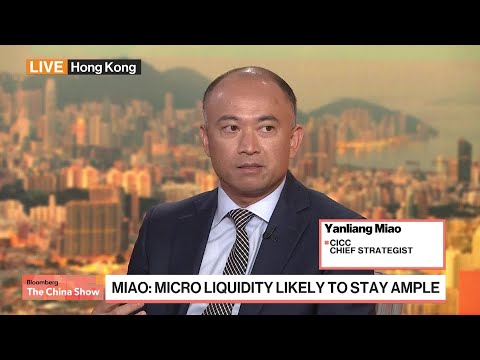
CICC's Miao on China's Bull Market
Bloomberg Television· 2025-11-11 16:20
What's the next step. The title report. The next step for China's bull markets, where they'll look for the next step.Yeah, I think, you know, for next year we still remain bullish. To me, I think the big change is really the global monetary order reconstruction from a, you know, strong dollar to a weak dollar and then from China us constantly in the trade negotiations to a G-2 framework. And then probably more importantly is the deep sea moment, not just in Asia but many other industries where there is a ma ...
X @Bloomberg
Bloomberg· 2025-10-23 16:14
South Africa needs to fast-track structural reforms to cushion the economy from the effects of US President Donald Trump’s punishing tariffs, the country’s central bank said https://t.co/C0MJhkJEr9 ...
X @Bloomberg
Bloomberg· 2025-10-14 14:04
South Africa’s gradual structural reforms are breathing life into the economy, but aren’t sufficient to lift the growth rate to the government’s 3.5% target, according to Moody’s Ratings https://t.co/OKexgJ3oZZ ...
中国情绪追踪-秋季针对性微调,后续重大改革-China – Sentiment Tracker-Targeted Tweaks in the Fall, Major Reforms Later
2025-09-25 05:58
Summary of Key Points from the Conference Call Industry Overview - **Industry**: China’s Economic Sentiment and Domestic Demand - **Date**: September 24, 2025 - **Source**: Morgan Stanley Asia Limited Core Insights 1. **Domestic Demand Cooling**: Domestic demand in China is slowing more than expected, attributed to a fading fiscal impulse and reduced effectiveness of consumer goods trade-in programs. The growth rate for Q3 GDP is projected at 4.5%[5][6][7] 2. **Exports Remain Firm**: Despite domestic demand cooling, exports are holding steady, with a year-over-year growth of 10.4% in container throughput as of the third week of September, largely due to a low base from adverse weather last year[4][5] 3. **Commodity Prices**: The anti-involution impulse is fading, leading to a short-lived rise in commodity prices. However, this increase may not be sustainable as rising costs for downstream firms may not be passed on to final demand[3][5] 4. **Policy Stance**: The Chinese government is expected to implement modest, targeted quasi-fiscal support rather than large-scale stimulus. This includes potential funding for infrastructure and settling local government payables[5][7] 5. **Cyclical Policy Measures**: Anticipated quasi-fiscal easing measures include Rmb500 billion in new policy-based financial instruments for local infrastructure investment and tapping into policy bank loans to help local governments settle payables, which could total Rmb5-10 trillion[7][5] 6. **Reform Discussions**: The Fourth Plenary Session is expected to discuss structural reforms related to cadre evaluations, tax systems, and social insurance systems, which are crucial for stabilizing inflation expectations and unlocking household savings[7][5] Additional Important Points 1. **Retail Growth Decline**: Retail growth in sectors such as autos and home appliances has cooled further in September, influenced by a high base effect and the diminishing impact of trade-in programs[6][20] 2. **Property Market**: Property sales and construction activities remain subdued, with year-over-year growth for housing sales expected to decline due to base effects[6][5] 3. **Container Throughput Divergence**: There is a notable divergence in performance between exports to the US and other regions, with US-bound shipments showing little change[4][12][14] 4. **High Frequency Data**: Recent high-frequency data indicates a negative sequential price momentum in major upstream sectors since mid-August, suggesting a potential downturn in commodity prices[3][8] This summary encapsulates the key insights and data points from the conference call, providing a comprehensive overview of the current state of the Chinese economy and its implications for investment opportunities and risks.
投资者演示文稿:中国市场辩论- 北京和深圳的关键要点-Investor Presentation Asia Pacific China Market Debate Key Takeaways from Beijing and Shenzhen
2025-09-02 14:24
Summary of Key Points from the Conference Call Industry Overview - **Industry**: China Market - **Date**: September 1, 2025 - **Source**: Morgan Stanley Research Core Insights 1. **Household Savings Reallocation Potential**: There is a potential for Rmb6-7 trillion in household time deposits to be reallocated towards higher-risk investments, stemming from excess allocation during 2022-23 [3][4] 2. **Market Sentiment**: Initial signs indicate a heating up of the market, with margin financing as a percentage of A-share daily turnover surpassing levels seen in October 2024 [7] 3. **Macro Challenges**: Despite some positive narratives, the macroeconomic environment remains challenging, with continued growth slowdown indicated by the August PMI [12][14] 4. **Structural Reforms Needed**: The current fiscal system in China incentivizes overbuilding and overcapacity, necessitating reforms to realign macro targets and improve household consumption metrics [20][22] 5. **"5R" Reflation Strategy**: Incremental progress is expected by the end of 2025, focusing on rebalancing the economy through various policy measures, including a Rmb10 trillion fiscal package aimed at consumption [23] Additional Important Points 1. **Market Dynamics**: The margin transaction balance and its percentage of free float market cap remain stable, indicating cautious optimism among investors [9][10] 2. **Policy Shifts**: A more constructive narrative is forming around China's economic policies, influenced by evolving social dynamics and a pivot in policy direction since September 2024 [17][18] 3. **Consumption Focus**: There is a growing emphasis on consumption as a percentage of GDP, which may become a core policy metric in future economic planning [20] 4. **Inflation and Price Index Trends**: The Producer Price Index (PPI) is expected to pick up, but the pass-through of upstream price gains remains limited, indicating potential inflationary pressures [14][15] This summary encapsulates the key insights and data points discussed in the conference call, providing a comprehensive overview of the current state and outlook of the Chinese market.