
Fiscal Policy

Search documents
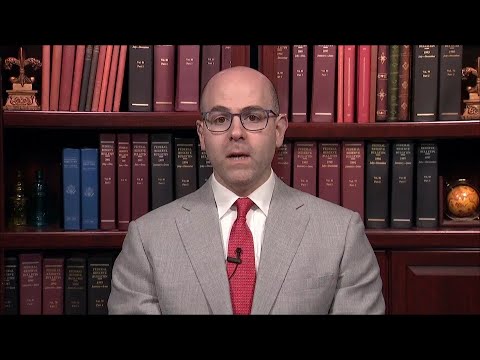
Fed's Miran on Neutral Rate, Tight Monetary Policy, Rapid Rate Cuts
Youtube· 2025-09-25 13:23
Core Viewpoint - The discussion centers around the current state of the economy, the labor market, and the implications of monetary policy adjustments, particularly the neutral interest rate and its relationship with fiscal and immigration policies [1][11][12]. Economic Projections - There is a divergence in projections among Federal Open Market Committee (FOMC) members regarding the neutral rate, with some members advocating for a quicker adjustment to a more neutral policy stance [5][6]. - The governor believes that the neutral rate has decreased due to significant changes in fiscal policy and immigration, which have impacted national savings and population growth [9][10]. Monetary Policy Implications - The governor argues that current monetary policy is excessively tight and needs to adjust quickly to avoid negative consequences for the economy, particularly regarding employment [11][12][21]. - The relationship between monetary policy and financial conditions is complex, with the governor emphasizing that not all financial conditions are uniformly loose, particularly in the housing market [15][16]. Housing Market Dynamics - The housing market is expected to play a significant role in inflation dynamics, with population growth impacting demand for housing and subsequently shelter inflation [31][32]. - A decrease in population growth due to changes in immigration policy could lead to a relative change in shelter inflation, highlighting the importance of supply and demand in the housing market [32][33]. Immigration Policy Effects - The governor anticipates that immigration trends will continue to influence the economy and the neutral rate for the foreseeable future, suggesting that the impact of immigration is not merely a short-term phenomenon [35].


Fed’s Miran on Neutral Rate, Tight Monetary Policy, Rapid Rate Cuts
Bloomberg Television· 2025-09-25 13:23
Governor, welcome to the program, sir. We've got tons of time to talk about what's going to happen next. Your thoughts on the labor market, the balance of risk, the broader economy.I actually wanted to lead the conversation with this one. Governor, what was your experience like. I'm sure this was unexpected 12 months ago.What was it like walking into the room and was it different to what you expected. Good morning and thanks for having me. It's great to see you again.Look, you know, walking into the room, y ...
全球数据观察: 中国国内需求持续疲软,凸显更多政策支持的必要性-Global Data Watch_ Asia_ China domestic demand continues to underwhelm, underscoring case for more policy support
2025-09-25 05:58
Summary of Key Points from J.P. Morgan's Global Data Watch: Asia Industry or Company Involved - The report focuses on the economic outlook for Asia, particularly China and its domestic demand, as well as the broader implications for emerging markets in Asia. Core Insights and Arguments 1. **China's Domestic Demand**: Domestic demand in China continues to underperform, leading to a reduction in the 3Q GDP growth forecast to 2.3% quarter-on-quarter annualized (q/q ar) from 3.0% [1] 2. **Impact of Trade-in Subsidies**: August retail sales have softened due to the fading impact of trade-in subsidies and weak consumer confidence [1] 3. **Industrial Production and Investment**: Industrial production has moderated, and fixed asset investment has collapsed, attributed to anti-involution policies, limited funding for infrastructure, and ongoing weakness in the housing market [1] 4. **Future Growth Projections**: Despite the current slowdown, average GDP growth on a year-on-year (o/y) basis is expected to remain at 5%, aligning with the full-year target, which reduces the urgency for immediate policy action [1] 5. **4Q Growth Expectations**: Sequential slowdowns are anticipated to drag down 4Q growth to 3.9% o/y, increasing pressures for more easing measures [2] 6. **Policy Easing Measures**: Expected easing measures include a tactical pause in anti-involution efforts, earlier monetary easing, and potential fiscal support through front-loading the 2026 budget or utilizing remaining debt ceiling limits [2] 7. **Export Trends in Asia**: The report notes a significant contraction in exports across several Asian countries, including a 9% sequential contraction in Singapore's non-oil domestic exports (NODX) in August, indicating a reversal from earlier growth [3] 8. **Japan's Export Performance**: Japan's real exports were nearly flat in August, with a notable 12% month-on-month (m/m) decline in exports to the US, influenced by tariff agreement timings [8] 9. **Taiwan's Resilience**: Taiwan's exports remain robust, driven by strong tech exports, with first-half growth reaching nearly 10% [9] 10. **Fiscal and Monetary Policy Coordination**: The report highlights the need for better coordination between fiscal and monetary policies in the region, as monetary easing has not sufficiently boosted domestic demand [10][11] Other Important but Potentially Overlooked Content 1. **Political Discontent**: Sluggish domestic demand and employment issues have led to political discontent in several countries, prompting calls for more policy support [10] 2. **Indonesia's Monetary Policy**: Bank Indonesia has implemented consecutive rate cuts to support growth, reflecting a desire for fiscal-monetary coordination amidst political developments [10] 3. **Fiscal Stimulus in Other Countries**: Countries like Korea and India have announced fiscal stimulus measures, indicating a trend towards increased fiscal support in response to economic challenges [11] 4. **Long-term Growth Potential**: The report suggests that structural changes and fiscal consolidation could enhance Japan's medium- to long-term growth potential, despite current concerns over debt sustainability [30] This summary encapsulates the critical insights and projections regarding the economic landscape in Asia, particularly focusing on China, Japan, and the broader emerging markets.

X @Bloomberg
Bloomberg· 2025-09-24 02:46
South Korea should maintain its accommodative fiscal and monetary policy settings to support the economic recovery, the IMF says https://t.co/B7tOgFOBJh ...
Major trigger Holmes believes could derail the bull run
Yahoo Finance· 2025-09-23 16:06
Core Viewpoint - Markets across various sectors are approaching record highs, indicating ongoing optimism in the rally, but fiscal policy is identified as a significant risk factor rather than credit issues [1][2]. Group 1: Market Conditions - Current market conditions show that banks and corporations, including those in the S&P 500, are less leveraged compared to the pre-2008 financial crisis, reducing the likelihood of a credit crisis [2]. - Monetary policy is characterized by easing conditions, with money printing and falling interest rates, which are not crashing [2]. Group 2: Fiscal Policy - Fiscal policy is viewed as the critical swing factor for risk assets, with a focus on the balance between taxes and spending [2][7]. - The impact of tariffs and regulations is highlighted, with past examples showing how quickly markets can adjust to fiscal changes [3][7]. Group 3: Innovation and Technology - The current tech and AI rally is differentiated from the dot-com bubble, as it is supported by revenue and cash flow rather than mere speculation [4]. - Bitcoin miners are recognized for their role in utilizing stranded and surplus energy, contributing to innovation in energy and infrastructure [4][5]. Group 4: Investment Outlook - There is a bullish outlook on Bitcoin, with expectations that it will lead advancements in data centers and high-performance computing, which are essential for the ongoing market growth [7].
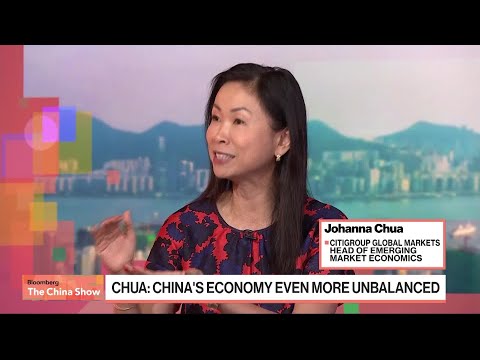
A Year Since Stimulus, Has China’s Economy Changed Much?
Bloomberg Television· 2025-09-23 06:25
We will cut the R and policy rate. We will also cut central bank policy rate to seven day repo rate. At the same time, we will guide the LPR and the deposit rate downward.We will also set up a special re lending program for increasing the holding of shares. We will enhance the quality and value for investment of listed companies to better serve investors. We will make use of stocks, bonds and futures, among other capital market tools, to invigorate the restructurings and M&A market.Yeah, that was a throwbac ...
X @The Economist
The Economist· 2025-09-22 09:40
The darkest cloud hanging over Colombia’s economy is high government spending. A fiscal mess awaits the next president https://t.co/lv1HzHxzkb ...
X @Bloomberg
Bloomberg· 2025-09-22 04:10
Fiscal Risk - France's political crisis has transformed the nation into the euro area's fiscal flashpoint [1] - This shift positions France as the primary source of fiscal concern within the Eurozone, a role previously associated with Italy [1]
X @Bloomberg
Bloomberg· 2025-09-20 09:59
Italy’s budget shortfall may drop below 3% of output this year, allowing it to leave the EU's fiscal shackles earlier than thought, its finance minister said https://t.co/ppoQiHr5aY ...
Pres. Trump wants a scapegoat for his base, says Fmr. Dallas Fed Pres.
Youtube· 2025-09-17 22:01
Core Insights - The discussion revolves around the Federal Reserve's current stance on monetary policy, particularly in light of inflation and employment statistics [4][10][12] - There is a perception of confusion regarding Jerome Powell's communication, but some argue he was clear in articulating the balance of risks [3][5][6] Group 1: Inflation and Employment - Inflation is currently running close to 3%, which necessitates a positive real return to support capital formation for businesses [4][5] - Weak employment statistics are attributed to fiscal and immigration policies, indicating external factors affecting the labor market [5][10] Group 2: Federal Reserve's Decision-Making - The Federal Reserve's dual mandate includes both inflation control and employment stability, which complicates decision-making [10][11][12] - There is concern that political pressures may influence the Fed's decisions, particularly regarding interest rate cuts, which could be seen as a response to the president's focus on employment [12][13][14] Group 3: Perspectives on Jerome Powell - Some analysts believe Powell's communication may have lacked focus, but others defend his clarity in discussing economic risks [2][3][6] - The influence of other Federal Reserve members, such as Bowman and Waller, is highlighted, suggesting a commitment to economic logic over political pressures [6][8]