
Interest Rates

Search documents
X @Bloomberg
Bloomberg· 2026-03-23 10:48
The two-year US Treasury yield surged to 4% for the first time since June https://t.co/tt57imLv1G ...
Gold Price Tumbles Again. Why the Precious Metal Just Wiped Out Its 2026 Gains.
Barrons· 2026-03-23 10:15
Core Viewpoint - Higher energy prices are increasing the likelihood that the Federal Reserve will maintain steady interest rates, which poses a headwind for gold [1] Group 1 - The rise in energy prices is influencing monetary policy decisions by the Federal Reserve [1] - Steady interest rates from the Fed could lead to reduced demand for gold as an investment [1]


HELOC and home equity loan rates Monday, March 23, 2026: Do you want a fixed or adjustable-rate?
Yahoo Finance· 2026-03-23 10:00
Core Insights - The article discusses the options available for homeowners regarding home equity, specifically focusing on Home Equity Lines of Credit (HELOC) and home equity loans, highlighting the differences in structure and interest rates [1][3][12] Interest Rates - The average adjustable rate for HELOCs is currently 7.20%, while the national average fixed rate for home equity loans stands at 7.47%, both based on applicants with a minimum credit score of 780 and a maximum combined loan-to-value ratio of less than 70% [2][11] - The prime rate, which influences HELOC rates, has fallen to 6.75%, and lenders typically add a margin to this index, resulting in variable rates starting at around 7.50% for HELOCs [5][6] Home Equity Utilization - Homeowners with significant equity, estimated at $34 trillion nationally, may find HELOCs or home equity loans advantageous, especially if they wish to retain their low primary mortgage rates [4][12] - HELOCs allow homeowners to draw funds as needed, while home equity loans provide a lump sum, making each option suitable for different financial needs [3][8] Lender Options and Comparisons - The best HELOC lenders offer competitive rates, low fees, and flexible credit lines, with some introductory rates available, such as FourLeaf Credit Union's 5.99% for the first 12 months on lines up to $500,000 [8][11] - Home equity loans are generally easier to compare due to their fixed rates, which remain constant throughout the repayment period, eliminating concerns about draw minimums [9][12] Payment Structures - For a $50,000 HELOC at a 7.25% interest rate, the monthly payment during the 10-year draw period would be approximately $302, but this rate is variable and may increase during the repayment period [13]
Sell The S&P 500 And Buy Gold Mining Stocks
Seeking Alpha· 2026-03-23 00:45
Core Viewpoint - The recent correction in gold mining stocks is viewed as a timely buying opportunity, suggesting investors should consider reallocating from S&P 500 Index funds to gold mining stocks due to rising geopolitical tensions and inflation concerns [2][5]. Group 1: Market Conditions and Trends - Since February 28, 2023, when military actions began between Israel and the US against Iran, West Texas Intermediate crude oil futures have increased by 46.7% [2]. - Rising interest rates are perceived as a negative for gold; however, this narrative is considered misleading as historical data shows that rising interest rates did not hinder gold prices during the 1970s [5][10]. - The US national debt has surpassed $39 trillion, indicating significant fiscal imbalances that could lead to sustained inflation [7]. Group 2: Historical Context and Comparisons - The 1970s serve as a historical parallel, where gold prices rose significantly despite rising interest rates, with gold increasing by 2,329% from $35/oz to $850/oz [9]. - The Barron's Gold Mining Index rose 1,292% during the 1970s, while the S&P 500 only increased by 41% during the same period, suggesting that gold mining equities outperformed large-cap equities [13]. Group 3: Investment Strategy and Recommendations - Current low valuations for mining stocks, combined with a favorable macroeconomic backdrop, suggest potential for high returns in the coming decade [14][16]. - The focus on small-cap exploration companies is emphasized, as they are expected to provide significant upside due to their control over valuable new discoveries [17]. - The recent sell-off in gold and silver presents a buying opportunity, especially for undervalued mining stocks that have been oversold compared to large-cap indices [18][22]. Group 4: Technical Analysis and Market Signals - Both the GDX and GDXJ ETFs are currently hovering near their 200-day moving average, indicating potential for a rebound as they are considered oversold [22]. - The S&P 500 and Nasdaq 100 indices appear to be breaking down from historically high valuations, suggesting further downside potential [20].

Wall Street Brunch: Oil And Rates Will Still Dominate Sentiment
Seeking Alpha· 2026-03-22 18:22
Economic and Market Sentiment - The current economic sentiment is closely tied to the conflict with Iran and its implications for oil prices and interest rates [2][9] - The Strait of Hormuz, which handles about 20% of global oil shipments, is a focal point of concern [7] Oil Market Dynamics - WTI crude oil prices briefly exceeded $100 per barrel before settling around $98 per barrel [8] - Rising oil prices are contributing to inflationary pressures, leading to diminished expectations for Federal Reserve rate cuts this year [9] Company Earnings and Developments - GameStop is expected to be a key focus in the upcoming earnings reports, with CEO Ryan Cohen aiming to transform the company into a Berkshire Hathaway-style investment platform [10][11] - Analysts anticipate limited insights into GameStop's core fundamentals, but backing from notable investors like Michael Burry may sustain stock momentum [13] Legal Issues Impacting Companies - A California jury found Tesla CEO Elon Musk liable for misleading Twitter investors, with potential damages estimated at $2.6 billion [15][16] Hiring Trends in Tech - OpenAI plans to nearly double its workforce to about 8,000 employees by the end of 2026, focusing on product development, engineering, research, and sales [17]

Here's Why High Oil Prices Are Hurting Precious Metals Mining Stocks
The Motley Fool· 2026-03-22 16:49
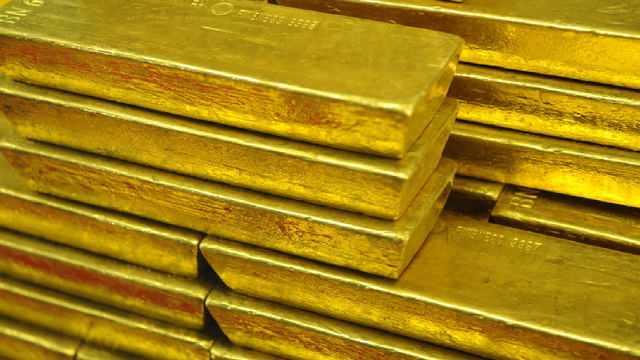
Group 1: Market Reactions - The relationship between oil prices and gold prices has been inconsistent, with gold and silver prices falling despite rising oil prices due to geopolitical tensions [2][3] - Following the bombing of Iran by U.S. and Israeli forces, gold and silver prices dropped approximately 10% and 16% respectively over a week and a half, while major gold producers like Newmont Corp. and Barrick Mining saw declines of 15% and 16% [3][4] Group 2: Economic Implications - Rising oil prices contribute to inflation, which in turn influences the Federal Reserve's interest rate decisions, making it less likely to lower rates and more likely to raise them [6][7] - Higher interest rates increase the cost of debt for businesses and make bonds more attractive to investors compared to non-yielding assets like gold and silver, leading to a decline in precious metal stocks [7][8]

1 Stock to Buy, 1 Stock to Sell This Week: Ondas, PDD
Investing· 2026-03-22 15:04
Market Overview - U.S. stocks experienced a significant decline, with the S&P 500 closing at its lowest level in six months, driven by ongoing tensions in the Middle East and elevated oil prices, which have raised inflation concerns and the potential for higher interest rates [1][2][3] - The major averages have recorded their fourth consecutive week of losses, with the Dow Jones Industrial Average dropping 2.1%, the S&P 500 falling 1.9%, and the Nasdaq Composite losing 2.1% [2] Economic Impact - Since the onset of the war in Iran on February 28, the S&P 500 has decreased by 5.4%, the Nasdaq by 4.5%, and the Dow by nearly 7%, indicating a deterioration in market sentiment [3] - The upcoming week will focus on oil prices, global bond yields, and news related to the Iran conflict, with a relatively light schedule for U.S. economic data [3] Company Earnings - Ondas, a provider of private wireless data and drone solutions, is expected to report Q4 earnings, with preliminary results indicating revenue between $29.1 million and $30.1 million, surpassing previous guidance [5][6] - The company anticipates a Q4 net income between $82.9 million and $83.4 million, with a full-year net income projected between $50.4 million and $50.9 million, ahead of earlier targets [7] - Ondas has set an ambitious revenue guidance for 2026 of $170 million to $180 million, supported by a growing backlog and recent defense contract wins [7] Stock Recommendations - **Stock to Buy: Ondas** - Entry price is suggested between $9.95 and $10.25, with an exit target of $12.00, indicating a potential gain of approximately 20% [9] - The stock is currently trading around $10.06, showing high volatility and a potential positive reaction to upcoming earnings if results align with preliminary guidance [8][9] - **Stock to Sell: PDD Holdings** - PDD Holdings, the parent company of Pinduoduo and Temu, is facing challenges amid a clear downtrend, with the stock closing at $96.19, having lost nearly a quarter of its value over the past year [10][13] - The company is expected to release its financial results, but risks of a miss loom large due to recent shortfalls and increasing competition in the e-commerce sector [10][12] - Technical indicators suggest a bearish outlook, with the stock trading below major moving averages and potential support levels in the $90.00-$92.00 range [14]


全球利率-通胀担忧暂时主导市场-Global Rates Trader_ Inflation Concerns Dominate... For Now
2026-03-22 14:24
Summary of Key Points from the Conference Call Industry Overview - The conference call primarily discusses the global rates market, focusing on inflation concerns and central bank policies across various regions including the US, Canada, Europe, Japan, Australia, and New Zealand [1][2][12][21][26]. Core Insights and Arguments 1. **Inflation and Central Bank Policies**: - Central banks are adopting hawkish stances due to inflationary risks, particularly from rising energy prices, which has led to higher front-end rates [1][2]. - The US rate pricing appears hawkish compared to the economists' Fed path, indicating a potential misalignment with market expectations [1][2]. 2. **Market Dynamics**: - The market requires an external mechanism, such as de-escalation of conflicts or stronger growth signals, for lasting relief from current pressures [1][5]. - The selloff in terminal rate pricing is viewed as inconsistent with the nature of the economic shock, suggesting that inflation concerns are currently dominating market sentiment [2][10]. 3. **Regional Insights**: - **Canada**: The Bank of Canada (BoC) is perceived as more dovish compared to other G10 central banks, with expectations to remain on hold for the year despite inflation risks [12]. - **Europe**: European front-end rates are pricing in nearly three rate hikes, reflecting concerns over high commodity prices and a hawkish tone from the European Central Bank (ECB) [14]. - **Japan**: The Bank of Japan (BoJ) is maintaining a cautious approach, with potential risks to Japanese Government Bonds (JGBs) if growth concerns persist alongside a weak yen [21][23]. - **Australia**: The Reserve Bank of Australia (RBA) has adopted a proactive stance, hiking rates due to inflation concerns, while also considering global growth risks [26]. 4. **Forecast Adjustments**: - The forecast for 10-year Gilt yields has been raised to 4.4% for the end of 2026, reflecting the changing economic landscape and expectations of further rate hikes [14][15]. 5. **Sovereign Credit and Fiscal Responses**: - Sovereign credit spreads are stable, but there is a growing focus on fiscal responses to economic challenges, particularly in Europe where fiscal packages are being introduced [20]. - Historical analysis indicates that a 1 percentage point decline in growth forecasts could lead to a 0.6% deterioration in fiscal balances as a share of GDP [20]. Additional Important Content - **Market Volatility**: The volatility in rates markets is attributed to hawkish policy risks from inflation, which has disrupted previous stability [10]. - **Cross-Market Opportunities**: There are potential cross-market opportunities, particularly in Canada, where the policy response differs from other regions [12]. - **Long-Term Projections**: The report includes long-term yield forecasts for various currencies, indicating a cautious outlook for global rates [30]. This summary encapsulates the key points discussed in the conference call, highlighting the current state of the global rates market, central bank policies, and regional economic insights.

Bitcoin Is Winning And That's The Problem
Coin Bureau· 2026-03-22 12:45
For years, critics have claimed that Bitcoin is just a speculative tech stock that would instantly collapse during a true global crisis. They told us that when the geopolitical alarm sounded, capital would flee digital assets and rush back into the comforting arms of traditional finance. But over the last few weeks, the data has proven them completely wrong.As tensions escalate in the Middle East, Bitcoin has surged roughly 11.6%, 6% forming a rising floor above $73,000. During that exact same window, tradi ...

HELOC and home equity loan rates Sunday, March 22, 2026: Steady following second Fed rate pause
Yahoo Finance· 2026-03-22 10:00AI Processing
Rates on home equity lines of credit (HELOC) and home equity loans remain mostly steady following the Federal Reserve’s second rate pause of 2026. The prime rate is unchanged and second mortgage rates are sticking close to three-year lows. HELOC and home equity loan rates: Sunday, March 22, 2026 According to real estate analytics firm Curinos, the average HELOC rate is 7.20%. The 52-week HELOC low was 7.19% in mid-January. The national average rate on a home equity loan is 7.47%, with a low of 7.38% rec ...