Asset Allocation

Search documents
VIG Vs. QQQ: Dividend Growth Offers Tech Exposure With Lower Risks
Seeking Alpha· 2025-11-10 21:13
Core Insights - The article discusses the expertise of Sensor Unlimited, who has a PhD in financial economics and specializes in the mortgage market, commercial market, and banking industry [2] - Sensor Unlimited contributes to the Envision Early Retirement investing group, which focuses on generating high income and growth through dynamic asset allocation [2] Group 1 - Sensor Unlimited has been covering the mortgage and banking sectors for a decade, emphasizing quantitative modeling [2] - The investing group offers two model portfolios: one for short-term survival and another for aggressive long-term growth [2] - Features of the group include direct access for discussions, monthly updates on holdings, and tax discussions [2]


X @Investopedia
Investopedia· 2025-11-09 15:00
GMO's co-head of asset allocation says this market isn't like 2007 and 2008, when everything was expensive. https://t.co/A3SiuKMu2a ...
JEPI Vs. SPY: Two Charts Explain Why Covered Call Is Timely (NYSEARCA:JEPI)
Seeking Alpha· 2025-11-07 20:54
Core Insights - The article discusses the JPMorgan Equity Premium Income ETF (JEPI) and its potential to outperform the Vanguard S&P 500 ETF (VOO) [1] Group 1: Analyst Background - Sensor Unlimited, an economist with a PhD, specializes in financial economics and has a decade of experience covering the mortgage market, commercial market, and banking industry [1] - The analyst focuses on asset allocation and ETFs related to the overall market, bonds, banking, financial sectors, and housing markets [1] Group 2: Investment Strategies - The investing group Envision Early Retirement, led by Sensor Unlimited, offers solutions for generating high income and growth with isolated risks through dynamic asset allocation [1] - The group features two model portfolios: one for short-term survival/withdrawal and another for aggressive long-term growth [1] - Members receive direct access via chat for idea discussions, monthly updates on holdings, tax discussions, and ticker critiques upon request [1]

A Decade Of Rewards: $83 Bil From NVIDIA Stock
Forbes· 2025-11-07 17:00
Core Insights - NVIDIA has returned a total of $83 billion to its investors over the past ten years through dividends and buybacks, ranking 24th in history for shareholder returns [2][3] - The company's capital return strategy reflects management's confidence in its financial viability and ability to generate consistent cash flows [4] Financial Performance - NVIDIA's revenue growth stands at 71.6% for the last twelve months (LTM) and an average of 92.0% over the last three years [11] - The company has a free cash flow margin of 43.6% and an operating margin of 58.1% for LTM [11] - The lowest annual revenue growth recorded in the last three years was 9.9% [11] - NVIDIA's stock is currently trading at a price-to-earnings (P/E) ratio of 52.9 [11] Market Context - Companies with high capital returns, like NVIDIA, may face trade-offs regarding growth opportunities, as seen with firms like Meta and Microsoft, which have returned a smaller portion of their market cap to shareholders while expanding rapidly [5][6] - Historical performance indicates that NVIDIA is not immune to significant market sell-offs, having experienced declines of 85% during the Global Financial Crisis and 68% during the Dot-Com collapse [8]


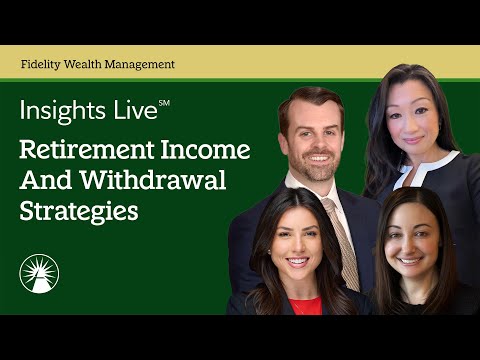
Retirement Income And Withdrawal Strategies | Insights Live℠ | Fidelity Investments
Fidelity Investments· 2025-11-06 15:22
Join the Insights from Fidelity Wealth Management team for the second of a 3-part series on retirement planning. We will focus on helping you manage many of the questions you may face during your retirement, such as “How do I make my money last?” and “How do I get comfortable actually spending the money I have saved?” Specific topics we'll cover include: - Retirement income planning and the different sources that can help create your cash flow - Optimizing your withdrawals, including drawdown strategies for ...
How To Prepare For Retirement | Insights Live℠ | Fidelity Investments
Fidelity Investments· 2025-11-04 16:32
Join the Insights from Fidelity Wealth Management team for the first of a 3-part series on retirement. We’ll not only address some classic retirement questions (such as, “How much money do I need to retire?”) but we’ll also examine those questions within the context of inflation and market volatility. And we’ll discuss how you can mentally prepare for retirement. Specific topics we'll cover include: - Estimating your "retirement cost of living" and how your retirement spending might evolve - Investing strat ...

5 Relatively Secure And Cheap Dividend Stocks, Yields Up To 8% (Nov. 2025)
Seeking Alpha· 2025-11-01 12:15
Core Insights - The "High Income DIY Portfolios" Marketplace service aims to provide high income with low risk and capital preservation for DIY investors, particularly targeting income investors such as retirees or near-retirees [1][2] - The service offers seven portfolios, including three buy-and-hold, three rotational portfolios, and a conservative NPP strategy portfolio, designed to generate stable, long-term passive income with sustainable yields [1][2] Portfolio Details - The portfolios include two High-Income portfolios, two Dividend Growth Investing (DGI) portfolios, and a conservative NPP strategy portfolio characterized by low drawdowns and high growth potential [1] - The service encompasses a total of 10 model portfolios with varying income targets and risk levels, along with buy and sell alerts and live chat support for investors [2]


Moving Averages of the Ivy Portfolio & S&P 500: October 2025
Etftrends· 2025-10-31 21:55
Core Insights - The article provides an update on the performance of the S&P 500 and the Ivy Portfolio, highlighting that all five ETFs in the Ivy Portfolio remain in an "invest" position as of the end of October [5][7][14]. Ivy Portfolio Overview - The Ivy Portfolio is constructed using an asset allocation strategy similar to that of Harvard and Yale endowment funds, consisting of five ETFs that cover various asset classes [2]. - The strategy involves creating a diversified portfolio with equal weight across asset classes, calculating a 10-month moving average for each fund, and making buy/sell decisions based on whether the fund closes above or below this average [3]. Ivy Portfolio Performance - At the end of October, none of the five ETFs in the Ivy Portfolio closed below their 10-month or 12-month simple moving averages, indicating a continued "invest" position [5][7]. - The percentage above or below the moving average for each fund is tracked, with funds within 2% of the signal highlighted for potential position reversals [6]. S&P 500 Performance - The S&P 500 closed October with a monthly gain of 2.3%, marking the sixth consecutive month of gains, and closed 11.0% above its 10-month simple moving average [8][10]. - The index also closed 11.6% above its 12-month simple moving average, maintaining an "invest" position for six straight months [12]. Moving Averages Strategy - Utilizing a moving average strategy can effectively manage risks associated with bear markets, where holding the index is advised when it closes above the moving average and moving to cash when it closes below [9]. - The article illustrates that a 10- or 12-month simple moving average strategy would have allowed participation in most upside movements since 1995 while significantly reducing losses [10][15]. Psychological Factors - The article discusses the psychology behind momentum signals, noting that human behavior often leads to buying during market uptrends and selling during downturns, which can create cycles of buying and selling momentum [16]. Implementation Considerations - The moving average strategy is most effective when applied to specific investments rather than broad indices, as signals may differ due to factors like dividend reinvestment [17]. - The strategy is recommended for use in tax-advantaged accounts with low-cost brokerage services to maximize gains [18].

Dow Jones Industrial Average Vs. Nasdaq: Rethink Blue Chips' Safety
Seeking Alpha· 2025-10-31 17:49
Core Insights - Major market index funds have recently declared their Q3 2025 dividends, with updates provided in late September [1] Group 1: Analyst Background - Sensor Unlimited, an economist with a PhD, specializes in financial economics and has a decade of experience covering the mortgage market, commercial market, and banking industry [1] - The analyst focuses on asset allocation and ETFs related to the overall market, bonds, banking, financial sectors, and housing markets [1] Group 2: Investment Strategies - The investing group Envision Early Retirement, led by Sensor Unlimited, offers solutions aimed at generating high income and growth with isolated risks through dynamic asset allocation [1] - The group features two model portfolios: one for short-term survival/withdrawal and another for aggressive long-term growth [1] - Additional offerings include direct access via chat for idea discussions, monthly updates on holdings, tax discussions, and ticker critiques upon request [1]

AGNC Investment: Yield Curve Could Normalize (Rating Upgrade) (NASDAQ:AGNC)
Seeking Alpha· 2025-10-31 09:41
Group 1 - The article discusses AGNC Investment Corp. and presents a critical viewpoint on its market performance, suggesting reasons to be cautious about investing in it [1] - The author, Sensor Unlimited, has a strong background in financial economics and has been analyzing the mortgage and banking sectors for over a decade [1] - The investing group Envision Early Retirement, led by Sensor Unlimited, offers strategies for generating high income and growth through dynamic asset allocation [1] Group 2 - The article does not contain any stock or derivative positions related to the companies mentioned, indicating an unbiased perspective [2] - There is no compensation received for the article beyond the platform's standard payment, reinforcing the independence of the analysis [2] - The article emphasizes that past performance does not guarantee future results, highlighting the inherent uncertainties in investment [3]