Inflation

Search documents
GDP 'Nowhere Near' 4.3%: Rosenberg Dismisses Q3 Report As 'Fugazi,' Pegs Real Growth At 0.8% - SPDR S&P 500 (ARCA:SPY)
Benzinga· 2025-12-24 06:48
Core Viewpoint - The U.S. GDP growth of 4.3% in Q3 is being challenged by economist David Rosenberg, who claims the real growth is only 0.8% due to underlying economic weaknesses masked by government spending and depleted savings [1][2][3]. Economic Analysis - The BEA reported a rise in real GDP from 3.8% in Q2 to 4.3% in Q3, primarily driven by consumer spending, exports, and government spending [2]. - Rosenberg argues that the GDP figures are misleading, suggesting manipulation similar to CPI data, and emphasizes that true economic growth is minimal when accounting for government spending and a significant drop in personal savings [2][3]. - The personal disposable income growth has remained flat, which Rosenberg identifies as a critical indicator contradicting the apparent consumption boom [3]. Diverging Perspectives - The report has ignited a debate among analysts, with Rosenberg viewing the economy as hollow and dependent on unsustainable spending, while Gordon Johnson from GLJ Research perceives a concerning nominal boom [4]. - Johnson points out that nominal GDP growth surged by 8.2%, with a GDP price index of 3.8%, indicating inflationary pressures that the Federal Reserve's easing cycle may exacerbate [5]. GDP Components - The BEA confirmed that a decrease in imports, which negatively impacts GDP, artificially inflated the headline growth figure [6]. - The price index for gross domestic purchases increased to 3.4% from 2.0% in the previous quarter, supporting Johnson's concerns about inflation [6]. Market Reactions - Investors face a dilemma in interpreting the GDP report, choosing between the headline strength, Rosenberg's "fugazi" weakness, or Johnson's inflationary concerns [7].

Asian markets mostly advance after the S&P 500 hits record high
ABC News· 2025-12-24 05:41
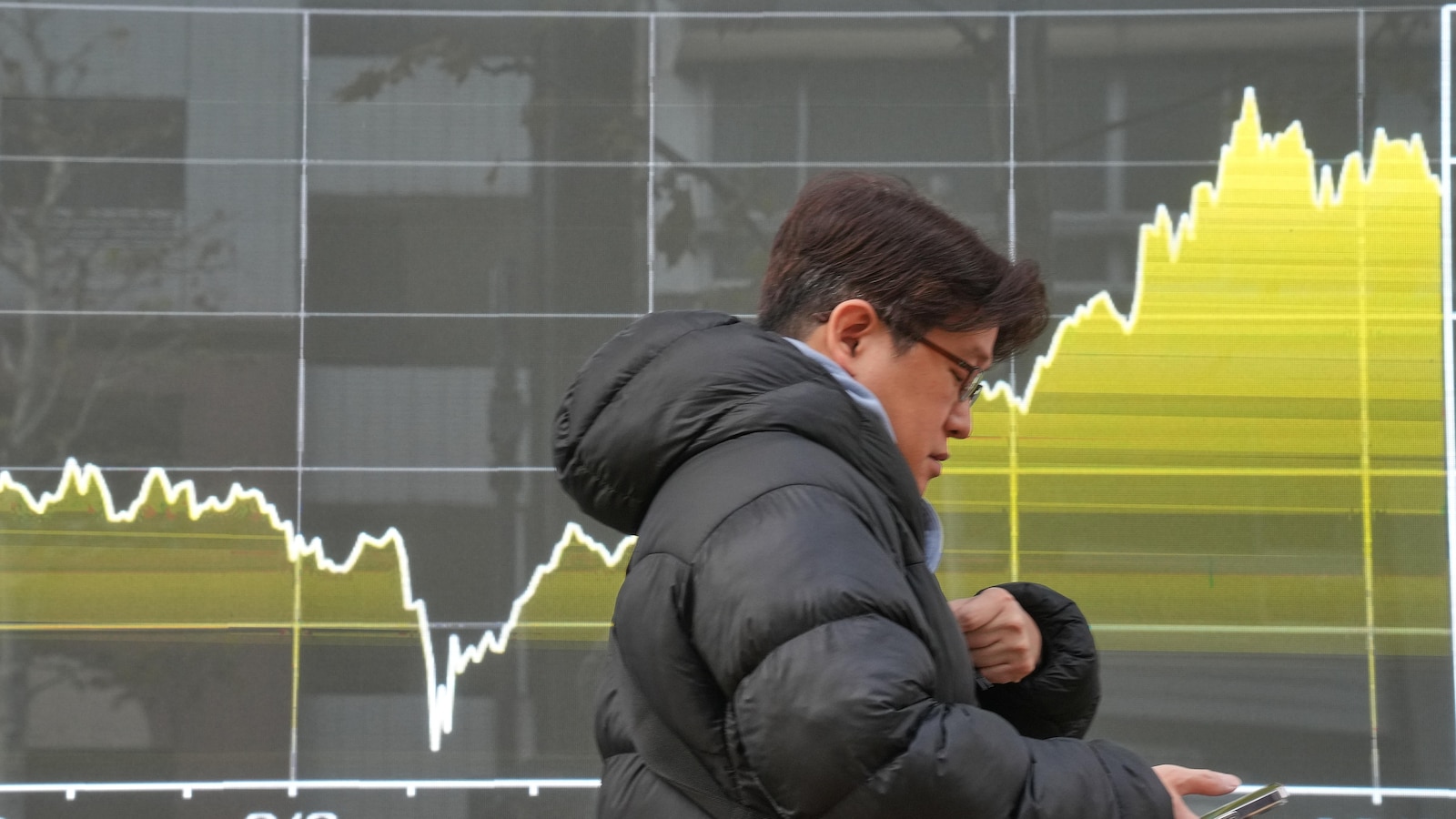
Economic Growth and Market Performance - The U.S. economy grew at an annual rate of 4.3% in the third quarter, exceeding expectations, following a 3.8% growth rate in the second quarter [1][2] - The S&P 500 closed at a record high of 6,909.79, driven by gains in tech stocks, despite most stocks in the index declining [5] - Asian markets mostly advanced, with Japan's Nikkei 225 unchanged at 50,411.10, South Korea's Kospi slipping 0.1% to 4,113.83, and Hong Kong's Hang Seng gaining 0.2% to 25,818.93 [3][1] Inflation and Consumer Confidence - Inflation remains high, with the personal consumption expenditures index (PCE) rising to a 2.8% annual pace in the last quarter, up from 2.1% in the previous quarter [6] - Consumer confidence has faded further in December, indicating potential concerns among consumers regarding high prices [2][7] Commodity Prices - Gold prices rose 0.4% to $4,525.50 per ounce, contributing to a 70% increase for the year, while silver increased by 1.8% [4] - Oil prices saw a slight increase, with U.S. benchmark crude oil rising to $58.45 per barrel and Brent crude to $61.90 per barrel, amid concerns over supply disruptions in Venezuela and Russia [9] Currency Movements - The U.S. dollar fell against the Japanese yen, trading at 155.96 yen, down from 156.17 yen, as officials indicated potential intervention in the currency market [7] - The euro slipped to $1.1793 from $1.1796 [8]

美国经济观察:企业通过提价转嫁关税成本-US Economics-What's going on, part 2 Firms are pushing price to recover tariff costs
2025-12-24 02:32
Summary of Conference Call Notes Industry Overview - The conference call discusses the **US nonfinancial corporate sector** and its response to **tariff costs** and **inflation** trends in the context of the **US economy**. Key Points Economic Recovery and Tariff Impact - The Q3 US GDP report indicates that firms have made significant progress in recovering tariff costs by increasing output prices, which is expected to reduce downside risks to the labor market and lower recession probabilities, supporting a rebound in growth in 2026 [1][11] - Firms absorbed tariff costs in Q2 2025 by hiring less and experiencing reduced profitability, but in Q3 2025, they began to raise output prices, improving profitability [1][8][22] Price and Cost Dynamics - In Q3 2025, the price per unit rose more than nonlabor costs, indicating that firms successfully passed on tariff costs to consumers, which helped restore profitability [1][23] - The increase in unit nonlabor costs in Q3 was driven by higher production taxes and tariffs, which accounted for almost half of the increase [1][24][27] Profitability Trends - The corporate sector's ability to raise output prices by 1.2 cents per unit helped offset a 1.3 cents increase in unit nonlabor costs over two quarters, leading to moderate growth in profit per unit [1][30][32] - The data suggests that firms are likely to continue increasing prices into 2026, which could lead to firmer inflation but also help avoid layoffs [1][37] Future Outlook - The expectation is that the majority of the tariff pass-through to consumer prices will be completed by Q1 2026, assuming no further tariff policy changes [1][37] - The forecast includes a rise in core CPI and core PCE inflation rates to 3.0% and 2.9%, respectively, early next year, driven by tariff impacts [1][38] Behavioral Comparison - A comparison of corporate behavior during the pandemic and in Q2 2025 shows that firms previously responded to cost pressures by raising prices, whereas in 2025, they engaged in cost control measures, leading to slower employment growth despite solid economic activity [1][45] Additional Insights - Survey data indicates that many firms have not completed the pass-through process of tariffs to consumers, suggesting further price increases are anticipated [1][39] - The analysis highlights the importance of monitoring inflation trends and corporate pricing strategies as they relate to labor market conditions and overall economic health [1][11][37]
日本经济-2026 年前景:稳定态势下是否会浮现动荡苗头-Japan Economics-Prospects for 2026:Will seeds of destabilization emerge amidst stability
2025-12-24 02:32
Summary of Key Points from the Conference Call Industry Overview - **Industry**: Japan's Economy - **Forecast Period**: 2026 Core Insights and Arguments - **GDP Growth**: Japan's GDP is expected to grow at +1.0% in 2026, a slight decrease from +1.3% in 2025, indicating resilience despite modest decline [1][4] - **Inflation Trends**: Headline inflation is projected to temporarily fall below 2%, with strong wage growth expected to ease consumer purchasing power headwinds [1][4] - **Bank of Japan (BoJ) Rate Hikes**: Anticipation of semiannual rate hikes by the BoJ, with the first expected in July 2026, and a terminal rate projected at +1.5% [5][6] - **Fiscal Policy Constraints**: Fiscal leeway is limited due to high government debt/GDP ratio and the JGB market's exit from quantitative easing, leading to moderate fiscal impulses [1][4][13] Additional Important Points - **Wage Growth**: Expected base pay increase of approximately 3.3% in spring negotiations, supported by labor shortages and corporate profits [20] - **Inflation Deceleration**: Core CPI is projected to decelerate to +1.7% in 2026 from +3.1% in 2025, influenced by government anti-inflation measures [22][23] - **Consumer Purchasing Power**: Recovery in purchasing power anticipated as food and energy inflation slows, allowing for higher service prices [23][24] - **Public Sector Price Adjustments**: Government considering price hikes in medical fees and other public services, which may impact CPI [25][26] - **Investment Trends**: Companies are increasingly investing in value-added products to manage rising costs, despite some sectors facing labor shortages [43][44] Risks and Considerations - **Exchange Rate Risks**: FX movements could impact the timing of rate hikes and overall economic stability [5][8] - **Geopolitical Tensions**: Recent tensions with China pose risks to service exports and tourism, which could affect GDP growth [56] - **Potential for Policy Missteps**: Concerns over unpredictable policy decisions may persist, particularly in the JGB market [1][4][13] This summary encapsulates the key insights and projections regarding Japan's economic outlook for 2026, highlighting growth expectations, inflation trends, fiscal policy constraints, and potential risks.

美国经济-2026 年消费展望:财政刺激支撑稳健增长-US Economics Analyst_ 2026 Consumer Outlook_ Solid Growth Supported by a Fiscal Boost
2025-12-24 02:32
Summary of the 2026 Consumer Outlook Conference Call Industry Overview - The report focuses on the **U.S. consumer spending** outlook for 2026, highlighting the expected growth trends and underlying economic factors. Key Points and Arguments Consumer Spending Growth - Consumer spending grew at a strong **3.5%** pace in Q3 2025 but is projected to moderate to **2.2%** in 2026 on a Q4/Q4 basis, down from **3.4%** in 2024 [2][5][30] - The slowdown is attributed to slower real income growth, with job gains slowing and tariff-related price increases keeping inflation elevated [2][5] - The new tax bill is expected to provide a **+0.2 percentage point (pp)** boost to household consumption growth in 2026, particularly in the first half of the year [10][18][21] Job Growth and Labor Income - Job growth is anticipated to rebound from **32,000** per month to **70,000** in 2026, driven by reduced tariff impacts and fiscal stimulus [11][14] - Real labor income growth is expected to rise to **2.3%** in 2026, up from **1.9%** in 2025, providing a solid foundation for consumption growth [11][22] Inflation and Wage Growth - Inflation is projected to decline more than wage growth, leading to slightly higher real wage growth of just over **1%** [15][16] - The report estimates that tariff effects have boosted inflation by **0.5pp** so far, with an additional **0.3pp** expected over the next six months [15] K-Shaped Recovery - The consumer economy is expected to exhibit a **K-shaped** recovery, with lower-income households facing the most significant challenges due to government spending cuts and reduced immigration impacting job growth [33][35] - Higher-income households are likely to experience stronger spending growth, benefiting from wealth effects driven by rising equity prices [38] Risks to Consumer Spending - Two major risks to the spending outlook include: 1. A potential weak job market that could restrain income and spending growth, particularly affecting lower-income workers [47][48] 2. A significant decline in equity or asset prices, which could turn the wealth effect into a drag on spending, with estimates suggesting a **20%** decline in equity prices could subtract **0.7pp** from consumption growth [51][52] Overall Consumption Forecast - The forecast for consumption growth in 2026 is solid at **2.2%**, exceeding the consensus forecast of **1.9%**, with stronger growth expected in the first half of the year due to fiscal and wealth effects [30][32] Additional Important Insights - The report emphasizes the importance of the new fiscal legislation and its impact on disposable income and consumption growth [18][21] - It highlights the stabilization of delinquency rates in consumer loans, suggesting that rising delinquency rates may not pose a significant risk to spending [41][42] This summary encapsulates the critical insights from the conference call regarding the U.S. consumer spending outlook for 2026, focusing on growth expectations, underlying economic factors, and potential risks.

Why Jerome Powell was right all along about interest rates, inflation and the economy
Yahoo Finance· 2025-12-24 01:20
Core Viewpoint - The article discusses the potential implications of Trump's influence over the Federal Reserve, particularly regarding interest rate policies and economic conditions in the coming years, highlighting concerns about inflation and the Fed's independence. Group 1: Economic Data and Trends - The U.S. economy showed stronger-than-expected growth in the third quarter, with GDP increasing at an annualized rate of 4.3%, surpassing expectations [6] - Inflation rose to 2.8% from 2.1% in the spring, indicating persistent inflationary pressures above the Fed's 2% target [6][8] - The consumer-price index increased by 2.7% over the past year, with the annualized inflation rate estimated to be back above 3% [8] Group 2: Federal Reserve and Interest Rates - Trump has criticized Fed Chair Powell for not cutting short-term interest rates sufficiently, labeling it as "monetary malpractice" [1][5] - The Fed's short-term interest rates, which influence various borrowing costs, are distinct from long-term rates set by the bond market, which are affected by inflation expectations [11][13] - A cut in short-term rates by the Fed could lead to rising long-term rates if the bond market perceives an overheating economy, as seen in 2024 when the yield on 10-year Treasury bonds rose to 4.19% [14] Group 3: Political Influence and Future Outlook - Trump's term as Fed chair ends in May, and he is expected to nominate a loyalist, potentially increasing his influence over the Fed [2] - Despite Trump's declining political clout, with a minus-15% approval rating, there are concerns about the Fed's independence if more loyalists are appointed [15] - The article suggests that Trump's previous demands for rate cuts were politically motivated, allowing him to blame Powell if the economy faltered, but the current economic performance complicates this narrative [17]
Conservative states see lower inflation than liberal ones nationwide, White House data shows
Fox Business· 2025-12-23 23:10
Core Insights - Inflation has been lower in conservative-led states compared to liberal-led states, averaging 2.5% versus 3% respectively [1] - The analysis indicates significant differences in energy and transportation costs contributing to the inflation gap [1][4] Inflation Analysis - The White House Council of Economic Advisers (CEA) utilized regional inflation data adjusted for state populations due to the absence of official state-level Consumer Price Index (CPI) [2] - Metro areas in conservative states experienced a year-over-year inflation rate of 1.9%, while those in liberal states saw a rate of 3% [3] Energy and Transportation Costs - Energy inflation is a major factor driving higher overall inflation in liberal-run cities, with cities like Baltimore, Chicago, Los Angeles, and New York experiencing rapid increases in energy prices compared to conservative states [3] - Energy and transportation costs are significant contributors to the inflation gap, affecting household expenses quickly even with slight price increases [4] Housing Affordability - Housing inflation remains high nationwide, with prices rising faster in liberal-led states than in conservative-led states [5] - The Trump administration is actively working on proposals to address housing affordability, with a comprehensive plan expected to be announced early in the new year [8][6] Voter Concerns - The findings from the CEA come at a time when inflation is a primary concern for voters, influencing discussions on energy, housing, and transportation policies that impact the cost of living [9]

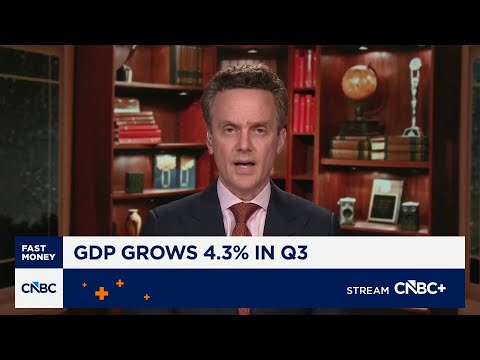
Treasury Official Joe Lavorgna talks robust Q3 GDP numbers
CNBC Television· 2025-12-23 22:53
For more, let's bring in Joe Leavia, counselor to the secretary of the Treasury Department. Joe, great to have you with us. Would you do you agree with that sentiment.>> I do. I mean, the thing is the GDP numbers, which we could get into, were fantastic, was all private sector led, but what struck me, Melissa, is the profound weakness in the interests sectors of the economy such as structures and residential. Structures, which are factories, by the way, they'll get a huge lift with the tax bill.uh 2026 shou ...
Tanger CEO Stephen Yalof Says Holiday Shoppers Seek Value
PYMNTS.com· 2025-12-23 22:41
Core Insights - Holiday shoppers are willing to spend but are seeking value, leading to increased traffic and sales at Tanger's outlet centers [1][2] - Retailers are responding to consumer demand by offering promotions, resulting in full parking lots and steady activity during the holiday season [2] - Mastercard reported a 3.9% year-over-year increase in retail sales for November and December, while Visa noted a 4.2% increase in holiday retail spending [3] Retail Performance - Simon Property Group reported a 6.4% year-over-year increase in traffic at its malls and premium outlets during the Black Friday weekend, with many brands experiencing double-digit sales increases [4] - The overall retail environment is thriving, despite a decline in consumer confidence [4] Consumer Confidence - The Conference Board reported a 3.8-point drop in consumer confidence in December, marking the fifth consecutive decline, affecting various demographics [5] - Factors influencing consumer sentiment include prices, inflation, tariffs, and personal finance issues [6]



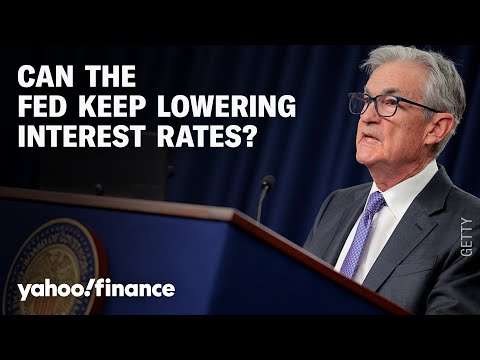
'The Fed can continue to lower interest rates' next year, Bessent advisor says
Yahoo Finance· 2025-12-23 21:59
Joe, always good to see you. Thanks so much for joining me. >> Thank you.Very good to be with you, Jennifer. Happy holidays. >> Happy holidays to you.And what a way to kick off the holidays with such a stellar third quarter GDP number up 4.3% a full percentage point above expectations and driven by consumer spending up three and a half% though a large chunk of that from healthcare spending. Though we also saw trade really add to this number as well. Joe, can we see this level of growth sustained into next y ...