铸牢中华民族共同体意识

Search documents
四川“十四五”时期民族宗教工作主要成就发布 15年免费教育惠及超158万名民族地区学生
Si Chuan Ri Bao· 2025-11-27 00:27
Core Viewpoint - The Sichuan government has made significant progress in ethnic and religious work during the "14th Five-Year Plan" period, focusing on strengthening the awareness of the Chinese national community and promoting the Sinicization of religion, aiming to contribute to the modernization of Sichuan. Group 1: Financial Investment and Economic Growth - A total of nearly 4 billion yuan has been invested in ethnic-related funds, with over 500 ethnic villages and demonstration villages for ethnic unity established [1][2] - The GDP of ethnic autonomous areas in Sichuan is projected to reach 391.34 billion yuan in 2024, which is 1.4 times that of 2020 [2] Group 2: Education and Language Proficiency - The pass rate for Mandarin proficiency among preschool children in ethnic areas exceeds 92%, with nearly 320,000 children receiving systematic Mandarin education [3] - The "9+3" program has provided free vocational training to over 50,000 students [3] Group 3: Cultural and Archaeological Development - Sichuan has implemented 18 proactive archaeological projects during the "14th Five-Year Plan," with the Pilo site in Daocheng recognized as one of the "Top Ten Archaeological Discoveries in the Country" [4] - A total of 2.84 billion yuan has been allocated for 118 cultural heritage protection projects in ethnic areas [4] Group 4: Legal and Social Framework - Sichuan has established the "Sichuan Provincial Ethnic Unity and Progress Regulations" to enhance the legal framework for ethnic and religious affairs [5] - The "Sichuan Together: Lawyer Service Team" has formed over 350 sub-teams, with more than 5,000 lawyers participating in legal services and public legal education in ethnic regions [5]
“道中华·京华行”在京启幕,以“中”字路线探源古都文脉
Xin Jing Bao· 2025-11-26 07:21
Group 1 - The event "Dao Zhonghua·Jinghua Xing" focuses on strengthening the awareness of the Chinese national community and promoting excellent Chinese culture, featuring a series of interviews and explorations in various historical and cultural sites in Beijing [1][2] - The route design of the event forms a "Zhong" character layout, symbolizing the importance of Beijing as the capital and the theme of the event, which emphasizes the unity of the Chinese nation [2] - The event includes visits to significant cultural sites such as the Palace Museum and the National Museum of China, highlighting the educational practices related to the awareness of the Chinese national community [2][3] Group 2 - The Beijing Yanjing Eight Wonders Museum is planning a large-scale "cultural relics reproduction plan" to recreate lost treasures of the Yanjing Eight Wonders, which represent a blend of various cultural influences and craftsmanship [4] - The museum has established a complete protection system and has hundreds of master craftsmen and intangible cultural heritage inheritors capable of reproducing lost works with high precision [4] - The Beijing Historical Emperors Temple Museum has been included in the first batch of educational practice bases for strengthening the awareness of the Chinese national community, focusing on the historical significance of the temple and its artifacts [5][6]
青海民族团结先进代表北京行:广泛交流 互学互鉴
Zhong Guo Xin Wen Wang· 2025-11-23 02:42
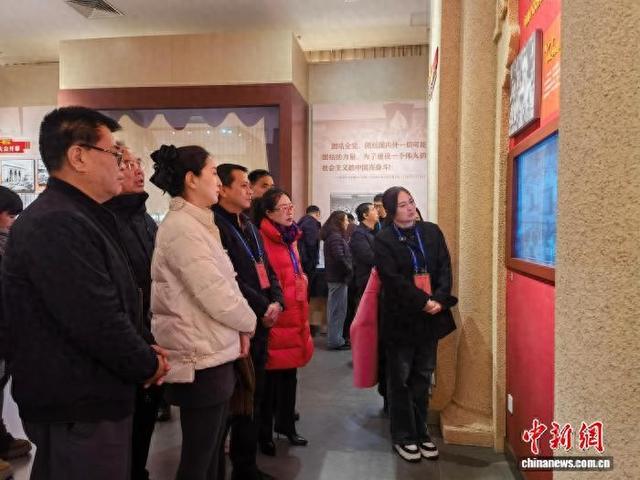
11月17日至11月22日,来自青海的49名全国、全省民族团结进步模范(先进)集体代表、模范(先进)个人 赴北京考察交流学习。 中新网北京11月23日电 (张海雯)"科技创新是推动民族团结进步的重要引擎,我们将进一步探索先进技 术,构建连接各民族的数字化桥梁,促进各民族之间的交往交流交融。"11月22日,在北京参观完中关 村国家自主创新示范区展示中心后,中国移动玉树分公司副总经理吕斌如是说。 图为青海 民族团结先进代表参观全国政协文史馆。张海雯摄 图为青海 民族团结先进代表参观中关村国家自主创新示范区展示中心。张海雯摄 北商业巷社区党委书记、社区主任严红新说:"我们探索形成了'从社区到小区再到商业街的石榴籽家 园'的拓展和延伸,'五共五化''五邻工作法'等一系列创新机制,推动各族民众交往交流交融。" "两堂理论课都讲到,社区是城市民族工作的重要阵地。接下来我们将以重要阵地为依托,持续深入探 索民族团结进步创建工作,努力在新的起点上实现新的提升。"严红新表示。 青海省委统战部综合协调处处长王玉成表示,此次参观考察交流活动既是汲取力量的"充电之旅",更是 传递团结声音的"桥梁之行",通过沉浸式学习与深度交流,激励 ...

全省民族团结进步表彰会议召开坚持以铸牢中华民族共同体意识为主线不断开创江苏民族团结进步事业新局面信长星讲话 刘小涛主持 张义珍出席
Xin Hua Ri Bao· 2025-11-20 23:30
信长星强调,全省各级党委政府要把民族工作摆上重要议事日程,主要负责同志带头学习党的民族 理论和政策,及时研究解决民族工作中的重大问题,支持民族工作部门更好履职尽责。各有关部门要密 切协作,健全铸牢中华民族共同体意识制度机制,营造关心支持民族工作的浓厚氛围,凝聚起做好新时 代民族工作的合力。 省委常委、省委秘书长储永宏宣读表彰决定,省领导向受表彰的集体和个人颁奖,受表彰代表作了 发言。 省委常委,省人大常委会、省政府、省政协有关领导同志,省有关部门单位、省人大省政协有关专 门委员会负责同志,各设区市有关负责同志,少数民族群众和学生代表等参加会议。 11月20日,全省民族团结进步表彰会议在南京召开。省委书记信长星出席并讲话。他强调,要深入 学习贯彻习近平总书记关于加强和改进民族工作的重要思想,认真落实全国民族团结进步表彰大会精 神,坚持以铸牢中华民族共同体意识为主线,画好民族团结同心圆,不断开创江苏民族团结进步事业新 局面。省长刘小涛主持,省政协主席张义珍出席。 信长星代表省委、省政府向受到表彰的模范集体和个人表示祝贺,向全省民族工作战线的同志们表 示问候,向关心支持江苏民族团结进步事业的各界人士表示感谢。他指出 ...
全疆技工教育系统首家马克思主义学院正式启用
Nan Fang Nong Cun Bao· 2025-11-20 14:02
Core Points - The establishment of the first Marxist College in the Xinjiang vocational education system marks a significant milestone in political education and aims to promote national unity and the awareness of the Chinese national community [6][19][50] Group 1: Establishment and Purpose - The Marxist College at Kashgar Technical Institute officially opened on November 18, 2023, supported by the Guangdong aid team [2][6] - This college serves as a new benchmark for ideological education in Xinjiang's vocational education system and will provide strong ideological support for cultivating skilled professionals and promoting high-quality economic and social development [4][6] Group 2: Educational Initiatives - The college will not only offer political courses to its students but will also function as a patriotic education base open to the public, guiding youth from various ethnic backgrounds [6][20] - A seminar titled "Building a Community of Shared Future" was held simultaneously, featuring experts from Guangdong and Xinjiang to enhance the teaching and research capabilities of the college [9][12][24] Group 3: Funding and Support - Guangdong's aid to Xinjiang has transitioned from "blood transfusion" support to "blood-making" cooperation, with nearly 50 million yuan invested in educational aid since 2023 [19][57] - The establishment of the Marxist College is part of a broader initiative that includes the construction of a Culinary College and an Innovation and Entrepreneurship Center, creating a comprehensive educational platform [60]

七省区各族青少年科技实践营在沈开营
Liao Ning Ri Bao· 2025-11-07 01:08
为加强铸牢中华民族共同体意识教育,11月6日,七省区各族青少年科技实践营在沈阳开营,来自 辽宁省、山西省、吉林省、黑龙江省、内蒙古自治区、西藏自治区、新疆维吾尔自治区的110余名各族 青少年和带队老师,共同开启为期三天的科技实践与交往交流交融之旅。 本次活动聚焦"民族团结手相牵·同心共筑中国梦"主题,以铸牢中华民族共同体意识为主线,旨在 通过开展跨区域、跨民族的交流活动,为各族青少年搭建一个共同学习、共同探索、共同成长的平台。 活动期间将组织各族青少年参观中国工业博物馆、辽宁省科学技术馆、辽宁省博物馆、沈鼓集团股 份有限公司、沈阳地铁指挥中心、辽宁省铸牢中华民族共同体意识主题展,引导各族青少年牢固树立休 戚与共、荣辱与共、生死与共、命运与共的共同体理念,不断增强对伟大祖国、中华民族、中华文化、 中国共产党和中国特色社会主义的认同。 ...
推进民生福祉与民族工作提质增效
Guang Xi Ri Bao· 2025-11-06 02:31
Group 1: Women's Federation Initiatives - The Women's Federation emphasizes the importance of learning, promoting, and implementing the spirit of the 20th Central Committee's Fourth Plenary Session, aiming for deep understanding and practical application [1] - The organization plans to conduct extensive educational campaigns, such as the "Sister Gui" initiative, to disseminate the session's spirit among women and families, thereby mobilizing women's contributions to modernization in Guangxi [1] - Focus will be placed on aligning work with the session's directives related to women, children, and families, ensuring that relevant goals are integrated into the 14th Five-Year Plan [1] Group 2: Disability Affairs - The Disabled Persons' Federation is tasked with closely integrating the spirit of the 20th Central Committee's Fourth Plenary Session with Xi Jinping's important discussions on disability affairs [2] - The Federation aims to develop a comprehensive 14th Five-Year Plan for the protection and development of disabled persons in Guangxi, focusing on high-quality development and enhancing the well-being of disabled individuals [2] - The goal is to contribute significantly to the modernization efforts in Guangxi by improving the happiness, sense of gain, and security of disabled persons [2] Group 3: Ethnic and Religious Affairs - The Ethnic and Religious Affairs Committee is committed to effectively communicating and implementing the spirit of the 20th Central Committee's Fourth Plenary Session across the ethnic and religious sectors [2] - The committee aims to deepen understanding of the session's core essence and integrate it with Xi Jinping's thoughts on ethnic and religious work, promoting the construction of a community of shared destiny among Chinese nationalities [2] - Efforts will be made to advance the Sinicization of religion in Guangxi, ensuring that the region's ethnic and religious policies align with national objectives [2] Group 4: Civil Affairs Development - The Civil Affairs Department emphasizes aligning with the decisions of the 20th Central Committee's Fourth Plenary Session to enhance basic social welfare and civil affairs in Guangxi [3] - A three-year action plan named "Warm-hearted Civil Affairs" will be implemented to translate the session's spirit into actionable steps for high-quality civil affairs development [3] - Key initiatives include improving elderly care services, developing a social assistance system, and enhancing welfare for vulnerable groups, thereby increasing the well-being of disadvantaged communities [3]
边疆民族地区建设铸牢中华民族共同体意识示范区论坛暨费孝通田野调查90周年纪念活动在南宁举行丁仲礼陈刚出席并致辞
Guang Xi Ri Bao· 2025-11-05 02:35
Core Viewpoint - The forum held in Nanning aims to strengthen the awareness of the Chinese national community and commemorate the 90th anniversary of Fei Xiaotong's field research, emphasizing the importance of ethnic unity and development in border minority areas [1][2][3] Summary by Sections Forum Overview - The forum is a platform for discussing the development of border minority areas and promoting the awareness of the Chinese national community, in line with the spirit of the 20th Central Committee of the Communist Party of China [1][2] Key Speeches - Ding Zhongli highlighted the importance of strengthening the awareness of the Chinese national community as a main line of ethnic work, urging the people of Guangxi to enhance their national consciousness and unity [2] - Chen Gang emphasized the need for high-quality development in ethnic work and the establishment of effective mechanisms to promote the awareness of the Chinese national community [3] Academic Contributions - Experts and scholars presented keynotes on topics such as accurately grasping the main line of the awareness of the Chinese national community and advancing its construction in border areas [4] - The forum included discussions on the contemporary value of Fei Xiaotong's research and its relevance to current ethnic studies [4] Future Directions - The forum aims to provide strong support for the construction of the Chinese national community through theoretical advancements and practical applications in economic development and social cohesion [3][4]
边疆民族地区建设铸牢中华民族共同体意识示范区论坛在广西南宁开幕
Xin Hua She· 2025-11-04 07:37
Core Viewpoint - The forum emphasizes the importance of strengthening the awareness of the Chinese national community as a central theme of the Party's ethnic work in the new era [1] Group 1 - The forum is held in Nanning, Guangxi, commemorating the 90th anniversary of Fei Xiaotong's field research [1] - Ding Zhongli, Vice Chairman of the National People's Congress Standing Committee and Chairman of the Central Committee of the Democratic League, attended the event [1] - The forum aims to promote the idea of a shared destiny among various ethnic groups in Guangxi, enhancing unity and political foundation [1]
“以族定葬”的困局与出路:论公墓管理的公共性回归
Zheng Quan Ri Bao· 2025-11-02 23:34
Core Viewpoint - The article discusses the need to reform the management model of Hui Muslim cemeteries in Guangzhou, advocating for a shift from ethnicity-based burial practices to a system that respects individual religious beliefs and funeral wishes, thereby promoting equality and inclusivity in burial practices [2][6][7]. Group 1: Current Management Issues - The current management of Hui Muslim cemeteries by the Islamic Association stems from historical policies aimed at respecting the burial customs of the Islamic minority, but this model has become problematic as it binds ethnic identity to religious affiliation [6]. - The "ethnicity-based burial" approach undermines individual religious freedom, as it assumes that all Hui individuals must adhere to Islamic burial practices, disregarding those who may not practice Islam or who may have converted to other religions [6][7]. - Allowing religious organizations to manage public burial facilities blurs the lines between religion and government, which contradicts the principle of separation of church and state [6]. Group 2: Proposed Reforms - The article calls for the gradual adjustment of the Hui Muslim cemetery management model, suggesting the elimination of single-ethnicity cemeteries and their incorporation into the public management framework of civil affairs [2][7]. - It proposes that access to Hui cemeteries should be based on the deceased's religious beliefs or funeral wishes rather than their ethnic identity, allowing for a more inclusive approach [2][7]. - Religious organizations should be permitted to provide religious services under government supervision but should not have control over cemetery management, ensuring the protection of minority rights while maintaining legal uniformity [2][7].