
Economic Growth

Search documents
X @The Economist
The Economist· 2026-01-26 08:20
India’s growth trajectory, like its population, is a bit of a jumble. It has pursued what the authors of a new book call a “precocious” model of development, doing things in a peculiar order https://t.co/ktmuIwAhtB ...
X @The Economist
The Economist· 2026-01-26 02:00
A new book re-examines India’s growth record, social divisions and state apparatus over the past 75 years https://t.co/MennsGxuBsIllustration: Álvaro Bernis https://t.co/s4Vfce9Bsi ...
X @The Economist
The Economist· 2026-01-25 03:00
The years since Morena took control of Mexico have been the most sluggish in a quarter century. Analysts think its economy will grow by 1.3% this year—about half of the Latin American average https://t.co/61JrkmooMn ...
Why Investors Shouldn’t Panic Over Japan’s Bond Market Turmoil
The Wall Street Journal· 2026-01-23 18:57
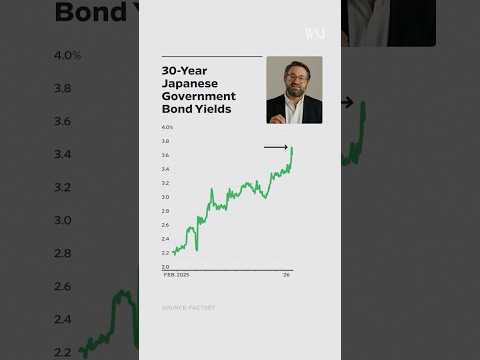
Forget Greenland. Investors should be paying attention to the Japanese government bond market. While this is going to be an important story all year, I think there's no need to panic.This chart shows the yield on 30-year Japanese government bonds. They've been trending up for a while, but as you can see, they suddenly spiked on Monday. That's because of some of the pledges that the prime minister has been making.Japan has a new prime minister, Sonai Tagichi, and she is known as a very strong advocate for go ...

Squawk Pod: Davos 2026: Goldman Sachs CEO David Solomon - 01/23/26 | Audio Only
CNBC Television· 2026-01-23 18:41
They have an environment where they think they really can make progress growing their businesses. You got technology innovation that's helping people in their businesses and CEOs are very focused in that. >> Goldman Sachs CEO David Solomon at the World Economic Forum in Davos, Switzerland.A conversation spanning business sentiment, consumer credit, and of course the markets. I think we're set up where we have the possibility for a stronger growth trajectory for the next few years. >> Business people around ...


印度经济:宏观指标-增长保持稳健;宏观稳定性向好-India Economics – Macro Indicators Chartbook-Growth Holds Up; Macro Stability Benign
2026-01-23 15:35
Summary of Key Points from the Conference Call Industry Overview - **Industry**: Indian Economy and Macro Indicators - **Company**: Morgan Stanley India Company Private Limited Core Insights 1. **Growth Recovery**: Domestic demand indicators are showing resilience despite global trade and geopolitical challenges. High-frequency growth indicators, particularly in consumption, are maintaining momentum due to improved purchasing power and labor market outlook. Vehicle registrations increased by 16.7% YoY for passenger vehicles in December, while two-wheelers grew by 6.8% YoY. Credit card spending rose by 14.3% YoY in December compared to 11.5% in November. GST collections remained steady at INR 1.75 trillion in December, with a growth rate of 6.1% compared to 3.6% in the previous month [2][9]. 2. **Inflation Trends**: The headline Consumer Price Index (CPI) rose to 1.3% YoY in December, up from 0.7% in November, but remained below 2% for the fourth consecutive month. Core CPI (excluding food and fuel) reached 4.7% YoY in December, the highest since September 2023. The Wholesale Price Index (WPI) increased to 0.8% YoY in December from a deflation of 0.3% in November [3]. 3. **External Indicators**: The goods trade deficit was stable at US$25 billion in December, representing 7.1% of GDP on an annualized basis. Foreign Institutional Investor (FII) equity outflows were recorded at US$2.7 billion in January, similar to December levels, while FII debt saw a slight inflow of US$0.2 billion. Gross Foreign Direct Investment (FDI) was robust at US$6.4 billion in November, but net FDI recorded outflows of US$447 million due to repatriation and outward FDI [4]. 4. **Policy Environment**: The monetary policy remains supportive, with a rate cut of 25 basis points to 5.25% and an injection of approximately US$16 billion in durable liquidity. The fiscal deficit for FYTD is up 15.4% YoY, annualizing at around 4.2% of GDP, with total spending tracking at 6.7% YoY [5][12]. 5. **GDP Growth Projections**: Real GDP growth is expected to be 7.6% YoY in FY2026, up from 6.5% in FY2025, while nominal growth is projected to moderate to 8.4% YoY in FY2026 from 9.7% in FY2025. Average GDP growth is anticipated to be around 6.5% YoY in FY2027 [9]. 6. **Inflation Expectations**: Headline CPI is expected to rise to align with the Reserve Bank of India's (RBI) medium-term target of 4% YoY in FY2027, with core inflation remaining stable. A lower weight of food in the new CPI series is anticipated to reduce volatility in overall inflation [10]. 7. **Fiscal Policy Outlook**: The government aims to target a fiscal deficit of 4.2% of GDP in FY2027, a slight improvement from the 4.4% target in FY2026. This is expected to be the slowest pace of consolidation since FY2023 [12]. 8. **Risks to Outlook**: Risks are balanced, primarily external. Upside risks include stronger domestic demand due to supportive policies and improved investor sentiment, while downside risks stem from adverse global growth and geopolitical tensions [13]. Additional Important Insights - **Consumer Sentiment**: The index of consumer sentiment has shown fluctuations, indicating varying levels of consumer confidence [58]. - **Employment Trends**: The Naukri Job Index has shown a broad-based moderation, reflecting changes in the labor market dynamics [60]. - **Sector-Specific Trends**: The auto sector has seen a notable increase in sales, with passenger vehicle sales up significantly, while two-wheeler sales have been more subdued [50][51]. This summary encapsulates the key points discussed in the conference call, providing a comprehensive overview of the current state and outlook of the Indian economy and its macroeconomic indicators.
Japan's factory activity returns to growth after seven months, PMI shows
Yahoo Finance· 2026-01-23 00:32
Core Insights - Japan's manufacturing activity expanded in January for the first time in seven months, driven by a significant rise in new export orders, marking a return to expansionary territory with a PMI of 51.5 [1][2] Manufacturing Sector - The S&P Global flash Japan Manufacturing PMI increased from 50.0 in December to 51.5 in January, indicating growth [1] - Key sub-indexes showed that factory output and new orders ended their contraction streaks, with new export orders climbing at the fastest rate since November 2021 [2] - Input price inflation for manufacturers reached a nine-month high, while they raised prices charged to customers at a faster rate in January [5] Services Sector - The flash Japan services PMI improved from 51.6 in December to 53.4 in January, indicating the steepest increase in services activity since last July [3] - The flash composite PMI rose to 52.8 from 51.1 in December, reflecting overall growth in both manufacturing and services [3] Employment and Capacity - Growing customer demand led to increased pressure on capacity, with outstanding business rising at the fastest rate since late 2007 [4] - Employment across Japan increased at the steepest rate since April 2019, driven by the need for more staff [4] Future Outlook - Both manufacturers and service firms forecast growth in future output, although optimism has slightly decreased due to concerns about rising costs, global economic uncertainty, labor shortages, and an aging population [4] - The Bank of Japan is expected to raise its growth forecast and signal readiness for the next rate hike, influenced by recent yen falls and a solid wage outlook [5]
Watch: Trump's Full Speech at World Economic Forum in Davos | WSJ
The Wall Street Journal· 2026-01-21 14:56
[applause] [applause] Well, thank you very much, Larry. It's great to be back in beautiful Davos, Switzerland, and to address so many respected business leaders, so many friends, few enemies, [laughter] and all of the distinguished guests. It's a who's who. I will say that. I've come to this year's World Economic Forum with truly phenomenal news from America. Yesterday marked the one-year anniversary of my inauguration. And today, after 12 months back in the White House, our economy is booming, growth is ex ...

Americans' paychecks grow stronger as Main Street shows new economic strength
Fox Business· 2026-01-19 17:28
Economic Strength and Consumer Behavior - Recent economic data indicates growing strength on Main Street, with Americans' take-home pay increasing by 1.42% after inflation from January to December 2025, contributing to rising retail sales and home purchases [1] - Retail spending rose by 3.3% year-over-year in November and increased by 0.6% from the previous month, surpassing economists' expectations of a 0.4% rise [2] Housing Market Dynamics - Lower interest rates have led to a 5.1% increase in existing home sales in December, as reported by the National Association of Realtors [3] - The average 30-year fixed-rate mortgage fell to 6.19% in December, down from 6.24% in November and 6.72% a year ago, indicating improved housing market conditions [6] - Inventory levels in the housing market remain tight, with fewer sellers eager to move, but more inventory is expected to come to market starting in February [6] Inflation Trends - Inflation remained elevated at the end of 2025, with the consumer price index (CPI) showing a 0.3% monthly increase in December and a 2.7% rise year-over-year [9] - Core CPI, excluding food and energy prices, rose by 0.2% in December and is up 2.6% from the previous year [9] Employment and Federal Reserve Actions - The US economy added 50,000 jobs in December, contributing to a decline in the unemployment rate [10] - The Federal Reserve has cut its benchmark federal funds rate by 25 basis points in its last three meetings, indirectly contributing to lower mortgage rates [12] - Market expectations indicate a 95% probability that the Fed will maintain its current target range of 3.5% to 3.75% in the upcoming meeting [13]

亚洲经济-2026 年十大问题-Asia Economics Analyst_ Ten questions for 2026
2026-01-19 02:29
Summary of Key Points from the Conference Call Industry Overview - The report focuses on the Asia-Pacific economic outlook for 2026, with specific emphasis on China, Japan, India, Taiwan, and New Zealand. Core Insights and Arguments 1. **China's GDP Growth**: - Expected real GDP growth of 4.8% in 2026, surpassing consensus expectations of 4.5%-4.6% due to strong export growth and easing fiscal policy [6][5][4] 2. **Housing Market in China**: - The housing market is not expected to bottom out across all indicators; housing starts are down approximately 80% from peak levels in 2020, while construction activity has fallen about 60% [7][4] - Home prices have significantly declined, with expectations that they will remain lower by the end of 2026 [7][4] 3. **China's Trade Surplus**: - Anticipated to increase further, with a record trade surplus of nearly $1.2 trillion in 2025 expected to rise in 2026 due to competitive manufacturing and a focus on exports [13][14][4] 4. **US Tariff Relief**: - Modest tariff relief expected for Asia, particularly benefiting India, as negotiations continue to lower trade barriers [19][4] - Taiwan has signed an agreement to reduce US tariffs in exchange for significant investments in semiconductor and AI production [21][4] 5. **Japan's Fiscal Policy and Yields**: - No significant rise in bond yields expected post-election; fiscal policy may loosen but will be constrained by market pressures [25][26][4] - The yen is expected to strengthen slightly, moving away from the current weak levels [31][4] 6. **Growth Surprises in Asia-Pacific**: - Taiwan and New Zealand are projected to outperform consensus growth expectations, driven by tech exports and recovering economic conditions, respectively [33][4] 7. **Inflation Outlook**: - Inflation pressures are not expected to drive significant policy shifts among Asia-Pacific central banks, with CPI inflation returning to pre-COVID levels [41][4] - China and Thailand are expected to see continued easing in monetary policy due to low inflation [42][4] 8. **Central Bank Policy Rate Expectations**: - Anticipated tightening in Japan, Taiwan, and New Zealand, with the Bank of Japan expected to resume rate hikes [47][48][4] 9. **Asian Currencies Performance**: - Majority of Asian currencies expected to appreciate against the USD in 2026, with the CNY anticipated to strengthen due to strong fundamentals [52][4] Other Important Insights - The report highlights that most themes from the previous year were accurate, with notable surprises including the rise in government bond yields in China and the underperformance of the Indian Rupee [56][4] - The analysis includes a review of past predictions and their outcomes, reinforcing the credibility of the current forecasts [56][4]