Stock valuation

Search documents
The Smartest Retail Stock to Buy With $1,000 Right Now
Yahoo Finance· 2025-10-22 23:43
Core Viewpoint - Amazon is currently viewed as a strong investment opportunity despite its recent stock performance, with analysts suggesting it is undervalued compared to historical metrics [1][3][8]. Company Overview - Amazon holds a market capitalization of $2.3 trillion, making it the most valuable member of the SPDR S&P Retail ETF, significantly larger than Walmart [2]. - The company commands approximately 40% of total U.S. e-commerce sales [2]. Stock Performance - Year-to-date, Amazon's stock has gained only 1.3%, underperforming the SPDR S&P Retail ETF's 8% increase and the S&P 500's nearly 15% rise through October 20 [2]. - Over the past month, Amazon's stock has declined by almost 4% amid economic concerns and geopolitical issues [3]. Analyst Ratings - A significant majority of analysts (66 out of 68) rate Amazon as a buy or strong buy, with an average 12-month price target of $266, indicating a potential upside of about 20% from current levels [3]. Valuation Metrics - Amazon's forward P/E ratio is currently 34 times expected earnings, which is the lowest it has been in a decade, despite being 50% higher than the S&P 500's equivalent ratio [5]. - The company's gross profit margin of 49.6% over the past 12 months places it in the 100th percentile for profitability, indicating it has never been more profitable in the last 10 years [6]. Long-term Outlook - Long-term investors are encouraged to consider Amazon as a favorable entry point, as current valuations are historically low [8].

Why Crown Holdings Stock Was Climbing Today
Yahoo Finance· 2025-10-21 17:52
Core Insights - Crown Holdings reported better-than-expected third-quarter earnings, with solid growth in both revenue and earnings, and raised its full-year guidance [1][3][4] Financial Performance - Revenue increased by 4.2% to $3.2 billion, surpassing estimates of $3.14 billion [3] - Segment income rose by 4% to $490 million, while adjusted earnings per share (EPS) increased by 13% to $2.24, exceeding the consensus estimate of $1.99 [4] Regional Performance - Strong growth was observed in Europe, with a 12% increase in volume in the European beverage segment, contributing to a 27% rise in segment income [3] Guidance Update - The company raised its full-year adjusted EPS forecast to $7.70 to $7.80, up from a previous range of $7.10 to $7.50, and expects fourth-quarter adjusted EPS of $1.65 to $1.75, compared to the consensus of $1.58 [5] Market Position - Following the earnings report, Jefferies reiterated a buy rating on Crown Holdings, describing the stock as "undervalued" with a price-to-earnings ratio of less than 13, indicating it is well-priced for a leading company in a challenging environment [5]

Chipotle Mexican Grill's Market Position and Financial Challenges
Financial Modeling Prep· 2025-10-20 16:06
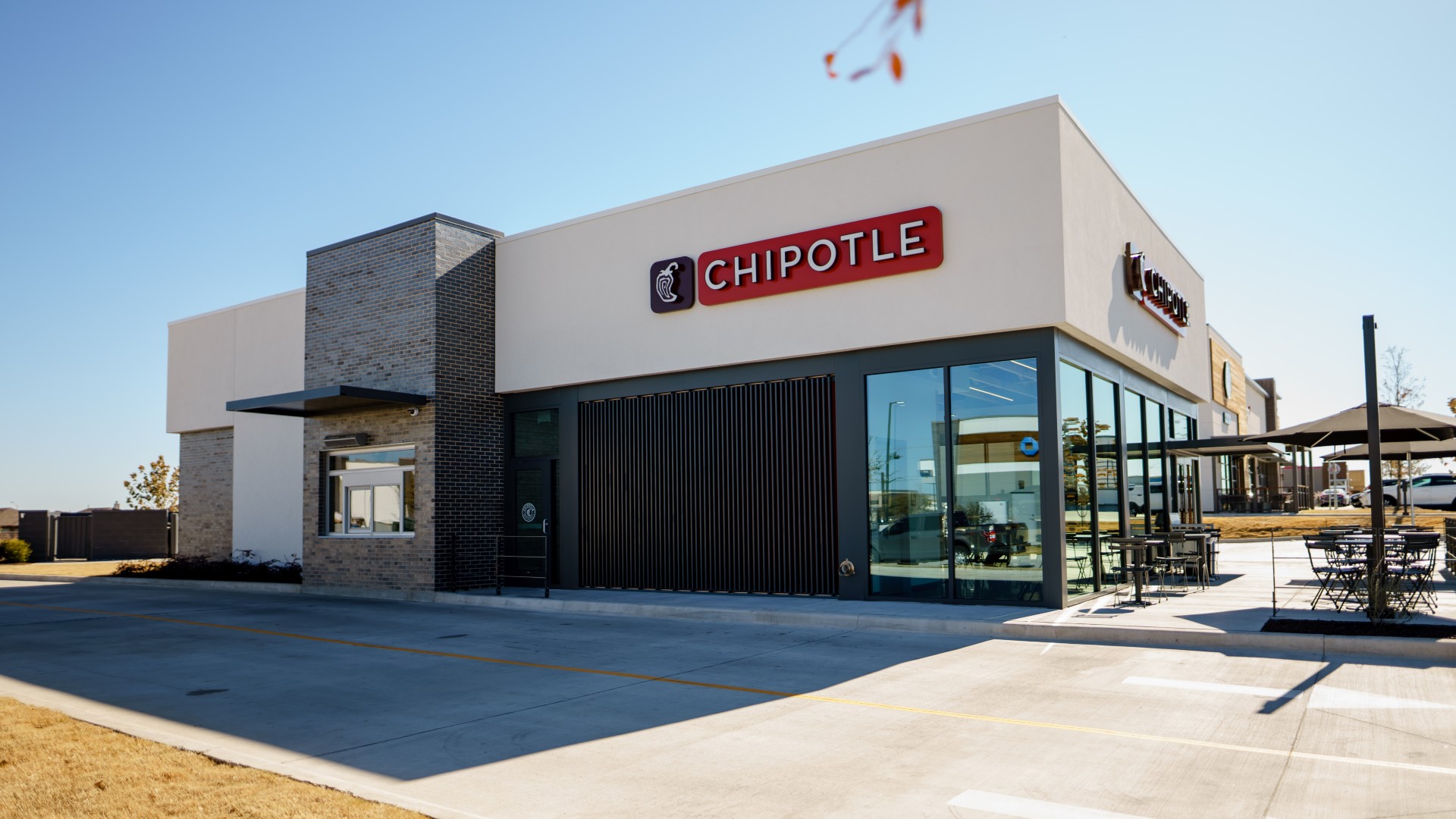
Core Insights - Chipotle Mexican Grill is a significant player in the fast-casual dining sector, focusing on fresh ingredients and customizable menu options, but faces intense competition from chains like Cava Group and Sweetgreen [1] - UBS has lowered its price target for Chipotle from $65 to $56, indicating a potential upside of 33.78% from the current trading price of $41.86, despite a 35% decline since its peak in December [2] - The leadership transition to CEO Scott Boatwright has coincided with a 4% decrease in comparable restaurant sales in Q2 2025, raising concerns about the company's high valuation of 37 times earnings and 4.7 times sales [3] - Chipotle's stock has declined by 32% this year, contrasting with the S&P 500's 13% rise, highlighting market concerns regarding its growth prospects [4] - The company is pursuing international expansion and new menu items to drive growth, but investor concerns remain regarding its premium valuation amid slowing growth and traffic trends [5] Financial Performance - Chipotle maintains a strong financial foundation with robust margins and a solid balance sheet, despite the stock's significant decline [4] - The company's high valuation and slowing growth have made investors wary, particularly in light of economic uncertainty [6]


Buy AMZN Stock At $215?
Forbes· 2025-10-20 12:15
Core Insights - Amazon stock (NASDAQ: AMZN) has seen a significant increase of 27% over the past six months, driven by strong Q2 earnings, growth in AWS, expansion in advertising, and positive analyst sentiment [2][4][6] - Despite the strong performance, the stock faced a temporary pullback due to cautious Q3 guidance and ongoing competition in the cloud sector [3][4] - The current stock price of $215 raises the question of whether it remains a buy, with the conclusion that it is fairly priced given its strong operating performance and financial condition [4] Financial Performance - Amazon's revenue has grown at an average rate of 11.3% over the last three years, with a 11% increase from $604 billion to $670 billion in the last 12 months [10] - Quarterly revenues increased by 13.3%, reaching $168 billion compared to $148 billion a year ago [10] - The last twelve-month operating income was $76 billion, resulting in an operating margin of 11.4% [10] - Amazon generated nearly $121 billion in operating cash flow, with a cash flow margin of 18.1% [10] - The net income for the same period was approximately $71 billion, indicating a net margin of about 10.5% [10] Debt and Financial Stability - Amazon's debt stood at $134 billion at the end of the most recent quarter, with a market cap of $2.3 trillion, leading to a debt-to-equity ratio of 5.9% [10] - Cash and cash equivalents accounted for $93 billion of total assets of $682 billion, resulting in a cash-to-assets ratio of 13.7% [10] Stock Recovery and Volatility - The stock experienced a decline of 56.1% from a high of $186.57 on July 8, 2021, to $81.82 on December 28, 2022, compared to a 25.4% decline for the S&P 500 [11] - Amazon fully recovered to its pre-crisis peak by April 11, 2024, and reached a high of $242.06 on February 4, 2025, currently trading at $213.04 [11] - Historical performance shows that Amazon has recovered from significant declines during various economic downturns, including a 65.3% drop during the 2008 financial crisis [11]

Trump-Induced Volatility Aside, Novo Trades Cheap While Patents Protect Its Profits Until 2032
Benzinga· 2025-10-17 18:33
Core Viewpoint - Novo Nordisk A/S is highlighted for its attractive valuation and strong patent protection, particularly in light of recent market reactions to potential price cuts for its drug Ozempic [1][5]. Valuation and Market Position - Novo Nordisk's stock is trading at a low P/E ratio of 14, which is significantly lower than peers like Eli Lilly, which trades at approximately 27 times forward earnings [2][3]. - The company's low multiples are not indicative of weak performance but rather reflect investor concerns over potential pricing reforms [3]. Long-Term Growth Drivers - Revenue growth for Novo Nordisk is supported by multiple products, including Ozempic and Wegovy, which cater to the increasing demand for diabetes and obesity treatments [4]. - The company benefits from a patent-protected portfolio that ensures a long runway for earnings growth, mitigating concerns about immediate generic competition [4]. Resilience Against Volatility - Short-term volatility induced by political discussions does not alter the fundamental strengths of Novo Nordisk, including its attractive valuation and patent protection until 2032 [5]. - The stock is positioned as a defensive yet growth-oriented investment opportunity within the pharmaceutical sector, offering a favorable risk/reward profile [5].

IBM Stock: I Am Expecting Solid Numbers Next Week (NYSE:IBM)
Seeking Alpha· 2025-10-16 11:30
Core Viewpoint - The article discusses the investment thesis on International Business Machines (IBM), highlighting a buy rating issued in March due to its elevated valuation and potential for growth [1]. Group 1: Investment Thesis - The investment thesis focuses on identifying high-quality companies with strong balance sheets and shareholder-friendly policies [1]. - The approach combines quantitative and qualitative measures to uncover underappreciated opportunities in stocks [1]. Group 2: Analyst Background - The analyst has 10 years of experience in investment banking, specializing in industry and company research [1]. - The analyst employs a long-only investment strategy with a long-term focus [1].


Should You Buy Verizon Communications Stock Before Oct. 20?
The Motley Fool· 2025-10-16 09:16
Core Viewpoint - Verizon Communications is facing challenges despite a low valuation and high dividend yield, with recent leadership changes and a flat stock performance amid a rising market [1][2][6]. Group 1: Earnings Report and Stock Performance - Verizon is set to report its third-quarter earnings on October 20, with expectations that the low valuation and recent news may present a buying opportunity [2]. - Historically, Verizon's stock movements on earnings day have been modest, typically remaining within a range of $40 to $45 since 2024 [3]. - The stock has not shown significant volatility in response to earnings reports, although a recent leadership change led to a notable decline of over 5% [5][6]. Group 2: Leadership Change - On October 6, Verizon appointed Dan Schulman, former PayPal CEO, as the new leader, replacing Hans Vestberg [6]. - The unexpected leadership change may have contributed to investor concerns, leading to a decline in stock price as investors anticipate potential troubling results in the upcoming earnings report [7][8]. Group 3: Business Stability and Investment Potential - Despite current struggles, Verizon operates a stable business model with essential products and services, generating strong profit margins of around 13% and offering a dividend yield of just under 7% [9]. - The stock trades at a price-to-earnings multiple of just over 9, significantly lower than the S&P 500 average of more than 25, suggesting potential for long-term investment [10].

ANET Stock To $181?
Forbes· 2025-10-15 13:25
Core Insights - Arista Networks (NYSE: ANET) stock dropped by 6% to $139 due to investor concerns over competition from Meta and Oracle adopting NVIDIA's Spectrum-X Ethernet devices for AI data centers [2] - Despite the recent decline, the stock is viewed as attractive with a target price of $181, supported by strong operational performance and financial health [3] Company Overview - Arista Networks has a market capitalization of $174 billion and provides cloud networking solutions globally, including post-contract services like technical support and hardware repair [4] - The company has achieved an average revenue growth rate of 32.1% over the past three years, with revenues increasing from $6.3 billion to $8.0 billion, a 26% rise in the last year [9] Financial Performance - In the most recent quarter, Arista's revenues rose by 30.4% to $2.2 billion from $1.7 billion a year earlier [9] - The operating income for the last 12 months was $3.4 billion, resulting in an operating margin of 43.1% [9] - The company generated nearly $4.0 billion in operating cash flow, with a cash flow margin of 50.9% [9] - Arista produced approximately $3.3 billion in net income, leading to a net margin of about 40.9% [9] - The company has no debt, with a Debt-to-Equity Ratio of 0.0%, and holds $8.8 billion in cash, constituting 53.5% of total assets [9] Market Resilience - Arista Networks has shown resilience during economic downturns, outperforming the S&P 500 in terms of stock decline and recovery speed [6] - The stock has previously recovered from significant declines, including a 38.4% drop from a peak of $36.71 in December 2021 to $22.61 in June 2022, fully recovering by March 2023 [10]


1 Former S&P 500 Stock Down 76% That History Suggests Buying at a Once-in-a-Decade Valuation
The Motley Fool· 2025-10-15 08:17
Core Insights - Etsy's valuation may have reached a low point, potentially setting the stage for future outperformance if a new partnership drives growth [1][10] - The company was removed from the S&P 500 due to its stock no longer representing large U.S. companies, reflecting a shift to a small-cap status [2] - Despite a significant stock decline of approximately 80% since its peak in late 2021, Etsy's business has remained resilient, generating substantial free cash flow [3][4] Valuation and Buybacks - Etsy's shares are currently trading at a price-to-free-cash-flow valuation of less than 14, one of the lowest since its IPO [4] - Over the past three years, Etsy has reduced its outstanding shares by 21% through substantial stock buybacks [5] Historical Performance and Future Potential - Historical data suggests that stocks removed from the S&P 500 tend to underperform initially but may outperform the market over a five-year horizon [8][9] - The decline in stock price often leads to a lower starting point for future returns, indicating that Etsy's current low valuation may present an opportunity [10] Adoption Trends and Growth Catalysts - Etsy's active buyers decreased by nearly 5% in Q2 2025, highlighting a challenge in user adoption [11] - The integration of ChatGPT with Etsy's platform could provide a new shopping experience, potentially boosting user engagement and growth [13] Comparative Analysis - eBay serves as a relevant example, having faced similar growth challenges but managed to reduce its share count significantly, leading to a 141% stock increase over three years despite low revenue growth [14][16] - If Etsy can leverage the ChatGPT integration to improve its growth rate, it may follow a similar trajectory to eBay and outperform the market [16]


2 Stocks in Focus as New Analyst Initiates Coverage
ZACKS· 2025-10-13 18:11
Core Insights - The current economic environment, characterized by shifting tariffs, persistent inflation, and policy uncertainty, necessitates enhanced analyst coverage to provide timely evaluations of company fundamentals and risk analyses [1][2] - Recent analyst initiations on WW International, Inc. (WW) and Webull Corporation (BULL) highlight the importance of market intelligence in navigating inflationary pressures and demand fluctuations [2][10] Analyst Coverage Importance - Analysts possess specialized knowledge that offers critical insights into a company's financial health, growth potential, and industry trends, which are often difficult for individual investors to obtain [3] - New analyst coverage typically indicates a higher investor interest in a stock, as it suggests that the company has value worth examining [4][6] - Analysts create value for companies by acting as intermediaries with access to relevant data, which helps mitigate information inefficiencies in the market [5] Stock Price Movements - New analyst coverage can lead to immediate stock price volatility, with positive ratings attracting bullish sentiment and driving share prices higher, while negative ratings may result in sell-offs [8] - Increased analyst focus on a stock often leads to more favorable ratings compared to continuously covered stocks, indicating a potential for upward momentum in valuation [6][7] Company-Specific Insights - WW International has seen a 29.6% decline in shares over the past three months, with 2025 EPS estimates remaining unchanged at $24.75 and revenue forecasts at $700.4 million [10][14] - Webull Corporation's shares have declined by 11% in the same period, with 2025 EPS estimates steady at $0.18 and revenue forecasts at $516.9 million [10][15] Screening Criteria for Investment - The strategy for identifying potential investments includes criteria such as an increase in the number of broker ratings and an improvement in average broker ratings over the past four weeks [11] - Additional parameters include a stock price of at least $5 and an average daily volume of over 100,000 shares to ensure sufficient investor interest [12]