Trade war

Search documents
Trump Faces Corporate Pushback As 122 American Companies In China Demand Tariff Relief Amid Revenue Volatility - DuPont de Nemours (NYSE:DD)
Benzinga· 2025-09-10 09:09
Group 1 - Nearly half of U.S. companies operating in China are urging for the elimination of all tariffs on Chinese goods, with 48% of respondents in a survey supporting this action [1][2] - The annual China Business Report by AmCham indicates that trade volatility has severely impacted bilateral commerce, with Chinese shipments to the U.S. falling by 33.1% year-over-year in August and U.S. imports to China dropping by 16% [3][4] - Two-thirds of survey respondents expect tariff tensions to negatively impact their revenues in China, particularly in the chemicals, logistics, and industrial manufacturing sectors [4][5] Group 2 - The survey reveals that only 18% of companies redirected investments to the U.S., while 51% opted for Southeast Asia as an alternative to operations in China [6] - Despite concerns, 71% of members reported profitability in 2024, an increase from 66% in 2023, with revenue growth rising to 57% from 50% [6] - However, only 45% of companies expect revenue increases this year, marking a record low, and just 30% anticipate China outperforming global growth rates in the next three to five years [7]


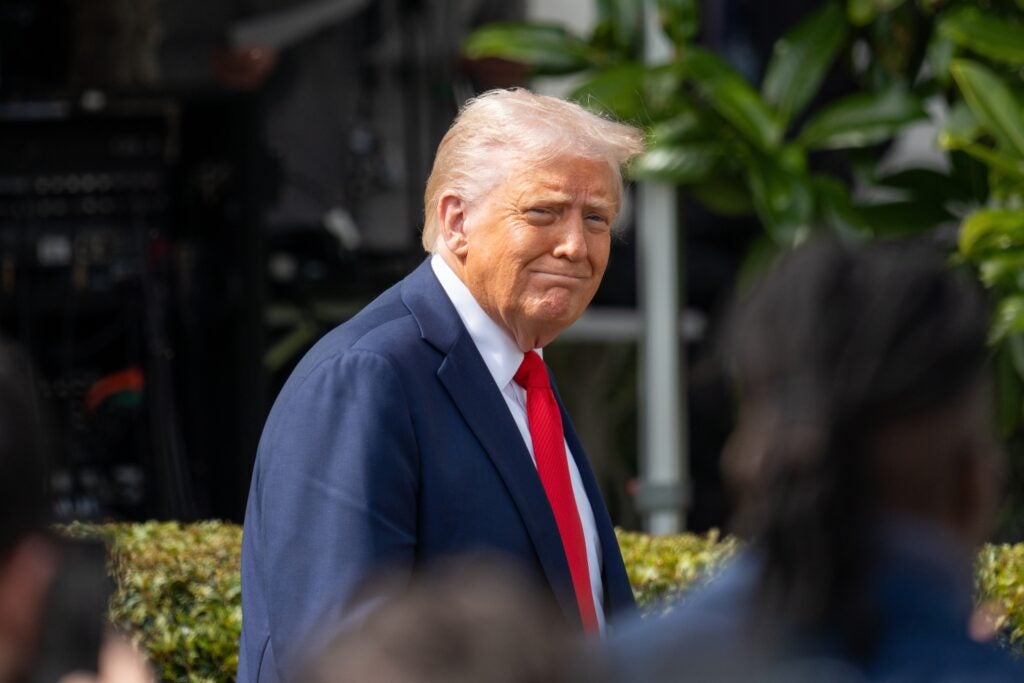
Trump suffers setback in bid to fire Fed governor
Sky News· 2025-09-10 06:12
Core Viewpoint - Donald Trump's attempt to remove Lisa Cook from the Federal Reserve has been blocked by a federal judge, highlighting the ongoing tension between the Trump administration and the Fed's independence [1][4]. Group 1: Legal Developments - A federal judge ruled that the claims against Lisa Cook regarding mortgage fraud were likely insufficient for her removal from the Federal Reserve [2][4]. - The White House alleged that Cook inaccurately described properties on mortgage applications, potentially allowing her to secure lower interest rates and tax credits [3]. - Cook's lawyer emphasized the ruling as a reinforcement of the Federal Reserve's independence from political interference [13]. Group 2: Economic Context - Trump's calls for the Federal Reserve to cut interest rates have not been heeded, as the central bank remains focused on inflation concerns linked to the trade war [5][7]. - The potential for a rate cut may arise due to a deterioration in the employment market, which has been negatively impacted by the trade war [5]. - The Federal Reserve's dual mandate includes ensuring maximum employment while controlling inflation, which complicates the influence of political demands on monetary policy [7][12].
China's Xi hosts Putin and Modi at regional summit
MSNBC· 2025-09-02 09:46
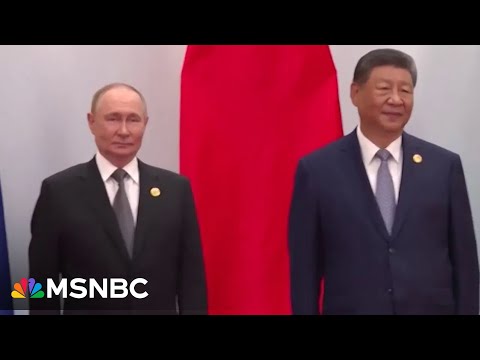
overseas where Russian President Vladimir Putin met with Chinese leader Xihinping as well as Indian Prime Minister Narendra Modi at a summit in China yesterday. As the New York Times reports, it was a scene almost certainly intended for an audience on the other side of the world. The leaders of China, Russia, and India, the three largest powers not aligned with the West, smiling and laughing like good friends as they greeted each other.Analysts told the paper the friendliness between Mr. . Shei and Mr. . Pu ...
X @Balaji
Balaji· 2025-09-01 20:50
DECOUPLING FROM DOLLARSThe US sends India billions in printed dollars for valuable goods. This is actually the US government ripping off India, like it does Vietnam, and everyone else, including its own citizens...not vice versa.To be precise: last year India exported $87B of valuable goods to the US for $42B of goods plus $45B worth of increasingly worthless dollars:That difference of $45B was, effectively, made up by money printing, which the Fed does at will:The current administration incorrectly thinks ...
Tariff Turmoil Latest: Appeals court rules Trump overstepped presidential powers
MSNBC· 2025-09-01 15:41
All right, joining us now, NBC News business and data correspondent Brian Chung. Also with us here on set, Axio senior economic reporter Courtney Brown. Brian, I'm going to start with you.For those of us who've been just overwhelmed and maybe on holiday or maybe just can't handle it anymore, can you please remind us what tariffs are in question here. Which ones this ruling uh cover and and what could be impacted. >> Yeah, Christina, this this did happen very late on Friday as people were beginning the their ...
Plenty of Negative Catalysts on the Horizon | Markets in 3 Minutes
Bloomberg Television· 2025-08-26 07:42
Federal Reserve & Monetary Policy - The market initially reacted to the Lisa Cook story, but those moves have largely been shrugged off because it's likely she will win the fight to reinstate her job, maintaining the Fed's status quo [2][3] - Trump's potential doubling down on attacks on Fed independence and credibility is an undermining of US institutions, ultimately bad for long-end yields, bonds, US stocks, and the dollar [4][5] Geopolitical & Trade Tensions - The trade war never really went away and is more accurately described as a US attack on the global trade system, which is likely to continue affecting businesses, consumers, and global growth [7][8] - The US is also discussing digital taxes, indicating that trade deals previously thought to be done may not be [6] Market Catalysts & Risks - Several negative catalysts are on the horizon, including Nvidia earnings, inflation data (core PC and CPI), and jobs data [9][10][11] - Weak jobs data could worry the market about a US recession, while strong data would undermine expectations of rate cuts, creating a lose-lose situation for stocks [10] - Historically, the equity market tends to decline in September [9]

Canada scraps billions in tariffs on US imports as it extends olive branch to Trump
New York Post· 2025-08-22 16:04
Core Viewpoint - Canada is reversing its tariffs on approximately $21.7 billion worth of American goods in an effort to ease trade tensions with the Trump administration, while maintaining tariffs on certain sectors like steel, aluminum, and automobiles [1][4][5]. Group 1: Policy Shift - Prime Minister Mark Carney will announce the removal of 25% tariffs on a wide range of US consumer goods that comply with the North American trade agreement [1][4]. - This marks a significant change in Canada's approach, moving away from aggressive retaliation against US tariffs that characterized Carney's election campaign [2][8]. Group 2: Economic Impact - The tariff rollback will exempt American products such as orange juice, wine, clothing, and motorcycles from the previously imposed import taxes [4][17]. - Canada's earlier retaliatory measures targeted about $21.6 billion in US shipments, but the recent policy change is expected to alleviate some economic pressures without triggering inflation, as consumer prices rose only 1.7% year-over-year in July [11][19]. Group 3: Strategic Considerations - The decision to roll back tariffs is seen as a strategy to ease tensions with the White House and prepare for the upcoming review of the US-Mexico-Canada Agreement [6]. - Carney's administration has shown skepticism towards the effectiveness of tit-for-tat trade measures, leading to exemptions for certain US items and potential relief for automakers maintaining Canadian manufacturing [13][16].
JD.com Stock: Just Too Cheap To Ignore
Seeking Alpha· 2025-08-15 12:15
Group 1 - Chinese stocks have been facing negative sentiment due to perceptions of China as an adversarial nation and ongoing trade tensions [1] - The Chinese economy has experienced a prolonged period of slowdown, impacting investor confidence [1] Group 2 - The Financial Prophet's All-Weather Portfolio has achieved a 36% year-to-date return in 2024, indicating strong performance in various market conditions [3] - The Daily Prophet Report offers essential market information prior to market openings, which can aid investors in making informed decisions [3] - A Covered Call Dividend Plan is suggested, with potential earnings of 50% on certain investments, highlighting a strategy for income generation [3]


Bloomberg Opinion: China's Long Game on Trade Is Working
Bloomberg Television· 2025-08-13 04:41
US-China Trade Negotiation Dynamics - China has navigated trade negotiations with the US without making significant concessions, only small compromises [1] - The outcome of these negotiations has primarily been agreements to continue discussions, providing the Chinese Communist Party with more time to plan for economic challenges [2] China's Economic Strategy - China aims to become more self-reliant in response to potential US tariffs [3] - Innovation within China, especially in the tech sector, has accelerated due to pressure from the US [5] - Delaying concrete trade negotiations allows China more time to advance its self-reliance initiatives [5] Political and Social Implications - The narrative of the US and the West attempting to suppress China is used to rally citizens [6] - The government promotes the idea that enduring short-term pain will lead to long-term success [6] Long-Term Strategy - State-run media references the philosophy of protracted war, similar to the Mao era, to guide the approach to the trade war [7][8][9] - China is prepared to withstand the economic impact of the trade war for the long term [10] - The Chinese government is willing to accept short-term economic pain to achieve long-term victory [10]

Inflation held steady in July
NBC News· 2025-08-13 02:30
Inflation & Cost of Living - July inflation was stubborn, but not as bad as many economists expected [1] - Lower gas prices helped keep inflation under wraps, but strip out volatile food and energy prices, inflation was 31% [2] - Many companies have been absorbing tariffs, but higher costs are beginning to be seen for furniture, tools, shoes, pet supplies, and coffee [2] - The White House is celebrating today's numbers, calling inflation low and stable [2] - Over the past 5 years, car insurance is up 60%, housing 52%, and electricity up 38% [3] - Used cars and food are also up strongly [3] - Wages are up 24% [3] - The cost of living is still issue number one for American families [3]