
Tariffs

Search documents
Genuine Parts pany(GPC) - 2025 Q3 - Earnings Call Transcript
2025-10-21 13:32
Financial Data and Key Metrics Changes - Total GPC sales for Q3 2025 were $6.3 billion, reflecting a 5% increase year-over-year, with adjusted EBITDA up 10% [4][5] - Adjusted diluted earnings per share were $1.98, a 5% increase from the same period last year [5][22] - Gross margin expanded by 60 basis points to 37.4% compared to the previous year [4][24] Business Segment Performance - Global industrial sales reached $2.3 billion, up approximately 5% year-over-year, with comparable sales growth of about 4% [7][10] - The automotive segment saw sales increase by approximately 5%, with comparable sales growth of about 2% [10][11] - Motion's core MRO and maintenance business, accounting for 80% of Motion sales, was up mid-single digits during the quarter [9] Market Performance - Growth was observed in seven out of fourteen end markets, with notable strength in iron and steel, food products, and fabricated metals [8] - European market conditions remained soft, with total sales flat in local currency and comparable sales down approximately 2% [16] - The Asia-Pacific region experienced double-digit growth in local currency, driven by both organic initiatives and acquisitions [17] Company Strategy and Industry Competition - The company is focused on strategic pricing, sourcing initiatives, and acquisitions to enhance gross margins [4][24] - An operational and strategic review is ongoing, with updates expected in 2026, aimed at differentiating in an evolving landscape [18][19] - The company is actively managing the tariff environment and leveraging supplier partnerships to mitigate cost impacts [6][23] Management's Comments on Operating Environment and Future Outlook - Management noted that end markets remain muted, particularly in Europe, with challenges including tariffs, trade uncertainties, and elevated interest rates [6][22] - The company is narrowing its guidance for 2025, expecting diluted earnings per share in the range of $6.55 - $6.80, and adjusted diluted EPS of $7.50 - $7.75 [29][30] - Management expressed confidence in the fundamentals of the business and the potential for growth despite current market conditions [20][34] Other Important Information - The company has invested approximately $350 million in CapEx for supply chain modernization and IT improvements [28] - A definitive agreement has been signed to acquire Benson Auto Parts, enhancing the company's footprint in Canada [15][16] - The company expects to generate cash from operations in the range of $1.1 billion - $1.3 billion and free cash flow of $700 million - $900 million [33] Q&A Session Summary Question: What accounts for the expected moderation in gross margins for Q4? - Management indicated that the moderation is primarily due to the lapping of acquisition benefits and ongoing cost pressures from tariffs [36] Question: What are the benefits of having the businesses together? - Management highlighted meaningful benefits from operating as one entity, including improved sales effectiveness and technology investments [37][38] Question: What is the same SKU inflation in U.S. NAPA? - Management noted that the benefit to U.S. automotive is around 2.5%, with expectations for slight net benefits in Q4 [44] Question: Are independent owners losing market share? - Management stated that independent owners are managing inventory levels effectively and are not losing market share [67] Question: How should the fourth quarter outlook inform expectations for 2026? - Management refrained from providing specific guidance for 2026 but indicated that improvements in SG&A and gross margins are expected to continue [90]

Genuine Parts pany(GPC) - 2025 Q3 - Earnings Call Transcript
2025-10-21 13:30
Financial Data and Key Metrics Changes - Total GPC sales for Q3 2025 were $6.3 billion, an increase of approximately 5% compared to the same period last year, with adjusted diluted earnings per share of $1.98, up 5% year over year [5][28][34] - Adjusted EBITDA increased by 10% year over year, with EBITDA margins improving in both Automotive and Industrial segments [5][31] - Gross margin was 37.4%, reflecting a 60 basis point increase from the previous year, driven by strategic pricing and sourcing initiatives [29][34] Business Line Data and Key Metrics Changes - Global Industrial sales were $2.3 billion, up approximately 5% year over year, with comparable sales growth of about 4% [9][12] - The Automotive segment saw sales increase by approximately 5%, with comparable sales growth of about 2% [12][34] - Motion's core MRO and maintenance business, accounting for 80% of Motion sales, was up mid-single digits during the quarter [11] Market Data and Key Metrics Changes - In the U.S., total automotive sales increased approximately 4%, with comparable sales up about 2% [13][18] - Canadian automotive sales rose approximately 3% in local currency, with comparable sales increasing by about 2% [18] - European sales were flat in local currency, with comparable sales down approximately 2% [20] Company Strategy and Development Direction - The company is focused on operational discipline and strategic investments to enhance customer service and manage inflationary pressures [24][33] - There is an ongoing operational and strategic review to assess business structure and differentiate in an evolving landscape, with updates expected in 2026 [23][34] - The company is optimistic about the long-term fundamentals of its markets and is positioned to build on its momentum [25][39] Management's Comments on Operating Environment and Future Outlook - Management noted that end markets remain muted, particularly in Europe, but they are adapting to dynamic environments and remain resilient [6][24] - The company expects diluted earnings per share for 2025 to be in the range of $6.55 to $6.80, with total sales growth projected at 3% to 4% [34][36] - Management highlighted the importance of monitoring the fluid tariff environment and customer sentiment as they navigate market conditions [39] Other Important Information - The company has signed a definitive agreement to acquire Benson Auto Parts in Canada, which is expected to close in Q4 2025 [19] - The company has returned $421 million to shareholders through dividends in the first nine months of 2025 [33] Q&A Session Summary Question: What accounts for gross margins being up less in the fourth quarter? - Management indicated that the moderation in gross margin expansion is primarily due to the lapping of acquisition benefits and ongoing sourcing and pricing efforts [43][44] Question: What are the benefits of having the businesses together? - Management emphasized the meaningful benefits of operating as one team, including improved sales effectiveness and technology investments [45][46] Question: What is the same SKU inflation in US NAPA? - Management noted that the full run rate of inflation is expected to stabilize, with a low single-digit benefit to sales growth from tariffs [53][54] Question: Have independents been losing market share? - Management stated that independent owners are managing inventory levels effectively and are not losing market share [78][80] Question: How should the fourth quarter outlook inform 2026 expectations? - Management suggested that while they expect solid performance in Q4, they are cautious about market conditions and will continue to monitor the environment closely [99][104]
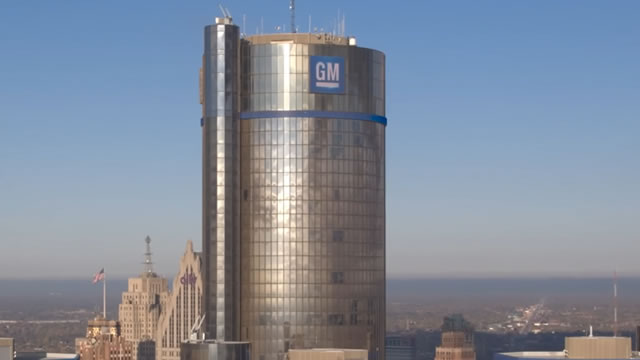
General Motors lifts financial forecast as Trump tariff outlook improves
The Guardian· 2025-10-21 12:55
Core Viewpoint - General Motors has raised its financial outlook for the year while slightly reducing the expected impact from tariffs, amidst a challenging electric vehicle market [1][2]. Financial Outlook - The company now anticipates its annual adjusted core profit to be between $12 billion and $13 billion, an increase from the previous estimate of $10 billion to $12.5 billion [2]. - The updated impact of tariffs on the bottom line is now projected to be between $3.5 billion and $4.5 billion, down from the earlier estimate of $4 billion to $5 billion [2]. Electric Vehicle Strategy - General Motors incurred a $1.6 billion charge due to changes in its electric vehicle strategy, with the removal of a $7,500 tax credit for battery-powered models at the end of September [3]. - CEO Mary Barra indicated that future charges related to electric vehicles are expected, but the company aims to reduce EV losses by addressing overcapacity [3]. Revenue and Sales Performance - Revenue for the quarter ending in September slightly decreased to $48.6 billion compared to the previous year [4]. - Despite tariff uncertainties, US car sales increased by 6% in the third quarter, with consumers opting for more expensive models and features [4]. Tariff Mitigation Efforts - General Motors plans to mitigate 35% of its anticipated tariff impact, aided by a new program allowing credits for US-assembled vehicles [5][6]. - The MSRP offset program is expected to enhance the competitiveness of US-produced vehicles over the next five years [6]. Investment and Market Dynamics - The company is increasing investments in the US to counteract tariffs, with a $4 billion investment announced for three facilities in Michigan, Kansas, and Tennessee [7]. - Other automakers, such as Stellantis, are also planning significant investments in the US, with Stellantis announcing a $13 billion investment over the next four years [8]. Electric Vehicle Market Challenges - Although electric vehicle sales were strong in the third quarter, they still represented less than 10% of General Motors' overall sales [8]. - The company initially planned to offer a program to allow dealers to continue providing tax credits on EV leases but has since retracted this initiative due to political backlash [9].


McKnight: Earnings are still very solid across sectors like finance and industry
Youtube· 2025-10-21 12:33
Core Viewpoint - The credit markets are showing signs of stability, with only a slight widening of credit spreads, indicating that Wall Street may be less concerned than equity market shareholders about recent reports [1][2]. Credit Market Insights - The fixed income markets are perceived as reliable indicators of investor sentiment regarding bank balance sheets, suggesting a positive outlook for the financial services sector [2][3]. - Corporate bonds are still considered attractive, particularly high-quality and shorter-duration credits, despite the tightening spreads historically [4][5]. Earnings Season Analysis - Earnings reports across various sectors, including financial services and consumer goods, are expected to remain solid, with corporate executives indicating strong margins [7][8]. - Potential risks include trade policy changes and consumer spending patterns, which could impact margins and overall earnings [8][9]. Trade Policy Concerns - The possibility of additional tariffs on Chinese imports remains a concern, with hopes for a diplomatic resolution to avoid negative impacts on businesses [10][11]. - Companies are seeking clarity on trade rules to adapt their strategies effectively, as uncertainty hampers decision-making [12]. Inflation and Federal Reserve Outlook - The upcoming Consumer Price Index (CPI) report is crucial, with expectations of a 3% year-over-year increase, which may influence Federal Reserve policy [14][16]. - The Fed is likely to remain vigilant regarding inflation while also considering labor market conditions in their decision-making process [15][16].

Intuit Report Projects 2025 Consumer Holiday Spending of $263-Billion
Insightfulaccountant.Com· 2025-10-21 11:22
Core Insights - Intuit Inc. has released its annual QuickBooks Holiday Shopping Report, indicating a strong spirit of giving this holiday season despite concerns regarding tariffs and inflation [1] Company Overview - Intuit Inc. is a global financial technology platform known for products such as TurboTax, Credit Karma, QuickBooks, and Mailchimp [1]


Stock Rally Fades, Gold Slips, $3T in Market Cap Set to Report Earnings | Bloomberg Brief 10/21/2025
Bloomberg Television· 2025-10-21 11:15
Market Trends & Global Economy - US indices finished up more than 1% yesterday, but exhaustion is expected today [1] - NASDAQ 100 is up 20% year-to-date, and the S&P is up 14.5% [2] - The 10-year yield is firmly below 4%, with the 30-year down 4.55% and the two-year yield at 3.45% [2][3] - The UK government borrowed $96 million more than forecast in the first six months of the fiscal year [23] Rare Earths & Trade - The U S is turning to Australia for a supply of rare earths with a landmark pact, the biggest deal of its kind between two Western nations [1][9] - China increased its rare earth export restrictions, putting the world on notice it has control over the supply chains [10] - Australia has the capacity to produce about 1/10 of what China can in terms of rare earth processing [12] - The U S Army has asked private equity to pitch strategic projects to help service fund $150 billion infrastructure overhaul [38] Corporate Earnings & Individual Movers - Regional banks are showing better-than-expected earnings, with Zions erasing its drop after last week [4][5] - Core Scientific shares are up 3.5% in premarket because a key proxy advisor has advised them to reject the bid from Coreweave [6] - DocGo shares are up 32% after announcing it has acquired Steady MD, a telehealth provider [7] - Unilever pushed back its merger with Magnum Ice Cream due to the government shutdown [62] - Pop Mart reported strong earnings following the release of a new series of Labubu dolls [63] AI & Technology - Core Scientific is changing from a Bitcoin miner to infrastructure for AI computing capacity [6] - European enterprises need to adopt AI solutions more quickly, with some clients taking six months to sign a deal [29] - The market is grappling with the dual mandate of efficiency and productivity gains from AI impacting the bottom line [50] - Ongoing AI spending is being monetized with additional attention on supply chain indicators, book-to-bill ratios, and data center power timelines [49] Japan - Sanae Takaichi has won the parliamentary vote to become Japan's first female Prime Minister [15][41] - A more positive attitude toward stimulus is expected from the new Japanese administration [16][18] - The Yen is above 151, and JGB's are under pressure [21]

GM raises guidance after beating Wall Street expectations, lowering tariff costs
CNBC Television· 2025-10-21 11:06
Third quarter results out from General Motors. Uh Phil joins us now with more. Hey Phil. >> Hey Joe.Take a look at shares of General Motors moving up substantially as the company beat on the top on the bottom line and it also raised its guidance for the full year for Q4. First in terms of Q3 results, EPS of 280 a share well above the estimate of 231. Automotive revenue or revenue overall 48.59% billion.The street was expecting 45.27% billion. But you do see the impact that tariffs had relative to last year ...
RTX raises 2025 forecast as strong demand offsets tariff worries
Yahoo Finance· 2025-10-21 10:57
Core Insights - RTX raised its full-year profit and revenue forecast, indicating confidence in managing tariff impacts due to increased demand for missiles and aftermarket services [1][4] - The company is benefiting from a shortage of new commercial jets, leading to increased sales in maintenance and repair services [2] - RTX's aerospace and avionics division, Collins Aerospace, reported a revenue increase of 8% year-over-year, reaching $7.62 billion [2] - Sales in the Pratt and Whitney unit rose 16% to $8.42 billion, driven by demand for engines for Airbus' A320neo jets [3] - The defense segment, particularly Raytheon, saw a 10% sales increase, largely due to demand for Patriot air defense systems amid geopolitical tensions [3] Financial Performance - RTX's total revenue for the third quarter increased by 12% to $22.48 billion [4] - The adjusted profit per share rose to $1.70, compared to $1.45 in the previous year [4] - The company now expects adjusted sales for the full year to be between $86.5 billion and $87 billion, up from a previous forecast of $84.75 billion to $85.5 billion [4] - The adjusted profit forecast for 2025 was raised to between $6.10 and $6.20 per share, from $5.80 to $5.95 [4]

Coach is winning over Chinese consumers with ‘American design,’ says CEO Todd Kahn
Yahoo Finance· 2025-10-21 09:44
Core Insights - Coach is experiencing significant growth driven by social media demand, particularly among Gen Z consumers, with a reported revenue of $5.6 billion in the last fiscal year [1] - Tapestry, Coach's parent company, reported a total revenue of $7 billion, indicating Coach's strong performance within the company [1] - Coach's shares have increased over 75% in 2025 so far, reflecting positive market sentiment [1] Leadership and Strategy - Todd Kahn has been leading Coach since 2020, officially becoming CEO a year later, and has a background in the apparel and fashion industry [2] - Kahn emphasizes a focus on a smaller range of affordable products, which positions Coach favorably to manage costs and price increases amid tariff uncertainties [4] Market Dynamics - Despite the threat of new tariffs, Coach does not manufacture in China, allowing it to navigate the situation more effectively than competitors [4] - Tapestry's Greater China revenue grew by 5% to $1.1 billion, showcasing Coach's successful brand positioning among young Chinese consumers [4] - Coach utilizes a combination of big data and ethnographic research to understand consumer behavior, enhancing its market strategy [4]
X @Bloomberg
Bloomberg· 2025-10-21 09:32
Investors are looking at Africa with fresh eyes as Donald Trump's tariffs redraw trade alliances.Bloomberg Businessweek lays out some of continent's top risks and opportunities, from mining to tech: https://t.co/0yNvvfdJ1u🎨: Illustration by George Wylesol https://t.co/jSlVc7sSub ...