中美经贸合作
Search documents
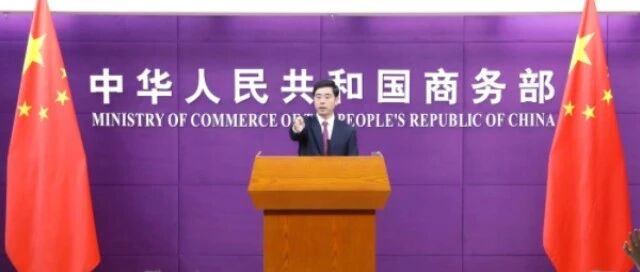
刚刚!中美经贸会谈成果公布
券商中国· 2025-09-15 15:47
李成钢说,本次会谈,双方围绕TikTok及中方有关关切进行了坦诚、深入交流,就以合作方式妥善解决TikTok相关问题, 减少投资障碍,促进有关经贸合作等达成了基本框架共识。 来源:新华社 中国商务部国际贸易谈判代表兼副部长李成钢15日说,过去两天,中美双方在西班牙马德里举行会谈。双方积极落实中 美两国元首通话重要共识,充分发挥中美经贸磋商机制作用,在相互尊重、平等协商的基础上,就TikTok等双方关注的 经贸问题进行了坦诚、深入、建设性的沟通。 李成钢说,关于TikTok问题,中国一贯反对将科技和经贸问题政治化、工具化、武器化,绝不会以牺牲原则立场、企业 利益和国际公平正义为代价,寻求达成任何协议。中方将坚决维护国家利益和中资企业合法权益,依法依规开展技术出 口审批。同时,中国政府充分尊重企业意愿,支持企业在符合市场原则基础上,开展平等商业谈判。 知天下财经 违法和不良信息举报电话:0755-83514034 邮箱:bwb@stcn.com 券中社 券 商 中 国 × 券 中 社 扫 码 下 载 券 中 社 A P P 扫码关注券商中国公众号 quanshangcn qzs.stcn.com 券中社APP 弊 ...
李成钢:中美就以合作方式妥善解决TikTok相关问题,减少投资障碍,促进有关经贸合作等达成了基本框架共识
Zhong Guo Zheng Quan Bao· 2025-09-15 15:41
新华社快讯:中国商务部国际贸易谈判代表兼副部长李成钢15日说,关于TikTok问题,中国一贯反对将 科技和经贸问题政治化、工具化、武器化,绝不会以牺牲原则立场、企业利益和国际公平正义为代价, 寻求达成任何协议。中方将坚决维护国家利益和中资企业合法权益,依法依规开展技术出口审批。同 时,中国政府充分尊重企业意愿,支持企业在符合市场原则基础上,开展平等商业谈判。 新华社快讯:中国商务部国际贸易谈判代表兼副部长李成钢15日说,过去两天,中美双方在西班牙马德 里举行会谈。双方积极落实中美两国元首通话重要共识,充分发挥中美经贸磋商机制作用,在相互尊 重、平等协商的基础上,就TikTok等双方关注的经贸问题进行了坦诚、深入、建设性的沟通。 (文章来源:中国证券报) 新华社快讯:中国商务部国际贸易谈判代表兼副部长李成钢15日说,本次会谈,双方围绕TikTok及中方 有关关切进行了坦诚、深入交流,就以合作方式妥善解决TikTok相关问题,减少投资障碍,促进有关经 贸合作等达成了基本框架共识。 ...
六年过去,“中国冷落美国商界” 竟是场闹剧?真相让马凯硕打脸!
Sou Hu Cai Jing· 2025-09-04 17:28
Group 1 - The core argument is that the notion of China "neglecting" American businesses is fundamentally flawed, as American companies have become increasingly intertwined with the Chinese market and supply chain [1][5][6] - The U.S. government's attempts to "decouple" from China, such as the implementation of the CHIPS Act and other restrictions, have not effectively reduced American companies' reliance on Chinese goods and services [2][3] - Reports indicate that a significant portion of products labeled as "manufactured in Vietnam" or "manufactured in Mexico" still rely heavily on Chinese components, demonstrating the deep-rooted connections in the supply chain [2][3] Group 2 - Major American companies, including Tesla and Boeing, have established significant operations in China, highlighting the importance of the Chinese market for their growth and production capabilities [4] - A survey by the American Chamber of Commerce revealed that 83% of U.S. companies in China do not plan to leave, citing the high costs and loss of market access as primary reasons [4] - The ongoing collaboration between U.S. and Chinese businesses is framed as a mutually beneficial relationship, with both sides needing each other for continued success and competitiveness [5][6]
美方要禁止中国用美元结算,还对华加税600%?网友:还有这好事?(1)
Sou Hu Cai Jing· 2025-08-28 05:29
Core Viewpoint - The Chinese Ambassador to the U.S., Xie Feng, emphasized the need for China and the U.S. to pursue a path of mutual respect, peaceful coexistence, and win-win cooperation, asserting that there is no reason for confrontation between the two nations [1] Group 1 - The U.S. politicians and experts are pushing legislation to prohibit China from using the U.S. dollar for transactions while simultaneously advocating for a 600% tariff increase on Chinese goods [1] - Chinese netizens are reportedly supportive of the U.S. actions, indicating a complex public sentiment regarding U.S.-China relations [1] Group 2 - The Chinese side argues that the current U.S.-China competition is fundamentally different from the U.S.-Soviet "Cold War," as a victory for one side would not lead to the collapse of the other's survival model [1] - The economic interdependence between the U.S. and China is highlighted, with the U.S. being described as primarily a financial nation that heavily relies on China, the world's largest industrial nation, for product supply [1] - The issue of rare earths is mentioned, with U.S. trade advisor Navarro acknowledging the inability to detach from Chinese supply chains [1]
美论坛:如果贸易战失败,美国会不会选择用武力摧毁中国?
Sou Hu Cai Jing· 2025-08-25 09:35
Group 1: Trade War Overview - The U.S.-China trade war began in 2018, with both sides imposing tariffs on a wide range of goods, aiming to limit Chinese products in the U.S. market and weaken China's manufacturing advantages [1][3] - China responded with "reciprocal countermeasures," focusing on enhancing domestic demand and diversifying foreign trade markets, which has led to a growing market presence [1][3] Group 2: Impact of Tariffs - Tariffs have a dual impact; while intended to punish China, they also harm U.S. consumers who face rising prices on imported goods such as electronics and clothing [4][5] - The burden of tariffs primarily falls on U.S. consumers, as the increased costs are passed down from retailers [5][7] Group 3: Resilience of Chinese Industry - China's industrial chain has shown resilience due to its tightly integrated supply chain, allowing for adjustments in response to external shocks [11][12] - The trade war has accelerated China's industrial upgrades, enhancing overall competitiveness through technological advancements [12] Group 4: Military Considerations - The discussion of military action in response to trade war losses is deemed unrealistic due to the high costs and complexities involved, including legal and institutional constraints [14][16] - Modern warfare requires strong industrial and financial support, making military solutions less viable [16][18] Group 5: Economic Cooperation - Economic cooperation between the U.S. and China is presented as the optimal solution to trade disputes, emphasizing the importance of stable expectations for multinational companies [20][22] - Reducing tariffs through negotiations could reignite capital spending and market activity, benefiting both economies [22][24] Group 6: Long-term Implications - The trade war has resulted in a "lose-lose" scenario, with U.S. consumers and small businesses bearing the brunt of the costs while China has made significant advancements in market diversification and industrial capabilities [24][26] - The notion of military action is viewed as an emotional response rather than a practical solution, highlighting the need for rule-based negotiations to manage uncertainties [25][26]
商务部回应美批准对华销售英伟达H20芯片
Xin Hua Wang· 2025-08-12 06:36
Core Viewpoint - The Chinese Ministry of Commerce emphasizes that cooperation and win-win outcomes between China and the U.S. are the correct path forward, rejecting the notion of suppression and containment as a viable strategy [1]. Group 1: U.S.-China Trade Relations - The U.S. has approved the sale of NVIDIA H20 chips to China, which is seen as part of ongoing U.S.-China economic negotiations [1]. - Chinese companies, including Huawei, have already produced equivalent chips, and the U.S. aims to prevent China from achieving domestic substitution [1]. Group 2: Recent Developments - Following the London economic talks, both sides have maintained close communication and confirmed details of the London framework, advancing related implementation work [1]. - The U.S. lifted certain trade restrictions on China in early July, which were discussed during the talks [1]. Group 3: Chinese Government's Position - The Chinese Ministry of Commerce criticizes the U.S. for imposing stricter export controls on Chinese chip products under unfounded accusations, which harms the legitimate rights of Chinese enterprises [1]. - The Ministry expresses hope for the U.S. to engage in equal negotiations to correct its erroneous practices and create a favorable environment for mutual cooperation between enterprises [1].
外交部:欢迎美国等各国企业在中国经营发展共享未来
Xin Hua Wang· 2025-08-12 05:54
Core Viewpoint - The essence of China-US economic and trade relations is mutual benefit and win-win cooperation, with a welcoming stance towards foreign enterprises, including American companies, to operate and develop in China [1] Group 1: Economic Cooperation - The economic cooperation between the two largest economies in the world brings tangible benefits to enterprises and consumers in both countries [1] - Following the Geneva economic and trade talks, there has been a surge in orders from American buyers, indicating significant bilateral demand [1] Group 2: Investment Sentiment - Major American companies, including JPMorgan, have expressed intentions to continue investing in China and deepen their engagement in the Chinese market [1] - The current trade dynamics reflect that the tariff conflict has validated China's importance as a significant market for American goods and a crucial source of supply [1] Group 3: Trade Dynamics - The shipping market between China and the US is experiencing high demand, with reports of "one ship hard to find," highlighting the robust trade relationship [1] - The spokesperson emphasized that protectionism is not a viable solution, reinforcing the need for collaboration and shared opportunities [1]
独家专访美中贸易全国委员会会长谭森:扎根中国才能把握创新方向
2 1 Shi Ji Jing Ji Bao Dao· 2025-08-06 13:36
Group 1 - The core message from the US-China Business Council is that American companies recognize the importance of being rooted in China to grasp market trends and innovation directions [1][10] - The US-China Business Council aims to represent American businesses operating in China and facilitate communication between the two governments [2][3] - The recent delegation visit to China was aimed at discussing opportunities and challenges faced by American companies in the Chinese market [3][6] Group 2 - The Chinese government is perceived as pragmatic and efficient, actively seeking to resolve challenges faced by foreign enterprises and improve the business environment [7][8] - The visit resulted in productive discussions with both central and local government officials, leading to actionable solutions for specific business challenges [7][9] - The US-China Business Council emphasizes the need for more communication channels between the two countries, highlighting the importance of interpersonal exchanges [8][12] Group 3 - American companies are not withdrawing from China but are diversifying their supply chains by increasing investments in other countries while maintaining a strong presence in China [9][10] - The reasons for investing in China have evolved beyond just market access to include research and development capabilities, supply chain efficiency, and innovation opportunities [10][11] - The US-China Business Council believes that collaboration in innovation between the two countries is essential for maintaining global competitiveness [12] Group 4 - The Greater Bay Area is seen as a potential hub for increased investment from American companies, contingent on favorable policies and resource integration [13][14] - Investment decisions should be tailored to specific industries and local government plans, as different regions in China offer unique advantages for various sectors [14]
宣昌能会见 美中贸易全国委员会董事会代表团
Jin Rong Shi Bao· 2025-08-04 02:39
Group 1 - The meeting between the People's Bank of China (PBOC) and the US-China Business Council focused on US-China economic relations, macroeconomic policies, and financial market openness [1] - The PBOC emphasized the importance of mutual respect, peaceful coexistence, and win-win cooperation between China and the US, as highlighted by President Xi Jinping [1] - The PBOC is committed to high-level financial openness and continuously optimizing the investment environment for foreign enterprises [1] Group 2 - The US-China Business Council expressed strong confidence in China's reform and opening-up measures and is dedicated to long-term investment in China [1] - The council aims to play a positive role in promoting win-win economic cooperation between China and the US [1] - Representatives from major firms like Goldman Sachs and PwC participated in the discussions, indicating strong interest from foreign companies in the Chinese market [1]
持续深化对话、扩大合作是中美两国共同利益所在 也是市场所盼
Zhong Guo Xin Wen Wang· 2025-08-01 01:31
Core Viewpoint - The recent economic talks between China and the United States in Stockholm indicate a commitment to deepening economic ties and cooperation, highlighting the interdependent nature of their economic relationship [1] Group 1: Official Interactions - The Chinese Ministry of Commerce reported that the economic talks held on July 28-29 were characterized by candid, in-depth, and constructive exchanges on trade relations and macroeconomic policies [1] - Both sides expressed a desire to continue discussions and achieve more win-win outcomes [1] Group 2: Business Community Engagement - The China Council for the Promotion of International Trade noted that there is active interaction between the business communities of both countries, with high-profile visits from executives of companies like Apple and Goldman Sachs to China [1] - This engagement underscores a commitment from U.S. companies to establish a strong presence in the Chinese market [1] Group 3: Economic Interdependence - The ongoing dialogues and collaborations reflect a deeper economic integration that transcends mere transactional relationships, forming a community of shared interests [1] - Both official and private sector interactions signal a mutual understanding that continued dialogue and expanded cooperation align with the interests of both nations and the market [1]