Edge Computing

Search documents
Hyperscale Data Centers and Strategic Partnerships Enhance Europe's GPU Market Resilience | Europe Data Center GPUs Market Analysis and Forecast, 2024-2034
GlobeNewswire News Room· 2025-05-30 08:09
Core Insights - The European data center GPUs market is expected to grow from $10.6 billion in 2024 to $82.2 billion by 2034, with a compound annual growth rate (CAGR) of 22.75% during the forecast period [1][7]. Market Drivers - The increasing demand for high-performance computing to support AI, deep learning, and big data analytics is a primary driver of the GPU market's growth in Europe [2][4]. - The rapid expansion of hyperscale data centers and strategic partnerships between GPU manufacturers and cloud providers are enhancing supply chain resilience and operational scalability [3]. - The rise of AI applications and the need for effective processing resources are propelling the adoption of GPUs in data centers [4][5]. Market Trends - There is a growing integration of AI and machine learning across various industries, leading to a surge in demand for GPU acceleration [9]. - The focus on green and energy-efficient data center operations is driving the development of more power-efficient GPU technologies [5][9]. - Continuous innovation in GPU architecture and performance is essential to meet the increasing data-intensive workloads [9]. Market Challenges - High operating expenses and complex system integration pose challenges to the market [6]. - Supply chain disruptions in the semiconductor industry are impacting GPU availability [9]. - The elevated power consumption and cooling requirements of GPU systems create additional operational hurdles [9].


Cerence AI Partners with Arm to Deliver Enhanced LLM Capabilities at the Edge
Globenewswire· 2025-05-28 15:00
Core Insights - Cerence AI has announced a strategic partnership with Arm to enhance the performance of its embedded small language model, CaLLM Edge, by utilizing Arm's Kleidi software library [1][4] - The collaboration aims to address challenges faced by automakers in optimizing compute performance for AI capabilities, particularly for large language models [2][3] Company Overview - Cerence Inc. is a global leader in creating AI-powered user experiences in the automotive sector, with over 500 million cars equipped with its technology [5] - The company focuses on integrating voice and generative AI to enhance safety and connectivity for drivers and passengers [5] Partnership Details - The partnership will enable flexible distribution and parallelization of AI computation loads between CPUs and GPUs, improving speed and performance for CaLLM Edge [3] - Arm's technology is already utilized by 94% of global automakers, providing a foundational compute architecture for AI applications in vehicles [2] Technological Advancements - The Kleidi software library is designed to accelerate machine learning and optimize neural network operations on Arm-based devices, facilitating real-time language processing [2][3] - CaLLM Edge operates efficiently on Arm-based chipsets, demonstrating high performance despite limited compute power and intensive processing requirements [3] Future Outlook - Both companies express excitement about the partnership, aiming to set new standards for performance and efficiency in automotive edge computing [4] - The collaboration is expected to lead to innovative application-specific AI models in vehicles, enhancing the in-car user experience [4]


Duos Edge AI to Launch Edge Data Center in Victoria, TX
GlobeNewswire News Room· 2025-05-21 12:00
Core Insights - Duos Technologies Group, Inc. has announced a strategic partnership with Region 3 Education Service Center to deploy a new Edge Data Center in Victoria, Texas, enhancing its presence in the education sector and rural markets [1][3] - The Victoria EDC will support 37 school districts, providing secure and scalable local computing capabilities for AI-based learning platforms, telemedicine, and EHR systems [3][4] - This deployment is part of Duos Edge AI's 2025 roadmap, aiming for 15 contracted EDCs by year-end, with nine sites already identified [4][6] Company Overview - Duos Edge AI specializes in high-function Edge Data Center solutions designed to minimize latency and optimize performance, particularly in underserved communities [6][8] - The company’s modular architecture is engineered to SOC 2 Type II compliance, featuring N+1 power redundancy and dual generators for enhanced reliability [3][4] - Duos Edge AI aims to position its edge data centers within 12 miles of end users, significantly closer than traditional data centers, enabling timely processing of data for real-time applications [6] Market Impact - The partnership with Region 3 ESC is expected to accelerate digital equity and expand Duos Edge AI's market footprint while contributing to sustainable long-term revenue [4] - The initiative will also create new job opportunities in the Victoria area and foster collaboration with local businesses [4] - The deployment aligns with the increasing demand for localized, low-latency compute infrastructure across Texas, the Southeast, and Midwest [4][6]


Arm Sets Sights on Intel's Turf With AI-Powered PC Push
PYMNTS.com· 2025-05-19 18:05
Core Insights - Arm is aggressively entering the personal computer market, aiming for 40% of PCs and tablets to be based on its architecture this year, while already dominating the smartphone market with a 99% share [1][2] - The shift towards AI-powered personal computing presents new opportunities for Arm, especially as Intel reorganizes after falling behind in the AI race [2][6] Market Position and Strategy - Arm currently holds about 25% market share in Chromebooks, with plans to expand further into areas traditionally dominated by Intel, such as Windows laptops [3][8] - The company is leveraging its expertise in power-efficient designs to capitalize on the growing demand for AI applications, particularly in edge computing [3][4] Technological Advancements - Arm is focusing on AI inference at the edge, which enhances privacy, reduces costs, and improves performance by processing workloads on devices rather than in the cloud [4][5] - The integration of AI tools into Windows by Microsoft is seen as a catalyst for Arm to challenge the x86 architecture, which has been the standard for PCs for decades [6][7] Future Projections - Projections suggest that 70% of PCs will incorporate AI acceleration or be AI Copilot PCs, prompting Arm to prepare for this demand with new AI libraries [7][10] - As enterprises consider their next PC purchases, there is an increasing emphasis on AI-enabled devices to meet future workload requirements [10] Partnerships and Industry Dynamics - Arm is forming partnerships with PC manufacturers and chip designers, such as MediaTek, to enhance its presence in the market [8] - The company's historical ties with Apple and Nvidia highlight its significant role in the tech industry, despite challenges faced during Nvidia's attempted acquisition [9]


芯片中的关键材料,将被替代
半导体行业观察· 2025-05-17 01:54
Core Viewpoint - The semiconductor industry is experiencing a significant transformation to meet the increasing demand for advanced technologies, with a projected production of 1 trillion chips in 2024, equating to 100 chips per person on Earth [1]. Group 1: Industry Trends - The rise of artificial intelligence (AI) and the demand for high-performance devices are driving innovations in semiconductor technology, particularly in 3D NAND and other advanced memory technologies [1]. - The manufacturing process is evolving with the introduction of metallization techniques, which involve depositing thin metal layers to create circuits, essential for advanced chip production [2]. Group 2: Material Advancements - Tungsten has been the primary material for interconnects for the past 25 years, but its performance is reaching its limits due to the increasing complexity of chip structures, particularly in 3D NAND and DRAM [2]. - Molybdenum is emerging as a superior alternative to tungsten, offering advantages such as lower resistivity, reduced manufacturing steps, and better scalability as device sizes shrink and layer counts increase [3][4]. Group 3: Challenges and Solutions - Despite its advantages, molybdenum has not yet been widely adopted in metallization processes due to the lack of developed atomic layer deposition (ALD) methods that meet its requirements [7]. - The development of solid precursors for ALD and engineering low-resistance interfaces are critical for the successful implementation of molybdenum in semiconductor manufacturing [10].
量贩零食店崛起:2100亿市场背后的四大新趋势解读
Sou Hu Cai Jing· 2025-05-15 14:22
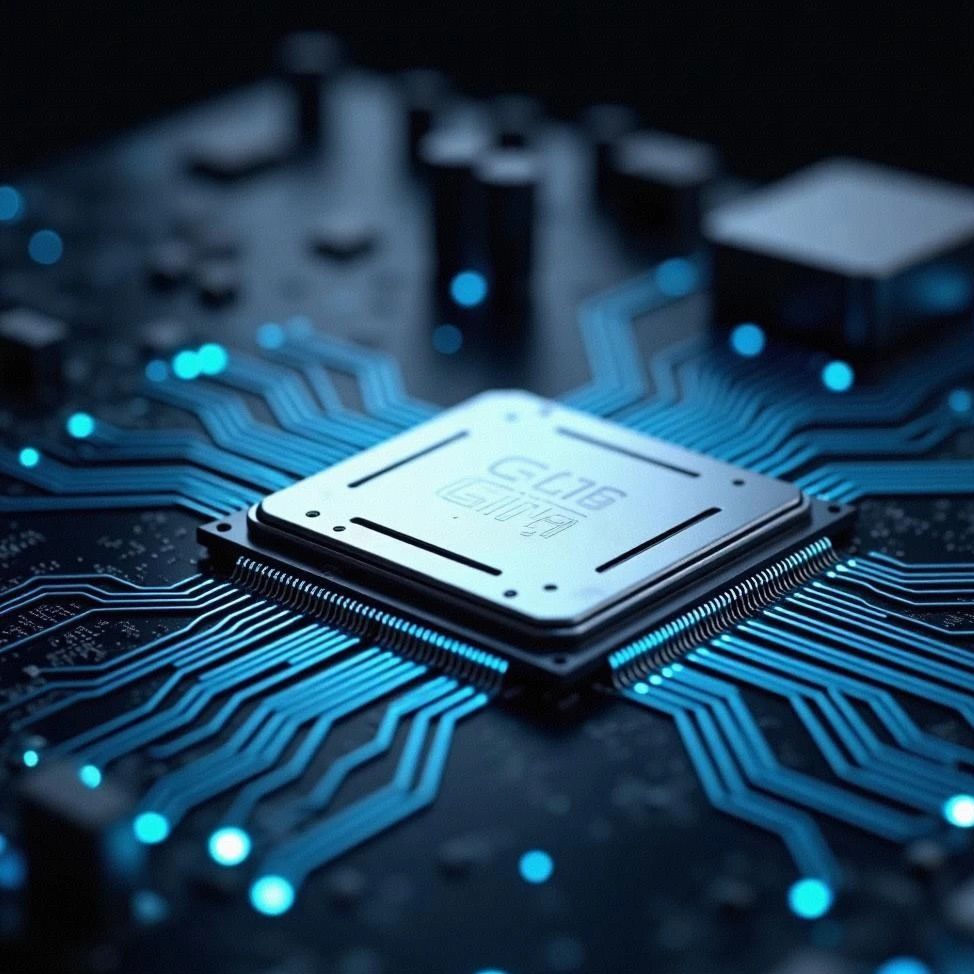
Core Insights - The snack retail industry is experiencing rapid growth, with the market size expected to reach 200 billion yuan by 2025, expanding at an annual rate of 30% [1][2] - Discount snack stores are gaining market share through strategies like "extreme low prices + large packaging," with single-store SKU counts exceeding 5,000 and gross margins stable at 18%-25% [1][2] - Health-focused snack stores cater to specific consumer needs, while membership-based warehouse stores attract customers with high-margin private label products [1][2] Market Challenges - The development of snack retail stores faces challenges such as low supply chain efficiency, regional shortages, high cold chain logistics costs, and market homogenization [2] - Data indicates that the replenishment cycle for imported snacks in the Southwest region can take up to 15 days, with cold chain logistics costs accounting for 8%-12% of revenue [2] - The average net profit margin in the industry is only 8%-12%, putting significant pressure on small and medium enterprises [2] New Strategies - New players are focusing on cost disruption as a primary goal, utilizing "factory direct + simplified packaging" strategies to reduce costs [2] - Innovations in technology, such as edge computing and localized AI algorithms, allow stores to analyze consumer preferences in real-time, improving conversion rates by 15% [2] - The integration of "snacks + semi-finished dishes + community group buying points" has increased average transaction values to over 50 yuan [2] Comparative Analysis - The development stage of snack retail in China is characterized as a high-speed growth phase, while foreign markets like the US and Japan are in a mature phase [3][6] - The market size in China is approximately 200 billion yuan in 2023, with an annual growth rate exceeding 30%, compared to the US snack retail market exceeding 1 trillion yuan [6] - Chinese snack retail focuses on vertical snacks and low-price strategies, while foreign markets emphasize comprehensive categories and membership-based models [6] Driving Factors - Upgrading consumer demand, supply chain efficiency revolutions, capital entry and consolidation, policy support, innovation in business models, and product differentiation are key driving factors in the industry [4][6] - Direct procurement models and blockchain traceability are emerging trends that enhance supply chain competitiveness [4] - The industry is witnessing increased concentration, with top brands accelerating expansion and mergers [5][6] Business Models - Various business models coexist in the snack retail sector, including direct chain, franchise, platform-based, DTC, and hybrid models [7] - Regardless of the model, optimizing cost structures and enhancing profitability remain critical challenges for new players [7]
OSS Appoints Lieutenant General David Bassett (Ret.) Board Member
Globenewswire· 2025-05-15 12:00
Core Insights - One Stop Systems, Inc. (OSS) has appointed Lieutenant General David Bassett (Ret.) to its Board of Directors, effective May 14, 2025, enhancing its leadership with significant defense acquisition and modernization expertise [1][2] Company Overview - OSS is a leader in rugged Enterprise Class compute solutions for AI, machine learning, and sensor processing at the edge, focusing on delivering high-performance computing capabilities in challenging environments [6][8] - The company designs and manufactures products such as ruggedized servers, compute accelerators, and flash storage arrays, which are utilized across various industries, including defense, autonomous trucking, and farming [7][8] Leadership and Expertise - Lieutenant General David Bassett brings over 35 years of military experience, including his recent role as Director of the Defense Contract Management Agency (DCMA), where he oversaw more than 250,000 contracts valued over $3.5 trillion [4] - His previous positions include Program Executive Officer for Command, Control, and Communications-Tactical and Ground Combat Systems, focusing on modernization efforts for the U.S. Army [4][5] Strategic Importance - The appointment of Bassett is seen as a strategic move to align OSS's growth initiatives with the modernization needs of the U.S. Armed Forces, particularly in enhancing situational awareness for Army vehicles [2][3] - Bassett emphasizes the critical role of OSS's AI and edge computing technologies in modernizing military platforms, highlighting the need for resilient capabilities and data-driven decision-making [2]


Duos Edge AI Confirms EDC Deployment Goal in 2025
Globenewswire· 2025-05-15 12:00
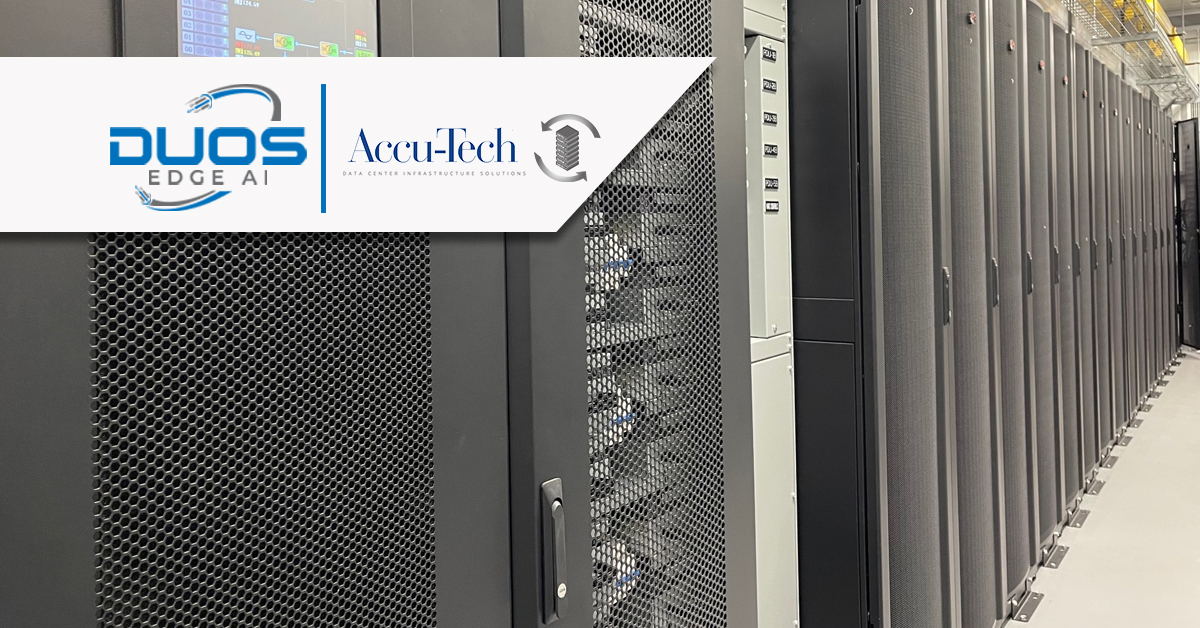
Core Viewpoint - Duos Technologies Group, Inc. is advancing its Edge Data Center (EDC) solutions through a partnership with Accu-Tech, aiming to meet the increasing demand for low-latency data processing by deploying 15 US-made EDCs by the end of 2025 [1][4]. Group 1: Company Developments - Duos Edge AI is on track to have 15 Edge Data Centers under contract by the end of 2025, addressing the growing need for localized digital infrastructure [1]. - The partnership with Accu-Tech enhances Duos Edge AI's supply chain reliability and cost-effectiveness, shielding the company from global supply chain disruptions [3][4]. - Duos Edge AI has identified at least nine EDC placements and is finalizing agreements across various markets, focusing on underserved communities [4]. Group 2: Product Features and Benefits - The modular EDCs are SOC 2 Type II compliant, built with N+1 architecture, and equipped with dual backup generators, ensuring reliable localized computing power [4][6]. - The deployment plan emphasizes serving critical infrastructure in education, healthcare, and AI workloads, particularly in Texas, the Midwest, and the Southeast [4][6]. - Duos Edge AI's EDCs can provide over 100 kW per cabinet and are designed for rapid deployment within 90 days, significantly closer to end users than traditional data centers [6].
NXP Semiconductors (NXPI) FY Conference Transcript
2025-05-13 13:50
Summary of NXP Semiconductors (NXPI) FY Conference Call Company Overview - **Company**: NXP Semiconductors (NXPI) - **Event**: FY Conference Call on May 13, 2025 - **Key Speakers**: Kurt Sievers (CEO), Rafael Sotomayor (President), Bill Betz (CFO), Jeff Palmer (SVP of Investor Relations) [2][3] Core Points and Arguments Company Transformation and Leadership Transition - Kurt Sievers reflected on his 30-year career, noting that since the IPO in 2010, NXP has tripled its revenue and more than doubled its operating margin, now solidly above 30% [5] - The company has focused on financial discipline and strategic portfolio management, particularly in edge computing for automotive and industrial sectors [6] - Rafael Sotomayor will succeed Kurt Sievers as CEO in October 2025, with a seamless transition planned [9] Market Recovery and Demand Trends - NXP is experiencing early signs of cyclical recovery after a downturn that began in 2022, with increased orders and a higher backlog from distribution customers [14][15] - The company is cautious about interpreting demand increases as purely cyclical, noting uncertainties related to tariffs and inventory management [19][23] Tariff and Manufacturing Strategy - Current tariffs have not materially impacted NXP's P&L, but there is uncertainty regarding their effects on customers [17][18] - NXP's hybrid manufacturing strategy focuses on consolidating 200mm fabs while expanding into 300mm manufacturing, which is expected to generate $4 billion in annual revenue and improve gross margins by 200 basis points [24][25] China Market Strategy - NXP's "China for China" strategy aims to increase local manufacturing and R&D investment in response to the growing importance of the Chinese market in automotive and industrial sectors [27][28] - Approximately 17-18% of NXP's total revenue is linked to China, with a third of that already manufactured locally [30][32] System-Level Solutions and Market Position - NXP is shifting towards providing system-level solutions in industrial and IoT markets, addressing the increasing complexity of customer needs [36][38] - The company has seen significant market share growth in emerging categories like battery energy storage and EV chargers, achieving up to 90% market share in some areas [40][41] Automotive Segment Insights - The automotive segment is projected to be flat year-over-year for the first half of 2025, with growth drivers such as software-defined vehicles and connectivity technologies continuing to gain traction [60][62] - NXP expects significant revenue impacts from its S32 software-defined vehicle platform by 2028, aided by the acquisition of TT Tech, which enhances its system solutions capabilities [67] Additional Important Content - NXP emphasizes the importance of edge AI solutions for industrial and automotive customers, driven by privacy and latency concerns [56][57] - The company is investing in developing its own machine learning processing units (MPUs) to maintain control over its technology and adapt to market shifts towards generative AI [52][54] This summary encapsulates the key points discussed during the NXP Semiconductors FY Conference Call, highlighting the company's strategic direction, market dynamics, and leadership transition.

Maris-Tech Expands European Reach with New Distribution Agreement in Poland
Globenewswire· 2025-05-02 12:10
Core Insights - Maris-Tech Ltd. has entered into a distribution agreement with Armit Sp. z o.o. to enhance its presence in the European defense market [1][2] - The collaboration aims to expand access to Maris-Tech's advanced video streaming, AI, and situational awareness platforms [1][3] - This partnership is part of Maris-Tech's broader strategy to grow its global distribution network [3] Company Overview - Maris-Tech is a leader in video and AI-based edge computing technology, focusing on intelligent video transmission solutions [5] - The company offers lightweight, low-power products that provide high-performance capabilities, including raw data processing and AI-driven analytics [5] - Founded by veterans of the Israeli technology sector, Maris-Tech serves various industries, including defense, aerospace, and homeland security [5] Partnership Details - Armit specializes in defense system integration and serves as a trusted partner to Poland's armed forces [2] - Under the agreement, Armit will distribute Maris-Tech's ruggedized video processing and intelligence platforms for various applications, including armored vehicles and drones [2] - Both companies express enthusiasm for the collaboration, highlighting the potential to introduce innovative solutions to the Polish market [4]