
党的自我革命

Search documents
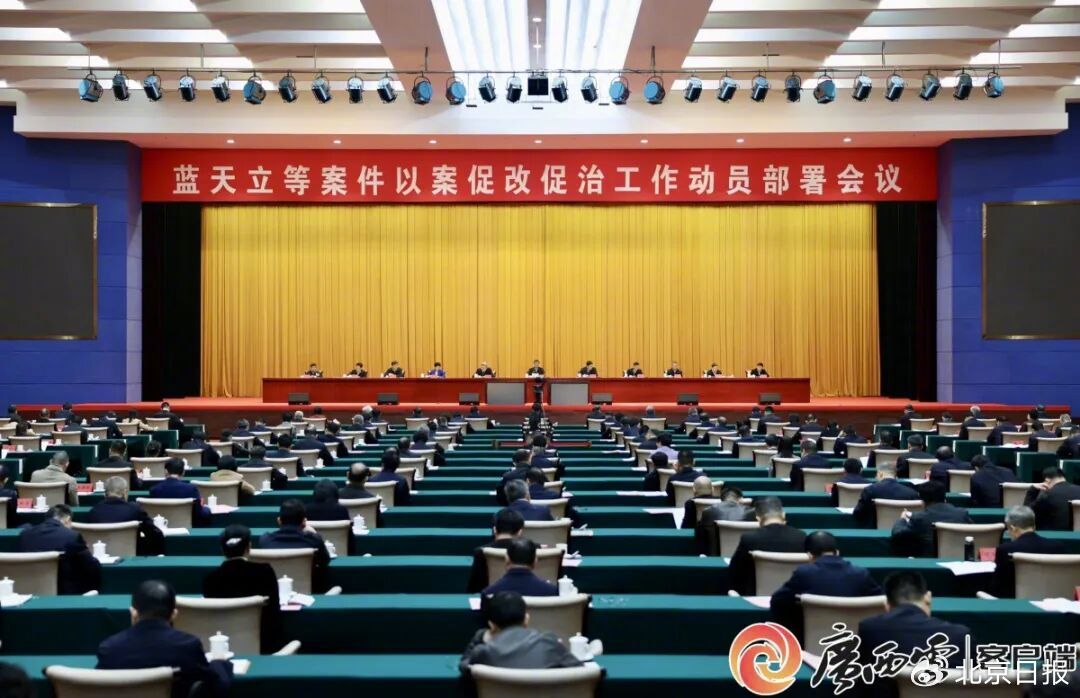
广西:带头向“小圈子”开刀、向“官老爷”开刀、向“一言堂”开刀
Xin Lang Cai Jing· 2026-01-02 02:00
Core Points - The meeting emphasized the importance of learning from the cases of Lan Tianli and others to promote reform and governance, aiming to deepen the comprehensive strict governance of the Party and ensure the establishment of both political and natural ecological systems [1][5] - The meeting highlighted the need for leaders at all levels to reflect on their responsibilities and improve their political awareness, recognizing the central government's unwavering commitment to strict governance and the public's expectations for a clean political environment [3][4] Group 1: Reform and Governance Initiatives - The meeting called for the implementation of five special governance initiatives to address issues exposed by the Lan Tianli case, including political discipline, corruption in major projects, family-style corruption, violations of regulations regarding gifts and meals, and improper personnel selection [4][5] - It was stressed that leaders must adhere to political discipline and regulations, ensuring that they act as clear-minded political figures and promote the central government's policies [4][6] Group 2: Commitment to Continuous Improvement - The meeting underscored the need for a problem-oriented approach to reform, with a focus on genuine changes and systematic efforts to improve the political and natural ecological environments [5][6] - There was a strong emphasis on the necessity of addressing political deviations and ensuring that development concepts align with the new development philosophy, promoting high-quality development in Guangxi [5][6]

以党的自我革命引领经济社会发展
Xin Lang Cai Jing· 2026-01-01 07:30
Group 1 - The core argument emphasizes the intrinsic relationship between the Party's self-revolution and economic and social development, highlighting that the Party's self-revolution can inject positive energy into economic and social progress [1][2] - The self-revolution of the Party aims to lead a great social revolution, addressing contradictions in production relations and promoting social progress through the liberation and development of productive forces [2][4] - Effective governance of the Party enhances the strength of economic and social development, with the Party's leadership being crucial for the sustained health of the economy [3][4] Group 2 - The "15th Five-Year Plan" period presents significant challenges and complexities, necessitating a higher demand for the Party's self-revolution to navigate both domestic and international issues [4][12] - There are notable discrepancies in the capabilities of Party members and leaders, which can hinder the modernization efforts and overall responsibilities [8][10] - The Party's commitment to anti-corruption efforts is critical, with a significant increase in cases handled by disciplinary bodies indicating ongoing challenges in maintaining integrity [11][16] Group 3 - The Party's self-revolution is essential for achieving the goals of the "15th Five-Year Plan," focusing on cultivating capable and proactive Party members and leaders [4][13] - The need for a strong organizational structure within the Party is emphasized, ensuring that grassroots organizations effectively lead governance and service to the public [14][15] - Continuous efforts to combat corruption and improve the Party's work style are necessary to maintain public trust and support for economic and social development [15][16]
习近平:学习好贯彻好党的二十届四中全会精神
国家能源局· 2026-01-01 02:06
Group 1 - The core viewpoint of the article emphasizes the importance of studying and implementing the spirit of the Fourth Plenary Session of the 20th Central Committee, which is a significant political task for the entire party and society [2][3][6] - The article outlines the major significance of the "14th Five-Year Plan" period for economic and social development, highlighting its role in achieving socialist modernization and responding to complex external environments [6][7] - It stresses the need for a correct understanding of the domestic and international situation, emphasizing the coexistence of strategic opportunities and risks during the "14th Five-Year Plan" period [7][9] Group 2 - The article details the guiding principles for economic and social development during the "14th Five-Year Plan" period, including the importance of the Party's leadership, prioritizing people, high-quality development, and comprehensive reform [9][10] - It outlines the major strategic tasks for advancing Chinese-style modernization, such as building a modern industrial system, promoting technological self-reliance, and enhancing domestic market strength [9][10] - The article emphasizes the fundamental guarantee for economic and social development, which is to uphold and strengthen the Party's comprehensive leadership [10][11] Group 3 - The article calls for a focus on high-quality development as the main theme of the "14th Five-Year Plan," advocating for the optimization of economic structure and the promotion of new productive forces [11][12] - It highlights the need to accelerate the establishment of a new development pattern that strengthens domestic circulation and promotes the interaction between domestic and international markets [12][14] - The article stresses the importance of advancing common prosperity for all people, ensuring that development benefits are distributed more equitably [14][15] Group 4 - The article discusses the need for better coordination between development and security, emphasizing that security is a prerequisite for development [15][16] - It outlines the necessity for comprehensive advancement across various fields to achieve socialist modernization, advocating for a systematic approach to policy implementation [16][17] - The article underscores the importance of strict governance of the Party, highlighting the need for self-revolution and anti-corruption efforts to ensure effective governance [17][19]

陈刚:扎实开展五个专项治理,坚决肃清蓝天立等案件恶劣影响
Guang Xi Ri Bao· 2026-01-01 01:55
Core Points - The meeting emphasized the importance of learning from past cases to promote reform and governance, aiming to strengthen the political and natural ecosystems in Guangxi [1][4] - The leadership highlighted the need for a deep understanding of the central government's commitment to strict party governance and the ongoing anti-corruption efforts [2][4] Group 1: Reform and Governance - The meeting called for a focus on ideological reform and awareness among leaders to prevent corruption and maintain political discipline [2][3] - Specific measures were outlined for addressing issues revealed by the Lan Tianli case, including special governance initiatives targeting political discipline, corruption in major projects, family-related corruption, and improper conduct regarding gifts and hospitality [3][4] Group 2: Political and Natural Ecosystems - The leadership stressed the need for a problem-oriented approach to ensure continuous improvement in both political and natural ecosystems, aiming for a fundamental positive change [4][5] - The meeting underscored the importance of aligning local governance with national standards and avoiding short-term, superficial projects that could hinder long-term development [4][5]
《求是》杂志发表习近平总书记重要文章学习好贯彻好党的二十届四中全会精神
Xin Hua She· 2026-01-01 00:13
Core Viewpoint - The article emphasizes the importance of studying and implementing the spirit of the Fourth Plenary Session of the 20th Central Committee, which is crucial for guiding China's economic and social development during the 14th Five-Year Plan period [1]. Group 1: Understanding the Spirit of the Fourth Plenary Session - The significance of the 14th Five-Year Plan period is highlighted as a critical phase for achieving socialist modernization, serving as a bridge for future development [2]. - The article stresses the need for the entire party and society to unify their thoughts and actions around the Central Committee's judgments and major decisions regarding the complex domestic and international environment [2][3]. - The guiding ideology and major principles established in the recommendations are seen as a scientific summary of the experiences gained since the reform and opening up, providing essential guidelines for economic and social development [2][3]. Group 2: Implementation of the Fourth Plenary Session's Spirit - The article outlines the necessity of promoting high-quality development, focusing on the real economy, and deepening reforms to enhance productivity [4]. - It emphasizes the importance of constructing a new development pattern, expanding domestic demand, and ensuring a positive interaction between consumption and investment [4]. - The article calls for advancing common prosperity by improving living standards, promoting regional coordination, and ensuring equal access to public services [4][5]. - It highlights the need for better coordination between development and security, advocating for a comprehensive national security system [5]. - The article stresses the importance of effective party governance as a foundation for economic and social development, including self-revolution and anti-corruption efforts [5].
《求是》杂志发表习近平总书记重要文章《学习好贯彻好党的二十届四中全会精神》
Xin Hua She· 2025-12-31 07:03
文章指出,管党治党越有效,经济社会发展的保障就越有力。必须以永远在路上的坚韧和执着,持之以 恒推进全面从严治党。第一,坚决把党的自我革命要求落实到位。党的自我革命和经济社会发展是紧密 相联、相互促进、相得益彰的。要全面贯彻党中央关于党的建设的重要思想、关于党的自我革命的重要 思想,把推进党的自我革命"五个进一步到位"要求全面一体地落实好。第二,推进党的作风建设常态化 长效化。要巩固拓展深入贯彻中央八项规定精神学习教育成果,强化党性锻炼,持续深化拓展整治形式 主义为基层减负工作,让广大基层干部有更多精力抓落实。第三,坚定不移开展反腐败斗争。要始终保 持反腐败高压态势,做到一步不停歇、半步不退让。健全制度机制,在铲除腐败问题产生的土壤和条件 上持续发力、纵深推进。持续加强理想信念教育,让广大党员干部始终牢记和自觉践行党的初心使命, 确保红色江山永不变色。 (文章来源:新华社) 党的领导这一最大优势,把党的领导贯穿经济社会发展各方面全过程。 2026年1月1日出版的第1期《求是》杂志将发表中共中央总书记、国家主席、中央军委主席习近平的重 要文章《学习好贯彻好党的二十届四中全会精神》。 文章指出,全会通过的《建议》, ...
中国海油:召开所属单位纪委书记述责述廉会议
Zhong Yang Ji Wei Guo Jia Jian Wei Wang Zhan· 2025-12-31 03:36
Core Viewpoint - The meeting organized by the disciplinary inspection and supervision group of China National Offshore Oil Corporation (CNOOC) emphasizes the importance of political supervision and the implementation of anti-corruption measures to ensure the effective execution of major decisions made by the central government [2][3]. Group 1 - The CNOOC disciplinary inspection and supervision institutions are committed to implementing Xi Jinping's important thoughts on the Party's self-revolution and the spirit of the Fourth Plenary Session of the 20th Central Commission for Discipline Inspection [2]. - The focus is on enhancing political supervision and establishing a precise, regularized work mechanism to support the construction of an energy and maritime power [2]. - Key areas of supervision include increasing reserves and production, technological innovation, and addressing systemic corruption risks [2]. Group 2 - The recent meeting marks the first on-site accountability session for lower-level disciplinary institutions after comprehensive reform, highlighting the importance of team building and guidance [3]. - The CNOOC disciplinary inspection group aims to strengthen supervision over leadership and improve the effectiveness of case investigations, particularly in addressing corruption and misconduct [3]. - There is a commitment to enhance the standardization and legalization of disciplinary work, ensuring a rigorous approach to self-reform and the eradication of corruption [3].

第一观察|2025,领悟总书记金句中蕴含的思想真谛
Xin Hua She· 2025-12-29 22:36
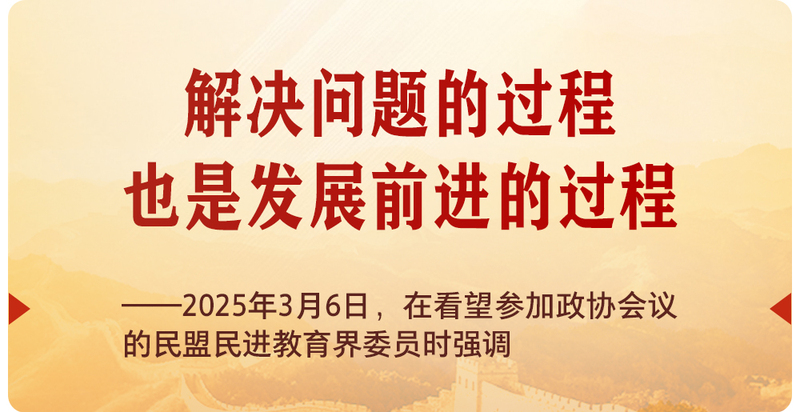
Group 1 - The core message emphasizes the importance of addressing problems as a pathway to development, highlighting a proactive approach to education and economic challenges [3] - Xi Jinping's focus on localized solutions and the importance of adapting strategies to specific regional characteristics is evident in discussions about rural tourism and revitalization [5] - The call for self-reform within the Communist Party is underscored, stressing the need for strong leadership and accountability in the face of complex governance challenges [10] Group 2 - The commitment to industrial development is highlighted, showcasing China's evolution into a leading manufacturing power through practical and pragmatic approaches [12] - The narrative of national rejuvenation is framed as an unstoppable historical process, emphasizing the collective spirit and determination of the Chinese people [13] - The principle of prioritizing the people's well-being is reiterated, with a focus on improving living standards and achieving common prosperity as central goals of economic and social development [17] Group 3 - The strategy of focusing on high-quality development and internal capabilities is presented as a response to external uncertainties, reinforcing the idea of self-reliance [19] - The call for unity and perseverance in the face of challenges is articulated, encouraging a spirit of resilience and ambition among the populace [15] - The overarching theme of modernization is linked to individual progress, with policies aimed at enhancing the quality of life for all citizens [17]
深化自我革命 凝聚民心力量
Ren Min Ri Bao· 2025-12-26 05:44
腐败是人类社会的历史痼疾,也是当今各个国家面对的共同难题。12月25日召开的中共中央政治局会议 强调,坚定不移推进反腐败斗争。在党的二十届四中全会上,习近平总书记指出:"要始终保持反腐败 高压态势,依法、依规查处腐败案件,从严惩处腐败分子,做到一步不停歇、半步不退让,决不能让腐 败分子有任何藏身之地,任何人都不要心存侥幸、抱有幻想。"党的十八大以来,以习近平同志为核心 的党中央以坚决态度和雷霆手段,领导全党开展了史无前例的反腐败斗争,有腐必反、有贪必肃,不给 腐败行为可乘之机,不给腐败分子藏身之地,党的创造力、凝聚力、战斗力明显提高,党风、政风、社 风焕然一新。 "国家之败,由官邪也。"腐败是危害党的生命力和战斗力的最大毒瘤,反腐败是最彻底的自我革命。早 在1926年,党中央就发出党史上首个惩治贪污腐败的文件,即关于坚决清洗贪污腐化分子的通告,要求 各级党部"迅速审查所属同志,如有此类行为者,务须不容情的洗刷出党"。新中国成立初期,我们党果 断严肃查处了刘青山、张子善案,对腐败现象起到了强烈震慑作用。党的十八大以来,习近平总书记亲 自领导、亲自部署、亲自推动党风廉政建设和反腐败斗争。不敢腐、不能腐、不想腐一体 ...
深化自我革命 凝聚民心力量(思想纵横)
Ren Min Ri Bao· 2025-12-26 03:40
Core Viewpoint - The Chinese government emphasizes the importance of a sustained anti-corruption campaign, highlighting the need for strict enforcement and zero tolerance towards corrupt practices [1][3][4] Group 1: Anti-Corruption Efforts - The Central Political Bureau of the Communist Party of China has reiterated its commitment to advancing the anti-corruption struggle, maintaining a high-pressure stance against corruption [1] - Since the 18th National Congress, the leadership has initiated unprecedented anti-corruption efforts, significantly enhancing the party's cohesion and effectiveness [1][3] - In the first three quarters of 2025, the National Supervisory Commission reported 789,000 cases filed and 677,000 individuals punished for corruption, demonstrating the party's determination to combat corruption [3] Group 2: Historical Context and Philosophy - The concept of corruption has evolved from its original meaning of decay to encompass outdated ideas and disorganized behavior, which contradicts historical progress [2] - Historical documents from the party's early years indicate a long-standing commitment to combating corruption, with significant cases serving as deterrents [3] - The party's self-revolution is framed as a complex and long-term task, requiring persistent efforts to address hidden and evolving corrupt practices [4] Group 3: Future Outlook - The anti-corruption campaign is viewed as essential for revitalizing the party and society, fostering a spirit of diligence and innovation among officials and the public [4] - The ongoing struggle against corruption is characterized as a comprehensive and enduring battle, necessitating both targeted actions and systemic reforms to eliminate the conditions that allow corruption to thrive [4]