全体人民共同富裕

Search documents
中金 | 提质谋新,砥砺前行——“十五五”规划纲要解读
中金点睛· 2026-03-15 23:48
Core Viewpoint - The article discusses the key points of the "15th Five-Year Plan" (2021-2025) of China, emphasizing its strategic goals, development indicators, and major tasks, which aim to guide the country's economic and social development in the coming years [1]. Overall Orientation - The "15th Five-Year Plan" is positioned as a critical period for achieving significant breakthroughs in strategic tasks related to Chinese-style modernization, moving from merely starting well to achieving major breakthroughs [2]. - The development environment has shifted from a period of significant strategic opportunities to one characterized by increased uncertainty and complexity, necessitating proactive and high-quality policy responses [2]. Development Goals - The plan outlines seven major goals, including achieving significant results in high-quality development, enhancing self-reliance in technology, and improving national security [3]. - By 2035, the plan aims for substantial increases in economic, technological, and defense capabilities, with a focus on achieving a per capita GDP level comparable to that of developed countries [3]. Development Indicators - The plan sets 20 key indicators across five areas: economic development, innovation-driven growth, social welfare, green low-carbon initiatives, and security [4]. - Economic indicators emphasize maintaining GDP growth within a reasonable range while focusing on structural optimization and quality improvement [4]. - Innovation indicators include a target for R&D expenditure to grow by over 7% annually and an increase in the digital economy's contribution to GDP from 10.5% in 2024 to 12.5% by 2030 [5]. Major Strategic Tasks - The plan prioritizes building a modern industrial system, emphasizing the importance of advanced manufacturing and the development of emerging industries such as AI, biotechnology, and renewable energy [6]. - It highlights the need for a strong domestic market and effective demand stimulation, with specific measures to boost consumption and investment [7]. - The plan also focuses on promoting common prosperity, improving population development strategies, and enhancing social welfare [8]. Security and Development - The plan emphasizes the modernization of the national security system and the importance of ensuring economic security, food security, and public safety [10]. - It outlines 109 major engineering projects aimed at supporting the strategic tasks, with a focus on modern infrastructure, green transformation, and urban-rural integration [11]. Capital Market Outlook - The "15th Five-Year Plan" is expected to reshape investment logic in China's capital markets, promoting a virtuous cycle of policy direction, capital allocation, and market ecology [12]. - The plan's clarity and long-term vision are anticipated to boost investor confidence and contribute positively to the capital market [13]. - Long-term conditions for a stable and gradual market growth are seen as more favorable, with a focus on new quality productivity and structural reforms [14]. Investment Opportunities - Key sectors for medium to long-term investment include digital technology, space economy, high-end manufacturing, new consumption patterns, and biotechnology [15]. - The plan's emphasis on modern industrial systems and green low-carbon initiatives presents significant investment opportunities in related industries [16].


“十五五”规划纲要(全文)
财联社· 2026-03-13 14:09
Core Points - The "14th Five-Year Plan" outlines a comprehensive framework for China's economic and social development, emphasizing modernization and self-reliance in various sectors [1][2]. Group 1: Economic Development - The plan aims to create a modern industrial system to strengthen the foundation of the real economy [2]. - It emphasizes the acceleration of high-level technological self-reliance to lead new productive forces [2]. - The construction of a strong domestic market is prioritized to accelerate the formation of a new development pattern [2]. Group 2: Digital and Green Transformation - There is a focus on advancing digital China construction to enhance digital and intelligent development levels [2]. - The plan promotes a comprehensive green transformation of economic and social development to build a beautiful China [2]. Group 3: Social and Cultural Development - The strategy includes enhancing the population development strategy to promote high-quality population growth [2]. - It aims to invigorate national cultural innovation and creativity to prosper socialist culture [2]. Group 4: National Security and Defense - The plan outlines the modernization of the national security system and capabilities to build a higher level of a safe China [2]. - It includes goals for high-quality advancement of national defense and military modernization by the centenary of the army [2]. Group 5: Governance and Coordination - The plan emphasizes the need for a high-level socialist market economic system to enhance the momentum for high-quality development [2]. - It also focuses on optimizing regional economic layout to promote coordinated regional development [2].

政府工作报告(全文)
21世纪经济报道· 2026-03-13 13:43
Core Viewpoint - The government work report outlines the economic and social development goals for 2026, emphasizing a growth target of 4.5% to 5%, with a focus on stabilizing employment, controlling inflation, and promoting sustainable development [21][22]. Group 1: 2025 Work Review - In 2025, China's GDP grew by 5%, reaching 140.19 trillion yuan, with urban employment increasing by 12.67 million and an average urban unemployment rate of 5.2% [3][4]. - The country achieved a grain production of 1.43 trillion jin, and the income growth of residents was synchronized with economic growth [3][4]. - Significant advancements in technology and innovation were noted, with high-tech manufacturing and equipment manufacturing value-added growth rates of 9.4% and 9.2%, respectively [4]. Group 2: Major Goals and Tasks for the 15th Five-Year Plan - The 15th Five-Year Plan aims for GDP growth to maintain a reasonable range, with a target of annual R&D expenditure growth of over 7% [17][18]. - Key indicators include a grain production capacity of approximately 1.45 trillion jin and energy production capacity of 5.8 billion tons of standard coal [19]. Group 3: 2026 Economic and Social Development Requirements - The report sets a target for urban unemployment at around 5.5% and aims for over 12 million new urban jobs [22][23]. - It emphasizes the need for a stable consumer price increase of around 2% and a reduction in carbon emissions per unit of GDP by 3.8% [22][23]. Group 4: Government Work Tasks for 2026 - The government plans to enhance domestic market strength by promoting consumption and investment, with a focus on increasing residents' income and improving social welfare [26][27]. - Investment in new quality productivity and urbanization will be prioritized, with a proposed central budget investment of 755 billion yuan [27][28]. Group 5: Innovation and Technology Development - The report highlights the importance of innovation-driven development, with a focus on enhancing the integration of technology and industry [7][30]. - It aims to strengthen original innovation and key core technology breakthroughs, with increased support for R&D and strategic technology projects [30][31]. Group 6: Reform and Opening Up - The government will deepen reforms to create a unified national market and enhance the business environment for both state-owned and private enterprises [32][33]. - There will be an emphasis on expanding high-level opening up, particularly in the service sector, and promoting foreign investment [34][35].
今天的人民日报,6个版聚焦一件事
中国能源报· 2026-03-12 13:42
Core Viewpoint - The article emphasizes the importance of establishing and practicing a correct view of performance to ensure a good start for the "14th Five-Year Plan" [1][27]. Group 1: Correct View of Performance - The correct view of performance should focus on practical results that withstand the tests of practice, the people, and history [1][27]. - It is essential to guide party members and officials to adhere to the principles of serving the public, making scientific decisions, and implementing practical actions [1][27]. Group 2: Economic Development - Economic growth should not only be measured by GDP but also by the enhancement of hard power and the pursuit of new quality productive forces [4][6]. - Continuous transformation and upgrading of industries are necessary to achieve higher quality development [4][6]. Group 3: Innovation and Industry Integration - There is a need to strengthen the integration of technology and industry, promoting the development of new quality productive forces [8][12]. - Emphasis on independent innovation and the integration of the entire industrial chain is crucial for enhancing competitiveness [9][12]. Group 4: High-Quality Development - High-quality development should be prioritized, focusing on enhancing economic resilience and integrating into the national unified market [13][14]. - The importance of fostering strategic emerging industries and maintaining a strong position in global supply chains is highlighted [16][19]. Group 5: Social Welfare and Public Services - The article discusses the need to improve public services and social security systems to enhance the well-being of the people [40][42]. - Investment in both material and human resources is essential for promoting balanced development and ensuring that the benefits of growth reach all citizens [46].
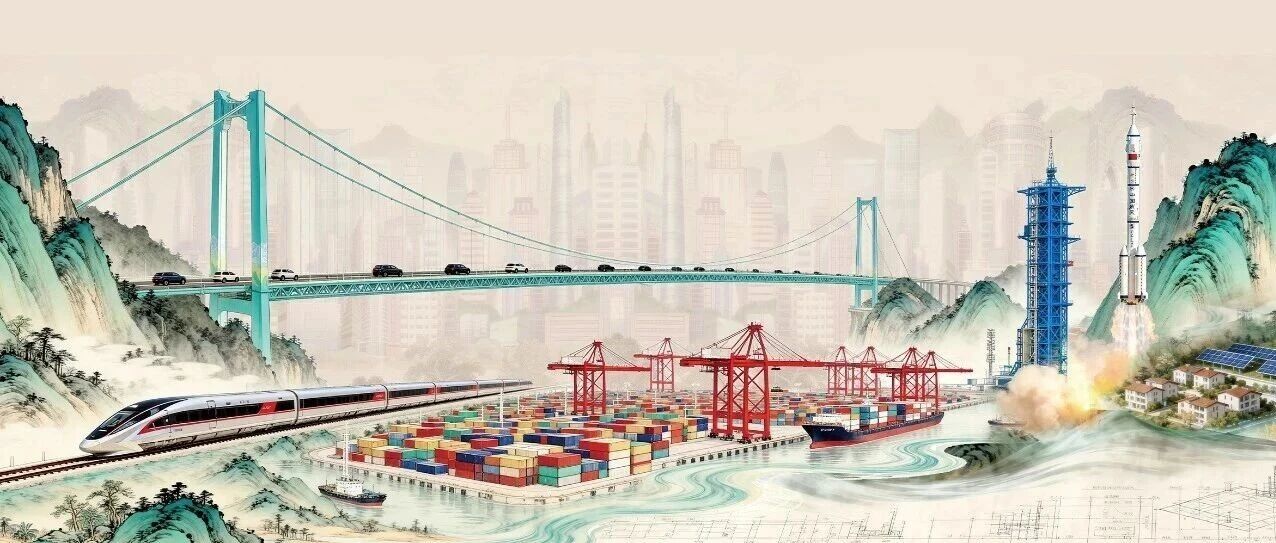
经济大省该如何在研究新情况、解决新问题上下功夫
第一财经· 2026-03-08 15:48
Core Viewpoint - The article emphasizes the importance of economic provinces as key contributors to national economic growth, with a projected contribution rate of 62.2% by 2025, and highlights their role as pioneers in reform and opening-up initiatives [2]. Group 1: Economic Development and Innovation - Economic provinces are tasked with identifying new situations and solving new problems to facilitate high-quality development and advance Chinese-style modernization [3]. - The "14th Five-Year Plan" suggests that economic provinces should focus on developing new productive forces, enhancing economic resilience, and exploring effective pathways for common prosperity [4][5]. - The government aims to foster emerging and future industries, emphasizing the importance of original innovation and breakthroughs in key technologies to enhance the national innovation system [5]. Group 2: State-Owned and Private Enterprises - Significant improvements in the efficiency and effectiveness of state-owned enterprises have been achieved through deep reforms, with a focus on enhancing the vitality and efficiency of central enterprises [6]. - The implementation of the "Private Economy Promotion Law" starting May 20, 2025, is expected to further protect the rights of private enterprises and create a more favorable environment for their development [6]. - Economic provinces exhibit varying structures, with some having a higher concentration of state-owned enterprises while others are more developed in the private sector, necessitating a collective approach to address new challenges [6]. Group 3: Common Prosperity and Social Welfare - Improving people's livelihoods is essential for advancing common prosperity, which involves addressing employment, income growth, and enhancing public services and social security [7]. - Economic provinces are actively exploring and implementing strategies to achieve significant progress in common prosperity by 2025, with ongoing efforts to deepen these initiatives [7][8]. - The ultimate goal is to ensure that the benefits of modernization are equitably shared among all citizens, enhancing their sense of gain, happiness, and security [8].

“十五五”时期主要目标和重大任务,一文看懂
中汽协会数据· 2026-03-06 02:12
Core Viewpoint - The article outlines the draft of the 15th Five-Year Plan for national economic and social development, emphasizing key targets and strategic tasks to achieve high-quality development, domestic circulation, common prosperity, and the balance between development and security [1][2][9]. Economic Development - The plan sets three indicators focusing on GDP growth, aiming to maintain it within a reasonable range and doubling per capita GDP by 2035 compared to 2020, reaching the level of moderately developed countries [4]. Innovation-Driven Development - It proposes three indicators related to innovation investment, targeting an annual growth of over 7% in R&D expenditure, aligning with the goals of the 14th Five-Year Plan to ensure sustained investment in research and development [5]. Social Welfare - Seven indicators are proposed to address urgent issues faced by the public, focusing on employment, income, education, healthcare, and support for the elderly and children [6]. Green and Low-Carbon Development - Five indicators are established to reduce carbon emissions and pollution, including a target to decrease carbon emissions per unit of GDP by 17% based on national contributions [7]. Security Assurance - Two indicators are focused on food and energy production capacity to strengthen the foundational guarantees for national security [8]. Major Strategic Tasks - The draft emphasizes four major strategic tasks: promoting high-quality development, strengthening domestic circulation, advancing common prosperity, and ensuring the balance between development and security [9][10][11][13][15]. Major Engineering Projects - The draft outlines 109 major engineering projects across six areas to support the implementation of the 15th Five-Year Plan, including enhancing industrial capabilities, modern infrastructure, urban-rural integration, and improving social welfare [18][19][20][21][22][25].

习近平:经济大省要在研究新情况解决新问题上下功夫出经验
中国能源报· 2026-03-05 14:56
Core Viewpoint - The article emphasizes the importance of addressing new situations and solving new problems for economic development, particularly in major economic provinces like Jiangsu, to achieve the goals set for the "14th Five-Year Plan" [1][4]. Group 1: Economic Development and Innovation - Xi Jinping highlighted the necessity of developing new productive forces to promote high-quality development and enhance economic competitiveness, with Jiangsu having a solid foundation in this area [4]. - There is a call for integrated advancement in education, technology, and talent development, aiming for breakthroughs in original innovation and key core technology [4]. - The article stresses the importance of optimizing traditional industries, nurturing emerging industries, and proactively planning for future industries to create new opportunities [4]. Group 2: Economic Resilience and Market Integration - Jiangsu is urged to strengthen its economic resilience to support national economic stability, emphasizing the need for internal strengthening and integration into the national unified market [4]. - The article advocates for expanding high-level opening-up and exploring global markets to better connect with international circulation [4]. Group 3: Social Development and Governance - Xi Jinping pointed out that modern Chinese development should focus on common prosperity, addressing new expectations from the public regarding quality employment, income growth, and public services [6]. - The article underscores the importance of effective governance and party management as a foundation for economic and social development, promoting a correct view of performance among party members [6].
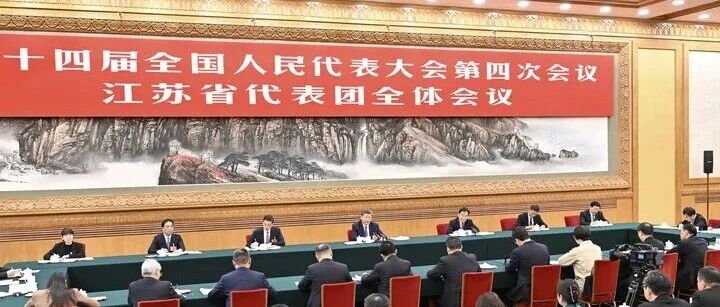
习近平在参加江苏代表团审议时强调 经济大省要在研究新情况解决新问题上下功夫出经验
证券时报· 2026-03-05 14:10
Core Viewpoint - The article emphasizes the need for Jiangsu, as a major economic province, to adapt to complex environments and address deep-seated issues to achieve the "14th Five-Year" economic and social development goals [1][3]. Group 1: Economic Development and Innovation - Xi Jinping highlighted the importance of developing new productive forces to promote high-quality development and enhance economic competitiveness, with Jiangsu having a solid foundation in this area [3][4]. - There is a call for integrated advancement in education, technology, and talent development, aiming for breakthroughs in original innovation and key core technology, as well as exploring new pathways for the efficient transformation and application of technological achievements [3][4]. Group 2: Economic Resilience and Market Integration - The article stresses that a stable economic base and strong ability to withstand external shocks are crucial for supporting national economic stability, urging Jiangsu to enhance its economic resilience [4]. - Jiangsu is encouraged to strengthen its internal capabilities, fully integrate into the national unified market, and facilitate the smooth flow of domestic circulation while expanding high-level openness to global markets [4]. Group 3: Social Development and Governance - Xi Jinping pointed out that modern Chinese development should focus on common prosperity, addressing new expectations from the public regarding quality employment, income growth, and improved public services [6]. - Effective governance and party management are emphasized as essential for robust economic and social development, with a focus on cultivating a correct view of performance and ensuring accountability among party members [6].

2026年政府工作报告,一图速览!
证监会发布· 2026-03-05 07:07
Core Viewpoint - The article outlines the achievements and future goals of China's economic and social development, emphasizing high-quality growth, innovation, and improved living standards while addressing challenges and risks in the current global landscape [3][4][21]. Economic Performance - In 2025, China's GDP reached 140.19 trillion yuan, with a growth rate of 5%, showcasing strong resilience in economic operations [5][11]. - Urban employment remained stable, with 12.67 million new jobs created and an average urban unemployment rate of 5.2% [5]. - The country experienced rapid growth in foreign trade, with a diversified export structure and a balanced international payment situation [5]. Technological and Industrial Advancements - Significant progress in new production capacities and technological innovations, with advancements in artificial intelligence, biomedicine, and quantum technology leading globally [6]. - Manufacturing value added grew by 9.4%, with industrial robot production increasing by 10.9% and integrated circuit production by 28% [8]. Social and Environmental Improvements - The average life expectancy increased to 79.25 years, and the proportion of days with good air quality in cities rose to 89.3% [16]. - The grain production reached approximately 1.43 trillion jin, supporting food security [6][22]. Future Goals and Strategies - For 2026, the economic growth target is set between 4.5% and 5%, with a focus on stabilizing employment and ensuring a balanced international payment situation [22]. - The government aims to enhance domestic market strength, promote new energy vehicles, and expand high-level foreign trade and investment [26][27]. Key Initiatives - The government plans to implement measures to boost consumption, optimize traditional industries, and foster new industries and services [26]. - There will be a continued emphasis on technological self-reliance and innovation, alongside reforms in key sectors to stimulate economic vitality [27][28].

“十五五”时期主要目标和重大任务,一文看懂
国家能源局· 2026-03-05 03:00
Core Points - The article discusses the draft outline of the 15th Five-Year Plan for national economic and social development, emphasizing key goals and strategic tasks for the upcoming years [2][3]. Economic Development - The plan sets a target for GDP growth to remain within a reasonable range, aiming for per capita GDP to double by 2035 compared to 2020, reaching the level of moderately developed countries [5]. Innovation-Driven Development - It proposes that the annual growth of R&D expenditure should exceed 7%, aligning with the goals of the previous five-year plan to ensure sustained investment in innovation [6]. Social Welfare - The plan outlines seven indicators to address urgent issues faced by the public, focusing on employment, income, education, healthcare, and support for the elderly and children [7]. Green and Low-Carbon Development - It aims for a 17% reduction in carbon emissions per unit of GDP, promoting green and low-carbon transitions in key sectors [8]. Security Assurance - The plan emphasizes enhancing food and energy production capabilities, with food production capacity targeted at approximately 1.45 trillion jin and energy capacity at 5.8 billion tons of standard coal [9][18]. Major Strategic Tasks - The draft outlines four major strategic tasks: promoting high-quality development, strengthening domestic circulation, advancing common prosperity for all, and balancing development with security [11][12][17][18]. Major Engineering Projects - The plan proposes 109 major engineering projects across six areas, including the development of new productive forces, modern infrastructure, urban-rural integration, and green low-carbon transformation [21][27].