
AI商业化

Search documents
港股投资双视角:AI+创新药|2025招商证券“招财杯”ETF实盘大赛
Quan Jing Wang· 2025-10-10 13:30
Group 1 - The core viewpoint of the articles emphasizes the positive outlook for the Hong Kong stock market, particularly in sectors like AI and innovative pharmaceuticals, which are experiencing valuation premiums due to their growth potential [2][3][5] - The Hong Kong stock market has shown signs of recovery since 2024, driven by low valuations, a stable interest rate environment from the Federal Reserve, and strong inflows from southbound capital [3][4] - The AI sector is revitalizing the technology segment in the Hong Kong market, with significant investments from major internet companies in AI infrastructure and applications [4][11] Group 2 - The innovative pharmaceutical sector has seen a remarkable increase, with the index for innovative drugs rising over 110% this year, supported by demographic trends, policy reforms, and payment system improvements [18][19] - The demand for innovative drugs is bolstered by an aging population, with projections indicating that by 2024, approximately 15.6% of China's population will be over 65 years old, leading to increased healthcare spending [18][19] - The trend of Chinese pharmaceutical companies going global is enhancing their valuation and stock price stability, with significant upfront payments from international partnerships [20][22] Group 3 - The AI sector is expected to reshape investment logic, with opportunities arising from hardware, software, and application layers, particularly in industries like gaming, finance, and healthcare [11][12] - The performance of the Hang Seng Technology Index, which has risen over 30% this year, is closely tied to the advancements in AI technology and its commercial applications [12][17] - The innovative drug sector's growth is also supported by favorable policies aimed at expediting clinical trials and approvals, enhancing the market's attractiveness for investors [19][24] Group 4 - The influx of southbound capital into the Hong Kong market is expected to continue, driven by the relative valuation advantages of Hong Kong-listed technology and biopharmaceutical companies compared to their A-share counterparts [6][8] - The unique characteristics of the Hong Kong market, including the presence of many high-quality internet and innovative pharmaceutical companies, provide diverse investment opportunities for mainland investors [6][8] - The ongoing development of AI technologies is seen as a new engine for corporate performance, moving beyond the narrative of merely being a costly investment [13][14]

赋能的美妙:DeepSeek开源背后的商业野心和生态架构
Sou Hu Cai Jing· 2025-09-30 18:48
Core Insights - DeepSeek leverages open-source technology to significantly lower the entry barriers in the industrial AI quality inspection market, allowing smaller companies to access advanced AI capabilities at a fraction of the cost [2][3] - The company aims to build a robust ecosystem by attracting developers and partners through free technology, which will later facilitate monetization through various services and collaborations [3][10] Group 1: Business Model - The first step in DeepSeek's monetization strategy involves using free technology to attract partners and build an ecosystem, similar to a shopping mall offering free rent to attract merchants [3][10] - The second step focuses on providing customized enterprise-level services to larger companies, ensuring high reliability and compliance, which allows DeepSeek to charge for these premium services [4][10] - The third step involves collaborating with hardware and cloud service providers, enabling DeepSeek to earn revenue through partnerships without extensive sales efforts [5][6] Group 2: Industry Impact - DeepSeek's open-source approach is changing the competitive landscape of the AI industry, forcing established players to lower their prices and adapt to a more open model [9][10] - The collaboration with domestic chip manufacturers like Huawei enhances the performance of local AI chips, reducing reliance on foreign supply chains and increasing the adoption of domestic solutions [8][10] Group 3: Strategic Insights - The strategy of offering free technology is designed to create a viral adoption effect, leading to a large user base that can later be monetized through high-end services and ecosystem partnerships [11][10] - Building a strong ecosystem is deemed more critical than the technology itself, as a larger user base leads to more tools and resources, solidifying DeepSeek's market position [12][10] - DeepSeek recognizes the potential risks associated with open-source technology and implements strict content review mechanisms and compliance frameworks to mitigate these risks [13][10]



倒车接人,积极把握买入机会!
Sou Hu Cai Jing· 2025-09-23 06:16
Market Overview - A-shares experienced a decline with all major indices falling, led by a significant retreat in the technology sector, while banking and semiconductor equipment sectors showed resilience [1][2] - The A-share market saw a trading volume of 1.71 trillion yuan, while the Hong Kong market recorded 165.23 billion HKD, indicating increased risk-averse sentiment among investors [1][2] Sector Performance - Defensive sectors such as banking and semiconductor equipment outperformed, with banking stocks rebounding due to policy support and high dividend yields attracting risk-averse capital [2][3] - The technology and consumer sectors faced substantial declines, particularly in tourism and real estate, with many stocks experiencing significant drops [2][3] Investment Strategy - The current market adjustment presents an opportunity to focus on quality assets, emphasizing sectors with policy certainty and sustainable performance [3][5] - Recommended strategies include strategic allocation in semiconductor equipment and AI infrastructure, as well as high-dividend blue-chip stocks to provide stable cash flow during economic fluctuations [3][4][5] Long-term Outlook - The long-term investment focus should be on industrial upgrades, green transformation, and consumption upgrades, with a preference for companies with strong cash flow and management buyback intentions [4][5]
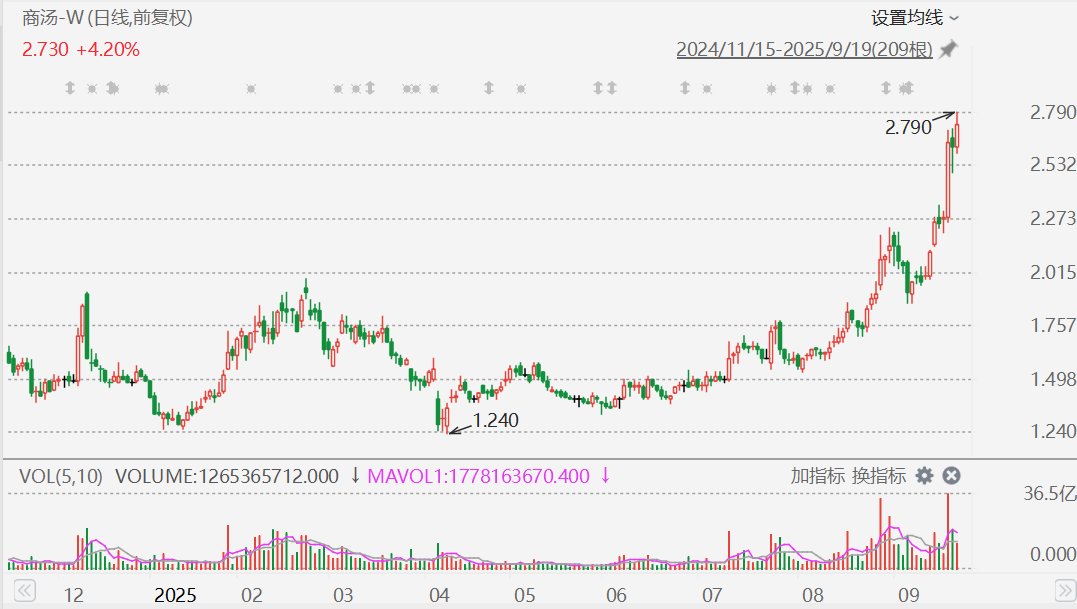
港股异动丨商汤涨超6%创2023年4月以来新高,获高盛看高至3.09港元
Ge Long Hui· 2025-09-19 03:52
Core Insights - SenseTime's stock (0020.HK) rose over 6% during trading, reaching HKD 2.79, marking a new high since April 2023, with a year-to-date increase of over 80% [1] - Goldman Sachs significantly raised its target price for SenseTime from HKD 2.72 to HKD 3.09, maintaining a buy rating [1] Business Expansion - Goldman Sachs has increased its expectations for SenseTime's ToC (Technology of Communication) business expansion, which includes productivity tools like "Office Little Raccoon" and financial tools like "Kapi Accounting" [1] - The company is expected to offer free trials to new users, transitioning to a revenue model based on annual or monthly fees for AI commercialization [1] Technological Advancements - SenseTime's AI infrastructure, SenseCore, has recently been adapted to other local computing platforms, including Huawei's Ascend Super Cluster (Atlas 900 A3 SuperPod) [1] - The integration and optimization of SenseCore have significantly reduced latency and improved utilization, supporting the operation of large-scale AI models [1] - The company has a comprehensive product line, including its self-developed large model SenseNova, and SenseCore can match various AI models such as LLaMA3, Qwen, and DeepSeek [1]
重要信号!高盛:维持A股超配
Shang Hai Zheng Quan Bao· 2025-09-18 14:57
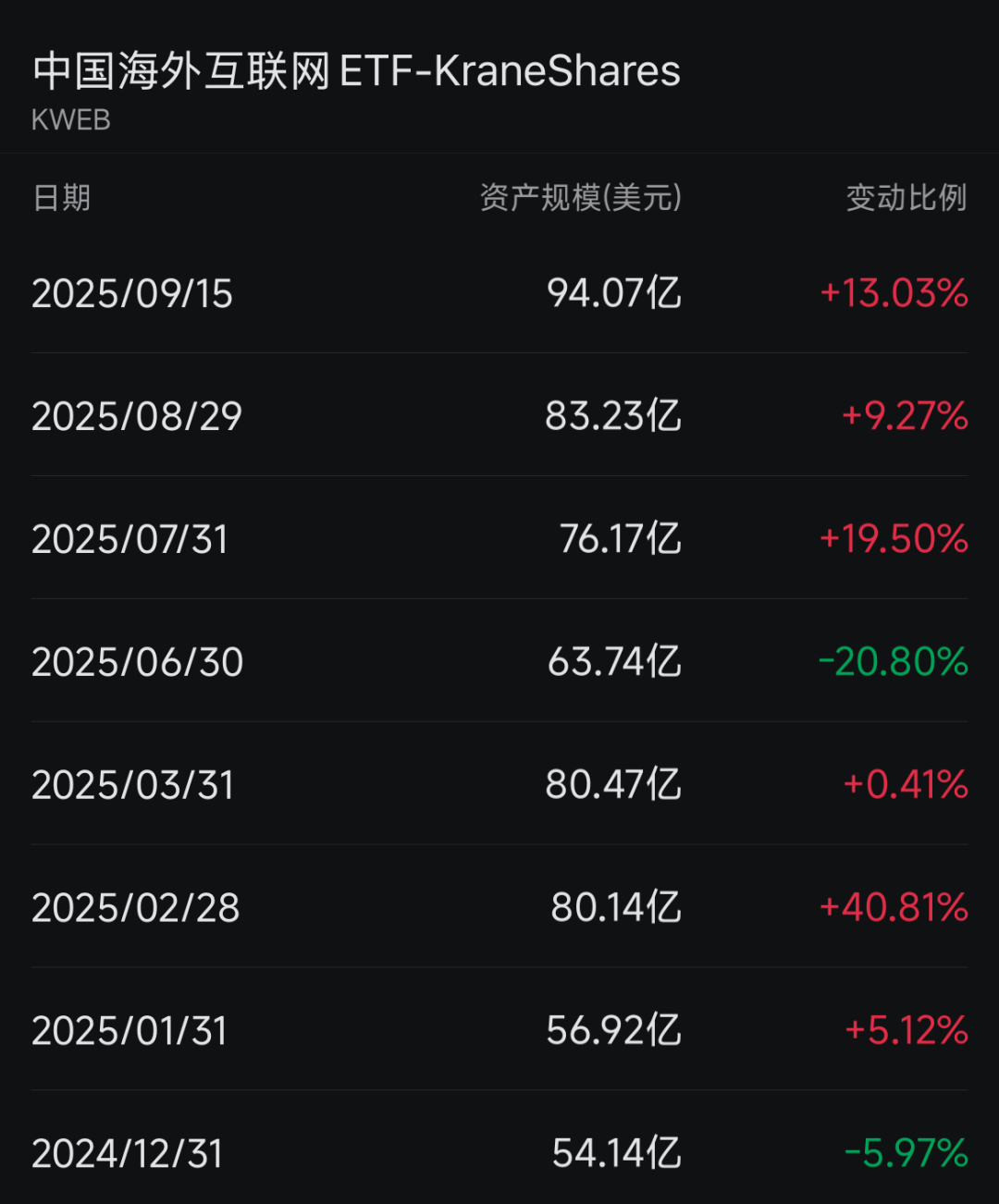
Group 1: Market Outlook - International investment banks have raised target prices for several Chinese stocks, including Alibaba, Tencent, Baidu, and BYD, indicating a positive outlook for these companies [1][3] - Goldman Sachs maintains an overweight rating on A-shares and H-shares, predicting potential upside of 8% and 3% respectively over the next 12 months, and suggests investors buy on dips [1][2] - The current market is characterized as a consolidation phase rather than a reversal, with major indices showing mid-single-digit earnings growth trends for this year and next [2] Group 2: Stock Target Price Adjustments - Goldman Sachs raised Alibaba's target price from $163 to $179 for US shares and from HKD 158 to HKD 174 for Hong Kong shares, maintaining a buy rating based on improved growth assumptions for Alibaba Cloud [3] - Citigroup has set a target price of HKD 735 for Tencent, citing expectations that Tencent will leverage AI capabilities to enhance core business monetization [3] - Jefferies increased Baidu's target price from $108 to $157 for US shares and from HKD 104 to HKD 152 for Hong Kong shares, maintaining a buy rating due to Baidu's recent AI developments [4] Group 3: Capital Inflows and Investment Trends - International capital is actively increasing its positions in Chinese technology stocks, with a focus on AI, robotics, and biotechnology, as these sectors show global competitiveness [1][5] - The KraneShares China Internet ETF has seen its assets grow from $83.23 billion at the end of August to $94.07 billion by mid-September, reflecting a 13% increase [6][7] - Strategic investments in companies like GCL-Poly and Weimob highlight the growing interest in AI development and international expansion, with GCL-Poly raising approximately $700 million and Weimob securing $200 million for AI initiatives [8][9]




山西证券 | 每日晨报(2025.9.18)
Zhong Guo Neng Yuan Wang· 2025-09-18 02:09
Industry Commentary - The automotive industry is expected to benefit from new materials opportunities as eight departments issued a "Work Plan for Stabilizing Growth in the Automotive Industry" [1] Company Commentary - Kingdee International (00268.HK) is experiencing resilient growth driven by its cloud subscription business, with accelerated commercialization of AI [1] - Zhongji Xuchuang (300308.SZ) reported that the increase in 1.6T volume will further enhance profitability, maintaining its position as a global leader in optical module delivery [1] Industry Commentary - The photovoltaic industry chain is witnessing price increases upstream, indicating potential market shifts [1]


百度交流纪要
2025-09-17 14:59
Summary of Baidu Conference Call Company Overview - **Company**: Baidu - **Date of Call**: September 12, 2025 Key Points Valuation Framework - The valuation framework consists of three parts: 1. Current stock price is seen as a support level for value investors 2. Five aspects that the market has not priced in, which could positively impact the stock price 3. A combination of value support and growth drivers that can act as catalysts for timing [2][3] Financial Position - Baidu currently holds **$30 billion** in cash, contrary to previous market perceptions of only **$10 billion** [2] - The company generates approximately **$10 million** in cash flow daily from its core business, which is significant in the Chinese market [2] AI and Robotaxi Services - Baidu is the largest robotaxi service provider globally, with operational order volumes comparable to competitors like Waymo [3] - The AI commercialization efforts are progressing well, with AI agents and digital humans enhancing operational monetization [3] - Baidu has the largest AI-empowered software portfolio in China, significantly larger than its closest competitors [3] Cloud and SaaS Business - Baidu's AI cloud capabilities rank among the top in terms of external revenue generation [4] - The company is positioned to be the largest AI-enabled SaaS provider in China, with high growth potential and margins [5] - Baidu's cloud services are expected to grow faster than the average market rate, driven by strong technical capabilities [15] Market Strategy and Shareholder Returns - Baidu is exploring a primary listing in Hong Kong, which could attract significant fund flow, potentially exceeding **20-30%** compared to Alibaba [6][7] - The company has repurchased **$2.6 billion** worth of shares over the past three years and plans to enhance shareholder returns, including potential dividends [7] Competitive Landscape - Baidu's competitive advantage in the robotaxi space is attributed to its comprehensive capabilities in cloud resources, data processing, and software development [9][10] - The company has successfully completed regulatory approvals to operate robotaxi services in Hong Kong [9] AI Commercialization and Business Model - AI commercialization is expected to drive a second growth curve, with current AI-related revenue increasing from **1%** to **13%** in a short period [11] - The company is transitioning to a "pay for results" model, which aligns revenue generation with performance [11] Future Outlook - Baidu aims to change market perceptions of its stock from a bond-like investment to an equity investment, focusing on attracting growth-oriented capital [17] - The company plans to provide new disclosures in November regarding its valuation metrics and growth strategies [17] Additional Insights - Baidu's cloud services are designed to be efficient and cost-effective, with a focus on maximizing resource utilization [15] - The company is committed to maintaining a strong cash position while investing in technology and innovation [16] This summary encapsulates the key insights and strategic directions discussed during the Baidu conference call, highlighting the company's financial health, competitive advantages, and future growth potential.
港股异动 | 阿里巴巴-W(09988)涨近4% 完成发行约32亿美元零息可转换优先票据 战略增强云基础设施能力
智通财经网· 2025-09-17 05:48
Core Viewpoint - Alibaba Group has successfully issued approximately $3.2 billion in zero-coupon convertible senior notes due in 2032, with the net proceeds aimed at enhancing its cloud infrastructure and international business operations [1][1][1] Financial Performance - Alibaba Cloud reported a significant year-on-year revenue increase of 26% to 33.398 billion yuan in the latest quarter, marking the highest growth in nearly three years [1][1] - AI-related product revenue has seen triple-digit year-on-year growth for eight consecutive quarters, now accounting for over 20% of external commercialization revenue [1][1] Investment and Strategy - The company has invested a record 38.6 billion yuan in AI and cloud capital expenditures during the reporting period, contributing to a total investment exceeding 100 billion yuan in AI infrastructure and product development over the past four quarters [1][1] - The acceleration of cloud business growth indicates steady progress in the commercialization of AI, with substantial infrastructure investments reinforcing the company's technological moat [1][1]
AI商业化看广东①AI如何被买单?关键看撬动多大实际价值
Nan Fang Du Shi Bao· 2025-09-16 10:52
Core Insights - The Chinese government is promoting the "Artificial Intelligence +" initiative, which aims to enhance AI commercialization across various industries, with 2025 being widely discussed as the year of AI commercialization [1][3] - Guangdong province is highlighted as a hub for innovation and commerce, with a robust technology supply chain and diverse industrial categories that facilitate AI commercialization [1][3] Group 1: AI Commercialization in Guangdong - The "AI Commercialization in Guangdong" series will explore the practical value AI brings to different application scenarios and how Guangdong is paving the way for AI integration across industries [3] - Titanium Technology, an AI company, has successfully implemented AI-driven services for Chinese brands to expand overseas, achieving significant profit margins compared to traditional manufacturing models [5][6] - The company has served over 80,000 Chinese enterprises in more than 200 countries, demonstrating the global reach and impact of AI in enhancing digital marketing strategies [5][6] Group 2: AI in Industrial Applications - AI is seen as a critical lever for enhancing value in the manufacturing sector, where profit margins are under pressure due to external market conditions [6][8] - Companies like Root Technology are focusing on providing scalable AI solutions that can be applied across various manufacturing lines, aiming to significantly increase the value-to-cost ratio for their services [8] - The goal is to create standardized solutions that can be utilized by both large and small manufacturers, thereby improving productivity at lower costs [8] Group 3: Consumer Market Innovations - In the consumer sector, companies like WeRide are leading the charge in commercializing autonomous driving services, with their Robotaxi service now operational in Guangzhou [9][11] - WeRide has launched multiple product lines and aims to scale its technology across various applications, reducing costs and accelerating commercialization [11][12] - The company has already established a loyal user base, indicating strong market acceptance and potential for growth in the autonomous vehicle sector [12] Group 4: Government Support and Industry Growth - Guangdong has released three batches of AI application scenarios, totaling 78 specific applications across various industries, reflecting a strong governmental push for AI integration [13][14] - The province's AI core industry has surpassed 100 billion yuan in scale, maintaining its position as a leader in the national market [14] - The government is fostering a collaborative environment to expand AI and robotics applications, focusing on developing tailored AI models for specific industry needs [14]

微盟集团(02013.HK):盈利拐点在即 AI商业化开启
Ge Long Hui· 2025-09-15 19:27
Core Viewpoint - Weimob's H1 2025 financial report shows a decline in revenue but improvements in profitability metrics, indicating a strategic shift towards high-potential areas and AI product commercialization [1][2][3] Financial Performance - Weimob recorded revenue of 780 million yuan in H1 2025, a year-on-year decrease of 10.6% [1] - Subscription solutions revenue was 440 million yuan, down 10.0%, with a gross profit of 270 million yuan and a gross margin of 62.6%, up 2.5 percentage points [1] - Merchant solutions revenue was 340 million yuan, down 11.3%, with a gross profit of 310 million yuan and a gross margin of 91.3%, up 16.8 percentage points [1] - The company achieved operating profit and non-GAAP net profit of 270,000 yuan and 23.8 million yuan respectively, with significant year-on-year increases in operating profit margin and non-GAAP net profit margin [1] Business Strategy - Weimob focuses on smart retail and large customer collaborations, with smart retail revenue accounting for 65.2% of subscription solutions [2] - The number of merchants reached 7,323, and the GMV for smart retail grew by 13.4%, with significant increases in million-level and billion-level GMV [2] - The company is optimizing its customer structure by eliminating low-margin clients, leading to improved gross margins [2] AI Product Development - Weimob launched a matrix of AI products, generating 34 million yuan in revenue from AI-related products in H1 2025 [3] - WAISaaS saw a 57% increase in average monthly active merchants, while WIME registered 116,000 users with a 172% revenue increase [3] - WAI Pro offers customized AI solutions, enhancing the company's service offerings [3] Future Outlook - Revenue forecasts for 2025-2027 have been adjusted to 1.6 billion, 1.7 billion, and 1.9 billion yuan respectively, with non-GAAP net profits projected at 40 million, 120 million, and 160 million yuan [3] - The target price for Weimob is set at 3 HKD, maintaining a "buy" rating based on the company's strategic adjustments and market potential [3]