Supply and Demand

Search documents
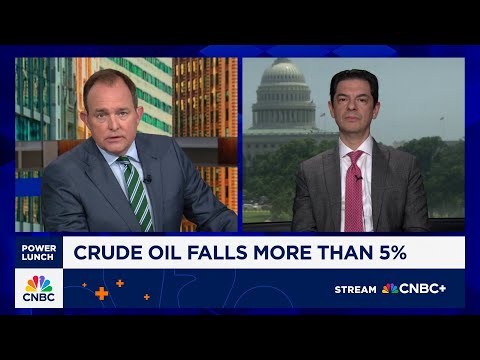
What cooling Iranian-Israeli tensions mean for oil prices
Yahoo Finance· 2025-06-24 23:04
US Oil Production & Geopolitical Impact - US oil production has nearly tripled in the last 15 years, driven by the fracking boom, with about two-thirds of US crude oil production attributed to fracking [3][4] - Increased US oil production has shifted the country from reliance on Middle East oil imports to a major exporter, providing geopolitical leverage [1] - Analysts suggest the US economy is more insulated from oil price shocks, potentially giving the President more leverage, although Federal Reserve Chair Jerome Pal noted limits to this buffer [5] Oil Price Dynamics & Market Reaction - Oil prices initially spiked due to concerns about supply risks in the Middle East, particularly around the Strait of Hormuz, but subsequently declined as ceasefire headlines reduced those concerns [12][13] - WTI crude oil prices experienced a drop of more than 5%, falling back to $64.95 [12] - The market recalibrated its assessment of supply risks, leading to the unwinding of upside tail hedging positions [13][14] - The fundamental picture in crude oil appears fragile and potentially oversupplied in the second half of 2025 [14] Energy Stocks & Investment Considerations - Energy stocks, as tracked by the XLE ETF, have shown flat performance year-to-date, despite outperforming underlying oil prices [9] - Oil companies face a tricky situation, balancing the desire to drill more with concerns about over-drilling and potential profit cuts if oil prices decline [10] - CIBC Private Wealth manages $100 billion in assets [12] US Production Outlook - Meaningful pickup in US oil production is unlikely unless crude prices are significantly higher than the current strip price of around $65 [19][20] - US producers are unlikely to increase capital expenditure (capex) and crude production at current price levels, considering OPEC+ is bringing more barrels into the market and recent price volatility [20][21] - Rig counts have been falling precipitously over the past three months, indicating a cautious approach by US producers who prioritize shoring up their balance sheets [23]


Iran-Israel worries about cessation of oil flows were overstated: CSIS' Clay Seigle
CNBC Television· 2025-06-24 18:43
Joining us now from the strategic for center for strategic and international studies, senior fellow for energy security, Clay Seagull. Was that was that an overstatement, Clay, to say that what we just showed our viewers, which is a bunch of red arrows, each one representing, by the way, a ship, the number of ships in that body of water is probably going to determine the path of oil and natural gas prices. Hey guys, good afternoon.Good to be with you. I think that the illustration that you showed basically ...
US luxury watch reseller sees tariffs pushing up prices
Bloomberg Television· 2025-06-20 16:51
Market Trends & Tariff Impact - US watch purchases surged in April and May due to tariff concerns [1] - Primary brands are throttling supply to the US market due to tariffs, leading to price increases [1] - The market is in an uncertain state as prices adjust to the speculative tariff environment [2] - A pricing correction occurred after June 2022, with watches previously valued 40% higher [3] - The market is seeing prices creep back up due to the current tariff environment [4] Valuation & Demand - Demand for watches remains strong [2] - Many Rolex watches are still trading at double retail prices [3] - Watch valuations, while still high, have decreased from the post-pandemic boom [3][4] - The market remains frothy with massive multiples [4]

Iran Won't Close Strait of Hormuz, Schork Says
Bloomberg Television· 2025-06-20 14:04
LISA: THANK YOU SO MUCH. JOINING US IS STEPHEN SHORCK. HOW LONG DO YOU THINK THAT THEY WILL LAST.IT WILL DEPEND ON FURTHER ESCALATION AND HOW LONG THE HOSTILITIES. WE ARE LOOKING AT A SITUATION OF A WAIT AND SEE. THE MARKET HAS PRICED IN GREATER VOLATILITY.WHAT WE SAW BEFORE LAST THURSDAY WAS A MARKET SWITCHING INTO THE BRENT AND WTI BEGINNING IN 2026 HAD SWITCHED TO A MARKET WHERE PRICES FOR JANUARY WERE CHEAPER THAN FEBRUARY AND SO FORTH. THIS IS A CLASSIC FUNDAMENTAL TELLTALE THAT THE MARKET IS PRICING I ...

Crypto EXPERT Explains How Bitcoin Can Hit $200k in 2025 (FULL BREAKDOWN)
Altcoin Daily· 2025-06-20 00:09
Bitcoin Price Analysis and Prediction - Bitcoin price is determined by supply and demand, with mathematically set supply [2][7] - Current price hovering around $100,000 due to behavioral factors and selling pressure from retail investors and estates like Mount Gaus and FTX [3][11][12][13] - Bitwise predicts Bitcoin could reach $200,000 by the end of the year, based on the expectation of exhausting sellers at $100,000 [14] Supply and Demand Dynamics - Bitcoin network will produce approximately 164,000 new Bitcoin this year [6] - Year-to-date through March 6, 57,000 new Bitcoin were produced, with ETFs buying all of it and corporations buying 3x that amount; governments also bought about 40,000 Bitcoin [8] - Structural mismatch exists between demand and supply, with new demand sources buying more than 100% of the supply [9] Altcoin News and Developments - Elastos debuts BTCD, a Bitcoin-backed stable coin, overcollateralized by 160-200% of BTCD's value in Bitcoin [15][16] - Ford Motor Company is exploring Cardano for legal data storage and advisory role [18][19] - Internet Computer (ICP) leads in development activity, surpassing ETH and ADA [20][21] Market Trends and Future Outlook - Shift in crypto demand from retail to institutions and governments [22] - Focus on projects with institutional appeal, such as DeFi, blue-chip projects, and stable coins [22] - Expectation that 95% of altcoins will fail, but those with product-market fit will succeed [23]

4 tips to save money at the grocery store as food prices rise
Yahoo Finance· 2025-06-11 19:11
Inflation and Pricing Trends - Food at home index increased by 03% in May, contrasting with a decrease of 04% in April [1] - Supply and demand issues, rather than tariffs, are significant contributors to cost increases, particularly concerning herd sizes which are at a 40-50 year low [4] - Increased fuel, labor, and energy prices are putting pressure on suppliers [17] Tariff Impact - Tariffs are impacting small suppliers, with a 10% tariff on bananas being split between the importer and the company, each absorbing 5% [7] - Specific tariffed items include bananas, pineapples, wines, and champagne from Europe [6][7] - Some products like avocados and salmon are not subject to tariffs [7] Consumer Behavior and Savings - Customers are generally feeling confident, and the company has not yet raised prices due to tariffs [3] - The company avoids raising prices because even a small increase (e g, from $499 to $509) can decrease sales [13] - Customers can save by checking specials, using apps, and trying private label products, which can offer savings of around 20% [14][15] - Sampling demos in stores can double or triple sales of an item [16] Local Produce and Supply - Local produce and fruits/vegetables are currently in season, providing good opportunities [9] - The US relies on imports for tropical fruits like pineapples and bananas due to limited domestic growing regions [11][9] - Lobster prices have decreased in the US due to high tariffs on US exports to China, resulting in ample domestic supply [8] Food Recalls - Food recalls are unpredictable and require quick reaction to clear shelves and notify customers [12]

研客专栏 | 商品:六月份的几个交易主题
对冲研投· 2025-06-11 10:47
Group 1: Coal Market Insights - The coal market is currently experiencing a seasonal demand window, with daily consumption at 4.85 million tons as of June 5, showing a week-on-week increase of 7.5% [1] - The inventory available for use is at 24.4 days, down by 1.6 days week-on-week, indicating potential supply constraints [1] - The price of Qinhuangdao port thermal coal is at 609 RMB/ton, a slight decrease of 0.3% [1] - There is a concern about the possibility of a weak peak season due to increased rainfall in the Yangtze River basin, which could enhance hydropower output [1][12] Group 2: U.S.-China Trade Relations - The upcoming U.S.-China economic consultation mechanism meeting from June 8 to 13 is crucial for assessing future trade dynamics, particularly regarding the 10% baseline tariff and semiconductor export restrictions [2][8] - The sensitivity of the commodity market to these discussions is high, especially for shipping and crude oil sectors [2][8] - The potential for a thaw in U.S.-China relations could lead to a rebound in previously declining commodities such as energy and chemicals [8] Group 3: U.S. Economic Indicators - The U.S. non-farm payroll data for May showed an increase of 139,000 jobs, slightly above the expected 130,000, while the unemployment rate remained steady at 4.2% [9][10] - Wage growth is at 3.9% year-on-year, indicating sustained consumer strength, but the overall economic outlook remains cautious due to downward revisions of previous employment data [9][10] - The interplay between rising import prices and wage growth may limit the Federal Reserve's monetary policy flexibility, impacting both equity and commodity markets [10][11] Group 4: Agricultural Products - The agricultural sector is witnessing independent pricing dynamics, with pork prices exceeding 14 RMB/kg and Brazilian soybean prices rebounding [3][16] - The soybean market is currently in a critical growth season, with no immediate weather threats in the U.S. Midwest, suggesting limited upward pressure on prices [16] - The recent performance of soybean meal is driven by rising CNF prices from Brazil, supported by speculative buying from domestic oil mills [16] Group 5: Precious Metals - Silver is positioned for potential gains due to its dual industrial and monetary attributes, with supply constraints and demand from sectors like photovoltaics and electronics [3] - The gold-silver ratio may continue to improve, but fiscal risks remain unresolved, keeping gold as a primary safe haven [3]

摩根大通:全球大宗商品一周回顾
摩根· 2025-06-10 07:30
Investment Rating - The report maintains a firm floor for Brent crude prices in the range of $55-60 and WTI prices in the range of $50-55 [5] Core Insights - Global oil demand increased by 400 thousand barrels per day (kbd) in May, averaging 103.6 million barrels per day (mbd), although this was 250 kbd below expectations [5] - Total liquid inventories globally built by 10 million barrels (mb) in May, with crude oil stocks rising by 3 mb and oil product inventories increasing by 7 mb [5] - The report anticipates a 2.6 mbd surplus in crude oil by the fourth quarter of 2025, driven by rising OECD inventories and a flattening crude curve [5] Oil Market Analysis - Front-month crude prices remain resilient despite accelerated OPEC supply hikes [5] - Five conditions are identified for crude prices to reflect year-end weakness, with expectations that only two will occur: a surge in OECD inventories and a flattening crude curve [5] - Limited potential for run increases due to refinery closures in the US and Europe, capacity constraints in Russia, and export restrictions in China [5] Agricultural Market Insights - The USDA's June 12 WASDE report is viewed as a major bullish event risk for CBOT Corn prices, with a significant increase in US corn export targets [6] - US wheat export sales remain competitive, prompting an increase in old crop US wheat exports [6] - A tighter US cotton balance is expected due to rising export demand [6] Natural Gas Market Dynamics - The European natural gas market is influenced by supply factors following the decline in Russian pipeline flows, with a focus on demand dynamics [7] - The report introduces a European natural gas demand and storage tracker to monitor weekly demand and storage dynamics in key regions [7] LNG Trade Forecast - Global LNG trade in May 2025 reached 47.4 billion cubic meters (Bcm), with a year-to-date volume of 244.8 Bcm, reflecting a 3.4% year-over-year increase [8] - The forecast anticipates a growth of around 5% in global LNG trade for the full year 2025, reaching 589 Bcm [8] Commodity Market Positioning - The estimated value of global commodity market open interest declined by 3% week-over-week, driven by outflows in the gold market and weakness in energy prices [9] - Cumulative flows for 2025 have returned to 10-year average levels [9] Rig Activity Trends - The downward trend in US rig activity continues, with a decrease of nine oil rigs this week, particularly in the Permian and Eagle Ford basins [10] - The pace of rig attrition in the Permian is surpassing earlier projections, leading to a downward revision of 2025 Permian crude and condensate output [10] Price Forecasts - The report provides quarterly and annual price forecasts for various commodities, including WTI and Brent crude, natural gas, base metals, and precious metals [13]
摩根大通:全球大宗商品一周动态
摩根· 2025-06-04 01:50
Investment Rating - The report does not explicitly provide an investment rating for the commodities sector, but it discusses various market dynamics and price expectations for oil and other commodities. Core Insights - Global oil inventories are increasing, yet prices remain stable, with market opinions divided on whether current oil prices are too low or too high. Prices are expected to remain within current ranges before easing into the high $50s by year-end [3][6] - A global oil surplus has widened to 2.2 million barrels per day (mbd), likely necessitating a price adjustment to prompt a supply-side response and restore balance [3][6] - Despite supply pressures, three strong market forces are providing a firm price floor in the $55-60 Brent ($50-55 WTI) range [3][6] - Most OPEC members, excluding Saudi Arabia, are producing at or near maximum capacity following a price hike in July [3][6] - The U.S. administration may begin repurchasing oil for the Strategic Petroleum Reserve (SPR) as early as August [3][6] - U.S. shale wellhead breakeven prices are estimated at around $47 WTI, assuming zero return [3][6] Oil Demand & Inventory Tracker - Global oil demand improved from the previous week, driven by a rebound in U.S. oil consumption, tracking approximately 400 thousand barrels per day (kbd) monthly expansion, yet remains 250 kbd below expectations [10] - Total liquid inventories globally edged up slightly, with crude oil stocks falling by 1 million barrels while oil product inventories increased by 2 million barrels [10] - Month-to-date, global liquid inventories have risen by 63 million barrels, with crude oil stocks up by 67 million barrels [10] Commodity Market Positioning - The estimated value of global commodity market open interest increased by 2.5% week-over-week (WOW) to $1.46 trillion, driven by inflows and rising prices across precious metals and crude oil [9] - Contract-based inflows reached $20 billion WOW, marking the highest aggregate inflows for 2025 at $90 billion year-to-date, surpassing 10-year average levels [9] Price Forecasts - WTI Crude prices are forecasted to average $57 per barrel in Q4 2025, while Brent Crude is expected to average $61 per barrel in the same period [12] - Platinum prices are projected to rise to an average of $1,200 per ounce in Q4 2025 and reach $1,300 per ounce by Q2 2026 [11]

You Need to Pay Attention to the Bond Markets
Principles by Ray Dalio· 2025-05-21 19:55
Bond Market Fundamentals - The bond market serves as the foundation for all markets, acting as the backbone [1] - It establishes the risk-free interest rate, influencing all asset returns [1] - A breakdown in the bond market's supply-demand balance leads to rising long rates relative to short rates and currency depreciation [1] - Gold prices increase due to movement away from the bond market caused by supply-demand imbalances [2] Central Bank Dilemma - Supply-demand imbalances in the bond market pressure central banks [2] - Central banks face a choice between allowing interest rates to rise, negatively impacting markets and the economy, or printing money to buy bonds [3] - Printing money to meet bond demand creates inflationary pressures [3]