
AI bubble

Search documents
Micron: Why The Stock's Valuation Suddenly Looks Cheaper? (Rating Upgrade)
Seeking Alpha· 2025-12-11 15:46
Core Viewpoint - Micron's stock has doubled in the past three months, raising questions about its sudden popularity despite concerns regarding the AI bubble [1] Company Performance - Micron's stock performance indicates a significant increase, with a doubling in value over a three-month period [1] Market Context - The rise in Micron's stock comes amid growing concerns about the sustainability of the AI sector, suggesting a potential disconnect between stock performance and underlying market fundamentals [1]



X @Bloomberg
Bloomberg· 2025-12-11 10:32
The quick sentiment reversal in US stocks on Oracle's earnings underscores how stubbornly the fears of an AI bubble are weighing on investor minds https://t.co/uk1tbFkwTv ...
Crypto has been collapsing. It could get even worse
Yahoo Finance· 2025-12-11 10:00
Core Insights - The cryptocurrency market is experiencing a significant downturn, with Bitcoin dropping 25% since early October and Ethereum down nearly one-third, leading to a total market capitalization loss of over $1 trillion [2][3]. Market Conditions - The current state of the cryptocurrency market is classified as a bear market, with concerns that it may evolve into a "crypto winter," characterized by prolonged price declines and a loss of confidence in the asset class [3][4]. - The downturn was catalyzed by a "flash crash" on October 10, triggered by President Trump's tariff threats, which led to a rapid sell-off of risky assets, including cryptocurrencies [5][6]. Trading Dynamics - The highly-leveraged positions of crypto traders have exacerbated the market's volatility, resulting in over 1.6 million liquidations and a record $19 billion in liquidated positions on the day of the crash [6]. - Following the liquidations, orderbooks have thinned, negatively impacting market makers and contributing to the ongoing struggle for market momentum [7]. Investor Sentiment - The crash coincided with diminishing hype around stablecoin legislation and rising uncertainties regarding tariffs, interest rates, and potential AI market bubbles, making cryptocurrencies less attractive to investors during stock market volatility [8].
Why former CEA chair Jason Furman says he would vote against a rate cut
Youtube· 2025-12-10 18:47
Core Viewpoint - The market anticipates a third quarter point cut in the last Federal Reserve meeting of the year, with odds at 91%, but there is a belief that this easing is a mistake due to inflation remaining above target [1]. Group 1: Inflation and Fiscal Policy - Inflation was largely driven by fiscal policies in 2021 and 2022, and it continues to be influenced by ongoing large budget deficits [3][7]. - The budget deficit is expected to increase over the next year, necessitating the Fed to counteract expansionary demand policies more aggressively than it did in 2021 [4]. - The current inflation rate is a percentage point above the target, while the unemployment rate is only slightly above its target, indicating a need for the Fed to maintain focus on inflation [7][8]. Group 2: Interest Rates and Economic Conditions - There is a call for higher long-term interest rates to counteract inflation and the AI bubble, which would require a shift in market expectations regarding short-term rate cuts [4][5]. - The government must reduce its budget deficit to facilitate lower interest rates for consumers and small businesses [6]. - Expansionary fiscal policy combined with rising asset prices creates a demand-heavy environment, complicating the inflation situation [7]. Group 3: Consumer Sentiment and Government Actions - Despite lower gas prices, consumer sentiment remains poor, highlighting a disconnect between economic indicators and public perception [9]. - The President has made claims about combating inflation and improving affordability, but there are suggestions that reducing tariffs could be a more effective tool for making goods more affordable [10][11]. - The current trade attitude is viewed as detrimental, with calls for the government to reverse tariffs that contribute to rising goods prices [12].
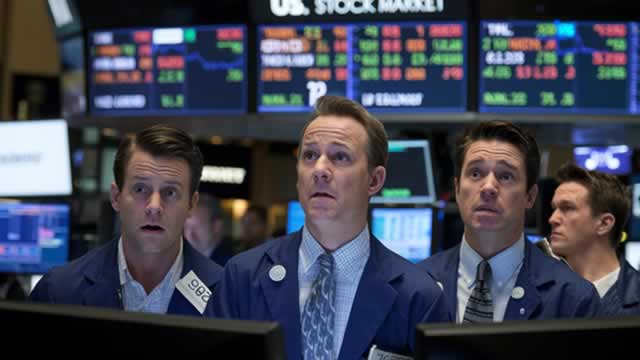
Why this expert thinks the AI bubble is "ridiculous," how interest rates impact retirement savings
Yahoo Finance· 2025-12-10 18:06
Market Catalysts host Julie Hyman takes on the day's biggest market stories on December 10, 2025. Athene USA co-president and Athene Holding COO, Michael Downing, speaks with Yahoo Finance executive editor Brian Sozzi about how investors can close the savings gap while continuing to save for retirement. Athene USA is a subsidiary of Yahoo Finance's parent company, Apollo Global Management. Humilis Investment Strategies CEO and Chief Investment Officer Brian Belski also comes on to talk about why he finds al ...

Nvidia Just Invested $2B in Synopsys—Any Value Here?
247Wallst· 2025-12-10 15:37
Core Viewpoint - Recent dealmaking in the AI sector has intensified concerns regarding an AI bubble, reflecting a growing skepticism among some investors [1] Group 1 - The current wave of dealmaking in the AI industry is characterized as circular, indicating a potential lack of genuine innovation and value creation [1] - The fears surrounding the AI bubble have escalated, suggesting that investors are increasingly wary of overvaluation in the sector [1]


AI泡沫與1990市場崩盤一致?拋售潮還沒來?傳奇技術分析師預測未來驚人走勢 ...【邦妮區塊鏈】
邦妮區塊鏈 Bonnie Blockchain· 2025-12-10 11:18
how this whole pattern is almost identical to what happened in the 1990s. >> You know, right now it feels like they're two opposite forces. One hand, people are talking about this AI bubble, potential crypto bare market.>> I've really enjoyed AI as far as whether it's a bubble or not. I mean, the thing about bubbles is even if you know, even if you knew for a fact we were in a bubble, it doesn't necessarily tell you how do you make money in the bubble. Because bubbles can last for years before they fully un ...

Hassett likely next Fed chair, but most think Trump should nominate someone else, CNBC Fed survey shows
CNBC· 2025-12-09 22:46
watch nowWhile markets expect Kevin Hassett to be named the next Federal Reserve chair, he is pointedly not the choice of respondents to the CNBC Fed Survey.The December survey shows 84% believe President Donald Trump will tap Hassett, director of the National Economic Council, to head the central bank. But only 11% think that's what the president should do. Fed Governor Christopher Waller is the favored pick of 47% of respondents, followed by Kevin Warsh at 23%. But only 5% of respondents think Trump will ...
'The Money Is Very, Very Clear:' BlackRock Says The Biggest Winners Of AI Revolution Are Hidden In Plain Sight — And Investors Are Missing Them
Yahoo Finance· 2025-12-09 22:30
Core Insights - The current wave of capital investment in AI infrastructure is expected to continue growing, with significant benefits for chipmakers and suppliers [2][4][5] Group 1: AI Capital Expenditure Trends - BlackRock's chief investment strategist predicts that AI-driven capital spending is accelerating, with major tech firms competing aggressively for market dominance [2][3] - The firm estimates that global AI capital expenditure could reach between $5 trillion to $8 trillion by 2030, with the U.S. leading this growth [5] Group 2: Beneficiaries of AI Investment - Suppliers of AI infrastructure, including chipmakers, energy producers, and copper-wire manufacturers, are identified as primary beneficiaries of the ongoing capital influx [2][4] - The hyperscalers are increasing their spending aggressively, driven by the belief that anything less than market leadership could jeopardize their positions [4] Group 3: Future Outlook and Execution - The next phase of AI investment will focus on execution capabilities rather than just spending, with success depending on infrastructure readiness and project management [7] - Concerns about a potential AI bubble persist, particularly regarding whether demand will justify the sector's high valuations [6]

Oracle set to report earnings as Wall Street looks for cracks in the AI bubble
Yahoo Finance· 2025-12-09 20:04
Oracle (ORCL) is set to report quarterly earnings after the bell on Wednesday. Wall Street is closely watching the cloud firm's results for any signs of cracks in the AI bubble. The fast-growing AI player is expected to report earnings per share of $1.64 for its fiscal second quarter, according to consensus estimates of analysts tracked by Bloomberg, up from $1.47 the previous year. Oracle is projected to report revenue of $16.21 billion for the period, up 15% from the year-ago quarter. And the tech firm ...
