中式审美

Search documents
130万元,全尺寸行政豪华SUV仰望U8L鼎世版开启预售
Qi Lu Wan Bao· 2025-07-31 10:37
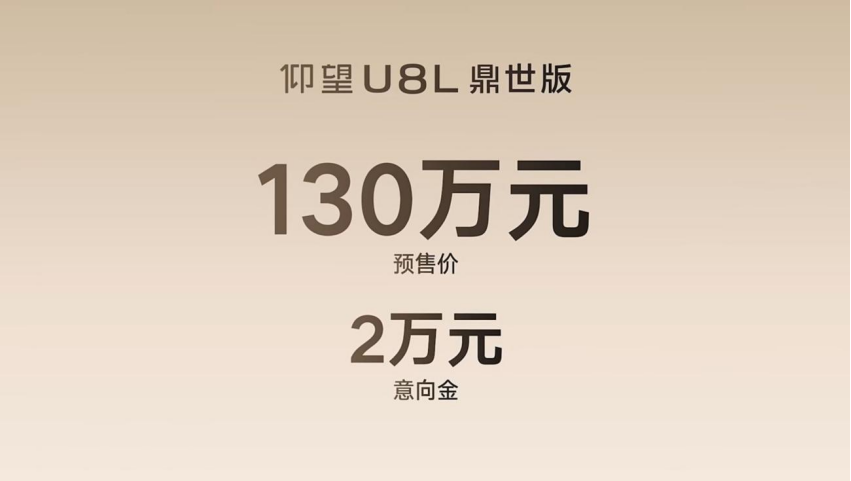
Core Viewpoint - The launch of the Yangwang U8L Ding Shi Edition marks a significant advancement in the luxury SUV segment, combining Eastern design philosophy with cutting-edge technology, and is positioned as a benchmark for full-size luxury SUVs [1][19]. Design and Aesthetics - The Yangwang U8L Ding Shi Edition draws inspiration from Chinese "Ding" culture, translating this ancient symbol into modern design, featuring a distinctive front with 99 diamond-shaped light beads [3][7]. - The vehicle's exterior showcases a robust and elegant design with a length of 5400mm, width of 2049mm, and height of 1921mm, emphasizing a commanding presence [7]. - Interior design reflects the beauty of symmetry and spaciousness, with a total cabin volume of 5.3m³, offering a luxurious experience [8][12]. Interior Features - The U8L Ding Shi Edition offers high-end materials, including true wood accents and top-grade Nappa leather, crafted through meticulous processes to enhance tactile quality [10]. - The seating configuration includes a 2+2+2 layout with extensive luxury features such as 14-point massage in the front seats and 18-point massage in the second row, providing a first-class travel experience [12][14]. Technology and Performance - The vehicle is built on the Yisifang technology platform and features the Yun Nian-P intelligent hydraulic body control system, enhancing driving performance and comfort [15][17]. - It boasts a comprehensive range of safety features, including emergency buoyancy and high-speed blowout stability, setting a new standard in the luxury SUV safety domain [17]. Market Positioning - The Yangwang U8L Ding Shi Edition is priced at 1.3 million yuan, with a reservation deposit of 20,000 yuan, and offers promotional benefits for early adopters [1][19]. - The vehicle is now available for experience at Yangwang centers and showrooms across the country, inviting potential customers to engage with this new luxury offering [19].


六个聊斋故事一次看爽!这部动画把《聂小倩》《画皮》全拍绝了
Bei Jing Ri Bao Ke Hu Duan· 2025-07-08 14:47
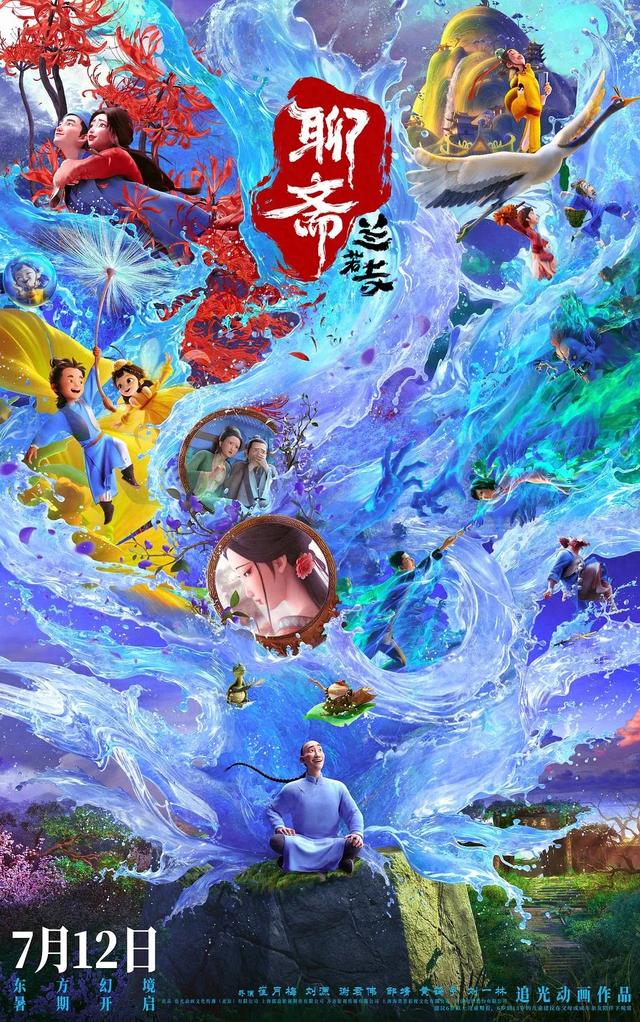
Core Viewpoint - The animated film "Liao Zhai: Lan Ruo Temple," produced by Light Chaser Animation, will be released on July 12, showcasing six stories that explore complex emotions and the essence of Chinese culture [1][3]. Group 1: Film Overview - The film connects six stories across different eras, breaking through in narrative, character development, artistic style, and audiovisual experience [3]. - "Lan Ruo Temple" serves as the central location for all stories, symbolizing the essence of Chinese culture and its transmission through generations [15]. Group 2: Story Selection and Themes - The creative team selected well-known stories from "Liao Zhai Zhi Yi," including "Nie Xiaoqian," "Hua Pi," and "Lao Shan Dao Shi," to present the unique charm of the "Liao Zhai world" [5][7]. - The stories aim to reflect themes of truth, goodness, and beauty, with character arcs designed to resonate emotionally with the audience [9][11]. Group 3: Artistic and Technical Aspects - The film employs various visual styles for each story, enhancing the storytelling experience and showcasing the artistic richness of the original tales [23]. - Advanced CG technology is utilized to create unique visual effects, such as the sticky texture in "Lao Shan Dao Shi," which enhances the immersive experience [23][30]. Group 4: Character Design and Cultural References - Characters are designed with inspiration from traditional Chinese art, incorporating elements from ancient paintings and opera to achieve a classical aesthetic [28]. - The design of the character Pu Songling reflects his optimistic personality, with features that symbolize his storytelling prowess [21].
文物里的色彩融入年轻人的日常穿搭 传统的,正是时尚的(文化中国行·这些美 很中国)
Ren Min Ri Bao· 2025-06-16 21:57
Core Perspective - The article highlights how young people are integrating traditional Chinese colors from cultural relics into their daily fashion and aesthetics, thereby revitalizing and expressing Chinese traditional culture in contemporary life [1][4]. Group 1: Cultural Integration - Young individuals are inspired by cultural relics to create makeup and fashion looks, such as using the color palette from a Qing Dynasty artifact to design a makeup style [2]. - The blending of traditional colors with modern fashion allows for a "fashion dialogue" that transcends history, redefining contemporary aesthetics [2][4]. - The rich historical context of traditional colors reflects ancient Chinese philosophies and aesthetics, showcasing a deep cultural heritage [2][3]. Group 2: Modern Applications - Young people are increasingly using traditional colors in various aspects of their lives, including home decor and personal accessories, demonstrating a trend towards integrating historical aesthetics into modern living [4]. - The emergence of a new audience for traditional color language indicates a growing appreciation for the poetic names and meanings behind these colors, moving away from contemporary color trends [4]. - The article emphasizes that traditional colors, which have survived through centuries, are now being embraced by Generation Z, illustrating that what is traditional can also be fashionable [4].
文博日历丨“雍正”款 vs“乾隆”款,一起来玩找不同
Yang Shi Xin Wen· 2025-06-11 01:48
Group 1 - The article discusses the aesthetic differences and similarities between the Yongzheng and Qianlong styles, particularly through the comparison of their blue-and-white dragon plates [2][3] - The Qianlong plate features a blue-and-white wave pattern on the inner rim, while the Yongzheng plate has a white wave pattern [7] - The Qianlong plate has more flames depicted around the eight red dragons compared to the more restrained design of the Yongzheng plate [9][10] Group 2 - The Yongzheng plate is marked with "大清雍正年制" in regular script, while the Qianlong plate is marked with "大清乾隆年制" in seal script without a double circle [12][13] - The article highlights the differences in the glaze, blue color, and decorative styles that can help distinguish between the two styles [14] - The blue-and-red color combination is noted as a high-level aesthetic, with the Yongzheng dragon plate being considered a significant piece among the imperial wares [16][21] Group 3 - The article explains the technique of blue-and-red decoration, which combines underglaze blue and overglaze red, originating in the Ming Dynasty and becoming prominent during the Qing Dynasty [25][28] - The Yongzheng period is noted for its innovations in porcelain, with a focus on the beauty of form and the spirit of decorative patterns [28][32] - The Yongzheng blue-and-white dragon plate is characterized by its fine white body and bright blue color, showcasing a rich contrast and a strong three-dimensional effect [32]