仰韶文化

Search documents
西吴壁遗址2022—2024年仰韶文化遗存发掘资料公布
Yang Shi Xin Wen· 2025-07-16 06:04
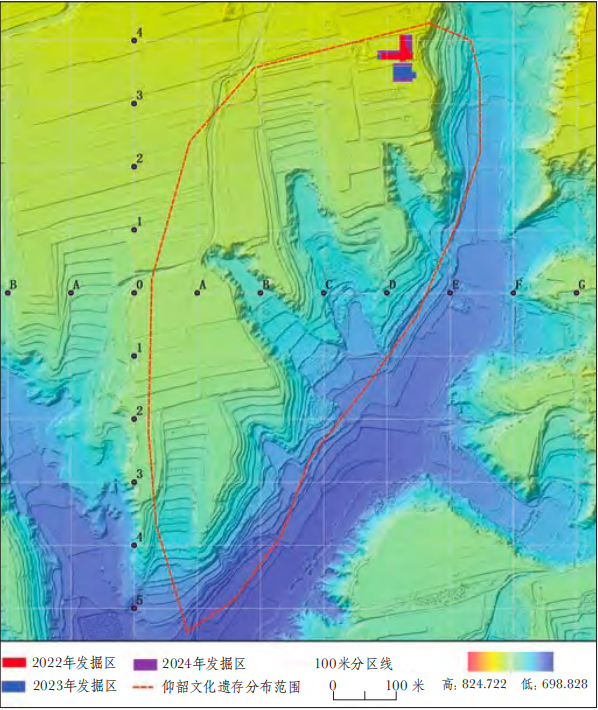
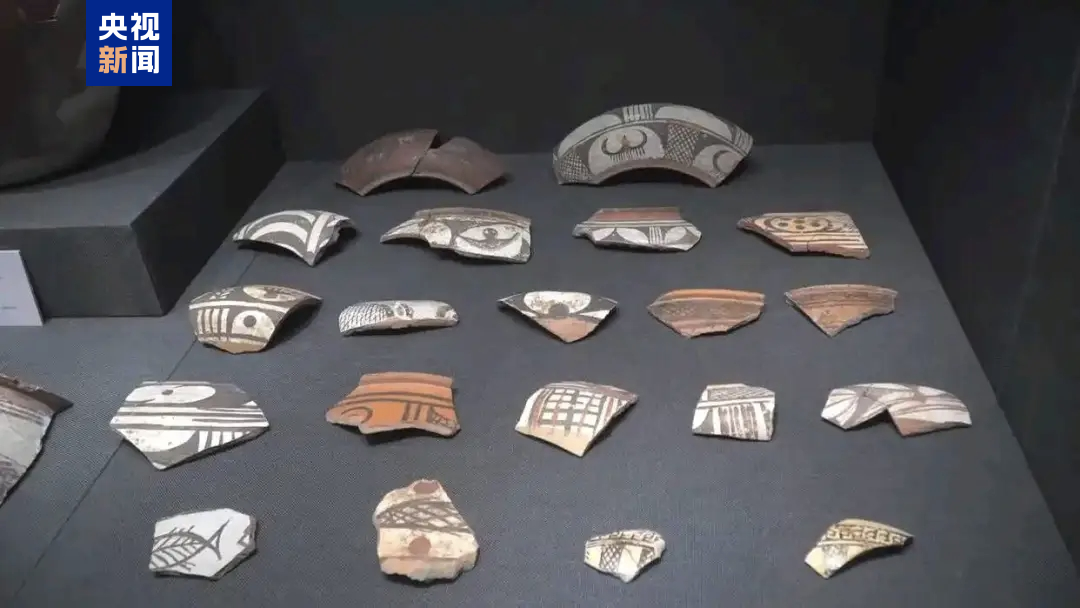
Core Insights - The joint archaeological team, consisting of the National Museum of China, Shanxi Provincial Institute of Archaeology, and the Yuncheng Cultural Relics Protection Center, has discovered rich prehistoric and Xia, Shang, and Zhou period relics at the Xiwubi site from 2022 to 2024 [1][5] - The Xiwubi site is significant as it serves as a major transportation hub connecting the Jin South and Yu West geographical units, with an area of approximately 300,000 square meters, making it one of the largest regional centers of the same period in Jin South and even the Central Plains [5] Summary by Sections Archaeological Findings - The Xiwubi site has yielded various types of relics from the Yangshao culture, including degraded heavy-lipped pointed bottom bottles, trumpet-shaped bottles, round-bellied bowls, and other pottery types, which are consistent with the "Xiwang type" of the late Yangshao culture in the Yu West and Jin South regions [2] - The distribution of Yangshao cultural relics at the Xiwubi site has been updated through detailed investigations since 2018, confirming the range of relics extends to the east, south, and west to the gully, covering an area of no less than 300,000 square meters [1][5] Cultural Significance - The cultural characteristics of the late Yangshao relics at the Xiwubi site are found to be consistent with those previously discovered in the Yu West and Jin South regions, and they are closer to the contemporaneous relics found in the Yuanqu Basin [5] - These findings fill a significant academic gap and provide essential material for further research into the cultural landscape of the Yangshao culture in the Jin South and Central Plains, as well as the decline of the Yangshao culture during the Xiwang type phase influenced by environmental changes [5]

【渭南】富平发现史前红陶宽沿彩陶盆
Shan Xi Ri Bao· 2025-07-13 00:03
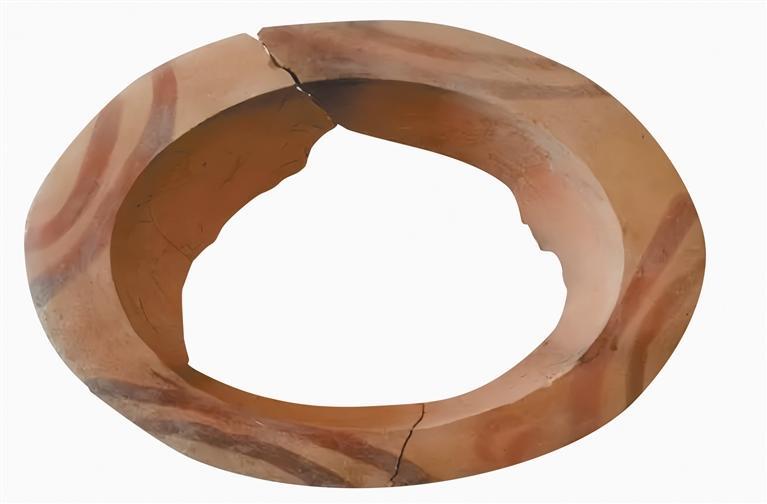
Group 1 - A prehistoric red pottery basin with a diameter of 41 cm was discovered by the archaeological team in Weinan City during the fourth national cultural relics census, providing valuable evidence for understanding the prehistoric cultural distribution in the region [2] - The red pottery basin features polished surfaces and is decorated with four sets of double arc lines, indicating its significance in the context of the Yangshao culture, particularly the Miao Digo type of the middle to late period [2] - The discovery site of the basin is part of a larger archaeological site that spans approximately 100 meters in length and width, with evidence of pottery shards and clear gray pits found at the cliff edge [2] Group 2 - In addition to the red pottery basin, over 100 new Paleolithic sites have been discovered in Weinan City, filling gaps in the understanding of the Paleolithic era in various counties and districts [3] - These new sites are primarily located in the Fuping area of the Weibei Shichuan River basin, as well as in several other regions including the northern Luo River basin and the right bank of the Yellow River [3] - The series of important new discoveries is enhancing the academic community's understanding of the survival history and cultural characteristics of ancient humans in the region [3]
探访“星空下的村落”:穿越数千年的“文明折叠”
Zhong Guo Xin Wen Wang· 2025-06-16 01:42
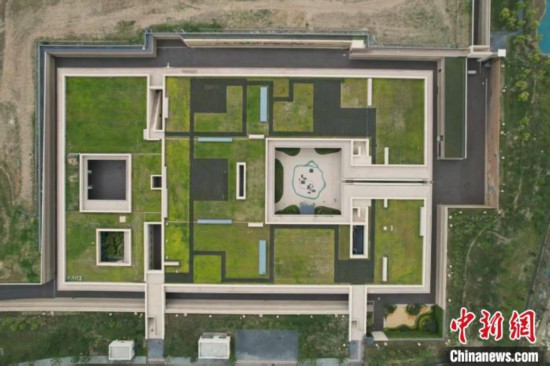
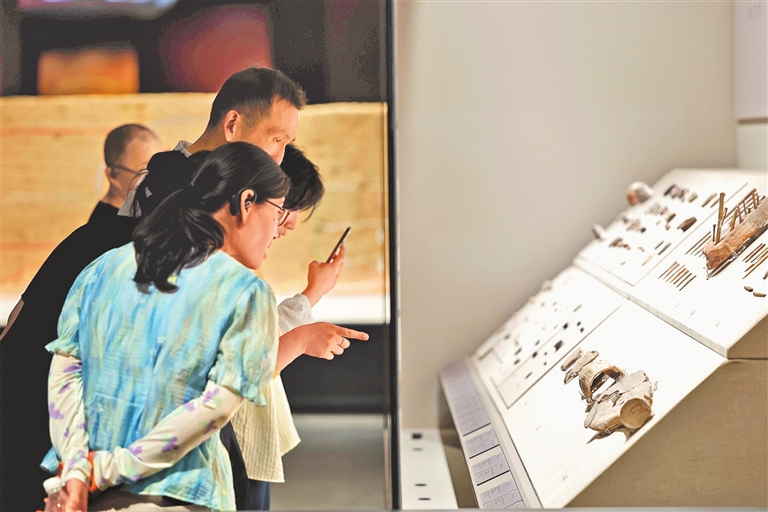
Core Points - The Dahu Village Archaeological Site Museum in Zhengzhou, Henan Province, has opened its new facility, coinciding with the announcement of Dahu Village as a national archaeological site park by the National Cultural Heritage Administration [1][2] - The site dates back 6,800 to 3,500 years and spans multiple cultural periods, earning the nickname "Village Under the Stars" due to its focus on celestial exploration [1][2] Group 1: Museum Features - The new museum features a sunken design that mimics an archaeological site, with a green roof covering approximately 14,000 square meters to blend with the landscape and preserve the cultural layers beneath [2][3] - The museum incorporates a water curtain wall to recreate the historical landscape of the Yellow River, enhancing the visitor experience [2] - The museum's collection includes over 1,600 artifacts from the Yangshao culture, with more than 1,100 items being displayed for the first time [8] Group 2: Security and Preservation - The museum is equipped with advanced security features, including C-level anti-damage doors and a multi-layered protection system to safeguard artifacts from theft, fire, and water damage [5] - Structural designs include vertical cavity double walls to prevent leakage and distribute soil pressure, ensuring the safety of the archaeological site [3] Group 3: Visitor Experience - The museum offers immersive experiences using digital technology, allowing visitors to engage in activities like fishing, pottery making, and harvesting, enhancing educational engagement [9][10] - Interactive areas enable children to participate in activities such as "restoring" broken pottery using AR technology, fostering interest in history and archaeology [9][10]
“大河村”入选国家队 河南省挂牌国家考古遗址公园增至8家
He Nan Ri Bao· 2025-06-15 00:05
Core Insights - The newly opened Dahu Village Archaeological Site Museum is part of the Dahu Village National Archaeological Park, which has been included in the latest list of national archaeological parks by the State Administration of Cultural Heritage, increasing the total number of such parks in Henan Province to eight [1][2] Group 1: Archaeological Significance - Dahu Village site is a significant archaeological site that includes elements from the Yangshao culture, Longshan culture, and the Xia and Shang dynasties, dating back 7,000 to 3,500 years [2] - The site is recognized as a "yardstick" for the Yangshao culture, showcasing the complete evolutionary context of its origin, formation, and development [2] Group 2: Cultural and Economic Impact - The Dahu Village National Archaeological Park is a demonstration project aimed at promoting ecological protection and high-quality development in the Yellow River basin, integrating site protection with environmental improvement and urban development [2] - The park features a large cultural space that combines site protection, archaeological research, cultural dissemination, and recreational activities [2] Group 3: Museum Features - The new museum will utilize various methods such as basic displays, digital exhibitions, and immersive storytelling to provide a panoramic view of the Yangshao culture and the Dahu Village site [2] - The museum aims to fill the gap in the domestic display of Yangshao culture, representing an innovative practice in the revitalization and exhibition of large archaeological sites in the province [2]
郑州大河村遗址博物馆新馆开馆
Yang Shi Xin Wen· 2025-06-14 05:36
Core Viewpoint - The Zhengzhou Dahu Village Ruins Museum's new exhibition hall opened on June 14, showcasing over 1,600 artifacts that highlight the rich cultural heritage of the Dahu Village site and the Yangshao culture, dating back 7,000 to over 5,000 years [1] Group 1: Museum Overview - The new exhibition area covers 7,292 square meters and focuses on the Dahu Village site's significance in the context of Chinese river civilization [1] - The museum is the first in China to present a panoramic view of the Yangshao culture, featuring over 2,000 artifacts from the Paleolithic era to the Xia and Shang dynasties [8] Group 2: Cultural Significance - The Dahu Village site is a key marker of the origin of Chinese civilization, showcasing the development of culture from the Yangshao and Longshan cultures to the Erlitou culture and Shang dynasty remains [1] - The site reflects the ancient inhabitants' interest in astronomy, as evidenced by their depictions of celestial bodies on pottery, earning it the nickname "the village under the stars" [1] Group 3: Archaeological Findings - The Yangshao culture period housing foundation, which is over 5,000 years old, demonstrates advanced construction techniques and is one of the best-preserved prehistoric residential sites in China [3] - The white-painted pottery basin, a prehistoric ceramic art treasure, features intricate designs and repair marks, indicating early craftsmanship similar to later pottery repair techniques [5] - The excavated double-spouted pottery vessel, adorned with parallel line patterns, symbolizes peace and friendship, possibly used during significant clan events [6]
关注2025文化和自然遗产日丨大河村遗址博物馆新馆开馆试运行 大河之滨 仰望仰韶
He Nan Ri Bao· 2025-06-13 23:30
Core Insights - The newly opened Dahu Village Archaeological Museum showcases the rich heritage of the Yangshao culture, marking a significant cultural event in China [7][10][22] - The museum features immersive exhibits and a variety of artifacts that highlight the historical significance of the Dahu Village site, which dates back over 3,500 years [8][12][23] Museum Highlights - The museum's entrance features a Yellow River cultural theme wall that presents a "3D puzzle" of the Yangshao culture's epic history [7] - The exhibition "Yangshao Impression" utilizes advanced technologies such as 3D mapping and holography to recreate the living environment and cultural practices of the Yangshao period [11] - Over 1,600 artifacts from more than 30 archaeological sites are displayed, including the notable painted double pot, which symbolizes the ceremonial practices of ancient tribes [12][13] Cultural Significance - The Dahu Village site has been excavated over 30 times since its discovery in 1964, revealing a cultural accumulation layer of up to 12.5 meters, encompassing multiple historical periods [8][9] - The artifacts reflect a blend of local and external cultural influences, showcasing the open and inclusive nature of the civilization that thrived in the region [9][10] Visitor Information - The museum operates from Tuesday to Sunday, with a capacity of 1,000 visitors per day during the trial operation phase [16] - Visitors can access the museum via public transportation or by car, with specific directions provided for convenience [18][20] Educational Initiatives - The museum aims to integrate Yangshao culture into modern life through creative products and experiences, promoting cultural appreciation among visitors [14][15]
彩陶双连壶等400余件文物回郑州大河村“省亲”
Zhong Guo Xin Wen Wang· 2025-06-11 08:18
Core Viewpoint - The Zhengzhou Dahu Village Museum is set to showcase over 400 precious artifacts, including the notable painted pottery double pot, which has significant cultural and historical value, marking a return to its place of origin [1][2]. Group 1: Artifacts and Cultural Significance - The Dahu Village site dates back 6,800 to 3,500 years and spans an area of 530,000 square meters, representing a large ancient settlement with influences from Yangshao culture, Longshan culture, and Xia-Shang culture [1]. - The painted pottery double pot, discovered in 1972, is the only connected pot of its kind from the Yangshao culture in Dahu Village and is displayed prominently in the new museum [1]. - The double pot features intricate designs, including horizontal and vertical patterns, which may symbolize the connection between two tribes [1][2]. Group 2: Museum and Exhibition Details - The new Dahu Village Museum will display over 1,600 exquisite artifacts, with more than 400 items returning to their place of origin for this exhibition [2]. - The exhibition aims to provide a comprehensive understanding of the lifestyle and cultural practices of the Dahu Village ancestors, presenting a vivid picture of life over 5,000 years ago [2].
6月14日,开馆试运行 大河村遗址博物馆新馆要来了
He Nan Ri Bao· 2025-06-10 23:54
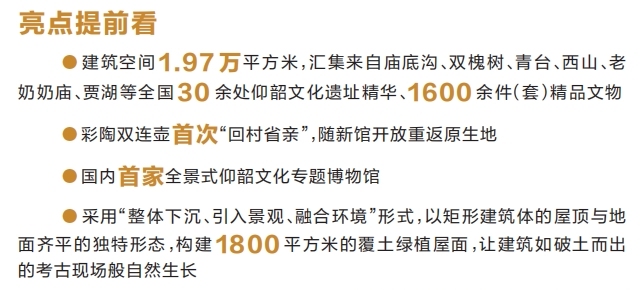
Core Insights - The newly opened Dahuacun Ruins Museum showcases over 1,600 exquisite cultural relics, providing a comprehensive view of the Yangshao culture and Chinese civilization within a 19,700 square meter space [2][10] - The museum employs a panoramic narrative approach, starting from the macro perspective of world river civilizations and focusing on the rich connotations of the Yangshao culture [3][5] - The museum integrates advanced digital technologies to create immersive experiences, enhancing educational functions and visitor engagement [8][10] Summary by Sections Museum Overview - The Dahuacun Ruins Museum is the first panoramic museum dedicated to the Yangshao culture, featuring a variety of artifacts that trace the origins of this ancient civilization [2] - The architectural design reflects the unique characteristics of the Yangshao culture, with elements such as yellow rammed earth walls and a water curtain that symbolizes the connection between ancient and modern times [2][3] Exhibition Features - The exhibition titled "Yangshao Culture: The Foundation of Huaxia Civilization" aims to recreate the living environment and activities of the Yangshao people, allowing visitors to experience the vibrancy of ancient life [3][5] - The museum's narrative is structured around eight dimensions, covering aspects such as the discovery of the site, living conditions, production methods, and cultural exchanges [5] Digital Integration - The museum utilizes cutting-edge digital technologies, including 3D interaction, mapping projection, and holographic imaging, to create engaging and interactive exhibits [8] - Special digital exhibits include "Yangshao Impression" and "Digital Archives of Yangshao Culture," which enhance the storytelling of cultural elements [8] Upcoming Events - The Dahuacun Ruins Museum is set to officially open for trial operation on June 14, with a special exhibition featuring artifacts from significant Yangshao culture sites [10]