仿生学

Search documents
仿珍珠母新材料可“隐身”能防护
Ke Ji Ri Bao· 2025-06-12 01:00
Core Viewpoint - A new biomimetic composite material inspired by nacre has been developed, showcasing unique color tunability, excellent wave transmission performance, lightweight, high strength, toughness, and outstanding impact resistance [1][2] Group 1: Material Properties - The newly developed nacre-like composite material exhibits a fracture toughness over three times that of commercial alumina ceramics and absorbs impact energy more than four times that of commercial alumina ceramics [2] - The material integrates mechanical robustness, camouflage functionality, and wave transmission capabilities, marking significant progress in multifunctional biomimetic structural materials [2] Group 2: Design Strategy - The research team introduced a dual oxide interface design strategy that enhances mechanical strength and toughness through the construction of mineral bridge structures between alumina micro-sheets [2] - The design also allows for controllable coloring by adjusting the chemical composition at the micro-sheet interfaces through solid-phase reactions [2] Group 3: Structural Inspiration - The inspiration for this research comes from the natural structure of nacre, which provides insights into achieving high mechanical strength while enabling camouflage effects in engineered materials [1][2]
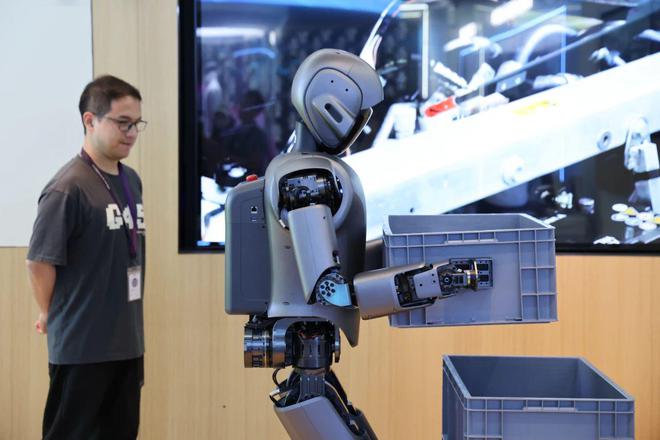
机器人的灵巧手怎样炼成
Xin Hua She· 2025-05-21 02:06
Core Insights - The development of robotic dexterous hands is crucial for integrating robots into daily life, representing a significant engineering and scientific challenge [1][3] - Current robotic hands are inspired by human anatomy but still lack the full range of dexterity and functionality found in human hands [2][3] Group 1: Current State of Dexterous Hands - Robotic dexterous hands have evolved from simple end-effectors to more complex designs capable of multi-angle and multi-task operations, such as opening bottles and handling delicate objects [2] - The integration of tactile and force sensors allows robots to perceive object characteristics like shape and temperature, enhancing their operational capabilities [2][6] Group 2: Development Challenges - Achieving a fully functional robotic hand involves overcoming several challenges, including miniaturization, agility, and cost [7][8] - Increasing the degrees of freedom in robotic hands complicates the design and requires advanced integration techniques [7] - Current limitations in response speed and control algorithms hinder the dexterity of robotic hands, necessitating improvements in sensor technology and motor responsiveness [7][8] Group 3: Future Prospects - The path to making dexterous hands commercially viable includes optimizing design for mass production and balancing performance, cost, and reliability [8] - The ongoing training and data accumulation processes are essential for enhancing the dexterity and operational efficiency of robotic hands, akin to a child's learning process [8]