传统村落保护利用

Search documents
辽宁45个村将入驻中国传统村落数字博物馆
Liao Ning Ri Bao· 2025-07-16 01:25
Group 1 - The core viewpoint emphasizes the integration of traditional villages into tourism development through a "company + villagers + investors" model, revitalizing ancient villages and enhancing local economies [1] - Xinbaozi Village has transformed 41 unique homestays and established 13 farmhouses, attracting 11 cultural and creative projects since being listed as a traditional village [1] - The province has 45 traditional villages recognized at the national level and 85 at the provincial level, with ongoing efforts to protect and utilize these cultural heritages [1] Group 2 - In 2022 and 2023, Chaoyang County and Suizhong County were selected as demonstration counties for the concentrated protection and utilization of traditional villages [2] - The demonstration project in Chaoyang County has successfully integrated agricultural and modern civilizations, improving infrastructure and enhancing residents' quality of life [2] - Future plans include establishing a multi-level protection directory, drafting management regulations, and fostering a talent pool for rural construction to ensure the sustainable development of traditional villages [2]
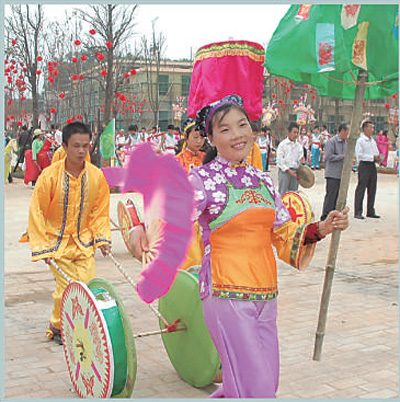
瑞金冈面车灯(答读者问·传统村落)
Ren Min Ri Bao· 2025-05-07 23:00
Core Points - The article discusses the unique craftsmanship of the Gangmian lanterns from Ruijin City, Jiangxi Province, highlighting their cultural significance and artistic value [1][2] - The Gangmian lanterns are a form of traditional Chinese folk dance lanterns, characterized by humorous performances and vibrant music, making them popular among the Hakka community [2] Summary by Sections Origin and Cultural Significance - The Gangmian lanterns originated from the family of Cai Xiang, a notable figure from the Northern Song Dynasty, with their creation linked to the historical context of the Cai family migrating to Ruijin [1] - The lanterns were initially performed by four individuals, depicting a scene of a nobleman on horseback, which evolved over time to focus solely on the lanterns [1] Craftsmanship and Unique Features - The Gangmian lanterns are distinct from other Hakka lanterns, known for their unique shapes and intricate decorations, made from bamboo, wood, and flower paper [1][2] - The production process involves eight detailed steps, including creating a wooden cross, connecting materials, and crafting decorative elements [1] Recognition and Popularity - In 2010, the Gangmian lantern-making technique was recognized as a provincial-level intangible cultural heritage in Jiangxi, underscoring its importance in local culture [2]