密态计算

Search documents
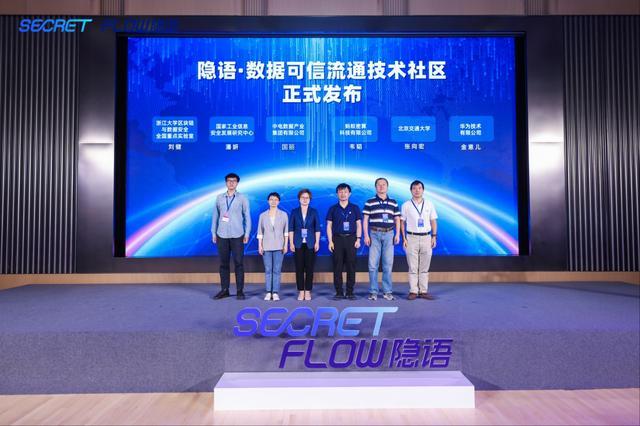
直击信任鸿沟!隐语社区升级 欲解高价值数据流通困局
Huan Qiu Wang Zi Xun· 2025-08-18 05:53
Core Insights - The article discusses the significant upgrade of the Yinyu open-source community, transitioning from a focus on privacy computing to a broader "trusted data circulation technology community" that addresses core industry pain points related to trust in data flow [1][4][9] Group 1: Industry Challenges - The core obstacle for large enterprises in data circulation is not profit motives but the risks associated with security and compliance in data external circulation [3] - The national data bureau estimates that the national data market transaction scale will exceed 160 billion yuan in 2024, with a year-on-year growth of over 30%, highlighting the challenge of bridging the trust gap in data circulation [3][4] - Current data infrastructure lacks consensus, and while enterprise-level support is advancing, public data openness is hindered by imbalances in responsibility and rights [4][5] Group 2: Technological Integration - The Yinyu community's upgrade aims to deeply integrate and reconstruct full-stack data circulation technologies, covering six major technical routes, including privacy protection computing and blockchain [4][9] - The community plans to build a "one-stop, verifiable, and interconnected" technical foundation to address the challenges faced by small and medium-sized enterprises [5][6] - The concept of "trusted data space" is crucial for ensuring secure and compliant data circulation across different entities [3][5] Group 3: Future of Data Elements - The article presents differing views on whether data transactions represent the future, with some arguing that large companies will not sell their data, as circulation does not equate to transaction [6][7] - The integration of data in supply chain finance is highlighted, where privacy computing allows data holders to output trusted results without exposing original data [6] - The emergence of artificial intelligence is seen as a new driving force for data circulation, although reliability remains a significant concern [7][8] Group 4: Open Source Ecosystem - The Yinyu community emphasizes the importance of open-source as a means to lower the application threshold for trusted data circulation technologies [8][9] - The community has linked with 20,000 developers and numerous industry partners to promote cross-domain standard building [8] - The upgrade signifies a shift from isolated breakthroughs in privacy computing to a comprehensive approach to data circulation technology [9]

2028年前将建100个!可信数据空间破解供应链金融“数据孤岛”
Hua Xia Shi Bao· 2025-05-08 08:34
Core Insights - The concept of "trusted data space" has become a hot topic in the financial industry this year, facilitating data sharing among core enterprises, suppliers, and banks to alleviate financing difficulties for small and medium-sized enterprises (SMEs) [2][3] - Traditional supply chain finance models exhibit vulnerabilities, and new technologies provide pathways to address financing challenges for SMEs, necessitating policy guidance and technological inclusivity to avoid widening the "digital divide" [2][4] Group 1: Trusted Data Space - Trusted data space serves as an infrastructure for secure data sharing among different institutions, crucial for building a unified national data market [3][4] - The core of trusted data space is to establish a technical trust system that enables efficient collaboration among data sources, processors, and users, facilitating the entire process of data value extraction, verification, and delivery [3][4] Group 2: Application in Financial Sector - The application of trusted data space in finance is evolving from customized scenarios to general solutions, allowing banks and consumer finance companies to integrate encrypted data without sharing raw data [4][5] - Financial institutions can analyze encrypted data such as accounts receivable and inventory turnover rates to assess the creditworthiness of supply chain enterprises, enabling real-time adjustments to credit limits and interest rates [4][5] Group 3: Challenges and Solutions - SMEs face high data acquisition costs, low standardization, and algorithm bias risks due to fragmented data, necessitating more resources from financial institutions for data cleaning and integration [6][7] - The solution lies in policy-driven data standardization, with government-led initiatives to establish industry data norms and encourage core enterprises to open supply chain data [6][7] Group 4: Future Developments - The National Data Bureau has issued an action plan for the development of trusted data spaces from 2024 to 2028, aiming to establish over 100 trusted data spaces to promote large-scale data circulation and sharing [6][7] - The future development of trusted data spaces will focus on urban and industry data spaces, with the goal of breaking public data supply bottlenecks and unlocking the value of data elements [7]