
可信数据空间

Search documents
十五五规划纲要数智化部分解读
2026-03-16 02:20
Summary of Key Points from the Conference Call Industry Overview - The conference call discusses the "14th Five-Year Plan" and "15th Five-Year Plan" focusing on digitalization and artificial intelligence (AI) in China, emphasizing the transition from networking to intelligence as a core competitive area against advanced countries [1][3][4]. Core Insights and Arguments - **Digitalization's Elevated Status**: The "15th Five-Year Plan" significantly elevates the status of digitalization, moving it from the fifth section in the "14th Five-Year Plan" to the fourth, highlighting its importance in national policy [3]. - **Investment Surge**: Infrastructure investment in computing power is expected to reach 500 billion RMB by 2026, a year-on-year growth of approximately 30%. The total investment during the "15th Five-Year Plan" is projected to exceed 3 trillion RMB, three times that of the "14th Five-Year Plan" [1][6]. - **Domestic Substitution Acceleration**: By Q1 2026, the domestic computing power in intelligent computing centers is expected to exceed 50%. New projects will have a mandatory domestic rate of 70%-80% [1][6]. - **Policy Breakthroughs**: The plan allows for the advanced development of edge computing in low-latency scenarios, with new hubs required to have over 80% green power usage and a Power Usage Effectiveness (PUE) of less than 1.15 [1][7]. - **Data Pricing Mechanism**: A pricing mechanism for data elements has been established, with public data subject to a government-guided price, allowing for a profit margin of approximately 9.5% by 2025 [1][18]. Additional Important Content - **Technological Uncertainty**: There is potential uncertainty in the AI technology route, with a shift from data-driven to structure-driven approaches being discussed. The development of agent technology may replace traditional intermediary software [2][4]. - **Low-Latency Definition**: Low-latency is defined as under 20 milliseconds, with specific applications in autonomous driving, industrial internet, and real-time services [8]. - **National Data Resource System**: The core of the national data resource system focuses on scheduling and coordination rather than data aggregation, with the upcoming national data group expected to operate market-oriented and infrastructure development [15]. - **AI Model Development**: The plan emphasizes the improvement of AI model architectures and algorithm optimization, focusing on non-Transformer architectures and dynamic models [12][13]. - **Marketization of Computing Power**: The goal is to establish a unified computing power trading market, increasing utilization rates from 30-40% to over 60% [10]. This summary encapsulates the key points discussed in the conference call, highlighting the strategic direction and anticipated developments in China's digitalization and AI landscape.
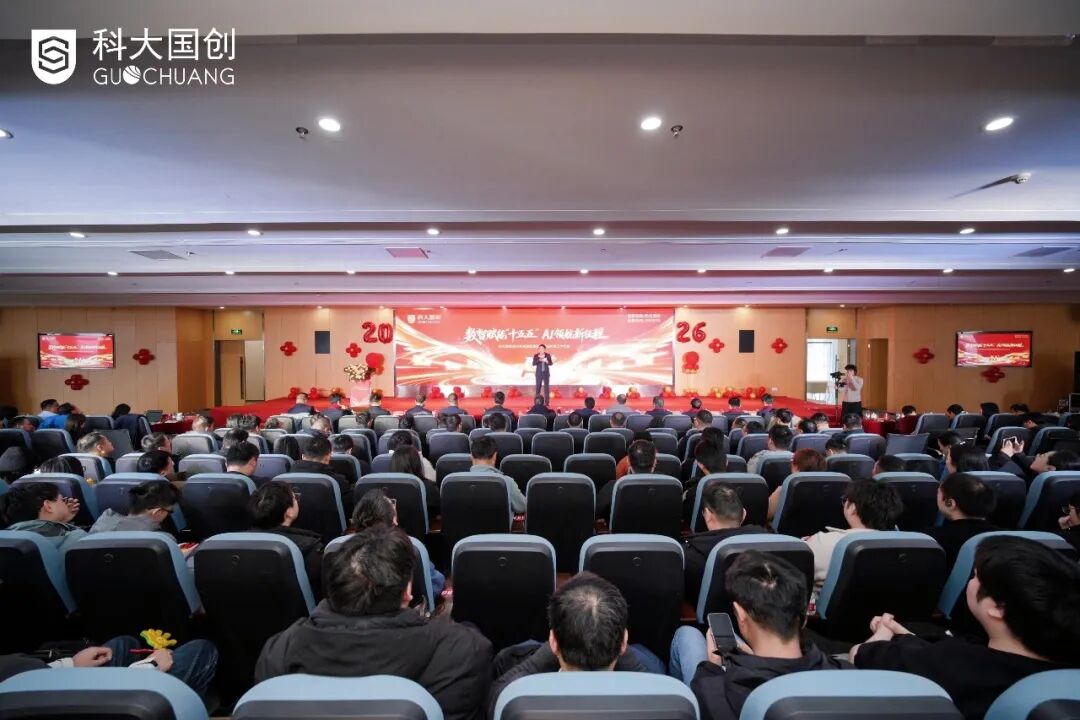
码力全开,AI创未来|科大国创2025年度总结表彰暨2026年度工作大会隆重举行
Xin Lang Cai Jing· 2026-02-11 10:33
Core Insights - The company is committed to advancing its "AI+" strategy, focusing on the integration of artificial intelligence across various sectors such as telecommunications, electricity, transportation, new energy, and government services [1][18][32] - The conference serves as a summary of the achievements during the "14th Five-Year Plan" and a strategic planning session for the "15th Five-Year Plan," utilizing self-developed technologies to enhance internal applications [7][21] - The company aims to leverage current advancements in AI and quantum computing to drive digital transformation and develop innovative products and services [15][32][33] Group 1 - The company has made significant strides in the application of AI technologies, particularly in the energy sector, showcasing how AI is facilitating a new phase of intelligence in the industry [9][27] - A report presented by a researcher highlighted the technical pathways and development trends of quantum computing, emphasizing the company's foresight in cutting-edge technology [11][29] - The company has established a systematic and measurable goal framework to ensure the effective implementation of its "15th Five-Year Plan" strategy [15][32] Group 2 - The company is focused on deepening its integration into the digital economy, aiming to empower various industries with AI technology to enhance productivity and support national digital transformation [16][33] - The conference included discussions on future industry trends and advanced technologies, providing employees with insights into the evolving landscape [6][23] - The company is dedicated to building a competitive edge through a three-pronged approach involving AI applications, trusted data spaces, and quantum computing [15][32]


蚂蚁数科FAIR平台完成国家级可信数据空间功能验证
Yang Guang Wang· 2026-02-04 07:02
Core Insights - Ant Group's FAIR Trusted Data Space platform has successfully passed all functional tests, achieving 100% compliance in a recent evaluation organized by the China Electronic Technology Standardization Institute under the guidance of the National Data Bureau [1][2] Group 1: Technical Validation - The evaluation was based on the TC609-6-2025-01 technical document, which was collaboratively drafted by over a hundred organizations, including Ant Group, and outlines the technical architecture, core functions, and business processes for trusted data spaces [1] - The testing covered three dimensions: service platform, access connectors, and security requirements, encompassing 19 functional modules related to identity management, digital contracts, data usage control, and audit trails [1] Group 2: Commercial Deployment - Following the successful validation of the platform, Ant Group is accelerating its commercial rollout, with multiple projects worth millions already signed by the end of 2025 [2] - Notable projects include the Wuhan Qiaokou Medical Trusted Space, which focuses on regional medical data collaboration and aims to connect multiple top-tier hospitals, supporting AI-assisted diagnosis and specialized research [2] - The Xi'an "Silk Road Data Port" project is another key initiative, aimed at establishing national-level data circulation infrastructure, with Ant Group providing core technical support through its FAIR platform and related technologies [2] Group 3: Industry Impact - The FAIR Trusted Data Space platform is seen as a critical infrastructure for breaking down "data silos" and unlocking data value, aligning with national efforts to build a data foundation and promote market-oriented data element allocation [3] - The platform's comprehensive technical validation and rapid deployment of large-scale projects demonstrate Ant Group's technical capabilities and understanding of industry needs, offering replicable and scalable pathways for secure and efficient data collaboration across various sectors [3] - The FAIR platform, launched in 2021, has undergone four major iterations and is currently focusing on building application ecosystems and operational capabilities, with initial implementations in sectors such as renewable energy, automotive, cross-border trade, and credit [3]
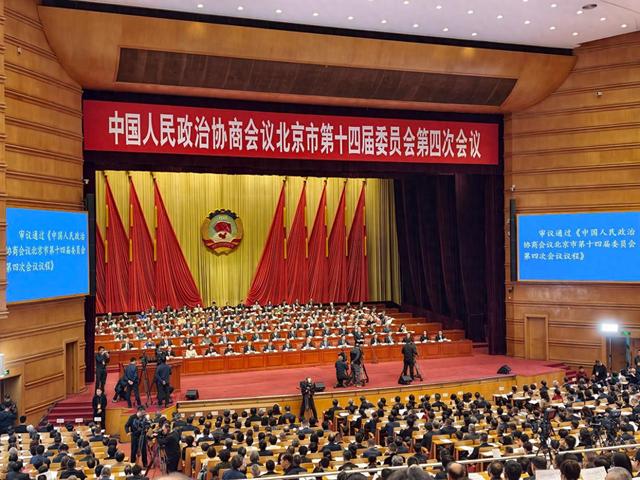
“十五五”开局之年 北京市政协将聚焦这些领域献计出力
Xin Lang Cai Jing· 2026-01-24 05:12
Group 1 - The Beijing Municipal Political Consultative Conference has outlined a work plan for 2026, focusing on key areas such as the role of Beijing as an international technology innovation center, the integration of advanced manufacturing and modern service industries, and the innovation and upgrading of the medical device industry [1][3] - The plan emphasizes the development of modern rural industries in suburban Beijing, enhancement of civilizational standards, and the establishment of a universal childcare service system [1][3] - The work plan aims to strengthen intellectual property protection and utilization, improve disaster prevention and relief capabilities in mountainous areas, and deepen exchanges and cooperation with capitals and major cities worldwide [1][3] Group 2 - The Beijing Municipal Political Consultative Conference will organize discussions on 12 key topics, including the construction of a trustworthy data space and the coordinated development of the elderly care sector and industry [3] - Continuous democratic supervision will be conducted to optimize the business environment, with six supervisory groups focusing on accelerating the implementation of carbon emission control systems and promoting a lifestyle of national fitness [3] - In 2025, the conference completed 53 tasks related to consultation and democratic supervision, filed 1,488 proposals, and organized over 1,600 activities, contributing positively to the high-quality development of the capital [3]
四标2516万:山东省可信数据空间项目招标汇总
Xin Lang Cai Jing· 2026-01-22 12:11
Group 1: Project Summaries - The first project involves the construction of a trusted data space in Dezhou, with a budget of 20 million yuan, aimed at integrating government, public, and social data to enhance decision-making and foster the local data industry [1][7]. - The second project focuses on a trusted data evidence management system, with a budget of 3 million yuan, which includes modules for data source management, data sharing, risk detection, and system management [2][7]. - The third project is for the procurement of training equipment for a trusted data space, with a budget of 1.2 million yuan, designed to support practical training in blockchain technology across various application scenarios [4][9]. - The fourth project is an upgrade of the Tianwang video surveillance security platform for the Yantai Public Security Bureau, with a budget of 953,400 yuan, aimed at enhancing security capabilities and compliance with national cybersecurity standards [6][10]. Group 2: Budget and Timeline - The budget for the trusted data space project in Dezhou is set at 20 million yuan, with a bidding date of December 2, 2025 [1][7]. - The trusted data evidence management system has a budget of 3 million yuan, with a bidding date of January 13, 2026 [2][7]. - The training equipment project has a budget of 1.2 million yuan, with a bidding date of November 25, 2025 [4][9]. - The upgrade project for the video surveillance platform has a budget of 953,400 yuan, with a bidding date of December 31, 2025 [6][10].


百台机器人“打工” 规模化采集打造数据基座
Zheng Quan Shi Bao· 2026-01-14 22:27
Core Insights - The lack of high-quality training data is a significant barrier to the application of humanoid robots, prompting the establishment of training centers across major cities in China starting in the second half of 2024 [1][4] - The Hubei Humanoid Robot Innovation Center aims to serve as a public service platform, focusing on data collection and model training to enhance the generalization capabilities of humanoid robots [2][3] Group 1: Data Collection and Training - The Hubei center features various training areas, including a data collection space where robots undergo a complete learning process, from basic action training to application testing in simulated environments [2] - The center aims to produce approximately 24,000 effective data entries daily, with an annual collection target of nearly 10 million entries to support the development of robust foundational models for the industry [3] Group 2: Industry Collaboration and Infrastructure - A nationwide competition to establish humanoid robot training facilities is underway, with cities like Beijing, Shanghai, and Zhengzhou accelerating their development to address the industry's data challenges [4] - The Hubei center differentiates itself by focusing on public service and acting as a connector within the industry chain, unlike other centers that prioritize proprietary development [4][5] Group 3: Talent Development and Ecosystem Building - The center recognizes the importance of talent development in the humanoid robotics field, addressing the gap between mechanical automation skills and AI algorithm knowledge [6] - The establishment of the Hubei Humanoid Robot Innovation Center is part of a broader initiative to create a robust humanoid robot industry in Hubei, with a clear goal of forming a billion-dollar industry cluster by 2028 [7] Group 4: Market Application and Business Model - The opening of the "7S store" in Wuhan aims to create a comprehensive service ecosystem for humanoid robots, focusing on market education and exploring sustainable business models [8] - The center's strategy emphasizes the importance of clear technological direction and industry pathways to convert early advantages into tangible industry outcomes [8]

实探湖北人形机器人公共训练平台: 百台机器人“打工” 规模化采集打造数据基座
Zheng Quan Shi Bao· 2026-01-14 18:09
Core Insights - The lack of high-quality training data is a significant barrier to the application of humanoid robots, prompting the establishment of the Hubei Humanoid Robot Innovation Center as a public training platform [1][3] - The center aims to systematically collect foundational action data to train a universal "base model" for humanoid robots, enhancing their generalization capabilities [2][3] - The center's unique advantage lies in its platform-oriented approach, focusing on public service and connecting various stakeholders in the industry [4] Group 1: Data Collection and Training - The Hubei Humanoid Robot Innovation Center features various zones for robot demonstrations, action training, data collection, and practical applications, enabling a complete learning process [2] - The center can produce 24,000 effective data entries daily, with an annual collection target of nearly 10 million entries, aimed at training more robust base models [3] - To enhance data generalization, the center has established strict rules for data collection, ensuring that robots learn to perform complex tasks autonomously rather than memorizing fixed paths [2][3] Group 2: Industry Development and Infrastructure - A nationwide competition for humanoid robot training facilities is set to begin in the second half of 2024, with cities like Beijing and Shanghai accelerating their training center constructions [4] - The center aims to create a "trusted data space" to facilitate data circulation and transactions across the industry, addressing the limitations of data collection by individual companies [5] - The center is also focused on building a localized supply chain platform to optimize the industrial ecosystem, leveraging Hubei's industrial foundation [5] Group 3: Talent Development and Ecosystem - The humanoid robot sector faces a talent gap, with mechanical automation professionals lacking AI knowledge and vice versa, prompting the center to prioritize talent cultivation [6] - The establishment of the Hubei Humanoid Robot Innovation Center is part of a broader initiative to develop a robust humanoid robot industry in Hubei, with a clear goal of creating a billion-dollar industry cluster by 2028 [7] - The center has already attracted 15 companies to its vicinity, forming a "15-minute innovation circle" that encompasses complete processes from research to production [7] Group 4: Market Application and Business Model - The opening of the "7S store" in Wuhan East Lake High-tech Zone aims to create a comprehensive service ecosystem for humanoid robots, integrating sales, service, and personalized solutions [8] - The short-term goal of the 7S store is to drive traffic and educate the market, while the long-term objective is to develop a self-sustaining business model [8] - The humanoid robot sector is viewed as full of opportunities, with the potential to convert technological advancements into tangible industrial outcomes [8]

实探湖北人形机器人公共训练平台:百台机器人“打工” 规模化采集打造数据基座
Zheng Quan Shi Bao· 2026-01-14 17:38
Core Insights - The article highlights the establishment of the Hubei Humanoid Robot Innovation Center as a significant step towards addressing the data scarcity issue in the humanoid robot industry, which is a major barrier to the development and commercialization of robotic applications [1][3][4]. Group 1: Data Collection and Training - The Hubei Humanoid Robot Innovation Center features a comprehensive training platform with 23 high-fidelity scenarios designed to systematically collect foundational action data for humanoid robots, aiming to enhance their generalization capabilities [2][3]. - The center is expected to produce approximately 24,000 valid data entries daily, with an annual collection target of nearly 10 million entries, which will support the training of more robust foundational models for the industry [3][5]. Group 2: Industry Positioning and Differentiation - The center's unique positioning as a public service platform aims to connect various stakeholders in the humanoid robot industry, contrasting with other centers that focus more on proprietary development [4][5]. - The center is part of a broader trend where multiple cities in China are accelerating the construction of humanoid robot training facilities to alleviate the industry's data challenges [4][5]. Group 3: Talent Development and Ecosystem Building - The center recognizes the importance of talent development in the humanoid robot sector, addressing the gap between mechanical automation skills and AI algorithm knowledge [6]. - The establishment of the Hubei Humanoid Robot Innovation Center is part of a larger initiative in Hubei province to create a robust humanoid robot industry cluster, with a clear goal of achieving a trillion-yuan industry scale by 2028 [7][8]. Group 4: Application and Market Strategy - The center is exploring innovative business models, such as the 7S store concept, which integrates personalized solutions and training, aiming to create a sustainable operational model for the humanoid robot ecosystem [8].
首批!苏宁易购入选江苏省入库培育数据企业名单
Jin Rong Jie· 2026-01-14 09:38
Core Insights - Jiangsu Province has officially released the first batch of data enterprises for cultivation, with Suning.com being recognized for its outstanding performance in data resource integration, technological innovation, and industry empowerment [1][4]. Group 1: Company Recognition - Suning.com has been included in the first batch of data enterprises in Jiangsu Province, categorized under three cultivation types: data application, data technology, and data resources [2][5]. - The company holds a certificate valid until December 2029, indicating its commitment to data-driven initiatives [2]. Group 2: Data-Driven Initiatives - As a leading enterprise in the retail industry, Suning.com has accumulated vast data resources over more than 30 years, focusing on data-driven business innovation [4]. - The company is actively participating in national initiatives related to data elements and the "AI + Manufacturing" strategy, developing core data products such as commodity transaction datasets and a supply chain financial platform [4][5]. Group 3: Technological Advancements - Suning.com has developed its own retail domain "LingSi" large model, achieving breakthroughs in inference efficiency and training cost reduction through key technological upgrades [5]. - The company has created a "Retail Cloud County Town Smart Internet Platform," which serves over 15,000 county and town merchants, facilitating the digital transformation of grassroots commerce [5]. Group 4: Future Directions - Suning.com aims to deepen the market-oriented reform of data elements and accelerate the application of AI technologies in the physical industry, contributing to the establishment of a digital economy and advanced manufacturing integration demonstration zone in Jiangsu [5].


为金融强省建设提供硬核支撑 江苏省金融可信数据空间实验室在南京揭牌
Jin Rong Shi Bao· 2026-01-13 02:08
Core Viewpoint - The establishment of the Financial Trusted Data Space Laboratory in Jiangsu marks a significant step in the digital finance sector, providing robust support for the construction of a strong financial province [1] Group 1: Purpose and Function of the Laboratory - The laboratory aims to address data silos and circulation barriers, facilitating financing for small and micro enterprises and promoting the deep integration of digital technology with the real economy [1] - It is designed as a data circulation infrastructure based on consensus rules, connecting multiple stakeholders to achieve shared use of data resources [1] Group 2: Technological and Collaborative Framework - The laboratory will utilize cutting-edge technologies such as privacy computing, blockchain, and data sandboxes to eliminate data circulation bottlenecks [2] - It will establish a cross-institutional collaboration network characterized by "multi-level governance, clear responsibilities, and controllable security" to enhance the value of data elements [2] Group 3: Goals and Expectations - The laboratory is expected to enhance the efficiency of financial services to the real economy by empowering data elements, innovating digital financial products, and creating an open collaborative platform [2] - Jiangsu Bank expresses optimism about the laboratory's potential to explore new models and paths for data-enabled high-quality financial development [2]