戍边精神

Search documents
排依克
Ren Min Ri Bao Hai Wai Ban· 2025-12-07 22:54
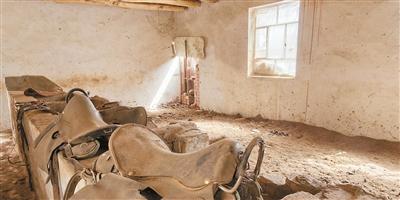
Core Viewpoint - The "Payike" border police station, located at the junction of China, Tajikistan, and Afghanistan, has become a significant cultural and historical site, showcasing its 75-year history and evolving role in border security and education [10][20]. Group 1: Historical Significance - The "Payike" border police station was established in 1950 and has undergone various transformations, reflecting the development of border security in China [11][25]. - The station has been recognized for its contributions, receiving titles such as "National Model of Public Security" and "National Youth Civilization Unit" [10][11]. - The site preserves multiple generations of barracks, showcasing the evolution of living and working conditions for border personnel [14][15]. Group 2: Cultural and Educational Impact - The "Payike" red education base has attracted numerous visitors, becoming a popular destination for cultural tourism [13][19]. - The site features a collection of historical artifacts, documents, and personal letters that reflect the dedication and spirit of the border personnel [16][15]. - The establishment of the red education base has led to the collection of nearly 10,000 handwritten messages from visitors, indicating its impact on public engagement and historical awareness [15][16]. Group 3: Infrastructure and Accessibility - The G314 highway, which runs through the region, has seen improvements in traffic capacity, facilitating access to the "Payike" border police station and surrounding areas [7][9]. - The highway is part of a larger network that connects significant historical and cultural sites along the ancient Silk Road [21][22]. - The ongoing development of infrastructure supports both tourism and the operational needs of border security [7][9].

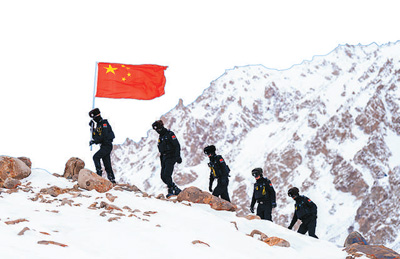
西藏军区某团一级上士次罗布扎根高原守家园—— 跋涉山林间,做坚固的屏障(新时代·面孔)
Ren Min Ri Bao· 2025-12-04 23:05
Core Viewpoint - The article highlights the dedication and resilience of a soldier, Cirobu, who patrols the treacherous routes of the Tibetan Plateau, emphasizing the importance of skill and experience in ensuring safety and success in challenging environments [1][2]. Group 1: Patrol Experience - Cirobu is a seasoned soldier familiar with one of the most dangerous patrol routes in the Tibet Military District, having traversed it over 40 times [1]. - The patrol routes, particularly "Axi Beila" and "Duren Cuokang," are fraught with risks, featuring over 200 dangerous sections and significant altitude changes [1]. - Cirobu's initial patrol experience taught him that physical fitness alone is insufficient; practical skills and knowledge are crucial for survival [1]. Group 2: Documentation and Training - Cirobu maintains a detailed notebook documenting terrain features and risks, which has earned him the nickname "living map" among his comrades [2]. - His commitment to training and skill development is evident as he helps fellow soldiers improve their shooting accuracy and physical fitness [3]. - Cirobu's training methods have led to significant improvements in his peers, showcasing his leadership and mentorship abilities [3]. Group 3: Competitive Achievements - Cirobu represented his country in the "Elbrus Ring" international military competition, excelling in extreme conditions and overcoming personal injury to achieve success [2]. - He has won multiple individual first places and set records in the competition, demonstrating his exceptional physical and mental fortitude [2]. Group 4: Personal Philosophy - Cirobu expresses a strong commitment to his duty, viewing himself as a guardian of the homeland and embodying the spirit of perseverance and dedication [3].
“界碑在哪里,戍边人的心就在哪里”
Ren Min Ri Bao Hai Wai Ban· 2025-05-26 00:59
Core Viewpoint - The article highlights the significance of the Paikek Border Police Station in the Wakhan Corridor, emphasizing its historical role in safeguarding China's borders and the personal stories of the officers and their families who have dedicated their lives to border defense [9][10][12]. Group 1: Historical Context - The Paikek Border Police Station has been operational since 1950, serving as a critical point connecting China with Afghanistan, Pakistan, and Tajikistan along a 197.4 km border [10]. - The station's motto, "I dedicate my life to guarding the border," reflects the commitment of generations of border guards [10][12]. Group 2: Personal Stories and Legacy - Chen Dawei, a visitor, recalls the emotional connection to the classic film "The Guests on the Iceberg," which symbolizes the heroism of border guards, particularly her father's memories associated with it [9][10]. - The story of Shao Gongni Longjike, the grandson of the film's hero, illustrates a family legacy of border defense, with multiple generations serving in the military [12][14]. Group 3: Modern Developments - The article notes significant improvements in living conditions and technology in the region, such as the extension of roads and the use of drones for patrols, contrasting with the past hardships faced by border guards [15][16]. - Despite advancements, the core values of loyalty and dedication to the homeland remain unchanged among the border guards [15][16]. Group 4: Personal Motivations - Officer Yuan Xiao, a recent recruit, shares his motivation to serve at the border, inspired by his grandfather's legacy as a soldier [17][18]. - The emotional connection to family history and the desire to honor past sacrifices drive the commitment of current officers [17][18].