
显示技术

Search documents
为什么2026年值得买的电视是RGB-MiniLed?
Sou Hu Wang· 2026-02-02 07:19
Core Viewpoint - The television industry in China is undergoing a significant transformation, with the introduction of the Hisense E8S Pro marking a milestone in the commercialization of RGB-MiniLED technology, which addresses the limitations of traditional QD-MiniLED displays [1] Group 1: Technological Advancements - The Hisense E8S Pro features a "dual-chip" logic, incorporating RGB light-emitting chips and an AI picture quality chip (H7) that controls up to 9,360 zones, enabling "light and color co-control" [2] - The E8S Pro achieves a light and color control precision of 108 bits, offering 100% coverage of the BT.2020 color gamut, which allows for the accurate reproduction of all colors found in nature [4] Group 2: Environmental Adaptability - The E8S Pro is designed to perform well in various lighting conditions, with a black crystal screen that reduces reflectivity to 1.28%, significantly lower than that of standard televisions, enhancing viewing experience in bright environments [7] - The television's RGB-MiniLED technology provides a peak brightness of 6,200 nits, ensuring that images remain clear and vibrant even in challenging lighting conditions [7] Group 3: Energy Efficiency - The E8S Pro is marketed as a "new energy television," achieving a 40% improvement in energy efficiency compared to QD-OLED displays, while also reducing harmful blue light by 42% [8] - This approach balances high-quality visual performance with health and environmental considerations, reflecting a mature commercial responsibility [9]



京东方取得显示装置专利实现非对称折叠
Sou Hu Cai Jing· 2026-01-31 03:26
Group 1 - The core point of the article is that BOE Technology Group Co., Ltd. has obtained a patent for a "display device," with the authorization announcement number CN115588369B, and the application date was October 2022 [1] - BOE Technology Group Co., Ltd. was established in 1993 and is located in Beijing, primarily engaged in the manufacturing of computers, communications, and other electronic devices. The registered capital is approximately 37.41 billion RMB [1] - The company has made investments in 73 enterprises and participated in 303 bidding projects, with 775 trademark records and 5000 patent records, in addition to holding 47 administrative licenses [1] Group 2 - Chengdu BOE Optoelectronics Technology Co., Ltd. was established in 2007 and is located in Chengdu, primarily engaged in the manufacturing of instruments and meters. The registered capital is approximately 2.5 billion RMB [1] - Chengdu BOE Optoelectronics Technology Co., Ltd. has participated in 922 bidding projects and holds 5000 patent records, along with 522 administrative licenses [1]

京东方取得显示基板专利实现窄边框设计
Sou Hu Cai Jing· 2026-01-30 09:02
Group 1 - The core point of the article is that BOE Technology Group Co., Ltd. has obtained a patent for "display substrate," with the authorization announcement number CN116864507B and an application date of March 2022 [1] - BOE Technology Group Co., Ltd. was established in 1993 and is located in Beijing, primarily engaged in the manufacturing of computers, communications, and other electronic devices. The registered capital is approximately 37.41 billion RMB [1] - The company has made investments in 73 enterprises and participated in 303 bidding projects, with 775 trademark records and 5000 patent records, in addition to holding 47 administrative licenses [1] Group 2 - Chengdu BOE Optoelectronics Technology Co., Ltd. was established in 2007 and is located in Chengdu, primarily engaged in the manufacturing of instruments and meters. The registered capital is approximately 2.5 billion RMB [1] - Chengdu BOE Optoelectronics Technology Co., Ltd. has participated in 922 bidding projects and holds 5000 patent records, along with 522 administrative licenses [1]
京东方取得驱动基板及显示面板专利提升显示性能
Sou Hu Cai Jing· 2026-01-30 06:36
Group 1 - BOE Technology Group Co., Ltd. has obtained a patent titled "Driving Substrate, Display Panel, and Display Device," with authorization announcement number CN119832861B, and the application date is December 2024 [1] - BOE Technology Group, established in 1993 and located in Beijing, primarily engages in the manufacturing of computers, communications, and other electronic devices, with a registered capital of 37,413.88 million RMB [1] - The company has invested in 73 enterprises, participated in 303 bidding projects, holds 775 trademark records, and has 5,000 patent records, along with 47 administrative licenses [1] Group 2 - Yunnan Chuangshijie Optoelectronic Technology Co., Ltd., established in 2017 and located in Kunming, focuses on software and information technology services, with a registered capital of 30,400 million RMB [1] - The company has participated in 276 bidding projects, holds 477 patent records, and has 8 administrative licenses [1] - Beijing BOE Technology Development Co., Ltd., established in 2016 and located in Beijing, primarily engages in the manufacturing of computers, communications, and other electronic devices, with a registered capital of 38 million RMB [2] - The company has invested in 1 enterprise, participated in 92 bidding projects, holds 3,900 patent records, and has 4 administrative licenses [2]
京东方取得移位寄存器专利可缩窄显示产品边框宽度
Sou Hu Cai Jing· 2026-01-30 03:50
Group 1 - The core point of the article is that BOE Technology Group Co., Ltd. has obtained a patent for a "shift register, gate driver circuit, and display device," with the authorization announcement number CN119479558B, and the application date is October 2024 [1] - BOE Technology Group Co., Ltd. was established in 1993 and is located in Beijing, primarily engaged in the manufacturing of computers, communications, and other electronic devices. The registered capital of the company is approximately 37.41 billion RMB [1] - The company has invested in 73 enterprises and participated in 303 bidding projects, with 775 trademark information entries and 5,000 patent information entries, in addition to holding 47 administrative licenses [1] Group 2 - Chengdu BOE Optoelectronics Technology Co., Ltd. was established in 2007 and is located in Chengdu, primarily engaged in the manufacturing of instruments and meters. The registered capital of this company is approximately 2.5 billion RMB [1] - Chengdu BOE Optoelectronics Technology Co., Ltd. has participated in 922 bidding projects and holds 5,000 patent information entries, along with 522 administrative licenses [1]
三星显示公布2025年业绩
WitsView睿智显示· 2026-01-29 04:18
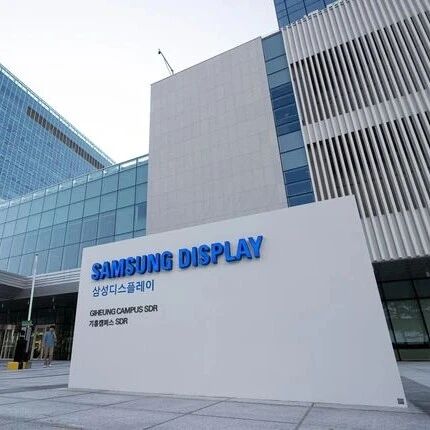
1月29日,三星电子公布了第四季度和2025年全年的财务业绩。 2025年第四季度,三星电子实现季度合并营收93.8万亿韩元(约合人民币4,558.7亿元),创历 史新高,环比增长9%。营业利润也创历史新高,达20.1万亿韩元(约合人民币976.9亿元)。从 全年业绩来看,公司实现累计营收333.6万亿韩元(约合人民币16,213亿元),营业利润43.6万 亿韩元(约合人民币2,119.0亿元)。 其中,负责显示业务的三星显示2025年全年累计销售额达29.8万亿韩元(约合人民币1,448.3亿 元),营业利润为4.1万亿韩元(约合人民币199.3亿元)。销售额同比增长2%,营业利润同比增 长10.8%;2025年第四季度,三星显示综合营收为9.5万亿韩元(约合人民币461.7亿元),营业 利润为2万亿韩元(约合人民币97.2亿元)。 第四季度,在中小尺寸显示业务方面,得益于稳定的供应和主要客户智能手机需求的增长,三星 显示业绩表现稳健,IT和汽车领域的销售扩张也为盈利增长做出了贡献。大尺寸显示业务则通过积 极响应年末旺季的市场需求,实现了营收增长。 三星显示表示,将在2026年凭借差异化技术巩固其在智能手机 ...
京东方取得驱动补偿电路专利提升显示效果
Sou Hu Cai Jing· 2026-01-28 01:11
Group 1 - The core point of the article is that BOE Technology Group Co., Ltd. has obtained a patent for a "drive compensation circuit, drive circuit, display panel, and display device," with the authorization announcement number CN119446028B, and the application date is November 2024 [1] Group 2 - BOE Technology Group Co., Ltd. was established in 1993 and is located in Beijing, primarily engaged in the manufacturing of computers, communications, and other electronic devices. The company has a registered capital of 37,413.880464 million RMB [1] - The company has invested in 73 enterprises and participated in 303 bidding projects, with 775 trademark information entries and 5,000 patent information entries, in addition to holding 47 administrative licenses [1] Group 3 - Chengdu BOE Display Technology Co., Ltd. was established in 2015 and is located in Chengdu, primarily engaged in software and information technology services. The company has a registered capital of 2,155 million RMB [1] - Chengdu BOE Display Technology Co., Ltd. has participated in 620 bidding projects, holds 560 patent information entries, and has 841 administrative licenses [1]
京东方取得显示模组及制备方法与显示装置专利
Sou Hu Cai Jing· 2026-01-27 05:52
来源:市场资讯 成都京东方光电科技有限公司,成立于2007年,位于成都市,是一家以从事仪器仪表制造业为主的企 业。企业注册资本2500000万人民币。通过天眼查大数据分析,成都京东方光电科技有限公司参与招投 标项目922次,专利信息5000条,此外企业还拥有行政许可522个。 声明:市场有风险,投资需谨慎。本文为AI基于第三方数据生成,仅供参考,不构成个人投资建议。 国家知识产权局信息显示,京东方科技集团股份有限公司取得一项名为"显示模组、显示模组的制备方 法及显示装置"的专利,授权公告号CN120089064B,申请日期为2025年2月。 天眼查资料显示,京东方科技集团股份有限公司,成立于1993年,位于北京市,是一家以从事计算机、 通信和其他电子设备制造业为主的企业。企业注册资本3741388.0464万人民币。通过天眼查大数据分 析,京东方科技集团股份有限公司共对外投资了73家企业,参与招投标项目303次,财产线索方面有商 标信息775条,专利信息5000条,此外企业还拥有行政许可47个。 ...
京东方取得显示基板及其制备方法和显示面板专利
Sou Hu Cai Jing· 2026-01-27 05:41
声明:市场有风险,投资需谨慎。本文为AI基于第三方数据生成,仅供参考,不构成个人投资建议。 来源:市场资讯 国家知识产权局信息显示,京东方科技集团股份有限公司取得一项名为"显示基板及其制备方法和显示 面板"的专利,授权公告号CN114762124B,申请日期为2020年10月。 天眼查资料显示,京东方科技集团股份有限公司,成立于1993年,位于北京市,是一家以从事计算机、 通信和其他电子设备制造业为主的企业。企业注册资本3741388.0464万人民币。通过天眼查大数据分 析,京东方科技集团股份有限公司共对外投资了73家企业,参与招投标项目303次,财产线索方面有商 标信息775条,专利信息5000条,此外企业还拥有行政许可47个。 成都京东方光电科技有限公司,成立于2007年,位于成都市,是一家以从事仪器仪表制造业为主的企 业。企业注册资本2500000万人民币。通过天眼查大数据分析,成都京东方光电科技有限公司参与招投 标项目922次,专利信息5000条,此外企业还拥有行政许可522个。 ...
新股前瞻|增收不增利VS卡位高成长赛道,云英谷科技赴港寻求“破局”?
智通财经网· 2026-01-27 02:00
Core Viewpoint - The new generation display technology represented by AMOLED is gradually replacing LCD technology in various applications, providing growth opportunities for companies focused on AMOLED display driver chips, such as Yunyinggu Technology, which is preparing for an IPO in Hong Kong [1][2]. Group 1: Company Overview - Yunyinggu Technology is a fabless display driver chip design company that specializes in AMOLED display driver chips and Micro-OLED display backplane/driving services [1]. - The company is the fifth largest supplier of AMOLED display driver chips globally and the largest in mainland China, with a market share of 40.7% in the Micro-OLED display backplane/driver market [2]. Group 2: Financial Performance - From 2022 to 2024, Yunyinggu Technology's revenue increased from 551 million to 891 million yuan, but losses also widened from 124 million to 309 million yuan during the same period [3]. - The company's gross margin fluctuated significantly, with rates of 31.9%, 0.4%, and 2.5% over the same years, indicating a challenging profitability landscape [3][4]. Group 3: Market Position and Challenges - Despite being a leading player, Yunyinggu Technology faces a "double squeeze" in the market, lacking bargaining power in the supply chain, which compresses profit margins [4]. - The company has seen a significant increase in chip sales from 14.06 million in 2022 to over 50 million in 2024, yet the gross margin has drastically decreased, highlighting the issue of revenue growth not translating into profit [4][5]. Group 4: Industry Trends and Future Outlook - The global AMOLED display driver chip market is expected to grow from approximately 723.7 million units in 2020 to 1,292.2 million units by 2024, with a compound annual growth rate (CAGR) of 15.6% [6]. - Emerging high-growth application areas such as automotive displays and industrial simulations are anticipated to drive future growth, despite a projected slowdown in smartphone shipments [7]. Group 5: Strategic Focus - Yunyinggu Technology is focusing on enhancing its technological capabilities, having developed a comprehensive self-research display driver technology that covers key technical aspects [7]. - The company invests significantly in R&D, with expenses ranging from 1.77 million to 2.42 million yuan from 2022 to 2025, representing a consistent percentage of total revenue [7]. Group 6: Revenue Diversification - The company's revenue is heavily reliant on the smartphone market, with AMOLED display driver chips accounting for 91.6% of revenue in 2024, while Micro-OLED revenue has declined significantly [8]. - To mitigate dependency on a single business line, Yunyinggu Technology needs to explore opportunities in less price-sensitive and high-growth sectors, such as automotive displays and next-generation display technologies [8].