智能手机显示屏

Search documents
三星显示公布2025年业绩
WitsView睿智显示· 2026-01-29 04:18
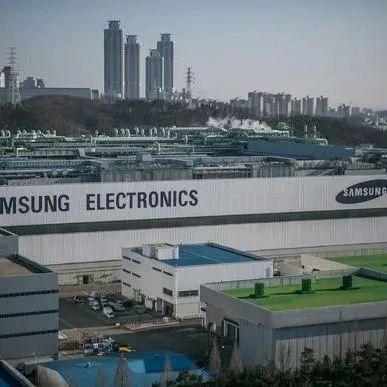
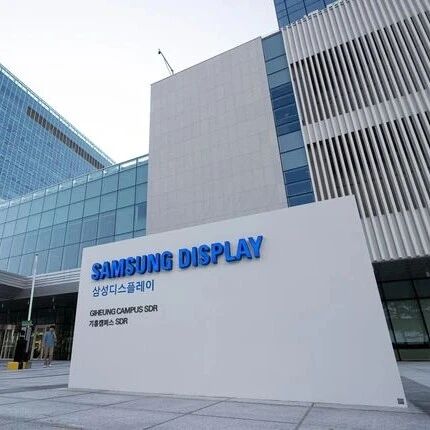
Core Viewpoint - Samsung Electronics reported record financial performance for Q4 2025 and the entire year, with significant revenue and operating profit growth, indicating strong market demand and operational efficiency [1]. Financial Performance Summary - In Q4 2025, Samsung Electronics achieved consolidated revenue of 93.8 trillion KRW (approximately 455.87 billion RMB), marking a 9% quarter-on-quarter increase and a historical high. Operating profit also reached a record 20.1 trillion KRW (approximately 97.69 billion RMB) [1]. - For the full year 2025, the company reported total revenue of 333.6 trillion KRW (approximately 1,621.3 billion RMB) and operating profit of 43.6 trillion KRW (approximately 211.9 billion RMB) [1]. Display Business Performance - Samsung Display's total sales for 2025 reached 29.8 trillion KRW (approximately 144.83 billion RMB), with an operating profit of 4.1 trillion KRW (approximately 19.93 billion RMB). Sales increased by 2% year-on-year, while operating profit grew by 10.8% [1]. - In Q4 2025, Samsung Display's consolidated revenue was 9.5 trillion KRW (approximately 46.17 billion RMB), with an operating profit of 2 trillion KRW (approximately 9.72 billion RMB) [1]. Market Outlook - For Q1 2026, Samsung Display anticipates a slowdown in smartphone market demand. The company plans to expand sales by timely developing and supplying display panels for new flagship smartphones [3]. - In the large-size display segment, Samsung Display aims to actively respond to market demand with the launch of new QD-OLED products, further increasing sales volume [3]. - The company intends to solidify its leading position in the smartphone market through differentiated technology and will continue to focus on high-brightness TV products to maintain competitiveness in the high-end TV market [3].

日本军工面临停摆,90%产能被咱掌控,稀土成反制利器,认错已晚
Sou Hu Cai Jing· 2025-12-11 05:39
Core Insights - Japan's anxiety stems from delays in rare earth export application approvals, which are critical for its high-end manufacturing sector [3][4][5] - The unique physical and chemical properties of rare earth elements make them indispensable in various high-tech industries, including automotive and electronics [4][5] - Japan's reliance on Chinese rare earth supplies remains high, with over 90% of rare earth separation and purification capacity concentrated in China [14][15] Group 1: Impact of Delays - The sudden halt in the approval process for rare earth exports has heightened tensions within Japan's manufacturing industry, as any disruption in supply could lead to significant operational challenges [3][5] - The approval delays are perceived as a potential warning from China, especially following Japan's Prime Minister's controversial remarks regarding Taiwan, which may have triggered a diplomatic response [7][9][10] Group 2: Japan's Dependency Issues - Japan has struggled to reduce its dependency on Chinese rare earths despite efforts to diversify its supply sources since the 2010 Senkaku Islands incident [12][17] - The challenges in establishing a domestic rare earth industry are compounded by strict environmental regulations and limited local resources, making it difficult for Japan to achieve self-sufficiency [14][15] Group 3: Diplomatic Context - The recent delays in rare earth export approvals reflect a broader geopolitical struggle between China and Japan, with economic measures being used as a means of political signaling [19][20] - Japan's high level of external dependency on rare earths highlights structural vulnerabilities in its resource security, which could have long-term implications for its manufacturing capabilities [22]

三星DRAM份额跌至十年低点!
国芯网· 2025-08-20 14:16
Core Viewpoint - Samsung Electronics' DRAM market share has dropped to 32.7% in the first half of 2025, down from 41.5% in the same period last year, raising concerns about its industry leadership [1][3]. Group 1: Market Performance - Samsung's DRAM market share fell below 40% for the first time in nearly a decade, having previously peaked at 48% in 2016 [3]. - The decline in DRAM market share is attributed to weak demand for high bandwidth memory (HBM), which is critical for AI chips [3]. - In contrast, Samsung's smartphone and television businesses have shown growth, with smartphone market share increasing by 1.6% to 19.9% and television market share rising by 0.6% to 28.9% in the first half of 2025 [3]. Group 2: Revenue and Exports - The Americas region leads in direct export revenue with 33.4 trillion KRW (approximately 24 billion USD), followed by China at 28.8 trillion KRW, a decline of about 11% from 32.3 trillion KRW year-on-year [3]. - The Asia-Africa region generated 20.8 trillion KRW, while Europe contributed 15.8 trillion KRW in export revenue [3]. Group 3: Pricing and Compensation - In the device experience (DX) department, the average price of mobile application processors (AP) and camera modules increased by 12% and 8%, respectively, compared to 2024 [4]. - The total compensation for Samsung's Vice Chairman and CEO Jun Young-hyun reached 11.9 billion KRW in the first half of 2025, while the head of the mobile experience (MX) business, TM Roh, received 11.95 billion KRW [4]. Group 4: R&D Investment - Samsung invested a total of 18 trillion KRW in research and development in the first half of 2025, with significant patent application activity, including 5,005 applications in South Korea and 4,594 in the United States [5].