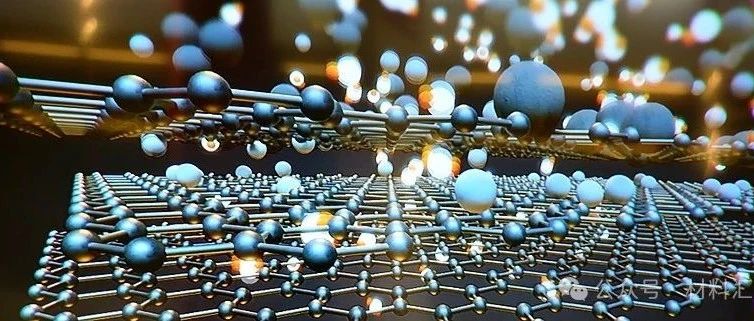
材料基因工程

Search documents
2025高分子产业大会丨报告精华分享(上篇)
DT新材料· 2025-09-20 16:03
Core Viewpoint - The global chemical industry is undergoing profound changes, with anxiety, confusion, and hope characterizing the current state of many companies. The rise of emerging industries in China is expected to lead the next decade in high polymers [2]. Event Overview - The 2025 Polymer Industry Annual Conference, hosted by Ningbo Detaizhong Research Information Technology Co., Ltd. (DT New Materials), took place in Hefei, featuring 55 speakers from various sectors to discuss new opportunities in materials and technologies related to AI, robotics, low-altitude economy, aerospace, new energy vehicles, and more [2][4]. Keynote Address - Academician Qian Xigao emphasized the deep adjustments in the global chemical industry chain and the new demands for high polymer materials arising from innovations in new applications and business models. He called for collaboration within the industry to tackle challenges and seize opportunities [6]. Awards Ceremony - The 2025 "New Plastic Award" recognized outstanding companies in the engineering plastics industry, aiming to promote innovation and development within the sector. Awards included "Innovative Materials Award," "Innovative Industry Solutions Award," and a special "End-User Innovative Application Award" [7][10]. Industry Insights - Various experts presented on topics such as the development of high-performance engineering plastics, global trends in new materials, and investment opportunities in the Zhoushan petrochemical and polymer industry [15][17][21]. Technological Innovations - Presentations covered advancements in materials for electric vehicles, online curing monitoring systems for resin-based composites, and the integration of AI in material development processes, highlighting the industry's shift towards intelligent manufacturing [29][32][75][77]. Future Directions - The conference underscored the importance of sustainable practices and the need for continuous innovation in materials to meet the evolving demands of industries such as automotive and robotics, with a focus on lightweight, high-strength, and environmentally friendly materials [30][56][67].

内蒙古包头稀土磁材成为新质生产力隐形基石
Zhong Guo Chan Ye Jing Ji Xin Xi Wang· 2025-08-01 00:45
Core Insights - The rare earth industry in Baotou, Inner Mongolia, is experiencing unprecedented vitality, driven by technological advancements and increased production capacity [1][2] - China is transitioning from a resource-based powerhouse to a technology-driven leader in the rare earth permanent magnet sector, with a significant increase in high-end product market share [1][2] Industry Developments - The production of high-performance NdFeB magnets at Jinli Permanent Magnet's factory is automated, with a new magnet produced every 90 seconds, showcasing advanced manufacturing capabilities [1] - The introduction of nanocrystalline boundary control technology has significantly improved the coercivity of NdFeB magnets while reducing the use of heavy rare earth elements [2] - The Baotou Rare Earth High-tech Zone has established a comprehensive innovation ecosystem, including key laboratories and numerous patent holdings, enhancing the local industry's capabilities [3] Market Trends - The market for rare earth functional materials in China is projected to exceed 200 billion yuan in 2024, with high-end applications surpassing 50% of the total market [4] - The demand for high-performance NdFeB magnets is expected to grow, particularly in the electric vehicle sector, which is projected to account for 28% of global demand in 2024, a 16 percentage point increase from 2023 [5] - The Baotou Rare Earth High-tech Zone is set to become a core supply base for key components in the global electric vehicle and wind power equipment markets, with an anticipated additional output value of 4 billion yuan by 2025 [5]
新材料突围:"十五五"新材料万亿级机遇与十大观点
材料汇· 2025-07-05 15:20
Core Insights - The article highlights differentiated growth in specific segments, with semiconductor materials growing at 50%, new energy materials at 52%, and biomedical materials at 87%, while traditional structural materials maintain a stable growth rate of 8-10% [2][10]. - Emerging fields are rapidly rising, such as AI servers with high-frequency materials growing at 60%, new energy vehicles with MLCC demand increasing by 100%, and hydrogen energy with a 60% localization rate for proton exchange membranes [2][10]. - The industry chain is evolving, with semiconductor materials seeing a "wafer factory + material factory" bundling development model, and new energy materials adopting a three-in-one model involving automakers, battery manufacturers, and material suppliers [2][12]. Market Dynamics - Channel transformation is evident, with traditional distribution dropping to 40%, while customized services account for 35%, technology licensing for 15%, and joint research for 10% [3][13]. - Reverse innovation is on the rise, with downstream applications leading material customization, breaking the traditional linear research-production-sales model, and it is expected that by 2030, 30% of new material innovations will be driven by application scenarios [3][20]. - Companies are making strategic choices, with leading firms focusing on "materials + equipment + algorithms" full-stack capabilities, SMEs concentrating on niche technologies, and startups exploring disruptive innovations [3][23]. Technological Advancements - Material genome engineering is revolutionizing the R&D model, while breakthroughs in production processes are reshaping cost curves [4][16]. - Future technological directions include extreme performance breakthroughs, intelligent upgrades, green manufacturing, and cross-industry integration [4][20]. Market Outlook - The market is projected to reach 1 trillion yuan by 2025 and exceed 3 trillion yuan by 2030, maintaining a CAGR of 18%, driven by domestic substitution, technological iteration dividends, and the expansion of emerging applications [4][19]. - Key materials to watch include high-end photoresists, aerospace engine materials, solid-state batteries, high-temperature superconductors, perovskite photovoltaic materials, high-frequency materials, MLCCs, UTG glass, and biodegradable materials [4][10]. Industry Background - The innovative materials sector is a cornerstone for China's manufacturing transformation, with the industry size surpassing 6 trillion yuan in 2024, maintaining a 20% annual growth rate [7][8]. - The industry is characterized by intensive policy support, accelerated technological breakthroughs, and expanded application scenarios, particularly in fields like solid-state battery materials and high-temperature superconductors [8][10]. Competitive Landscape - The industry is witnessing an increase in concentration, characterized by a dual-track model of "national teams leading + specialized private firms" [12]. - The collaborative model in the supply chain is innovating significantly, with semiconductor materials adopting a bundling development model and new energy materials forming a three-in-one R&D approach [12][13]. Policy and Institutional Innovation - National strategic layouts provide strong support, with the Ministry of Industry and Information Technology outlining key development directions for advanced materials [15]. - The establishment of a standard system that aligns with international standards is accelerating, although challenges remain due to new EU regulations [15][16]. Investment Strategy Recommendations - Focus on three major tracks: high certainty in domestic substitution (semiconductor precursors, medical-grade polylactic acid), beneficiaries of technological iteration (solid-state electrolytes, superconducting materials), and platform technology companies (materials AI design software) [24]. - Companies should build long-term agreements for certification and procurement, while material firms need to integrate into automotive battery technology roadmaps [23][24].