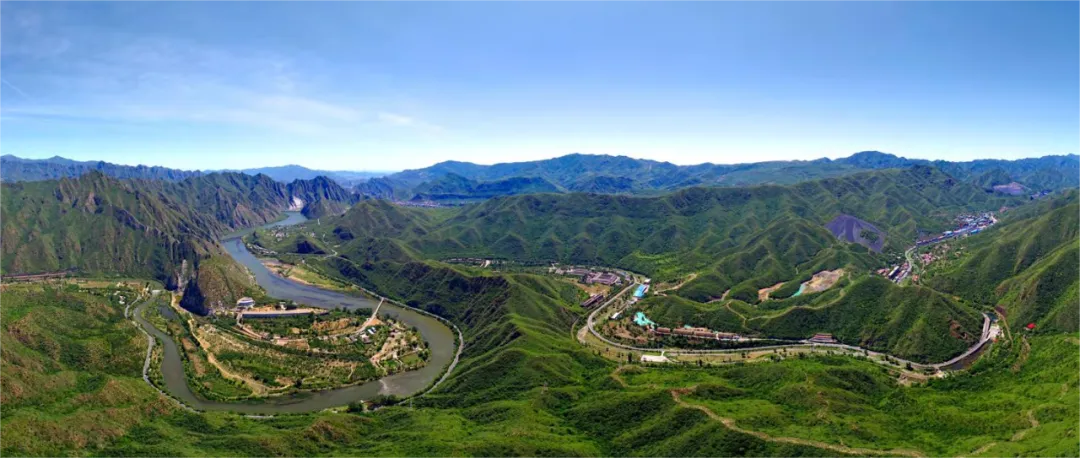
水利工程建设

Search documents
抢抓施工“黄金期” 我市四十八项冬春水利工程加速推进
Nan Jing Ri Bao· 2025-12-25 02:12
Group 1 - The construction of water conservancy projects in Nanjing is entering a "golden period," with 48 projects scheduled to start or accelerate construction this winter and spring, aiming for completion before the main flood season in May next year [1] - Among the 48 projects, four key water conservancy projects are crucial for regional flood control, water resource allocation, and ecological balance, with an expected annual investment of approximately 1.5 billion yuan [1] - The completed projects will address issues such as insufficient levee height, slope erosion, and accessibility of flood control roads, ensuring flood safety along both banks [1] Group 2 - The external Qinhuai River flood control capacity enhancement project, covering a total length of 12.9 kilometers, aims to improve flood defense from a 100-year to a 200-year flood event [2] - The project includes raising flood walls, reinforcing levees, and addressing seepage issues, following the recognition of flood risks during the 2020 historical flood event [2] - A total of 22 flood risk mitigation and 5 urban waterlogging remediation projects have been identified, with a total investment of approximately 195 million yuan, focusing on areas prone to waterlogging [3]
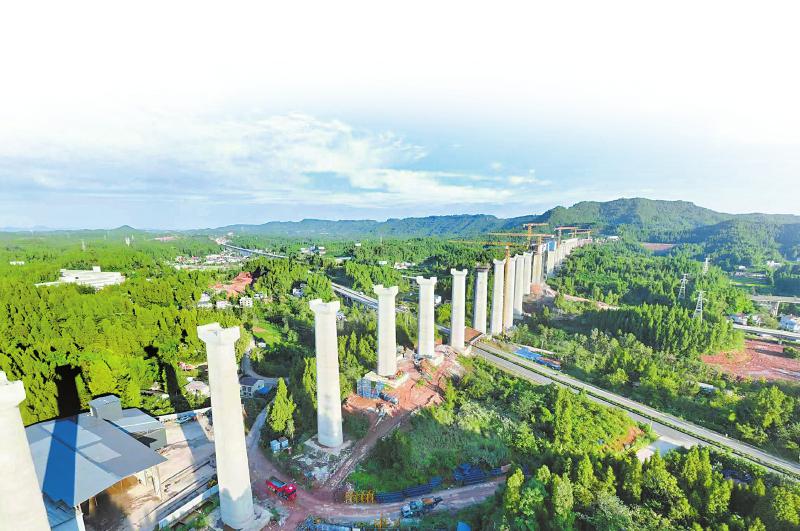
为让灌区早日用上水,亭子口灌区一期工程建设不停歇 1400吨巨型造槽机空中造“长河”
Si Chuan Ri Bao· 2025-11-27 00:27
Core Viewpoint - The Tizikou Irrigation District Phase I project, including the Sujiamiao Aqueduct, is a significant water management initiative aimed at addressing water scarcity in Northeast Sichuan, with completion expected by 2027 [3][7]. Group 1: Project Overview - The Sujiamiao Aqueduct is a key control project within the Tizikou Irrigation District Phase I, measuring 2,270 meters in length and reaching a maximum height of 87 meters, making it the longest and most technically challenging aqueduct in the region [3][5]. - As of now, the Tizikou Irrigation District Phase I has completed 292.85 kilometers of tunnel excavation, 189.8 kilometers of lining, 11.02 kilometers of aqueduct pouring, and 36.2 kilometers of open and closed channels [8]. Group 2: Construction Progress - The project is currently at its peak construction phase, with 361 working faces opened across four sections and 5,207 workers and 1,623 sets of machinery involved [3][5]. - The construction of the Sujiamiao Aqueduct's foundation and pier columns has been completed, and the focus is now on the pouring of the aqueduct body [5][6]. Group 3: Economic and Social Impact - The Tizikou Irrigation District Phase I is part of a major national water conservancy initiative, aimed at solving irrigation and drinking water issues for over 3.7 million acres of farmland and more than 4 million people in Northeast Sichuan [3][7]. - The project is expected to significantly improve the water resource situation in areas like Guang'an, addressing the growing water supply-demand imbalance and supporting local economic development [7][8].

四川省“引大济岷”水利工程即将从蓝图走向现实
Zhong Guo Jing Ji Wang· 2025-11-07 16:33
Core Points - The "Yin Da Ji Min" project is a major water diversion initiative in Sichuan, aimed at addressing the imbalance in water resource distribution across the province, particularly benefiting the Chengdu Plain Economic Zone [2][3][6] - The project is expected to supply an average annual water volume of 13.89 billion cubic meters by 2040 and 15.23 billion cubic meters by 2050, with a total investment of approximately 536.23 billion yuan [3][16] - The project has a long history, dating back to the 1970s, and has recently gained momentum with its inclusion in multiple national planning documents [4][6] Water Resource Imbalance - Sichuan experiences significant seasonal rainfall, with 70% of precipitation occurring from May to October, leading to a stark contrast in water availability between regions [2] - The Chengdu Plain, which accounts for 80% of the province's economic output, has less than 1,000 cubic meters of water per capita, highlighting the urgent need for the "Yin Da Ji Min" project [2] Project Overview - The project is designed to have a water diversion capacity of 80 cubic meters per second, with plans to increase irrigation areas by 1.79 million acres and improve 5.91 million acres of existing irrigation [3] - The construction period is estimated to last 8 years, with the project being a key component of Sichuan's water network development [3] Historical Context - The concept of diverting water from northwest Sichuan to the Chengdu Plain has been proposed for over fifty years, with various plans emerging since the early 2000s [4][6] - Recent developments since 2012 have seen the project included in national strategies, leading to the establishment of a project command center in 2021 [6] Technical Challenges - The "Yin Da Ji Min" project faces numerous technical challenges, including traversing 29 geological fault zones and addressing 48 major technical issues [7] - Significant geological surveys are required, involving drilling 521 boreholes with a total depth of 39,500 meters, often in difficult terrain [7][9] Community and Workforce Involvement - The project has involved extensive community engagement, including land acquisition and relocation efforts, with over 600 personnel participating in surveys [9] - The dedication of the workforce is highlighted by the intense work schedules and commitment shown by team members during the design phase [10][11] Recent Developments - As of September 2023, the project has entered the feasibility study approval stage, with the feasibility report already approved by the National Development and Reform Commission [16] - The project is not only a water management initiative but also a significant development and livelihood project for the region [16][17]
苏北灌溉总渠堤防加固工程完工
Xin Hua Ri Bao· 2025-11-05 22:27
Core Points - The completion of the Su Bei Irrigation Main Canal dam reinforcement project marks a significant achievement, finishing the three-year task in just two years [1] - The total investment for the Su Bei Irrigation Main Canal dam reinforcement project is 1.505 billion yuan [1] - Key projects include the reinforcement of the Yun Dong Gate, the reconstruction of the Fu Ning Waist Gate, the reinforcement of the Tong Yu River main canal interchange, and the dredging of the Liu Duo South Gate [1] Project Details - The Yun Dong Gate reinforcement and Fu Ning Waist Gate reconstruction passed acceptance in May 2024, completing underwater construction in just seven months [1] - The Tong Yu River main canal interchange reinforcement started in October 2024 and was completed in eight months [1] - The Liu Duo South Gate dredging project took seven months from start to acceptance [1] Operational Efficiency - From June 2024 to the present, the Yun Dong Gate has operated for 142 days, discharging 2.296 billion cubic meters of water [1] - The Fu Ning Waist Gate has operated for 270 days, discharging 2.917 billion cubic meters of water [1] - The comprehensive benefits of the project include flood control, irrigation, and navigation [1]
打通“咽喉要道” 亭子口灌区一期工程最后一条高瓦斯隧洞贯通
Si Chuan Ri Bao· 2025-10-20 07:16
Core Viewpoint - The completion of the Yunwuzhai tunnel marks a significant milestone in the construction of the Tizikou irrigation district phase one project, which is crucial for supporting the economic and social development of drought-affected areas in northeastern Sichuan and revolutionary old districts [1] Group 1: Project Details - The Yunwuzhai tunnel has a total length of 2,928 meters and a designed water flow capacity of 6.65 cubic meters per second [1] - The Tizikou irrigation district phase one project consists of 17 channels, with a total length of 375.59 kilometers [1] - Upon completion, the project is expected to provide an average annual water supply of 396 million cubic meters [1] Group 2: Construction Challenges - The tunnel's geological conditions are complex, characterized by fractured rock, poor stability, abundant groundwater, and high gas risks, making construction difficult and safety risks high [1] - The project team has implemented strict safety measures, including the "one blast three checks" system and "three-person chain blasting system," along with advanced geological forecasting to ensure safety during construction [1] Group 3: Future Outlook - The completion of the tunnel is seen as a critical step in advancing the overall project construction, which is part of the "project attack year" initiative [1] - The project is a key component of Sichuan's "six horizontal and six vertical" backbone water network, aimed at enhancing water supply and supporting regional development [1]
行走江河看中国丨南水穿秦岭,引汉济渭“嘹咋咧”!
Yang Shi Xin Wen Ke Hu Duan· 2025-10-16 06:35
Core Points - The article discusses the progress of the Yinhang-Jiwei project, a significant water conservancy project in China, which has successfully completed the main tunnel construction, moving closer to its goal of water delivery by 2026 [1][5]. Group 1: Project Overview - The Yinhang-Jiwei project consists of two main components: water diversion and distribution, with a total length of 983 kilometers for the Qinling water supply tunnel [5]. - The project aims to deliver 1.5 billion cubic meters of water annually to meet the needs of over 14 million people in 21 urban areas within Shaanxi province [7]. Group 2: Engineering Challenges - The construction faced significant challenges, including high temperatures (40°C) and humidity (90%) within the tunnels, as well as frequent rock bursts, with over 4,000 incidents recorded during the project [18]. - The project has implemented measures for environmental protection, including the establishment of fish breeding stations and ecological facilities to support local biodiversity [16]. Group 3: Impact and Benefits - The project has already demonstrated its importance by providing 120 million cubic meters of water during drought conditions in the spring and summer of 2023, ensuring water security for Xi'an [14]. - The first hydropower generator of the Huangjinxia Hydropower Station has been successfully connected to the grid, with an average annual power generation of 132.5 million kilowatt-hours [9].

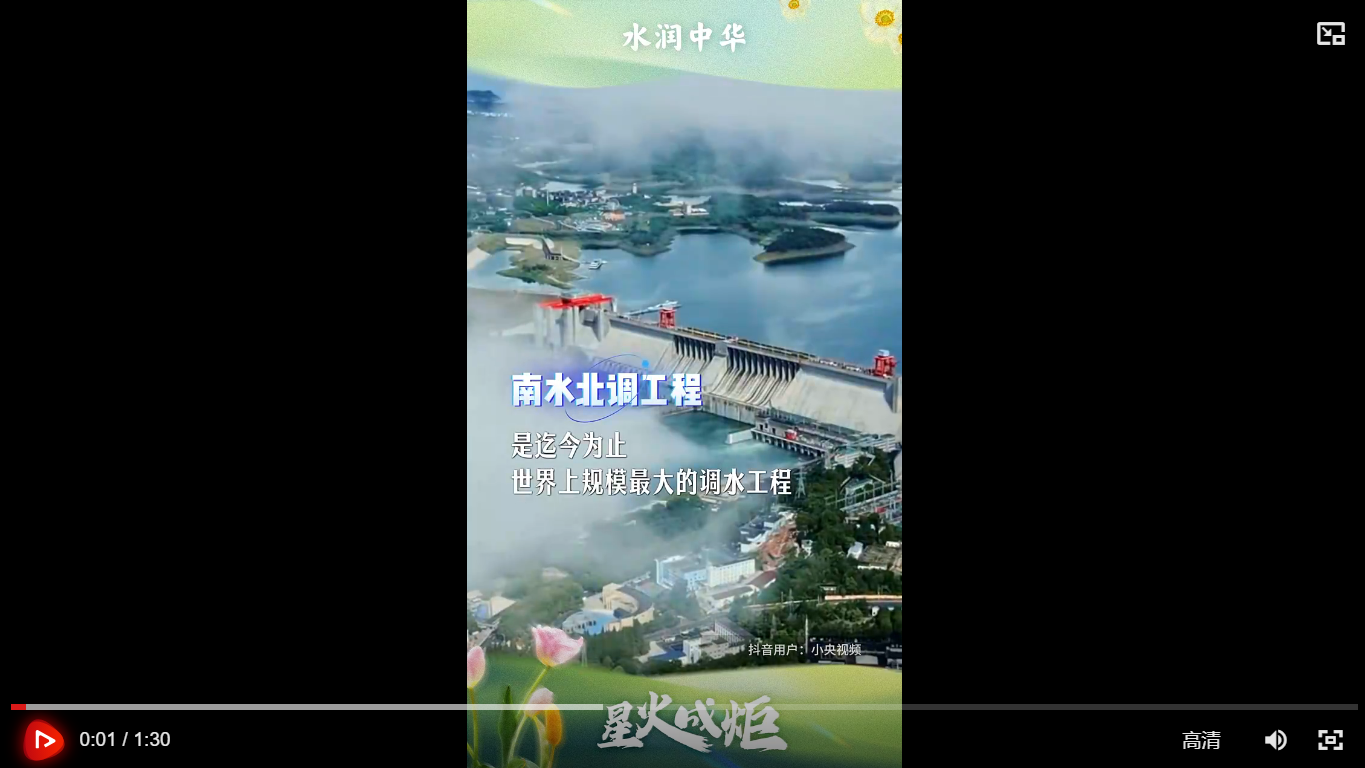
星火成炬|水润中华
Yang Shi Wang· 2025-10-07 06:40
Core Insights - The article highlights the transformation of a country with complex water conditions and significant river management challenges into a leader in water infrastructure, boasting the largest and most comprehensive water management system globally [2] Group 1 - The country has achieved world-class water engineering projects and technological innovations, addressing difficult challenges in water management [2] - It has developed the largest water infrastructure system in the world, benefiting the most people [2] - The advancements in water management are crucial for sustaining ecosystems and supporting economic growth [2]
重大水利工程新突破!
中国能源报· 2025-09-29 10:48
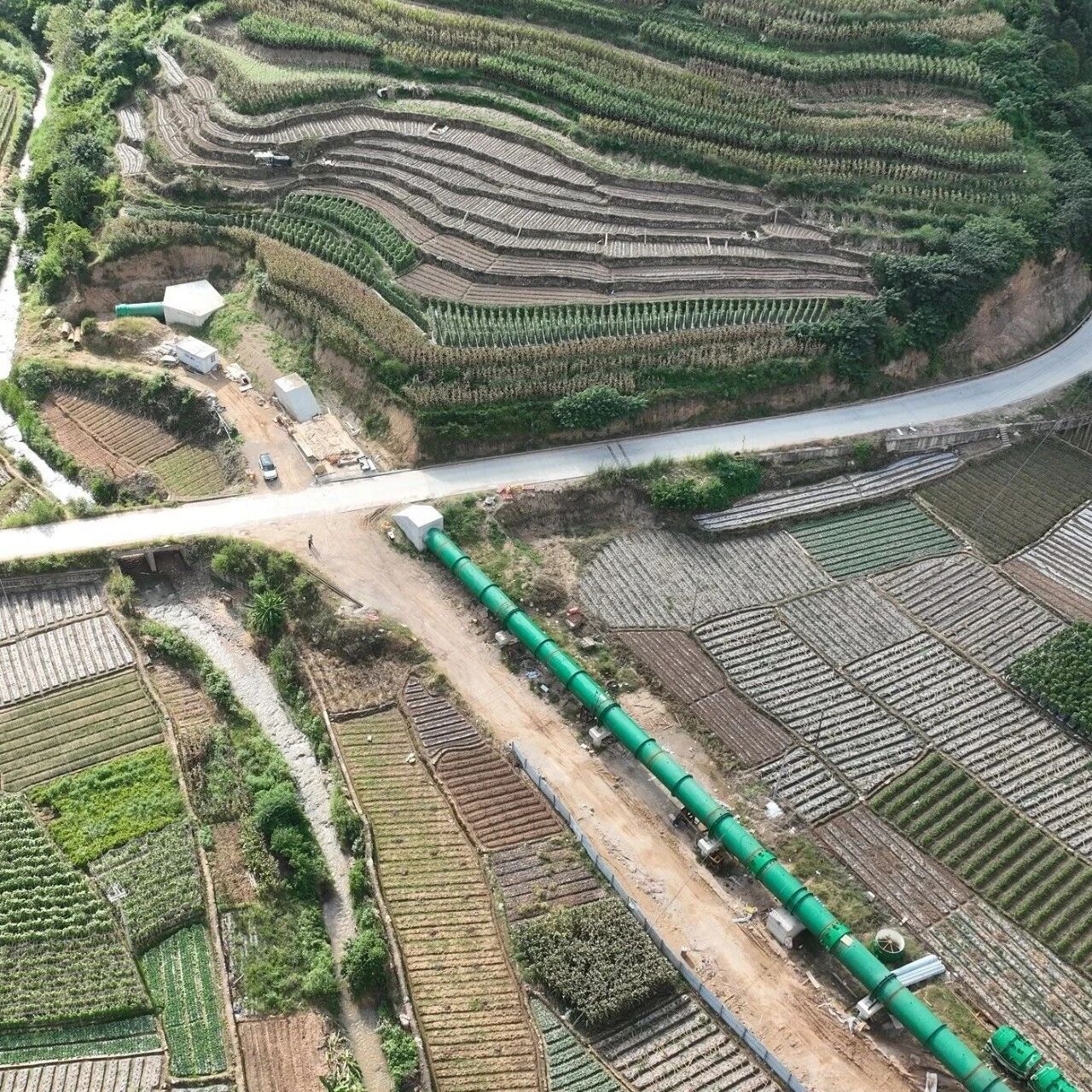
Core Viewpoint - The Dianzhong Water Diversion Project has made significant progress with the successful construction of the Qujiang inverted siphon, marking a breakthrough in this major national water conservancy project [1][2]. Group 1: Project Overview - The Qujiang inverted siphon is located in the Water Tank Village of Gaoda Township, Tonghai County, Yuxi City, and spans approximately 1829 meters, intersecting multiple transportation routes and rivers [2]. - The project is part of the largest water diversion project under construction in China, covering a total length of 664.326 kilometers, including 611 kilometers of water diversion tunnels [3][5]. Group 2: Technical Challenges and Innovations - The construction team faced challenges such as high precision requirements for road subsidence control, complex underground pipelines, and strict ecological protection standards [2]. - Innovative techniques such as refined detection, three-dimensional pipeline positioning, and ecological isolation were employed to control roadbed subsidence within 3 millimeters while ensuring the safety of the ecological environment and pipelines [2]. Group 3: Expected Impact - Upon completion, the project is expected to achieve an annual water diversion volume of 340 million cubic meters, effectively alleviating water scarcity issues in the central Yunnan region and benefiting over 11 million people along the route [5].
西藏在建投资最大中型水库大坝顺利封顶
Xin Hua She· 2025-09-28 18:19
Core Viewpoint - The completion of the dam for the Meipatang Reservoir project in Tibet marks a significant milestone in the construction of one of the largest medium-sized water conservancy projects in the region, with a total investment of 1.435 billion yuan [1] Group 1: Project Overview - The Meipatang Reservoir is located in the Zaqi River midstream in Baqing County, Naqu City, Tibet, with an average elevation of 4,100 meters [1] - The total storage capacity of the reservoir is 24.1 million cubic meters, with a dam length of 539 meters and a maximum height of 55 meters [1] - It is the largest single investment water conservancy project in Naqu City and the largest ongoing investment project in Tibet [1] Group 2: Construction Challenges - The construction faces multiple challenges due to high altitude, low air pressure, and significant temperature variations [1] - To ensure quality and durability, the dam employs a mixed design of roller-compacted concrete gravity dam and geotextile membrane gravel dam, enhancing its impermeability, frost resistance, and corrosion resistance [1] - The project team has conducted relevant process experiments to analyze parameters such as layer thickness and compaction frequency to ensure construction quality [1] Group 3: Project Impact - The Meipatang Reservoir is expected to be completed by June 2026 and will meet the irrigation needs of 44,400 acres of grassland along the downstream riverbanks [1] - It will address the urban and rural water supply needs of approximately 53,100 people in Baqing County and Suoxian [1] - The project plays a crucial role in promoting high-quality economic and social development, advancing rural revitalization, and improving the ecological environment in the region [1]
左岸之都
Bei Jing Ri Bao Ke Hu Duan· 2025-09-27 07:57
Core Points - The article discusses the historical significance of the Yongding River in the development of Beijing, highlighting its dual role as a source of sustenance and a potential threat due to flooding [2][5][6] - It emphasizes the ongoing interaction between the city and the river, illustrating how various water management projects have been implemented over centuries to mitigate flooding while utilizing the river for irrigation and transportation [11][25] Historical Context - The Yongding River has been a crucial water source for Beijing since ancient times, with its water system forming the basis for the city's growth [4][5] - Major water management projects began as early as the Cao Wei period, with the construction of the Liling Weir and Chexiang Canal aimed at irrigation [7][8] - Despite these efforts, the river's tendency to flood has led to repeated destruction and reconstruction of water management structures throughout history [9][10][11] Urban Development - The river's natural features influenced the location and expansion of Beijing, with its floodplain providing fertile land for agriculture [5][6] - The city’s growth was initially hindered by the river's flooding, prompting the search for alternative locations for settlement [6][12] - The transformation of the Yongding River into a navigable waterway was attempted during the Jin Dynasty, but ultimately failed due to the river's unpredictable flow [12][15][16] Water Management Efforts - The article details various historical attempts to manage the river, including the construction of the Jin Kou River during the Yuan Dynasty, which aimed to improve transportation and irrigation [19][21] - The management of the Yongding River evolved over time, with the Qing Dynasty formalizing a system to address flooding issues [25] - Modern efforts continue to focus on balancing urban growth with effective water management, reflecting a long-standing relationship between the city and the river [25][26]