
引汉济渭工程

Search documents
水质更优 河湖更美 用水更严
Xin Lang Cai Jing· 2026-02-10 21:07
Core Viewpoint - The news highlights the significant advancements in water resource management and ecological restoration in Shaanxi Province, particularly through the implementation of the "Yin Han Ji Wei" project, which aims to alleviate water shortages and improve water quality for millions of residents [1][2]. Group 1: Water Resource Management - The "Yin Han Ji Wei" project is the largest water conservancy project in Shaanxi's history, expected to benefit over 14 million people by alleviating water shortages in the Guanzhong region [2]. - The project involves transporting water from the Han River through a 90-kilometer tunnel across the Qinling Mountains to the Wei River basin, addressing the uneven distribution of water resources in the province [2]. - Shaanxi's water resources are characterized by a total of 117 billion cubic meters in the Yellow River basin and 303 billion cubic meters in the Yangtze River basin, with significant population and economic activity concentrated in water-scarce areas [2]. Group 2: Ecological Restoration - The restoration of the Zao River in Xi'an transformed it from a polluted waterway into a clean river, enhancing the quality of life for local residents [6]. - The implementation of the river and lake chief system has led to improved water quality across various rivers in Shaanxi, with a projected 96.4% of water quality sections reaching Class I-III standards by 2024 [6]. - The province has seen a significant reduction in soil erosion, with a cumulative treatment area of 21,400 square kilometers, and the water environment quality in the Yellow River basin reaching its best level in nearly 20 years [6]. Group 3: Agricultural Water Efficiency - The province is transitioning from traditional flood irrigation to more efficient methods, such as precision irrigation, to reduce water costs and improve agricultural productivity [7]. - The effective utilization coefficient of irrigation water in Shaanxi has increased from 0.565 in 2017 to 0.589 by 2025, surpassing the national average [8]. - The introduction of advanced water treatment technologies in coal mining operations has improved water recycling and reduced overall water consumption in the industry [8].
引汉济渭二期工程北干线全线贯通
Ren Min Ri Bao· 2025-12-19 22:10
Core Viewpoint - The completion of the second phase of the Yinhang-Jiwei project marks a significant advancement in addressing water resource shortages in the Weibei "dry belt" region, enhancing water supply for both residential and industrial needs in key areas of Shaanxi province [2] Group 1 - The Yinhang-Jiwei project is a crucial component of the national water network [2] - The northern trunk line of the second phase spans 89.54 kilometers [2] - The project aims to better meet the water demand for daily life and industrial use in Xi'an, Xianyang, Weinan, and Yangling [2]

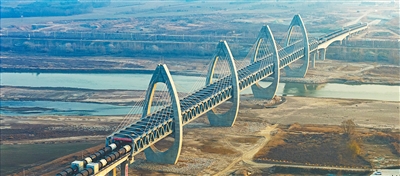
现代化基础设施网络激发协同发展活力
Shan Xi Ri Bao· 2025-12-16 22:53
Core Viewpoint - The construction of significant water and transportation infrastructure in Shaanxi province is set to enhance regional development and economic growth, with projects like the Dongzhuang Water Conservancy Project and the Hanjiang to Weihe Water Diversion Project playing pivotal roles in this transformation [1][2][3]. Infrastructure Development - The Dongzhuang Water Conservancy Project, a 230-meter high dam, has transitioned from construction to operational phase, providing essential flood control and water supply to the Weihe River basin [1] - The Hanjiang to Weihe Water Diversion Project utilizes long tunnels to supply water from the Han River to the Guanzhong Plain, further supporting regional water needs [2] - Shaanxi's "14th Five-Year Plan" emphasizes the development of a comprehensive transportation network, including a "米" shaped and five horizontal and two vertical transportation framework, to enhance connectivity and efficiency [3] Economic Impact - The integration of high-speed rail lines, exceeding 2000 kilometers in total length, is expected to significantly reduce travel times and enhance economic activity along the routes, creating a more interconnected economic landscape [3][4] - The establishment of a modern energy transportation system in northern Shaanxi, including a coal transport railway network and oil and gas pipelines, supports the region's energy supply and economic stability [5] - Shaanxi's GDP grew by 5.3% year-on-year in the first three quarters of the year, outperforming the national average, indicating strong economic resilience and growth driven by infrastructure investments [5] Regional Collaboration - The infrastructure projects are fostering deeper regional integration, with improved transportation facilitating economic collaboration between cities like Xi'an and Xianyang [4] - The coordinated development of the three regions—Guanzhong, southern Shaanxi, and northern Shaanxi—aims to enhance overall competitiveness and economic circulation within the province [5] Long-term Vision - The ongoing infrastructure developments are not only aimed at short-term economic stabilization but also at laying a solid foundation for sustainable, high-quality economic growth in the long run [6]
“十四五”期间陕西建成1426个政府投资重大项目
Shan Xi Ri Bao· 2025-11-27 22:49
Group 1 - The core report highlights that during the "14th Five-Year Plan" period, a total investment of 962.9 billion yuan has been completed, with 1,426 major projects constructed and put into operation, resulting in a significant number of quality assets and effective supply [1] - Since 2021, over 30,000 government investment projects have been implemented in Shaanxi, covering 17 public sectors including transportation and water conservancy [1] - In the comprehensive transportation sector, an investment of 388.8 billion yuan has been completed, with five high-speed rail constructions fully promoted, achieving historic "highway access for every county" [1] Group 2 - In terms of high-level innovation platforms, Shaanxi has completed the reorganization and establishment of 42 national key laboratories, accelerating the potential release of the Qin Chuang Yuan platform, and overcoming over 1,100 key core technologies in critical fields such as high-end equipment and aerospace [2] - To enhance public welfare capabilities, 56 key medical projects, including the provincial public health center (Phase I), have been put into use, along with the construction and expansion of 345 county-level hospitals and health centers [2] - In improving ecological environment quality, the province has completed afforestation of 1.585 million acres and improved the centralized sewage treatment rate in Guanzhong towns to 97% [2]
陕西加快推进重大水利工程建设——打通“水脉”惠三秦
Shan Xi Ri Bao· 2025-10-19 23:00
Group 1: Project Progress and Impact - The second phase of the Yinhanshui project is progressing rapidly, with the northern trunk line expected to be fully connected by the end of this year [2] - The Yinhanshui project has supplied 1.19 billion cubic meters of water to Xi'an in the first half of this year, accounting for over 50% of the main urban area's water consumption [1] - Since the project's inception, it has supplied over 3 billion cubic meters of water to Xi'an, significantly enhancing its functions in water supply, power generation, flood control, and ecology [1] Group 2: Water Resource Management and Investment - Water resources are crucial for national economic and social development, with significant investments in water infrastructure in Shaanxi during the 14th Five-Year Plan period [3] - As of June 30 this year, Shaanxi has completed water investment totaling 192.85 billion yuan, with numerous key water projects underway [8] - The East Zhuang Water Conservancy Hub is the only water conservancy project in the country under construction that has water diversion and sediment regulation functions, with completion expected by the end of 2026 [8] Group 3: Agricultural Support and Irrigation - The Jiao Kou Water Diversion Irrigation District has provided stable water sources for agriculture, allowing crops to withstand drought conditions [4] - The irrigation district has diverted a total of 360 million cubic meters of water this year, irrigating 3.3 million acres, setting a record since its establishment in 1970 [7] - The provincial irrigation projects are essential for ensuring food security and supporting agricultural production in the region [6]
行走江河看中国丨水润三秦 看陕西如何碧波织锦
Yang Shi Xin Wen Ke Hu Duan· 2025-10-19 06:51
Core Viewpoint - The news highlights the significant advancements in water resource management in Shaanxi Province, particularly through the implementation of the "Yin Han Ji Wei" project, which aims to address water scarcity and improve ecological conditions in the region [2][5][21]. Group 1: Water Resource Management - The "Yin Han Ji Wei" project, a major water conservancy initiative in Shaanxi, will provide 1.5 billion cubic meters of water annually for over 14 million people, addressing the issue of seasonal water scarcity [2][5]. - The project has been under construction for over a decade, involving 15,000 participants, and is expected to be fully operational by 2027 [5][21]. - The project plays a crucial role in enhancing water security and supporting agricultural productivity in the region [5][14]. Group 2: Flood Control and Ecological Restoration - The construction of the Baoji Gorge dam has proven effective in flood control, significantly reducing the impact of floods on downstream areas [6][8]. - The ecological restoration efforts along the Wei River have transformed previously barren areas into vibrant ecosystems, enhancing biodiversity and recreational spaces [10][11]. - The project has also improved the connectivity of tributaries, leading to better water flow and ecological health in the region [10][11]. Group 3: Agricultural Impact - The introduction of efficient irrigation techniques, such as micro-spray and drip irrigation, has significantly improved water usage in agriculture, leading to increased crop yields and reduced water costs for farmers [13][14]. - The transformation from traditional irrigation methods to modern techniques has allowed farmers to optimize water usage, ensuring crops receive adequate moisture [13][14]. - The agricultural initiatives supported by the water management projects have contributed to local economic growth and food security [14][21]. Group 4: Soil and Water Conservation - The "Three Lines of Defense" strategy implemented in the region has effectively reduced soil erosion and improved water retention, transforming arid areas into fertile land [22][24]. - The strategy includes terracing, afforestation, and the construction of sediment retention structures to manage water and soil resources sustainably [24][25]. - The successful implementation of these conservation practices has led to increased agricultural productivity and environmental sustainability in the region [24][25].

行走江河看中国丨南水穿秦岭,引汉济渭“嘹咋咧”!
Yang Shi Xin Wen Ke Hu Duan· 2025-10-16 06:35
Core Points - The article discusses the progress of the Yinhang-Jiwei project, a significant water conservancy project in China, which has successfully completed the main tunnel construction, moving closer to its goal of water delivery by 2026 [1][5]. Group 1: Project Overview - The Yinhang-Jiwei project consists of two main components: water diversion and distribution, with a total length of 983 kilometers for the Qinling water supply tunnel [5]. - The project aims to deliver 1.5 billion cubic meters of water annually to meet the needs of over 14 million people in 21 urban areas within Shaanxi province [7]. Group 2: Engineering Challenges - The construction faced significant challenges, including high temperatures (40°C) and humidity (90%) within the tunnels, as well as frequent rock bursts, with over 4,000 incidents recorded during the project [18]. - The project has implemented measures for environmental protection, including the establishment of fish breeding stations and ecological facilities to support local biodiversity [16]. Group 3: Impact and Benefits - The project has already demonstrated its importance by providing 120 million cubic meters of water during drought conditions in the spring and summer of 2023, ensuring water security for Xi'an [14]. - The first hydropower generator of the Huangjinxia Hydropower Station has been successfully connected to the grid, with an average annual power generation of 132.5 million kilowatt-hours [9].

“十四五”期间,这些重大工程改变了我们的生活
Zhong Guo Zheng Quan Bao· 2025-10-02 10:27
Core Insights - The "14th Five-Year Plan" outlines 102 major engineering projects aimed at meeting national needs and public expectations, with significant progress reported and completion expected by year-end [1] Group 1: Major Engineering Projects - The 102 major engineering projects are transforming daily life, with significant advancements in transportation, water conservancy, technology innovation, and ecological construction [2][3] - The Baotou to Yinchuan high-speed railway is set to reduce travel time from 6 hours to under 3 hours, with full operation expected soon [2] - The first phase of the "Yinhan Jihua" water diversion project is supplying half of Xi'an's daily water needs, with the second phase projected to provide an annual water supply of 1 billion cubic meters [2] Group 2: Technological and Ecological Advances - Major technological breakthroughs include the successful landing of the "Zhurong" Mars rover and advancements in quantum computing and nuclear fusion [3] - Ecological initiatives such as the "Three North" project and desertification control efforts are making significant strides in environmental protection [3] Group 3: Future Planning and Coordination - Local and national authorities are actively working to ensure the successful completion of the 102 major projects, with a focus on enhancing infrastructure and boosting domestic demand [4] - The National Development and Reform Commission plans to strengthen inter-departmental collaboration and prepare for the "15th Five-Year Plan," which will continue to focus on high-quality development and innovation [4]
一批国家水网骨干工程建设“进度条”持续刷新 重大水利工程加速推进
Yang Shi Wang· 2025-07-05 04:02
Core Viewpoint - The Chinese government is accelerating the construction of major water conservancy projects to enhance water resource allocation and supply security, as outlined in the recent policy document on river protection and governance. Group 1: Major Water Projects - Since 2022, 12 major water diversion projects, including those in the Pearl River Delta and the Yangtze River, have been completed, adding an annual water diversion capacity of 124.8 billion cubic meters [1] - New projects, such as the North Bay Water Resource Allocation and the Jilin Water Network, are expected to add another 142.3 billion cubic meters of annual water diversion capacity upon completion [1] Group 2: Reservoir and Flood Control - 24 large reservoirs, including the Xijiang Datiangxia and Xinjiang Dashimen, have been completed, increasing water supply capacity by 34.6 billion cubic meters and flood control capacity by 26.6 billion cubic meters [3] - New flood control and key water source projects, including the Yellow River Guxian, are projected to add 49 billion cubic meters of water supply capacity and 36.7 billion cubic meters of flood control capacity [3] Group 3: Policy and Funding Support - The South-to-North Water Diversion Project has delivered over 800 billion cubic meters of water, benefiting 185 million people, and is crucial for optimizing water resource allocation and ensuring drinking water safety [5] - The National Development and Reform Commission (NDRC) is increasing support for major water projects, with an average increase of 20 percentage points in central investment support for new medium-sized irrigation and water diversion projects [7] Group 4: Integrated Infrastructure Development - The NDRC and the Ministry of Water Resources are focusing on the integration of flood control projects with irrigation and high-standard farmland construction to maximize comprehensive benefits [9]
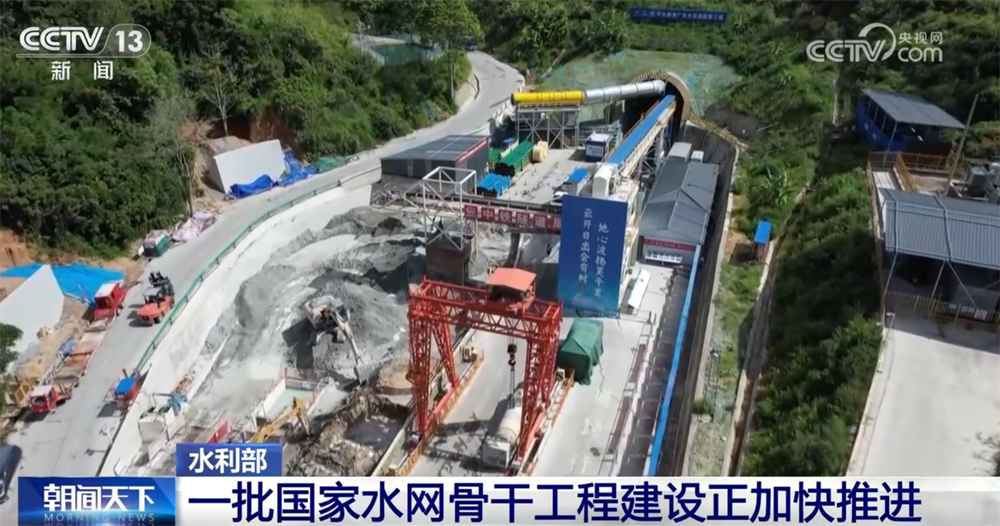
陕西管好用好专项债券资金助力高质量发展
Shan Xi Ri Bao· 2025-05-27 22:57
Group 1: Government Debt Management - The provincial government is actively managing debt through special bonds for various sectors, including transportation, water conservancy, and education [1][2] - In the transportation sector, special bonds are allocated for highway and high-speed rail construction, with a focus on projects like the Xixiang to Zhenba and Ankang to Lanhua highways [1] - The provincial transportation department aims to complete the '米' shaped high-speed rail network by 2028, ensuring connectivity between cities [1] Group 2: Audit and Oversight - The provincial audit office is enhancing government debt management systems and addressing hidden debt risks through audits of local government special bonds and financing platforms [2] - Collaboration with the provincial People's Congress is emphasized to improve oversight and develop relevant systems [2] - Annual reports on audit rectification work are submitted to the provincial People's Congress to ensure accountability [2]