
燃油车

Search documents
奇瑞汽车招股书解读:净利润增长90.9%,毛利率下滑1.1%暗藏风险
Xin Lang Cai Jing· 2025-08-29 03:24
Core Viewpoint - Chery Automobile demonstrates significant growth in revenue and net profit, driven by a diversified product portfolio and effective market strategies, while facing challenges in gross and net profit margins due to competitive pressures and market dynamics [3][4][5][6]. Business Model and Market Coverage - Chery designs, develops, manufactures, and sells a diverse range of passenger vehicles, including both fuel and new energy vehicles, under multiple brands such as Chery, Jetour, and Exeed, targeting various market segments from budget to luxury [1]. - The company employs a combination of dealer networks in China and overseas, with 3,663 domestic and 2,958 international dealer outlets as of March 31, 2025, and utilizes a multi-brand strategy to enhance market penetration [2]. Revenue and Profit Analysis - Revenue has shown remarkable growth, with a compound annual growth rate (CAGR) of 70.7%, increasing from 92.6 billion yuan in 2022 to 269.9 billion yuan in 2024, and reaching 68.2 billion yuan in Q1 2025, a 24.2% increase year-on-year [3]. - Net profit also surged, with a CAGR of 57.1%, rising from 5.8 billion yuan in 2022 to 14.3 billion yuan in 2024, and a 90.9% increase in Q1 2025 compared to the same period in 2024, reaching 4.7 billion yuan [4]. Margin Analysis - Gross margin fluctuated, decreasing to 12.4% in Q1 2025 from 13.5% in 2024, influenced by increased competition and changes in product mix [5]. - Net margin showed variability, stabilizing at 6.4% in 2023 but dropping to 5.3% in 2024, before rebounding to 6.9% in Q1 2025, indicating ongoing challenges in cost management and pricing strategies [6]. Revenue Composition - Passenger vehicle sales dominate revenue, accounting for over 90% of total income, with fuel vehicles comprising 69.6% and new energy vehicles increasing from 13.2% in 2022 to 27.3% in Q1 2025 [7][8]. Related Transactions - Chery's inter-company transactions are compliant with regulations, but there are uncertainties regarding profit distribution and tax implications that could affect financial stability [9]. Financial Challenges - The net current liabilities have raised concerns, with figures of 4.8 billion yuan in 2022 and 17.4 billion yuan in 2023, although improvements were noted in 2024 and Q1 2025 [10]. Market Competition - The global automotive market is highly competitive, with Chery facing challenges from both domestic and international rivals, particularly in the rapidly evolving new energy vehicle sector [11][20]. Peer Comparison - Chery ranks as the second largest domestic brand in China and the eleventh globally, with significant sales growth, yet it still lags behind in brand influence and profit margins compared to some international competitors [12][13]. Customer and Supplier Dynamics - Customer concentration remains stable, with the top five clients contributing 19.0% of total revenue in Q1 2025, indicating a broad customer base [14]. - Supplier concentration is also stable, with the top five suppliers accounting for 17.1% of total raw material purchases, though risks related to price fluctuations and delivery delays persist [15]. Management and Ownership Structure - Chery's management team possesses extensive industry experience, with the founder having over 40 years in the automotive sector, which aids in strategic decision-making [16]. - The company's ownership structure is dispersed among 22 shareholders, including state-owned enterprises, which may impact governance and decision-making processes [17].
【财经分析】中资车企以丰富产品线应对澳大利亚市场变局
Zhong Guo Jin Rong Xin Xi Wang· 2025-07-31 05:24
Core Insights - The Australian electric vehicle market is experiencing a shift, with a decline in pure electric vehicle (BEV) sales and a significant increase in plug-in hybrid electric vehicle (PHEV) sales [3][4][5] - Chinese automotive companies are adapting to these changes by diversifying their product lines to meet evolving consumer preferences [8][10] Electric Vehicle Sales Trends - In the first half of the year, BEV sales in Australia fell by 6.5% year-on-year to 47,145 units, reducing their market share from approximately 8% to 7.6% [3] - Despite the decline, the overall market share of BEVs is expected to grow by about 0.5 percentage points in 2024 compared to 2023, driven by increased competition from Chinese manufacturers [3][4] - A survey indicated that the proportion of respondents unwilling to purchase BEVs rose from about one-third in 2024 to nearly half, primarily due to concerns over range and charging infrastructure [3] Plug-in Hybrid and Hybrid Vehicle Growth - PHEV sales surged over 210% in the first half of the year, reaching 25,584 units, with significant contributions from models like BYD's Shark 6 and Sealion 6 [4][5] - Non-plug-in hybrid electric vehicles (HEVs) also saw a 14.9% increase in sales, totaling 93,746 units, raising their market share from 12.9% to 15% [5] Market Dynamics and Consumer Preferences - The Australian market is characterized by low fuel prices and insufficient charging infrastructure, which hampers the transition from fuel vehicles to electric vehicles [6] - Cultural factors contribute to a slower acceptance of new technologies, making it challenging for electric vehicles to rapidly replace traditional fuel vehicles [6][7] Chinese Automotive Companies' Strategies - Over a dozen Chinese automotive brands have entered the Australian market, with BYD leading in both BEV and PHEV sales [8][9] - BYD's total deliveries of new energy vehicles reached 23,355 units in the first half of the year, surpassing Tesla's 14,156 units [9] - Chinese companies are expanding their product offerings to include a range of low-emission vehicles, catering to diverse consumer needs [10][11] Future Outlook - The introduction of the New Vehicle Efficiency Standard (NVES) aims to promote higher fuel efficiency across all vehicle types, including hybrids and traditional fuel vehicles, indicating that fuel vehicles will remain relevant in the short to medium term [6] - The competitive landscape among Chinese brands is intensifying, with potential implications for individual company performance despite overall market growth [12]


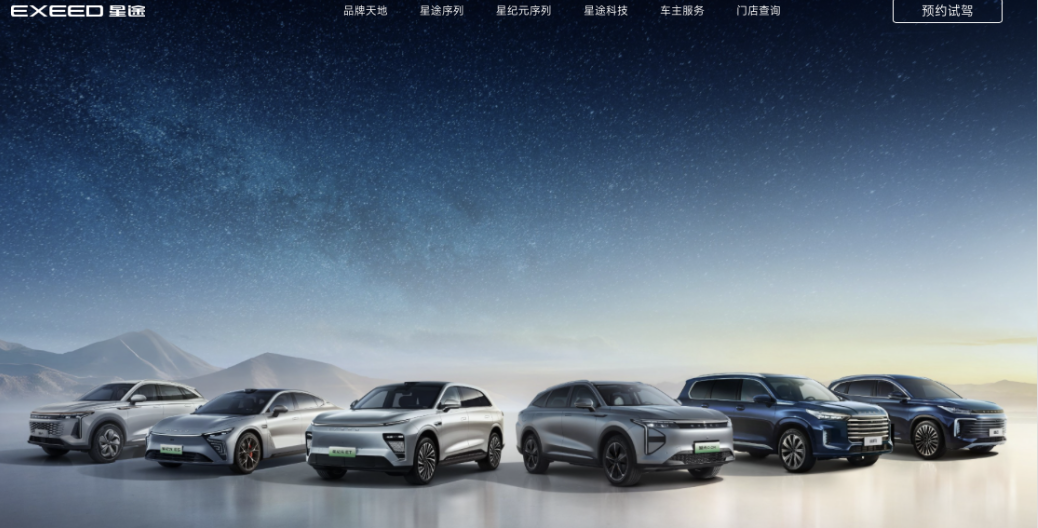
星途“降级”并入事业部 奇瑞全力冲击港股IPO
Cai Jing Wang· 2025-07-12 11:42
Core Viewpoint - Chery has established a domestic business group to streamline its brand structure and enhance operational efficiency ahead of its IPO in Hong Kong, aiming to boost investor confidence in its management and profitability [3][10]. Group 1: Organizational Changes - Chery has formed a domestic business group that includes four divisions: Xingtu, Aihui, Fengyun, and QQ, with a focus on high-end, classic, new energy, and small car products respectively [1][3]. - The Xingtu brand, previously operating independently, has been integrated into the domestic business group, with its marketing center manager now serving as the executive vice president of the Xingtu division [4][5]. Group 2: Sales Performance - The Xingtu brand has struggled to meet sales expectations, with a target of 60,000 units annually, but only achieving 51,000 units in 2022 and 125,500 units in 2023, marking a year-on-year increase of over 130% [5][6]. - The new Xingji series, launched in 2023, has not yet reached a monthly sales target of 10,000 units since its introduction [5][6]. Group 3: Financial Overview - Chery's revenue for the first three quarters of 2024 reached 182.15 billion yuan, a 67.7% increase year-on-year, with significant growth in new energy vehicle sales, which rose by 231% [14][16]. - Despite the rapid growth in new energy vehicle sales, traditional fuel vehicle sales remain the primary revenue source, accounting for 74.8% of total sales in the first three quarters of 2024 [16]. Group 4: Market Position and IPO Strategy - Chery is positioned as the second-largest independent passenger car brand in China and the eleventh globally, as per sales data [15]. - The company aims to complete its IPO by 2025, focusing on brand enhancement, internationalization, and management improvements [10][20].
花旗:升东风集团股份(00489)目标价至6.2港元 评级“买入”
智通财经网· 2025-05-26 02:42
Group 1 - Citigroup has adjusted its revenue forecasts for Dongfeng Motor Group for 2025 and 2026, lowering them by 3% and 2% respectively [1] - The net profit margin forecasts for 2025 and 2026 have been adjusted to -1.8% and -2.0%, compared to previous estimates of -2.3% and -2.1% [1] - The projected net losses for 2025 and 2026 have been revised to RMB 2.006 billion and RMB 2.279 billion, down from previous forecasts of RMB 2.584 billion and RMB 2.455 billion [1] Group 2 - UBS has also lowered its joint venture profit forecasts for Dongfeng Motor Group for 2025 and 2026 by 5.4% and 2.3%, estimating profits of RMB 667 million and RMB 676 million respectively [2] - The company achieved 23%, 37%, and 24% of its annual targets for passenger cars, commercial vehicles, and total vehicle sales in the first four months of this year [2] - The management has set a sales target of 200,000 units for its Voyah brand in 2025, aiming for breakeven by the end of that year if price wars do not escalate [2]

美参议院通过终止加州禁售燃油车法案 将递交特朗普签署
news flash· 2025-05-22 15:35
Core Points - The U.S. Senate voted to overturn California's plan to ban gasoline-powered vehicles by 2035, sending the bill to President Trump for his signature [1] - The vote result was 51 to 44, reversing a waiver from the Biden administration's EPA that allowed California to set stricter emissions standards than federal requirements [1] - The House of Representatives passed this measure earlier in the month, and Trump has previously criticized electric vehicles, claiming they are ineffective and harm American auto workers [1]