生物技术创新

Search documents
中国跻身全球第二大生物药市场
Zhong Guo Chan Ye Jing Ji Xin Xi Wang· 2025-09-29 00:42
Core Insights - China's bio-economy is showing a positive trend, with significant advancements in CAR-T cell therapy, original drug production, and brain-machine interface medical devices, positioning the country as the second-largest biopharmaceutical market globally [1][2] Industry Overview - The global bio-manufacturing industry is receiving heightened attention from major economies, with increased funding for genetic and cell engineering research, biomass utilization, and bio-based product development [2] - The number of CAR-T clinical research centers worldwide has grown to 2069 in 2024, a 60% increase from 1297 in 2020, with China hosting 388 centers, ranking second globally [2] - China has achieved a record high in the proportion of self-developed new drugs, with 93 new drugs approved by the National Medical Products Administration in 2024, marking a five-year peak [2] Research and Development - In 2024, China published over 20,000 SCI papers in the medical equipment field, leading globally in research output [3] - The bio-economy in China is characterized by a robust industrial foundation, with significant growth in the pharmaceutical and chemical sectors driven by advancements in synthetic biology and high-throughput screening technologies [3] Industry Transformation - The bio-industry is transitioning from "quantitative accumulation" to "qualitative leap," focusing on core technology breakthroughs, product quality upgrades, and enhancing supply chain resilience [4] - Notable innovations include the approval of the world's first "rice-derived" human serum albumin injection and the launch of the world's first 5.0T whole-body MRI system [4] Future Prospects - Innovations in synthetic biology and gene editing are driving rapid growth in bio-manufacturing, outpacing GDP growth, and positioning the bio-economy as a crucial sector in the future global economy [5]
四大因素驱动中国生物医药崛起
Zheng Quan Shi Bao· 2025-08-28 22:40
Core Insights - The Chinese biopharmaceutical industry is poised for significant growth in 2025, driven by increased licensing agreements and international expansion [1][2] - The Hong Kong capital market has seen a surge in investment activity, with a notable increase in IPOs and fundraising amounts [2] - Four key driving factors are identified for the rise of the Chinese biopharmaceutical sector: government support, innovative talent, a vibrant venture capital ecosystem, and a comprehensive infrastructure [3][4] Group 1: Market Performance - In 2024, Chinese biopharmaceutical companies engaged in 94 business development transactions totaling $51.9 billion, accounting for nearly one-third of the global market [1] - The first half of 2025 saw licensing agreements nearing $66 billion, surpassing the total for 2024 [1] - Hong Kong's IPO market led globally in the first half of 2025 with 42 IPOs, raising $13.9 billion, a 700% increase year-on-year [2] Group 2: Driving Factors - Long-term national strategy support positions biotechnology as a key component of China's "strategic emerging industries," with significant funding for basic research and drug approval reforms [3] - The return of overseas talent has fostered innovation, with many scientists and executives establishing biotech firms in China [3] - A robust venture capital ecosystem, including domestic and international funds, plays a crucial role in supporting early-stage innovations [4] Group 3: Challenges and Opportunities - There is a mismatch between China's innovation output and domestic market absorption, with only 5% of the global innovative drug market share [5] - Recent policy changes, such as new procurement regulations favoring innovative drugs, are expected to support the continued development of biotechnology in China [5] - Collaboration with multinational companies and emerging markets is essential for Chinese biopharmaceutical firms to thrive globally [6]
新加坡媒体:中国生物技术惊人进步正改变全球药物研发
Huan Qiu Wang Zi Xun· 2025-07-14 23:02
Core Insights - The global biotechnology industry is undergoing a structural transformation, with Chinese pharmaceutical companies increasingly challenging Western dominance in innovation [1] - In 2024, the number of innovative drugs entering the R&D phase in China has surpassed 1,250, exceeding the EU and nearing the US's 1,440 [1] - The rapid development and attractiveness of these new drugs span various treatment areas, including cancer and weight loss, gaining recognition from Western regulatory bodies and multinational pharmaceutical companies [1] Group 1 - The number of new drugs in China's global drug development pipeline was only 160 in 2015, accounting for less than 6% [1] - Reforms in China's drug regulatory system have accelerated review processes, improved data quality, and enhanced regulatory transparency [1] - Government initiatives aimed at boosting manufacturing levels in key areas have stimulated investment in the biotechnology sector, leading to a wave of innovation driven by returning overseas scientists and entrepreneurs [1] Group 2 - China has become the leading location for clinical research globally, initiating the most new trials since 2021 [2] - Among the 50 companies generating the most innovative drug candidates from 2020 to 2024, 20 are based in China [2] - The perception of high-quality innovation in China's biotechnology sector is expected to become a recognized norm as the industry continues to develop [2]
加仓100%!全球巨头出手
中国基金报· 2025-07-11 01:32
Core Viewpoint - Invesco Developing Markets Fund, a prominent emerging market fund under Invesco, has increased its holdings in Jiangsu Hengrui Pharmaceuticals by 100%, indicating a strong foreign capital inflow into Chinese companies [4][6]. Fund Activity Summary - The Invesco Developing Markets Fund's latest size is approximately $14.1 billion, equivalent to about 101.24 billion RMB. After the increase, the fund's holdings in Hengrui Pharmaceuticals amount to 18.6 million HKD [4]. - As of the end of May, the fund's top five holdings include TSMC, Tencent, Huazhu Group, Kotak Mahindra Bank, and Meituan. During the same period, the fund reduced its stakes in Tencent and Meituan by 5.31% and 24.77%, respectively, while increasing its positions in CATL by 22.16% and Alibaba by 14.79% [5]. - Morgan Asset Management's JPM China A-Share Opportunities Fund also increased its stake in Hengrui Pharmaceuticals by 18.49% in May, with the fund's latest size being $2.8 billion [8]. - Allianz Investment's China A Shares Fund, with a size of $2.3 billion, raised its holdings in Hengrui Pharmaceuticals by 8.47% as of the end of May [9]. Industry Outlook - Justin Leverenz, the fund manager of Invesco, expressed optimism about the Chinese pharmaceutical industry, noting that China has transitioned from a follower to a leader in drug development over the past five years. The country has moved directly into advanced treatment models, skipping traditional drug development stages [6]. - The article highlights that China has established a leading position in clinical and commercial aspects of blood cancer treatment globally. The share of China in biotechnology licensing transactions has increased from 4% in 2019-2020 to 12% in 2023-2024 [6]. - Despite being a significant source of biopharmaceutical innovation, the Chinese biotechnology industry is still in its early stages, with limited value capture in critical areas such as late-stage global clinical development and commercialization [6].



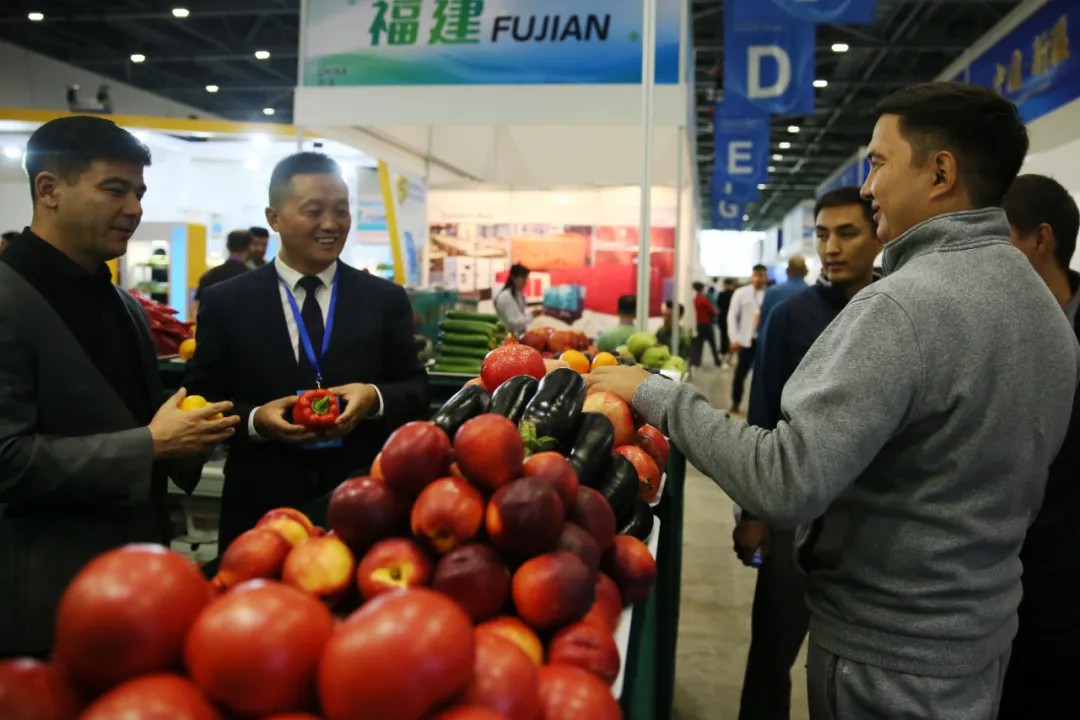
奥登·沙亚赫梅达娃:哈中农业合作为何“全面开花”?
Zhong Guo Xin Wen Wang· 2025-06-17 00:44
Core Viewpoint - The agricultural cooperation between China and Kazakhstan is flourishing due to complementary resources and technologies, strong governmental support, and a historical friendship that fosters mutual understanding and trust [2][4][8]. Group 1: Agricultural Cooperation Foundations - Kazakhstan's abundant land and water resources provide a strong foundation for agricultural development, while China's advanced agricultural technologies and experience enhance production efficiency [2]. - The partnership involves Kazakhstan supplying raw materials and China providing technology and investment, enabling high-value joint projects [2]. - Historical ties and ongoing exchanges in trade, culture, and agriculture have established a solid basis for current cooperation [2]. Group 2: Achievements in Agricultural Projects - The establishment of the China-Kazakhstan Grain and Oil Crop Production Technology Demonstration Park has led to successful trials of various crop varieties, including spring wheat and potatoes, with promising results [4][5]. - New wheat varieties developed through joint efforts are expected to increase yields by 25%, translating to an additional 37.5 kg per acre compared to local varieties [5]. - Collaborative research in livestock aims to improve milk production and quality, with ongoing projects focused on feed quality and breeding [7]. Group 3: Future Cooperation Opportunities - Future collaboration could focus on digital agriculture, enhancing data applications and smart monitoring systems to improve crop yields by over 15% [8]. - Cross-border e-commerce initiatives could leverage existing logistics to expand the trade of quality agricultural products [8]. - Carbon farming projects, such as saline-alkali land improvement, could provide ecological benefits and additional carbon credits [8][9]. Group 4: Broader Implications - The ongoing Belt and Road Initiative is expected to deepen agricultural cooperation, leading to further advancements in the agricultural sector [11]. - The cooperative model established between China and Kazakhstan may serve as a replicable framework for other Central Asian countries, albeit with necessary adaptations to local conditions [8].