
线上零售

Search documents
莎莎国际“退场”,平价美妆零售商日子不好过
Bei Jing Shang Bao· 2025-06-23 13:48
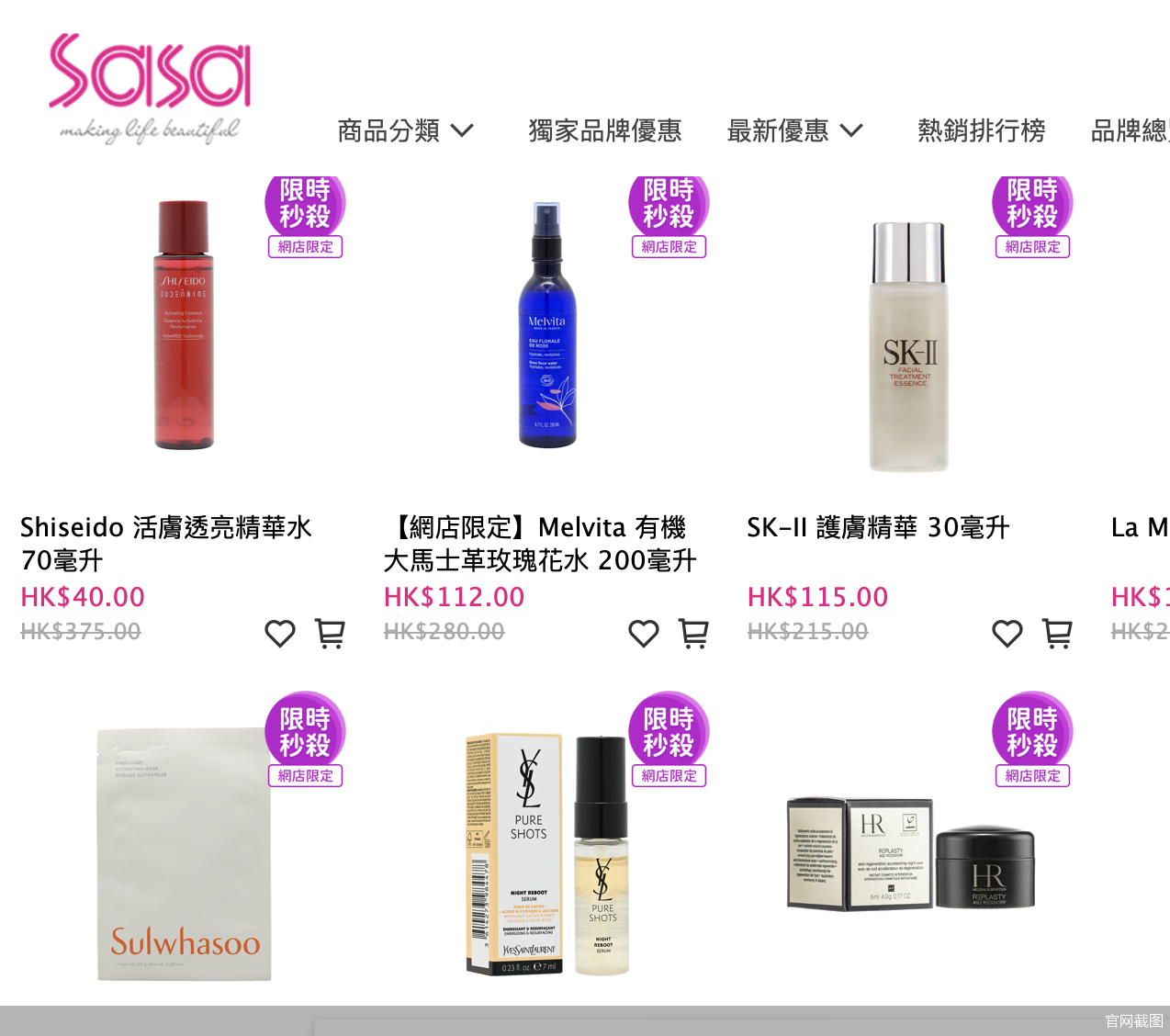
Core Viewpoint - Sasa International is closing all its offline stores in mainland China by June 24, marking a complete exit from the market after 20 years of operation, as the company shifts focus to online business due to changing consumer preferences and the dominance of e-commerce [1][3][4]. Group 1: Store Closures - Sasa International has confirmed the closure of all its offline stores in mainland China, with a specific deadline of June 24 [1][3]. - The company had previously indicated in its fiscal report that it would close its remaining mainland stores by June 30, citing that over 80% of its revenue in the region comes from online sales [4][5]. - The decision to close stores is part of a broader trend among traditional beauty retailers struggling to adapt to the evolving market landscape [1][10]. Group 2: Historical Context and Performance - Sasa International, founded in Hong Kong in 1978, once thrived in the beauty retail sector, boasting over 200 stores globally, including 77 in mainland China at its peak [5][8]. - The company's revenue peaked at approximately HKD 89 billion in the 2015 fiscal year but has since declined, with revenue dropping to HKD 39 billion in the 2025 fiscal year [8][9]. - The decline in performance is attributed to increased competition and the rise of online shopping, which has diminished the appeal of traditional retail models [9][10]. Group 3: Strategic Shift to Online Business - Sasa International plans to concentrate resources on its online business following the closure of its physical stores, aiming to enhance profitability in mainland China [5][12]. - The company has begun to implement digital transformation strategies, including the introduction of a self-operated website and partnerships with social media platforms to reach consumers [9][12]. - The shift to online sales is seen as a necessary adaptation to meet changing consumer behaviors and preferences in the beauty retail market [4][12].

“以旧换新”持续显效!1-4月,泰安家用电器和音像器材销售额同比增长45.2%
Qi Lu Wan Bao Wang· 2025-06-06 10:34
Economic Overview - The economy of Tai'an City is showing a stable and improving trend, with continuous efforts to implement various policies aimed at production, consumption, and growth [5] Industrial Production - The industrial production has slightly rebounded, with the added value of industrial enterprises above designated size increasing by 8.3% year-on-year from January to April, an increase of 0.3 percentage points compared to the first quarter [1] - The manufacturing sector leads with an added value growth of 10.8%, contributing 98.5% to the growth of industrial enterprises [1] - Among 37 major industrial categories, 25 achieved year-on-year growth, resulting in a growth coverage of 67.6% [1] - Out of 154 major industrial products, 79 saw an increase in production, with a growth coverage of 51.3% [1] Investment Trends - Fixed asset investment in Tai'an City grew by 5.8% year-on-year from January to April, with the primary industry increasing by 3.5%, the secondary industry by 26.7%, and the tertiary industry decreasing by 6.8% [1] - Industrial investment accelerated with a year-on-year increase of 26.6%, and manufacturing investment grew by 19.6% [2] - New momentum investments, particularly in high-tech industries, saw significant growth, with "Four New" investments increasing by 17.1% and high-tech industry investments rising by 47.6% [2] Consumer Market - The retail market showed positive growth, with retail sales of units above designated size reaching 16.92 billion yuan, a year-on-year increase of 13.2% [2] - Categories such as household appliances, food, and clothing saw substantial retail sales growth, contributing significantly to the overall retail sales increase [2] - The "old-for-new" policy has effectively boosted sales in sectors like automobiles and household appliances, with respective year-on-year growth rates of 8.9% and 45.2% [2] - Online retail sales also accelerated, achieving a year-on-year growth of 25.2%, contributing 13.7% to the overall retail growth [2] Service Sector - The service sector showed stable growth, with revenue from large-scale service enterprises reaching 8.99 billion yuan, a year-on-year increase of 7.0% [3] - Among 615 large-scale service enterprises, 379 reported positive revenue growth, resulting in a growth coverage of 61.6% [3] - The top 30 enterprises contributed significantly to the overall revenue growth of the service sector, accounting for 55.1% of total revenue [3] Fiscal and Financial Indicators - The general public budget revenue reached 10.63 billion yuan from January to April, a year-on-year increase of 5.5% [3] - Financial institutions reported a total deposit balance of 723.8 billion yuan, growing by 10.5%, and a loan balance of 519.53 billion yuan, increasing by 9.9% [3] - Total electricity consumption reached 95.0 billion kilowatt-hours, a year-on-year increase of 2.8%, with industrial and tertiary sector electricity consumption growing by 3.7% and 7.1%, respectively [3] Consumer Price Index - The Consumer Price Index (CPI) remained stable at 99.7, with a year-on-year decrease of 0.3% [4] - Among eight major categories, five saw price increases while three experienced declines [4]