
护肤品

Search documents
芭薇股份:护肤品ODM领先企业,2025年营收增21%-20260327
KAIYUAN SECURITIES· 2026-03-27 10:35
Investment Rating - Investment rating: "Outperform" (maintained) [5] Core Views - The company is a leading player in the skincare ODM sector, with a projected revenue growth of 21% in 2025 [3][7] - The company reported a revenue of 842 million yuan in 2025, a year-on-year increase of 21.15%, while the net profit attributable to the parent company was 38.74 million yuan, a decline of 14.64% year-on-year [7] - The company continues to implement a large client and large product strategy, increasing market expansion efforts and enhancing product competitiveness [8] Financial Summary - Revenue projections for 2025-2027 are 842 million yuan, 1.148 billion yuan, and 1.316 billion yuan, respectively, with corresponding net profits of 39 million yuan, 80 million yuan, and 101 million yuan [10] - The gross margin is expected to decline to 23% in 2025, with a recovery to 27.2% by 2027 [10][13] - The company has a total market capitalization of 1.353 billion yuan and a circulating market capitalization of 772 million yuan [5] Market Position and Recognition - The company was included in the first batch of "white list" enterprises for customs clearance convenience in Guangzhou and was awarded "Most Innovative ODM Enterprise" in 2026 [9] - Guangzhou's cosmetics industry is a leading city in China, with an annual output value exceeding 100 billion yuan, and the company benefits from favorable policies supporting high-quality development in the beauty industry [9]
芭薇股份(920123):北交所信息更新:护肤品ODM领先企业,2025年营收增21%
KAIYUAN SECURITIES· 2026-03-27 08:41
Investment Rating - Investment rating: "Outperform" (maintained) [5] Core Views - The company is a leading player in the skincare ODM sector, with a projected revenue growth of 21% in 2025 [3][7] - The company reported a revenue of 842 million yuan in 2025, a year-on-year increase of 21.15%, while the net profit attributable to the parent company was 38.74 million yuan, a decline of 14.64% year-on-year [7] - The company is focusing on a large customer and large single product strategy, increasing market expansion efforts, and enhancing R&D to improve product competitiveness [8] Financial Summary - Revenue (million yuan): 2023A: 469, 2024A: 695, 2025E: 842, 2026E: 1,148, 2027E: 1,316 [10] - Year-on-year growth rates: 2025E: 21.2%, 2026E: 36.4%, 2027E: 14.6% [10] - Net profit (million yuan): 2023A: 41, 2024A: 45, 2025E: 39, 2026E: 80, 2027E: 101 [10] - EPS (yuan): 2025E: 0.35, 2026E: 0.72, 2027E: 0.90 [10] - P/E ratios: 2025E: 34.9, 2026E: 16.9, 2027E: 13.4 [10] Market Position and Recognition - The company was included in the first batch of "white list" enterprises for customs clearance convenience in Guangzhou and was awarded "Most Innovative ODM Enterprise of the Year" at the 2026 CiE Beauty Innovation Awards [9] - Guangzhou's cosmetics industry has a yearly output value exceeding 100 billion yuan, maintaining its position as the leading city for beauty and personal care product exports in China [9]
东吴证券晨会纪要-20260327
Soochow Securities· 2026-03-27 01:23
Macro Strategy - The report highlights that the recent rise in oil prices has a "U-shaped" impact on China's exports, with potential negative growth in exports if oil prices reach $100 per barrel, while a price range of $80 to $120 per barrel could lead to a 1% growth in exports [23][24]. - The analysis indicates that China's ample oil reserves and reduced dependence on external energy sources will mitigate the impact of rising oil prices compared to other economies [23]. Fixed Income - The report notes that the yield on the 10-year government bond increased from 1.8225% to 1.8365% during the week of March 16-20, 2026, reflecting market reactions to geopolitical tensions and inflation expectations [25][27]. - It suggests a shift in investment strategy from long-term holdings to short-term trading of core assets, emphasizing the need to monitor evolving market narratives [30]. - The issuance of green bonds decreased to 171.29 billion yuan, while trading volume in the secondary market increased to 704 billion yuan during the same period [31][32]. Company Analysis - China Taiping (00966.HK) reported a significant increase in net profit by 223% year-on-year, with a dividend yield of 5.8%, and maintains a "buy" rating with adjusted profit forecasts for 2026-2028 [9]. - Gu Ming (01364.HK) is recognized for its strong profit performance and rapid store expansion, leading to an upward revision of profit forecasts for 2026-2028 [10]. - Yihai International (01579.HK) is noted for its robust growth driven by third-party contributions and overseas expansion, with a focus on B-end markets [11]. - Lin Qingxuan (02657.HK) achieved a 92.9% increase in net profit, driven by online sales growth, and is projected to maintain strong growth in the coming years [12]. - Puyuan Precision (688337) met profit expectations, with core product lines showing significant growth, and maintains an "overweight" rating [14]. - Jingjin Equipment (603279) is highlighted for its long-term growth potential, despite short-term profit forecast adjustments due to market conditions [15]. - Shanghai Jahwa (600315) turned profitable in 2025, with a focus on high-growth beauty products and a commitment to double-digit revenue growth in 2026 [16]. - H&H International (01112.HK) is recognized for its long-term strategy and solid sales growth, with profit forecasts adjusted upward for 2026-2028 [17]. - Huatai Medical (688617) reported steady growth in revenue and profit, with a focus on core product promotion and market penetration [18]. - China Life (601628) showed high growth in net profit and new business value, maintaining a "buy" rating despite profit forecast adjustments [20]. - WuXi AppTec (02268.HK) continues to experience strong growth, with profit forecasts adjusted for 2026-2028 [21]. - Hutchison China MediTech (00013.HK) is expected to see steady sales growth, with an emphasis on its ATTC platform as a long-term growth driver [22].
价格战里熬不出伟大品牌!投出多个万店巨头的他,凭什么敢聊“不涨价的消费升级”?
混沌学园· 2026-03-26 12:05
Core Insights - The consumer market has shifted dramatically from a period of growth (2016-2021) to a downturn in 2022 and 2023, leading to concerns about consumer spending and perceived economic challenges [1][2] - The traditional model of supply-driven consumption is being replaced by a consumer-driven approach, where consumers prioritize convenience and emotional connection over mere product quality and price [2][3] Consumer Behavior Changes - Consumers now have more power and are more discerning, leading to a decline in the effectiveness of traditional low-price strategies [3] - The concept of "not raising prices while upgrading consumption" is introduced as a counterintuitive strategy to adapt to changing consumer expectations [5] Strategic Insights from Industry Leaders - Chang Bin, founder of Qicheng Capital, emphasizes the importance of understanding the underlying logic of consumer behavior and the need for traditional and new brands to adapt their strategies [4][6] - Traditional companies ("old brands") need to shift their focus to user value, while new brands ("emerging brands") must develop their capabilities to navigate market challenges [7] Case Studies and Practical Applications - Qicheng Capital has successfully assisted brands like Lin Qingxuan in transforming their strategies, demonstrating the potential for growth through strategic innovation [8] - The article highlights the importance of aligning business strategies with organizational capabilities to achieve sustainable growth [9] Course Offerings - The article promotes a course that aims to provide insights into consumer behavior, strategies for "not raising prices while upgrading consumption," and practical methods for traditional and emerging brands to adapt [9][10][15]


青松股份(300132):双聚焦战略成效兑现,持续领跑化妆品ODM赛道
Shenwan Hongyuan Securities· 2026-03-25 10:27
Investment Rating - The report maintains an "Accumulate" rating for the company [2] Core Views - The company is benefiting from a dual-focus strategy on clients and products, leading to strong performance in the cosmetics ODM sector [8][22] - The company has successfully transitioned to focus solely on cosmetics manufacturing, shedding its previous chemical business, which has allowed for improved operational efficiency and profitability [20][22] - The cosmetics industry is entering a high-quality recovery phase, with the company positioned to capture market share as smaller competitors exit the market [41][54] Financial Data and Profit Forecast - Total revenue projections for the company are as follows: - 2024: 1,940 million CNY - 2025: 2,218 million CNY (14.3% YoY growth) - 2026: 2,565 million CNY (15.6% YoY growth) - 2027: 2,957 million CNY (15.3% YoY growth) [7] - Net profit forecasts are: - 2025: 153 million CNY (179.7% YoY growth) - 2026: 192 million CNY (25.3% YoY growth) - 2027: 242 million CNY (26.2% YoY growth) [7] - The company’s gross margin is expected to stabilize around 17.4% for the next few years, with a notable increase in 2025 to 19.2% [7][40] Business Strategy and Market Position - The company has established itself as a leading player in the global cosmetics ODM market, with significant production capacity and a diverse client base including major international brands [8][20] - The company’s focus on high-margin products, particularly in the mask and skincare segments, is expected to drive future growth [8][10] - The company has a strong R&D team and has accumulated a significant number of patents, enhancing its competitive edge in product development [8][10] Industry Outlook - The Chinese cosmetics market is projected to continue its growth trajectory, with a compound annual growth rate of 5.84% from 2015 to 2024, positioning it as the second-largest market globally [41][47] - The industry is experiencing a consolidation phase, with leading companies gaining market share as smaller players exit, which is beneficial for the company [54][56] - Consumer demand is shifting towards high-quality and effective products, which aligns with the company’s strategic focus on innovation and quality [41][47]

欧莱雅拿下开云美妆后,雅诗兰黛坐不住了,洽购700亿市值的百年香水“大佬”
Sou Hu Cai Jing· 2026-03-24 06:59
Core Viewpoint - Estée Lauder is in discussions for a potential merger with Spanish fragrance and beauty group PUIG, following L'Oréal's acquisition of Kering's beauty business, indicating a strategic move to enhance competitiveness in the high-end beauty market [2][3]. Group 1: Company Developments - Estée Lauder's stock fell by 7.72% to $79.29 per share after the merger news, with a market capitalization of approximately $28.7 billion [2]. - PUIG, which is set to go public in 2024, reported revenues of approximately €5.04 billion (about ¥40.2 billion) for the fiscal year 2025, with over half of its revenue coming from its fragrance business [2]. - Estée Lauder's net sales have been declining, with projections of $15.91 billion, $15.61 billion, and $14.33 billion for the fiscal years 2023 to 2025, respectively, and a projected net loss of $1.13 billion for 2025 [3]. Group 2: Strategic Responses - In response to declining performance, Estée Lauder initiated a restructuring plan called "Reinventing Beauty," focusing on resource allocation and streamlining its brand portfolio to enhance operational efficiency [3]. - The competitive landscape is shifting, with L'Oréal acquiring luxury beauty brands and LVMH entering the beauty sector, prompting Estée Lauder to strengthen its position in high-end fragrances [4][5]. - A successful merger with PUIG could complement Estée Lauder's existing skincare and makeup strengths, potentially regaining market leadership in the high-end beauty sector [5]. Group 3: Financial Performance - Estée Lauder's latest quarterly results exceeded market expectations, indicating signs of recovery, with a 6% year-over-year increase in net sales to $4.23 billion for the second fiscal quarter of 2026 [5]. - The operating profit margin improved to 9.5%, reflecting the effectiveness of the company's restructuring efforts [5].


当丝芙兰不再押注“独家”
36氪未来消费· 2026-03-21 02:08
Core Viewpoint - Sephora is shifting its growth strategy by abandoning its traditional reliance on exclusivity agreements with brands, opting instead for partnerships that allow for a more fluid retail environment [4][16]. Group 1: Strategic Changes - In January, Sephora announced a partnership with Olive Young, a leading South Korean beauty retailer, to introduce popular products in dedicated store areas, marking a significant departure from its historical practice of exclusivity [4][14]. - Sephora's previous success was largely built on exclusive sales agreements, which accounted for 30-40% of its sales at peak times, but this model is now being reconsidered due to changing market dynamics [4][11]. - The partnership with Olive Young reflects a new approach where exclusivity is less about long-term agreements and more about short-term launches and priority distribution [7][16]. Group 2: Market Dynamics - The beauty retail landscape is evolving, with online channels like Amazon and TikTok Shop gaining market share, prompting Sephora to adapt its strategy to remain competitive [15][16]. - Sephora's revenue in the LVMH retail segment grew by 4% over the past year, driven primarily by markets in North America, Europe, and the Middle East, despite overall group revenue decline [15]. - The company plans to open approximately 150 new stores, focusing on Europe and exploring smaller, more efficient store models to enhance its market presence [17]. Group 3: Challenges and Opportunities - Sephora faces challenges in maintaining its value proposition as brands become available through multiple channels, raising questions about what additional value Sephora can offer to attract consumers [16][17]. - The company has struggled with local market adaptation in China, where it has attempted to introduce domestic brands but faced difficulties in positioning and competition with established online channels [12][13]. - Management acknowledges that there is still significant market penetration potential, with current coverage in some regions as low as 5%, indicating room for growth [17].

美容护理行业双周报(2026/3/6-2026/3/19):需求稳增与盈利承压并存,行业分化加剧-20260320
Dongguan Securities· 2026-03-20 08:56
Investment Rating - The report maintains an "Overweight" rating for the beauty care industry, indicating an expectation that the industry index will outperform the market index by more than 10% over the next six months [29]. Core Insights - The beauty care industry is experiencing a simultaneous increase in demand and pressure on profitability, leading to intensified industry differentiation. Companies are shifting focus from scale expansion to profit orientation, with a structural divergence expected in the short term. However, there is potential for recovery in the medium to long term due to increased concentration among leading companies and product strength [29]. - The retail sales of cosmetics reached 75.3 billion yuan in January-February 2026, marking a year-on-year growth of 4.5%, which outperformed the overall market and reflects a steady growth trend [21][23]. - The overall price-to-earnings ratio (PE) of the beauty care industry is approximately 32.46 times, which is below the valuation mean since 2015, indicating a potential undervaluation [20]. Summary by Sections Market Review - The SW beauty care industry underperformed the CSI 300 index, declining by 1.52% from March 6 to March 19, 2026, and ranked fifteenth among SW primary industries [13]. - All secondary segments within the beauty care industry recorded negative returns during the same period, with personal care products, cosmetics, and medical beauty declining by 1.56%, 2.27%, and 2.30%, respectively [14]. - Approximately 29.03% of stocks in the industry recorded positive returns, with Keshihua leading with a 5.62% increase, while Shuiyang shares saw the largest drop at 10.32% [15]. Industry News - The growth of the skincare and beauty business by Ryohin Keikaku (Muji) has doubled its revenue to approximately 100 billion yen, accounting for about 13% of total sales, becoming a significant growth driver [24]. - Intercos, a leading global beauty OEM, reported a 1.7% decline in revenue for 2025, marking its first annual revenue drop since its IPO in 2021, although its adjusted EBITDA increased by 8.8% [25]. Company Announcements - Aimeike reported a revenue of 2.453 billion yuan for 2025, down 18.94% year-on-year, with a net profit of 1.291 billion yuan, a decrease of 34.05% [26]. - Juzi Biotechnology achieved a revenue of 5.519 billion yuan for 2025, a slight decline of 0.4%, with a net profit of 1.915 billion yuan, down 7.1% [27]. - Shuiyang shares are nearing conditions for redeeming convertible bonds, reflecting marginal improvements in operations and market expectations [28]. Weekly Industry Perspective - The report emphasizes the ongoing structural optimization in the beauty care industry, with a shift from scale expansion to profit quality enhancement. It suggests focusing on leading companies with strong brand and cash flow advantages, such as Huaxi Biological, Wanmei Biological, Beijia Clean, and Shanghai Jahwa, to capture structural opportunities [29][30].
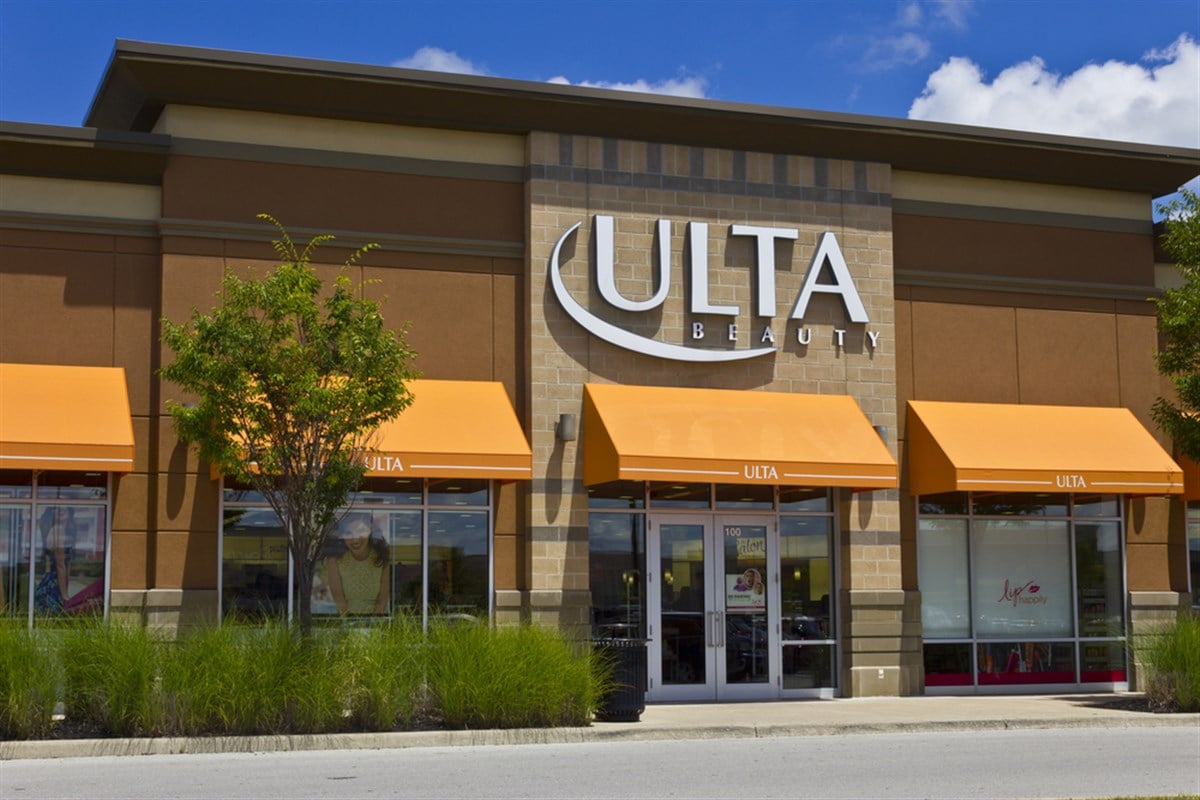
Ulta Beauty, Inc. (NASDAQ:ULTA) Faces Market Challenges Despite Strong Product Offerings
Financial Modeling Prep· 2026-03-13 21:09
Core Viewpoint - Ulta Beauty, Inc. is facing challenges in maintaining investor confidence due to a disappointing quarterly profit report and a weaker-than-expected outlook for 2026, despite exceeding revenue expectations [2][3][5]. Financial Performance - Ulta's fourth-quarter earnings per share were $8.01, missing analyst estimates by 2 cents, while revenue reached $3.9 billion, exceeding expectations [3][6]. - The current stock price of ULTA is $547.16, reflecting a decrease of $77.54 or approximately -12.41% [4]. - Over the past year, ULTA has fluctuated between a high of $714.97 and a low of $323.37, with a market capitalization of approximately $24.53 billion [4]. Analyst Insights - Michael Lasser from UBS set a price target of $810 for ULTA, indicating a potential upside of approximately 48.20% from its then-current price of $546.56 [2][6]. - Analysts at Oppenheimer have reduced their price target for Ulta from $750 to $650, citing concerns over economic and geopolitical factors [5][6]. Market Context - Ulta competes with major beauty retailers like Sephora and operates over 1,200 stores across the United States, offering a diverse range of products and in-store salon services [1].

中顺洁柔(002511) - 002511中顺洁柔投资者关系管理信息20260312
2026-03-12 12:30
Group 1: Company Performance - In 2025, the company experienced steady growth due to a decrease in raw material and manufacturing costs, leading to a significant reduction in production costs and an increase in gross margin year-on-year [2] - The company aims to continuously optimize its product structure, focusing on high-end, high-margin non-traditional dry towels as a strategic category for future development [2][3] Group 2: Operational Strategy - The company will implement a full-cost leadership strategy and continuously optimize its operational management system to solidify its profitability foundation for long-term stable development [3] - The company is committed to enhancing its governance structure and will continue to focus on core business areas while gradually expanding into quality sectors [3] Group 3: Product Categories - The company currently offers a range of brands including Jierou, Duoleimi, and others, covering products such as sanitary napkins, cotton soft towels, wet toilet paper, laundry liquids, skincare products, and disposable travel items [3] Group 4: Market Outlook - The price of pulp, a major commodity, is expected to decline in 2025, although it may experience volatility due to various factors [3] Group 5: Shareholder Returns - The company emphasizes shareholder returns and has introduced a share repurchase plan for 2026, aimed at stock incentives or employee stock ownership plans [3]
