美国两党党争

Search documents
军饷成党争筹码 特朗普急了
Xin Hua Wang· 2025-10-12 14:19
Core Points - The U.S. federal government shutdown has entered its 11th day, with military pay day approaching on October 15, and Republican leaders are refusing to intervene to resolve military pay issues to pressure Democrats for concessions [1][2] - President Trump has ordered the Secretary of Defense to use "all available funds" to ensure military personnel are paid, criticizing Democrats for using military and national security as leverage [1][6] Group 1: Government Shutdown and Military Pay - The use of military pay as leverage is a significant tactic employed by Senate Republican leader John Thune and House Speaker Mike Johnson against Democrats, knowing it also puts pressure on their own party [2][3] - If military personnel do not receive their pay on October 15, it would mark the first instance in modern U.S. history of active-duty military facing widespread unpaid salaries during a government shutdown [2][3] Group 2: Political Dynamics - The Republican party, holding a slim majority in Congress, requires bipartisan support to pass a temporary funding bill in the Senate, but Democrats are demanding concessions on healthcare-related spending [3][6] - There is a clear divide between the parties, with Republicans insisting that Democrats must make concessions, while Democrats accuse Republicans of prioritizing political games over the welfare of American workers [3][6] Group 3: Funding Sources for Military Pay - Trump has indicated that the funds for military salaries will come from the Department of Defense's research and development budget, specifically utilizing approximately $8 billion from leftover appropriations from the previous fiscal year [6][7] - However, reallocating congressionally approved funds for other purposes may expose the Trump administration to potential legal challenges [7]

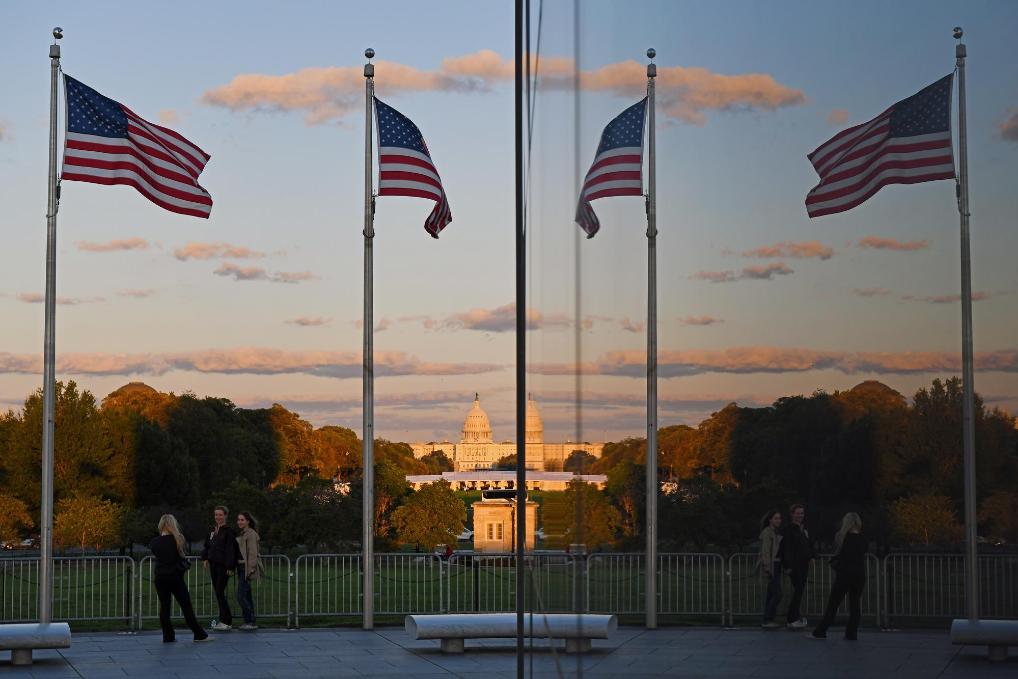
美联邦政府“停摆”危机持续 两党继续相互指责
Yang Shi Xin Wen· 2025-10-04 01:10
Core Points - The U.S. Congress failed to pass government funding bills proposed by both the Democratic and Republican parties, leading to a continuation of the government shutdown [1][3] - Both parties are blaming each other for the ongoing crisis, with Republicans accusing Democrats of politicizing the situation and Democrats claiming Republicans aim to keep the government closed [3] Group 1 - On October 3, both the Democratic and Republican funding bills were voted down, resulting in the government shutdown extending into the following week [1] - The Senate will enter a recess over the weekend, halting legislative work, which is expected to exacerbate the shutdown's impact [1] - The political blame game intensified, with Republican leaders accusing Democrats of obstructing funding efforts, while Democrats criticized Republicans for their budget negotiation stance [3] Group 2 - House Speaker Mike Johnson attributed the shutdown to Democratic actions, asserting that Republicans are acting responsibly [3] - Senate Republican leader John Thune accused Democrats of holding the government and the American people hostage by repeatedly rejecting temporary funding measures [3] - House Democratic leader Hakeem Jeffries countered that Republicans' arguments are unfounded and emphasized that any budget agreement to end the shutdown must enhance healthcare benefits [3]
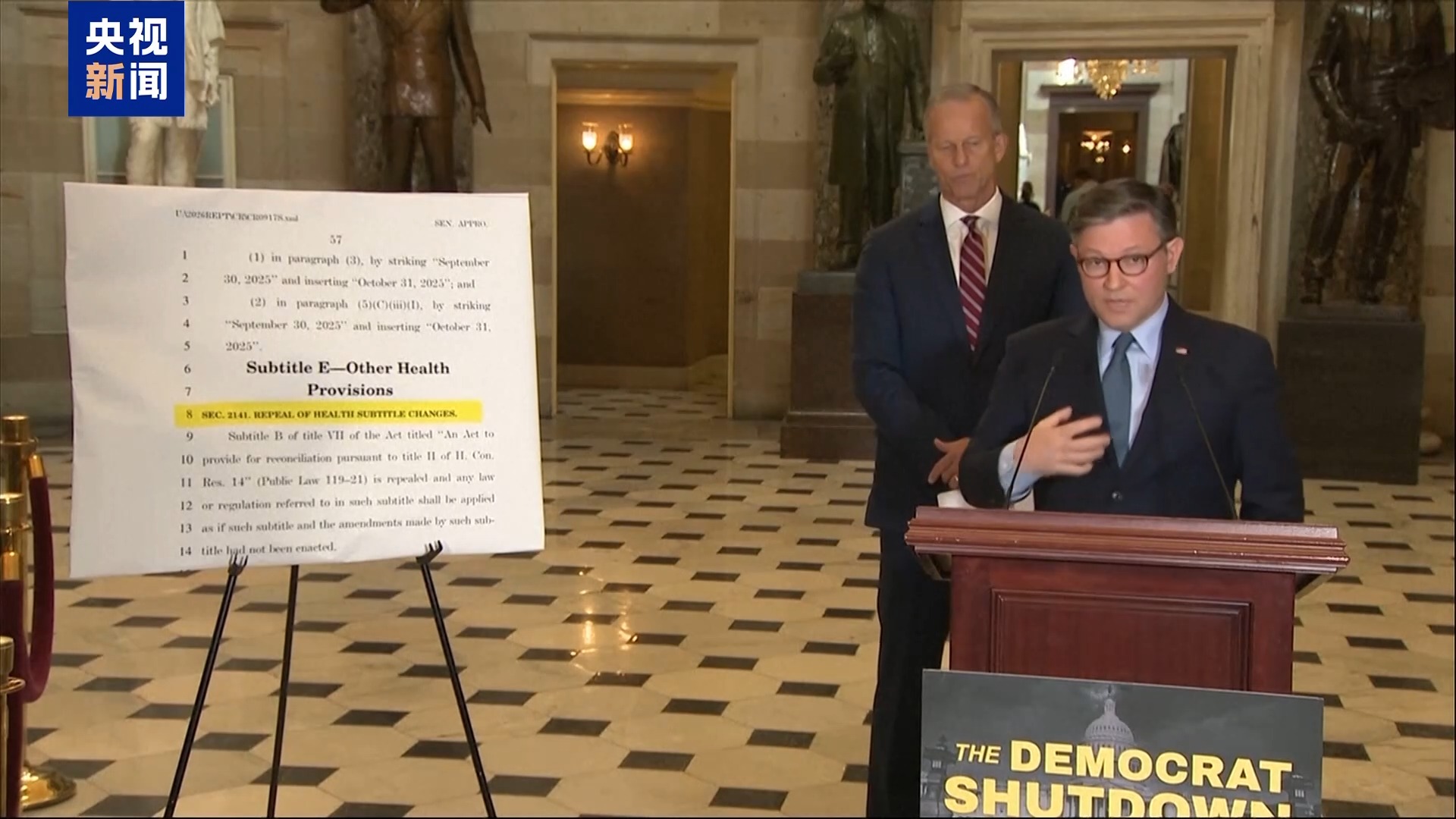
国际观察|美国联邦政府再次“停摆”与以往有三个不同
Xin Hua She· 2025-10-03 13:49
Core Points - The current government shutdown in the U.S. is marked by heightened political hostility and a more aggressive approach from the Trump administration against the Democratic Party, differing significantly from previous shutdowns [1][2][5] - The Democratic Party is displaying unusual unity and determination to fight for healthcare cost reductions, contrasting with their previous fragmented responses [4][5] - The ongoing political polarization is leading to severe economic and social impacts, with approximately 750,000 federal employees affected and public services disrupted [5][7] Group 1: Trump's Aggressive Tactics - Trump is leveraging the shutdown to eliminate programs favored by Democrats, including terminating 223 energy projects across 16 states, totaling approximately $7.56 billion [2] - The administration plans to implement a federal workforce reduction, targeting employees perceived as Democratic supporters [2][5] - Former House Speaker Newt Gingrich describes Trump's strategy as unprecedented, aiming to dismantle the Democratic agenda through a calculated political offensive [2][3] Group 2: Democratic Unity and Strategy - The Democratic Party is presenting a rare moment of solidarity, with members committed to resisting Trump's actions during the shutdown [4] - Analysts suggest that this shutdown is a critical test for the Democratic Party to regain support and prepare for the upcoming midterm elections [4][5] - The party's previous failures to stand firm against Republican pressures have led to a significant drop in their approval ratings, prompting a more aggressive stance this time [4] Group 3: Escalating Political Hostility - The current political climate is characterized by increased animosity between the two parties, with the shutdown expected to have prolonged economic and political ramifications [5][6] - The shutdown has already resulted in significant disruptions, including unpaid leave for federal employees and halted public services, exacerbating uncertainty in the economic outlook [5][7] - The political conflict has overshadowed critical discussions on issues like gun control, as both parties focus on attacking each other rather than addressing pressing national concerns [5][6]
世人恐要失望了,这次洛杉矶之乱,美国内战3个大要素还没凑齐
Sou Hu Cai Jing· 2025-06-12 23:26
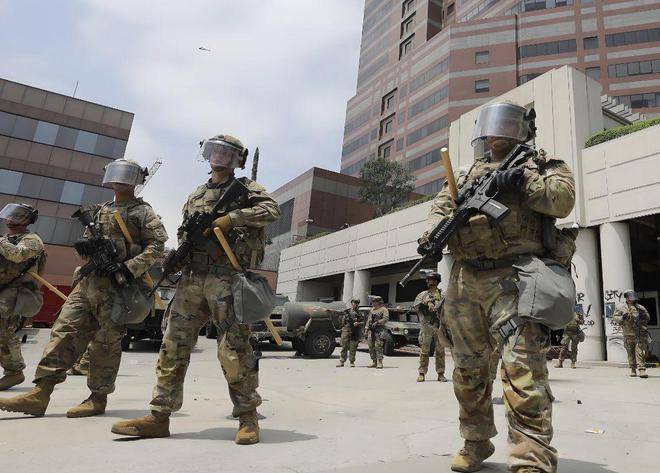
Core Viewpoint - The recent unrest in Los Angeles is being interpreted by many as the beginning of a civil war in the United States, but key elements necessary for such a conflict are currently absent [1][3][5]. Group 1: Conditions for Civil War - A significant factor for the outbreak of war is the availability of weapons and ammunition, which is lacking as the current economic system remains stable and production continues [3][5]. - Financial support is crucial for warfare, yet the unrest in Los Angeles is not directly linked to financial capital, which remains unaffected and may even subtly support protestors for political gain [5][7]. - The scale of participation in the unrest is limited, with only a few thousand involved, primarily from marginalized immigrant communities, lacking the organization or resources to form a substantial resistance [5][7]. Group 2: Political Dynamics - The unrest has devolved into a spectacle of mutual accusations between the two major political parties, with Democratic governors criticizing Trump's deployment of the National Guard without consent [7]. - This political division is deepening, shifting from broader national strategies to localized confrontations, which may not escalate to a civil war unless there is a significant shift in control over production resources [7].
特朗普为何不放过哈佛?MAGA与美国精英的对决,美国社会撕裂真相
Sou Hu Cai Jing· 2025-05-29 12:41
Group 1 - The core issue revolves around the escalating conflict between the Trump administration and Harvard University, marked by the cancellation of Harvard's student and exchange scholar program and the halting of federal funding, which has intensified the ongoing legal battle [1][3]. - The conflict is seen as a continuation of Trump's established policy against elite institutions, particularly targeting Harvard, which is associated with the Democratic elite, including past presidents like Roosevelt and Obama [3][12]. - Harvard's historical role as a bastion of elite education has contributed to its current status, with its educational model historically focused on classical subjects and later evolving under leaders like Charles Eliot, who modernized its curriculum [5][7]. Group 2 - The financial model of Harvard, which relies on alumni donations and high tuition fees, has created a barrier for lower-income students, reinforcing social stratification and contributing to the formation of an elite class [9][10]. - The emergence of a "redneck" demographic, characterized by lower education levels and economic struggles, has become a significant political force, contrasting sharply with the elite educated class represented by institutions like Harvard [14][16]. - The political landscape has shifted dramatically since the 2008 financial crisis, with the Republican Party adapting its policies to appeal to this demographic, leading to Trump's rise and the subsequent polarization of American politics [17][19].